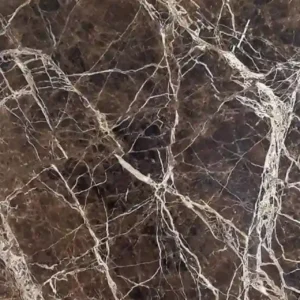
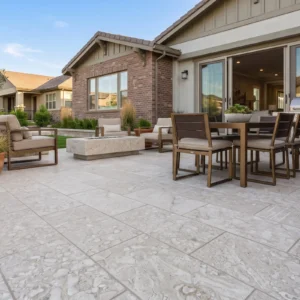
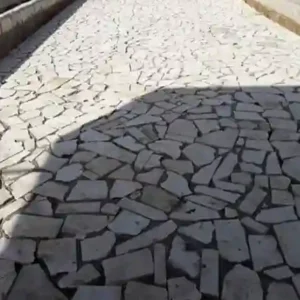
The distinction between white marble vs Calacatta comes down to geology before it comes down to aesthetics — and that detail changes how you specify, install, and maintain each material over its service life. Both stones are metamorphic calcium carbonates, but their mineral composition, veining density, and physical performance profiles diverge in ways that genuinely matter on a project. Understanding where those differences show up in real installations helps you make a specification decision you won’t revisit in five years.
What Separates White Marble from Calacatta
White marble is a broad classification covering dozens of quarried varieties — Carrara, Thassos, Bianco Sivec, and others — that share a pale base and relatively fine crystalline structure. Calacatta is a specific subset quarried from a narrow zone in the Apuan Alps, distinguished by a bright white ground and bold, widely spaced veining in gold, grey, or taupe tones. The veining pattern alone tells you something structural: Calacatta’s dramatic movement forms during high-pressure metamorphism and reflects a denser, slightly less porous matrix than most standard white marble varieties.
Absorption rates are where the performance gap shows up first. Most general white marble varieties test between 0.15% and 0.40% water absorption by weight under ASTM C503 criteria, while authenticated Calacatta typically sits at the lower end of that range or just below it. That difference is meaningful when you’re specifying for kitchens, bathrooms, or any surface with regular liquid exposure — it affects both sealing frequency and stain risk.

Veining Character and Its Design Impact
Design intent should drive the veining conversation more than anything else. Standard white marble — Carrara being the most familiar — carries fine, feathery grey veining distributed relatively evenly across the surface. It reads as quiet and textural, well-suited to environments where the stone is one design element among many rather than the focal statement.
Calacatta reads differently in a space. The veining is bold, irregular, and widely spaced, which means large format slabs produce dramatic, book-matched compositions that draw the eye immediately. That visual weight is an asset in a feature wall, a kitchen island waterfall edge, or a primary bathroom surround. It becomes a liability in a smaller space where the stone needs to recede rather than dominate.
- Carrara and similar white marble varieties suit transitional and neutral interiors where consistent patterning is preferred
- Calacatta’s bold veining creates high-contrast focal points — effective in large-format, high-ceiling applications
- Book-matching Calacatta slabs requires careful slab selection at the warehouse to achieve the symmetry the pattern demands
- White marble with fine veining is more forgiving in irregular or mixed-stone installations
Hardness and Surface Durability
Both materials register between 3 and 4 on the Mohs hardness scale — softer than granite, harder than most travertine. That puts them in the same vulnerability category for scratch resistance, but the specific grain structure of each affects how surface wear actually presents. Calacatta’s tighter crystalline matrix tends to hold a polished finish slightly longer under equivalent traffic conditions, though the difference is measured in years rather than decades when maintenance protocols are equal.
According to ASTM C503 marble dimension stone specifications, exterior marble must meet minimum flexural strength thresholds that standard white marble varieties and Calacatta both exceed when sourced from reputable quarries — but quarry-to-quarry variation is real and worth verifying through documentation before finalizing your specification. At Citadel Stone, we request quarry test certificates on every shipment to confirm absorption and flexural values before material leaves the warehouse.
- Polished Calacatta shows etching from acidic liquids more visibly than honed finishes of the same material
- Honed white marble conceals light scratching better than polished surfaces but requires more frequent sealing
- Both materials require felt pads under decorative objects and cutting boards as a baseline maintenance practice
- Compressive strength for both stone types typically exceeds 7,500 PSI — adequate for residential and light commercial floor loads
Installation Base and Subgrade Considerations
Here’s where marble installations fail more often than the material itself warrants: inadequate subgrade preparation. Both white marble and Calacatta are relatively rigid, low-flex materials with limited tolerance for substrate deflection. Any movement in the base — from settlement, soil shift, or moisture cycling — transfers directly to the stone surface as cracking or joint failure.
Expansive clay soils present the most consistent challenge in slab installations. Clay soils can exert uplift pressure of 5,000 PSF or more during moisture cycling, and that movement will telegraph through even a well-bonded mortar bed into the stone above. The specification response is a deeper, more stable subbase — typically 6 to 8 inches of compacted crushed aggregate over a geotextile separation layer — rather than simply increasing mortar bed thickness. Sandy or gravelly soils present the opposite problem: they drain well but provide inconsistent bearing, meaning isolated soft spots create differential settlement that cracks large-format marble slabs along their longest dimension.
- Caliche and hardpan soils can create deceptively stable-looking subgrades that fracture unevenly under thermal cycling
- Slab-on-grade installations require verification of compaction to 95% Standard Proctor before setting bed application
- Large-format Calacatta slabs (24×48 and larger) are especially sensitive to any point differential in substrate bearing capacity
- Interior installations over wood subfloors require deflection limits of L/360 or better — verify with a structural assessment before specifying either material
The subgrade conversation is equally relevant for exterior white marble applications. Rocky or caliche-heavy substrates often require mechanical breaking and recompaction rather than simple aggregate infill — skipping that step creates voids that allow water infiltration, which accelerates spalling in freeze-thaw regions.
Sealing and Maintenance Protocols
Your sealing schedule is the single biggest differentiator between a marble installation that ages gracefully and one that stains irreversibly in its first year. Both white marble and Calacatta benefit from a penetrating impregnating sealer applied before grouting and refreshed on a scheduled cycle — but the interval varies with finish type and use context.
Polished surfaces of either material create a denser, more reflective face that resists initial liquid penetration better than honed or brushed finishes. Counter-intuitively, polished marble can be harder to reseal effectively because the closed surface limits penetrant absorption. Honed white marble, which has a more open surface texture, accepts sealers more readily and provides better long-term protection when maintained properly. The Natural Stone Institute marble grades and technical specifications provide useful baseline guidance on finish-specific maintenance requirements.
- Polished Calacatta: reseal every 12 to 18 months in kitchen and bathroom applications
- Honed white marble: reseal every 8 to 12 months in the same use context
- Use a neutral-pH cleaner daily — acidic or alkaline cleaners etch both marble types regardless of sealing status
- Perform a water bead test annually: if water absorbs within 4 minutes rather than beading, reseal immediately
Price, Availability, and Lead Times
The price gap between white marble vs Calacatta is significant and worth planning around at the specification stage. Authenticated Calacatta from certified Apuan quarries commands a substantial premium — typically 40% to 80% above comparable Carrara or standard white marble grades — because the quarry zone is geographically limited and demand consistently outpaces supply. That premium is justified for feature applications, but it doesn’t make sense across every surface in a multi-room project.
You can access our white and calacatta marble inventory directly through Citadel Stone, where our team can confirm current warehouse stock and realistic truck delivery timelines for your project location. Lead times from the warehouse for standard white marble run 5 to 10 business days for most projects. Calacatta availability is more variable — warehouse stock moves quickly on this material, and waiting for a specific lot to arrive from overseas can add 4 to 6 weeks to your schedule if the current inventory doesn’t match your slab size and veining requirements.
- Specify more material than your net area requires — 15% overage is the minimum for any book-matched Calacatta installation
- Confirm lot consistency before ordering: slabs from different extraction dates vary in background tone and veining intensity
- White marble in standard sizes (18×18, 12×24) typically carries deeper warehouse stock than large-format Calacatta
- Factor truck delivery access into your timeline — large slab shipments require a flat, stable unloading area that some project sites cannot accommodate without advance coordination
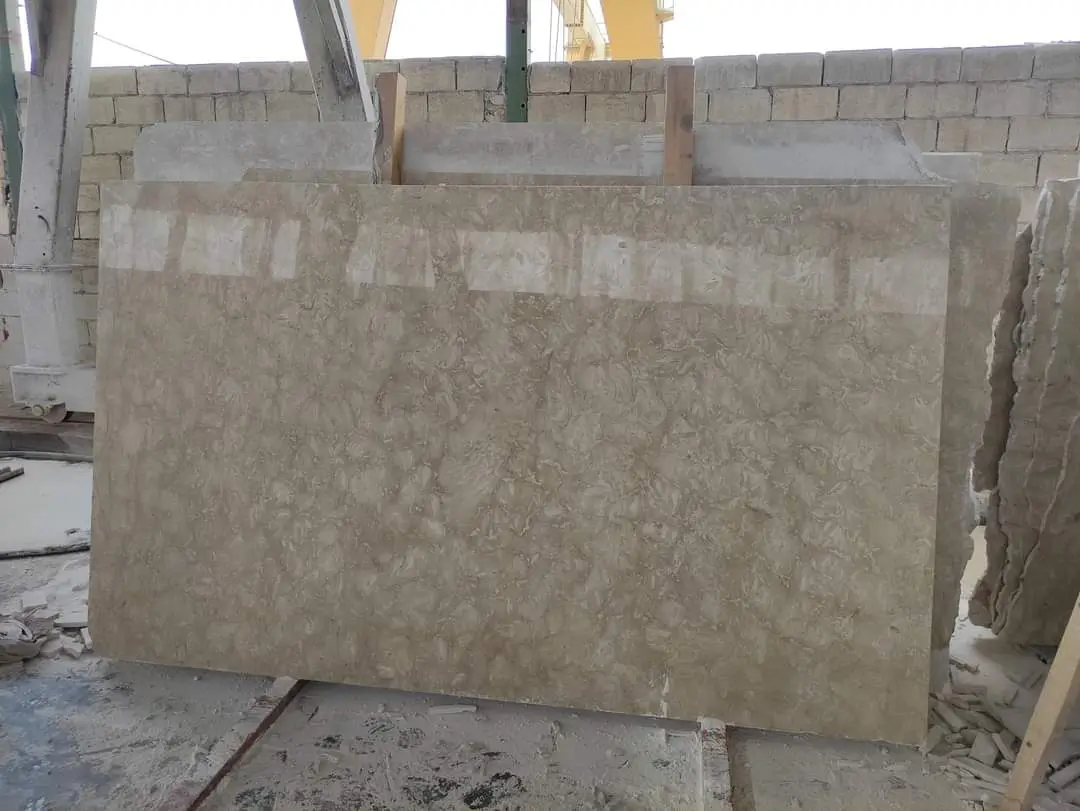
Application Matching: Which Stone for Which Use
The most practical way to resolve the white marble vs Calacatta question is to match stone character to application demands. Neither material is universally superior — each performs better in specific contexts, and choosing the wrong one creates maintenance headaches regardless of how well the installation is executed.
Calacatta earns its premium in applications where the stone is the visual centerpiece and surface area is controlled: kitchen islands, feature walls, fireplace surrounds, and primary vanity tops. Its bold veining rewards large, uninterrupted surfaces and suffers visually when cut into small tiles where the pattern is fragmented. White marble in Carrara or similar grades works better across large continuous floor fields, shower surrounds with complex geometry, and projects where budget constraints require cost averaging across multiple surfaces. According to Britannica’s coverage of marble geological formation, the metamorphic pressure and mineral contamination during formation directly determine the veining density and crystal structure — which explains why the two stone types perform differently even though they share a calcium carbonate base.
- Calacatta: kitchen islands, fireplace surrounds, feature walls, primary bathroom vanities
- White marble (Carrara type): floor fields, shower walls, secondary bathrooms, stair treads
- Both: countertop applications with proper sealing — though Calacatta is more forgiving of minor maintenance lapses due to its lower absorption rate
- Neither: high-acid or heavy commercial kitchen environments where etching cannot be managed through maintenance protocols
White Marble vs Calacatta: Spec Wrap-Up
The white marble vs Calacatta decision rarely comes down to a single factor — it’s a hierarchy of considerations that starts with your design intent, works through the physical performance requirements of the application, and ends with the practical realities of budget and lead time. Calacatta is the right specification when visual drama and a lower-absorption matrix justify the cost premium. Standard white marble earns its place across larger surface areas, complex geometries, and projects where consistent patterning matters more than bold movement.
Subgrade stability affects both materials equally, and it’s the installation variable most often underestimated at the specification stage. Whether you’re working over expansive clay, sandy fill, or caliche, the base preparation requirements for large-format marble are non-negotiable — get that layer right and both stone types will perform for decades. For related maintenance challenges once your stone is in place, the guidance on resolving marble staining issues covers the most common field problems and how to address them before they become permanent. Stone for nationwide projects, Citadel Stone matches white marble and calacatta slabs to suit brighter or bolder interiors.
Related reading: how to install marble threshold · How to Care for Red Marble Surfaces · Understanding Marble Texture for Interior Design.