In September 2017 the Virgin Islands took something no other market in this library experienced: Irma crossed St. Thomas and St. John at category five on the sixth, and Maria struck St. Croix a fortnight later. Two catastrophic storms, three islands, one season — and a rebuild that has run for years since, rewriting how the territory builds. Here is the rebuild decade’s guide.
What the storms revealed
The damage pattern taught the same lessons the region keeps learning: roofs failed at their fixings before their materials, unengineered additions took down engineered cores, anything loose in a yard became a projectile, and the buildings that stood best were the ones with mass low, modest openings and honest connections — which is to say the historic masonry the Danish towns are built from. The old walls came through with roof and opening damage rather than structural loss, and that observation has quietly shaped a decade of specification since.
Rebuilding to a harder standard
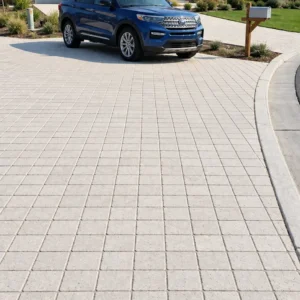
The reconstruction that followed hardened the stock: roofs re-engineered and properly strapped, openings protected as a matter of course, envelope detailing taken seriously, and the resilience curriculum this library documented in Dominica running in an American regulatory accent. Ground works joined the standard rather than trailing it — mortar-set terraces that give wind nothing to lift, engineered and capped walls, drainage sized for the rain inside the wind, and the debris audit as a design requirement rather than a seasonal chore.
- Photographic records of every assembly before it is covered
- Fixing types and spacings written down, not left to the crew
- Material sources logged so a later repair can match
- A single file handed to the owner rather than scattered across trades
The recovery’s long tail
Two storms in a fortnight overwhelmed everything at once: materials, crews, accommodation for those crews, insurance adjusters, and the shipping capacity to bring it all in. The practical lessons were logistical and are worth keeping: consolidated consignments beat trickled orders when capacity is contested, materials that survive open staging beat those needing covered storage that does not exist, and documented properties settled claims in weeks while undocumented ones argued for seasons. Stone came through that period well for unglamorous reasons — it arrives dense, stacks outdoors, waits without spoiling, and is what the rebuilt roof goes back on top of.
Insurance, evidence and the file
The territory’s insurance market tightened after 2017, and the properties that hold good terms are the ones that can prove their mitigation: engineered roof documentation, opening-protection specifications, photographed condition baselines, maintenance records and the batch documentation that makes repairs routine. The evidence-culture instinct Bermuda practises formally applies here directly — and in a market where cover is a genuine constraint on transactions, the file is not administration, it is value.
- Specifications written to survive an adjuster reading them
- Restraint details drawn rather than described in general terms
- Receipts and product data retained with the building file
- Post-storm condition surveys carried out before any clearing begins
What owners actually do now
Territory households run a rehearsed season: shutters serviced before June rather than during a watch, furniture with a designated stow location, drains cleared, the yard audited for anything the wind can claim, generator and cistern checked, the independence systems exercised so the first real test is not the first operation. Property managers formalize the same list for absent owners. None of it is dramatic; all of it is the difference between a hard week and a ruinous one, and the territory learned the difference the expensive way.
Specifying to the standard
The rebuild-decade kit is this library’s law at its most serious: engineered structure and fixings, debris-free landscapes, storm-scale drainage, ground-set stone that needs no boarding, and documentation the insurer will actually read — supplied through the territory supply page with batch records the property keeps for its lifetime. The islands took two category-five storms in fourteen days and rebuilt to a standard designed for the next one. That standard is now simply how the territory builds.
The workforce question: who rebuilds, and where they sleep
Two category-five storms in a fortnight created demand for construction labor that no small territory could meet from its own population, and the response shaped the recovery as much as any material decision. Crews arrived from the mainland and around the region; local trades worked at capacity for years; and the constraint that governed everything was not skill or money but accommodation — because the same storms that created the work had damaged the housing the workers needed.
The lesson generalises to every island in this library and is worth stating plainly: post-disaster reconstruction capacity is limited by beds as much as by budgets. Projects that solved accommodation early — the crew-housing craft this library documented across the channel — got crews and kept them; projects that assumed workers would find their own way waited. The same logic applies to ordinary times in a milder form: the territory’s construction sector is finite, good crews are booked far ahead, and the client who treats scheduling as a negotiation rather than a queue is usually the client still waiting.
For owners planning any significant work, the practical translations are three. Book early and hold the slot, because the good contractor’s calendar is the real critical path. Specify materials that arrive complete and wait patiently, since a crew idled by a missing component is a crew that moves to the next job. And treat the trades relationship as long-term rather than transactional — on islands this size, the builder who did your terrace is the one you will want on the phone the week after the next storm, and reputation travels both directions faster than anywhere on the mainland.
Two declarations, thirteen days apart
The scale is easier to grasp from the federal record than from memory. FEMA declared a major disaster for Hurricane Irma in the territory on September 7, 2017, for an incident period of September 5 to 7, with roughly 40.8 million dollars approved in individual assistance and 68.9 million obligated in public assistance. That was the first storm. The islands were still without power in most places when the second one arrived.
- Assume back-to-back events rather than a single design storm
- Plan repairs that can start before utilities are fully restored
- Keep materials and fixings on island, because freight stops first
- Design so partial reinstatement is possible while waiting on the rest
The scale of what followed
Maria was declared on September 20, 2017 for an incident period of September 16 to 22, with about 44.1 million dollars approved in individual assistance, more than 2.9 billion obligated in public assistance and a further 65.3 million in hazard mitigation funding. The gap between those public assistance figures tells the story: the second storm did the structural damage, and the decade since has been spent putting the territory back.
- Treat mitigation funding as part of the design brief, not an afterthought
- Prefer assemblies that qualify for hardening rather than replacement in kind
- Document upgrades, since funded work is audited work
- Sequence so the most exposed elements are hardened first
What the decade taught about detailing
The lessons were consistent across every island. Wind rarely lifts a well-bedded field; it lifts the coping that was only bedded, the loose slab at an edge, or the item stored on an open terrace. Failure then travels, and the repair bill is never limited to the piece that moved first.
- Mechanical restraint on every coping, nosing and edge unit
- Continuous edge restraint so one lost unit cannot unzip a field
- Non-ferrous fixings sized for uplift rather than for weight
- A clear-the-deck routine written into the property calendar
Choosing rebuild decade stone for whatever comes next
A rebuild is only finished when the next storm passes over it without leaving a list. Dense units, restrained edges, documented fixings and spares on island are what turn that from an aspiration into a specification. Our US Virgin Islands stone supply guide sets out the formats, finishes and lead times that suit these islands. Thirteen days taught this territory more about building than the thirty years before them.