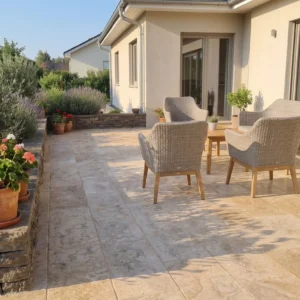
Curaçao builds with a double passport: Caribbean climate, Dutch institutional DNA — the kingdom connection running through building culture as codes, inspection habits, professional formation and a client base that grew up expecting European process. The island’s construction market speaks both languages, and the projects that satisfy both — tropical performance, Dutch documentation — set the local standard. Here is the double-passport guide.
The expectation inheritance
The market’s European wing — Dutch second-home buyers, kingdom-linked institutions, insurers and lenders with Netherlands process instincts — arrives assuming the home country’s rhythm: drawings that govern, tolerances that get measured, variations documented, handover files complete. The villa-park ecosystem institutionalized the expectation; the wider market inherited it. Contractors fluent in the paperwork win a structural advantage: trust, here, is a document trail.
Tropical physics, European tolerances
The double standard meets hardest in the details: thermal movement at Caribbean swing accommodated within European flatness expectations, slip ratings specified to standards written for other weather then proven under tropical rain, salt exposure the Netherlands never modeled answered by the marine-grade disciplines this cluster teaches, and drainage designed for cloudburst intensity on island-rain arithmetic. The resolution is always the same: European process documenting tropical specification — never one pretending to be the other.
- Write the specification to a named standard rather than to a description.
- Include test values in the tender so bidders price the same material.
- Require certificates at delivery rather than accepting them retrospectively.
- Keep one document set so designer, contractor and inspector all read the same thing.
Inspection culture as ally
The island’s permitting and inspection regime runs more procedural than most of the cluster, and experienced teams work it as an asset: hold points scheduled into programs rather than resented, substrate and waterproofing inspections documented before stone conceals them, and the developer-handover disciplines aligned to inspection milestones. The file that satisfies the inspector satisfies the future buyer’s lawyer; the paperwork is resale value in a drawer.
Procurement the Dutch way
The market’s procurement instincts favor specification over improvisation: materials selected from documented ranges, samples approved and retained as the reference-panel practice prescribes, batch numbers recorded against locations, and warranties that mean something because the supply chain behind them documents. Import realities bend but don’t break the instinct — the island logistics chapter adds lead-time honesty to the European calendar, and the teams that reconcile both deliver on the date the contract names.
Professional formation, island practice
The island’s architects and engineers train substantially in the Netherlands and return bilingual — European method, island knowledge — and the collaboration culture shows it: coordinated drawings that reach site matching, structural counsel on the hillside disciplines stamped and archived, and the design-build conversation running on shared professional grammar. The cluster’s wider lesson travels from here: process is not bureaucracy when it protects the build; it is memory the project keeps about itself.
- Expect European detailing conventions applied to Caribbean exposure conditions.
- Translate temperate assumptions rather than importing them unchanged.
- Check that any imported detail accounts for salt and constant wind.
- Use local experience to test a specification drawn up abroad before it is issued.
The double-passport dividend
Projects built to both passports collect twice: tropical durability from the cluster’s material law — dense stone, marine fixings, honest drainage — and transaction-grade documentation that prices into every sale, refinance and insurance renewal. The island supply guide serves the culture natively: specification-sheet materials, retained samples, batch records and delivery dates kept — the paperwork Dutch, the performance Caribbean, and the standard exactly what the island’s double inheritance built it to be.
The handover file: what closing day should contain
The double-passport build’s final deliverable is a file, and its contents are worth specifying as precisely as any terrace. The complete handover binder runs: as-built drawings that match the building rather than the intention; the structural and inspection certificates in sequence; every material’s documentation — for the stone package, datasheets, batch numbers mapped to locations, finish samples physically retained, and the spares inventory with its storage location; warranties with their registration proof; the services’ operating manuals and valve maps; the maintenance calendar priced at island rates; and the photographic record — construction stages, concealed works before covering, and the completion baseline shot from repeatable positions. Assembled, it is a few kilograms of paper and a drive folder; omitted, it is a decade of guesswork purchased at closing.
The file’s value compounds through every later transaction. Insurance renewals price documented mitigation; the resale market pays for provenance; repairs proceed from batch records instead of matching lotteries; and disputes — the rare times they come — resolve from evidence. Owners should refuse to treat assembly as optional courtesy: the contract names the binder as a deliverable, retention releases against its completeness, and the practical test is a stranger’s — could a new caretaker, handed the file cold, run the house within a week? Contractors fluent in the culture deliver it unprompted; the market’s structural advantage belongs to them for exactly this reason.
The island’s lesson travels well beyond it: buildings are temporary custodians of their own information, and paper outlives memory everywhere. On Curaçao the culture simply says it aloud — the house is finished when its file is — and the cluster’s wisest owners have started saying it in every jurisdiction they build.
Metric meets imperial: units discipline on a mixed market
The double-passport island runs a double measurement culture — European metric in its drawings and codes, North American imperial arriving with suppliers, appliances and half the professional literature — and units discipline is a small craft with expensive failure modes. The working rules are simple: one system governs each drawing set and says so on every sheet; conversions happen once, at documentation stage, never ad hoc on site; stone schedules state both where suppliers span markets — the 60 x 90 centimeter slab and its 24 x 36 inch alias reconciled in writing — and critical dimensions carry their tolerance in the governing system alone. The classic failures justify the pedantry: the pool coping ordered to a converted-and-rounded radius that missed by a centimeter’s compound error, the threshold detailed twice in two systems that disagreed at the junction. Procurement closes the loop: quotes confirmed in the specification’s units, packing lists checked against the same, and the site’s tape measures — both kinds — calibrated by the one document that rules. Bilingual building is the island’s fluency; bilingual measuring, done once and written down, is its quiet grammar.
What the ordinance actually requires
Construction on Curacao is governed by a written framework, not by custom. Guidance summarized in this overview of Curacao construction regulations identifies the Bouw- en woningverordening Curacao as the principal instrument and is explicit that no construction works may be carried out without a building permit from the government of Curacao. Applications must be submitted in writing, and the government must decide as soon as possible and no later than a month after an application has been filed.
- Assume a permit is required, because the ordinance frames it as universal rather than conditional.
- Prepare a full building plan with dimensions, heights, wall thickness and structural calculations.
- Include the site drawing, cadastral extract and title or lease deed with the application.
- Expect a written refusal with reasons if the plan does not comply, and a right of appeal.
- Consult the fire department on prevention, which the process requires rather than suggests.
How a stone specification passes a plan check
Plan checkers assess documents, not intentions, and a specification written in adjectives is a specification that invites questions. The Natural Stone Institute testing program provides the vocabulary that removes ambiguity: ASTM C97 for absorption and bulk density, C170 for compressive strength, C880 for flexural strength, C1353 for abrasion resistance and ANSI A326.3 for slip. A specification quoting those returns a decision rather than a query.
- Quote the standard and the required value rather than naming a look.
- Attach test certificates for the actual batch, not for the quarry in general.
- Use slip data to demonstrate compliance in wet areas rather than asserting it.
- State the setting method and bedding depth explicitly, since checkers read for buildability.
Where European habits meet Caribbean conditions
The technical culture here is Dutch and the climate is not. Detailing that performs well in a temperate maritime setting can behave differently under constant salt-laden easterlies, intense sun and rain that arrives in short heavy bursts. The best work on the island keeps the rigor and adapts the assumptions rather than importing both unchanged.
- Keep the documentation discipline, which is the genuine strength of the local tradition.
- Adjust exposure assumptions upward for salt, which reaches further here than in Europe.
- Size drainage for a short intense downpour rather than for steady rainfall.
- Allow for thermal movement well beyond a temperate range in any rigid assembly.
Dutch building standards applied honestly on Curacao
The framework here is genuinely rigorous, and that is an advantage rather than an obstacle. Write to named standards with real values, submit a complete application, expect a decision within the month, and adapt temperate detailing to a salt-heavy tropical exposure rather than assuming it transfers. Our Curacao stone supply guide sets out the formats, finishes and lead times that suit this island. The paperwork culture that frustrates people on day one is the same culture that makes a well built house here provable twenty years later.