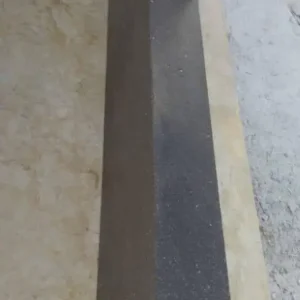
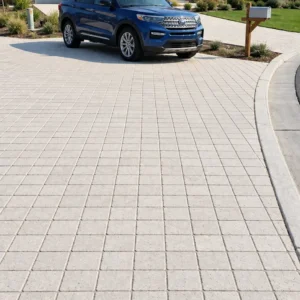
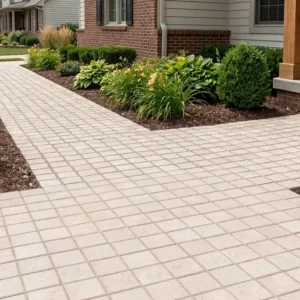
Why Granite Outperforms Other Driveway Materials
A white granite driveway delivers compressive strength figures that routinely exceed 19,000 PSI — well above the performance threshold for residential vehicle loads and even light commercial traffic. Granite’s interlocking crystalline structure means you’re not dealing with the surface spalling, pitting, or color fade that plague concrete and asphalt over time. That performance stability is what makes granite the go-to specification for high-value residential projects.
What most homeowners and specifiers don’t fully appreciate is how granite’s density directly affects thermal performance. The surface of a white granite driveway absorbs significantly less radiant heat than dark-toned alternatives, and that lower thermal mass translates to cooler surface temperatures on bright days. According to Natural Stone Institute granite durability and application specifications, granite’s low porosity — typically under 0.4% water absorption — also makes it one of the most frost-resistant natural stones available for exterior use.
The reflective quality of white and light-toned granite isn’t just aesthetic — it’s a practical thermal management decision that can influence the microclimate around your home’s foundation and landscaping. That said, selecting the right finish matters as much as selecting the material itself. A honed finish reads softer and more matte, while a flamed or bush-hammered surface delivers the texture you need for safe traction without sacrificing the pale, luminous look that makes white granite driveways so visually compelling.
White Granite Driveway Design Ideas Worth Considering
The appeal of white granite driveways is rooted in how well the material adapts to different architectural styles. Modern minimalist homes benefit from large-format slab cuts — think 24×24 or 24×48 inch pieces laid in a running bond or straight stack — which emphasize clean lines and uninterrupted surface planes. Traditional and colonial-style homes, on the other hand, pair beautifully with smaller modular cuts or cobble-style granite setts that reference heritage paving patterns without looking dated.
Here are design directions worth exploring for your project:
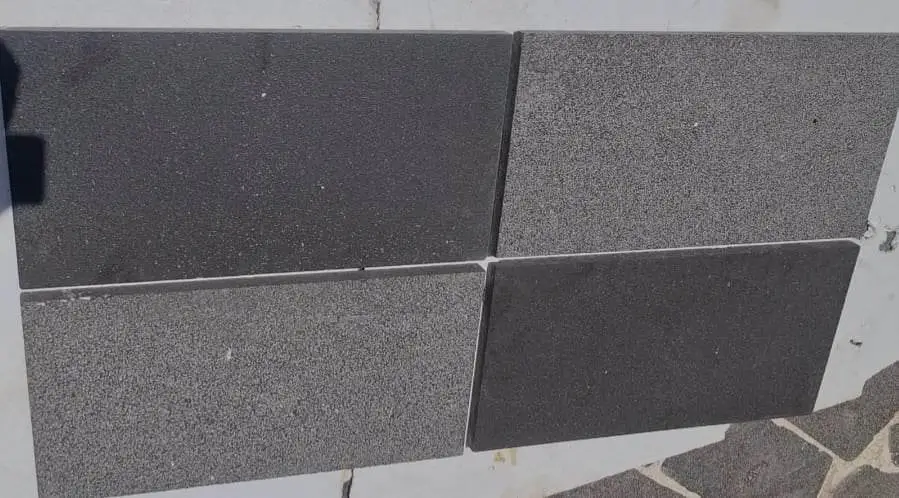
- Bordered driveway layouts using contrasting dark granite setts as edge definition — the tonal contrast between white field stone and charcoal borders creates a high-contrast, tailored appearance
- Herringbone patterns in mid-size granite pavers, which distribute load more evenly across the surface and add visual complexity without requiring custom fabrication
- Mixed-finish installations combining a flamed white granite field with honed granite border strips for a subtle textural shift that frames the driveway without color change
- Fan or radial patterns at the entrance apron, transitioning to straight coursework down the main run — a detail that signals intentional design rather than utilitarian paving
- Recessed linear drainage channels running parallel to the driveway edges, faced with matching white granite to integrate drainage into the overall design
- Flush-mounted landscape lighting strips along the driveway perimeter, with granite pavers cut to accommodate the fixture housings cleanly
Your choice of joint width also carries design weight. Tight joints of 2–3mm give the surface a monolithic, refined appearance, while wider joints of 8–12mm — filled with contrasting polymeric sand — introduce a grid pattern that references traditional stone paving. Neither is wrong, but the decision should be made before ordering, because it affects how you specify the cut tolerances for your granite pieces.
Choosing the Right Surface Finish for Your Driveway
Surface finish is the decision that determines both the safety performance and the long-term visual character of your white granite driveway. You’ve got four primary options for exterior driveway use, and each carries different trade-offs between aesthetics, traction, and maintenance.
- Flamed finish: the industry-standard choice for driveways — thermal treatment creates a roughened, textured surface with a coefficient of friction typically exceeding 0.6 wet, well above the 0.42 threshold recommended for exterior paving; color appears slightly lighter and more matte after flaming
- Bush-hammered finish: mechanical texturing that creates a pocked surface similar to flamed but with a more uniform, geometric texture; coarse and durable, though the texture traps debris slightly more than flamed surfaces
- Honed finish: smooth, matte appearance that reads clean and contemporary; acceptable for low-slope driveways with good drainage design, but wet-surface traction drops significantly on steeper grades — use with caution in freeze-thaw regions
- Sandblasted finish: fine-textured surface with moderate slip resistance; aesthetically softer than flamed or bush-hammered; better suited to pedestrian zones adjacent to the driveway than the driveway surface itself
The finish you select also affects sealing decisions. Flamed and bush-hammered surfaces benefit from a penetrating impregnator sealer rather than a topical coat — topical sealers fill the texture and reduce the traction properties you paid for with the finish specification. A penetrating sealer applied every three to four years is the right maintenance protocol for a white granite driveway in most climates.
Base Preparation, Load Requirements, and Code Compliance
Design ideas only translate into lasting installations when the base preparation matches what your soil and load conditions actually demand. This is where building codes become directly relevant to your specification — and where many residential projects fall short.
Most jurisdictions require driveway paving bases to meet minimum compaction standards and frost-line depth requirements for the region. In areas with frost-susceptible soils, frost line depths can range from 12 inches in moderate zones to 48 inches or more in severe freeze-thaw regions. Your base aggregate must extend to or below the frost line to prevent heave cycles from displacing your granite surface over time. The ASTM compressive strength standards for driveway paving stone provide the material-side framework, but local building departments govern base depth, drainage requirements, and edge restraint specifications — check those before finalizing your design.
For a white granite driveway carrying standard passenger vehicles, here’s what a properly engineered base looks like:
- Subgrade preparation to 95% Proctor compaction minimum — any soft spots should be excavated and replaced with compacted fill, not just covered over
- Compacted aggregate base: 6–8 inches of crushed stone for standard residential loads, increasing to 10–12 inches where SUVs, delivery trucks, or occasional heavier vehicle access is anticipated
- Bedding layer of 1 inch coarse sand or granite dust, screeded to ±3mm tolerance — the precision of this layer determines how level and stable your granite surface reads
- Granite pavers at 1.5–2 inches nominal thickness for pedestrian and standard vehicle loads; 2.5–3 inches where heavier vehicle loads apply
- Edge restraints set to grade before pavers are laid — concrete haunch or steel restraint channel, depending on the edge detail you’ve specified
Seismic zones introduce additional considerations. In higher seismic design categories, local codes may require that driveway paving adjacent to the structure be designed to accommodate differential settlement at the foundation-paving interface. This typically means a 50mm expansion gap between the driveway granite and any foundation element, filled with a compressible backer and flexible sealant rather than solid mortar.
Project Planning: Ordering, Lead Times, and Delivery
Your ordering timeline for a white granite driveway project needs to account for material availability, cut-to-size fabrication lead times, and truck delivery scheduling — all of which interact in ways that can delay a project if you don’t sequence them correctly.
Standard modular granite pavers in common sizes (12×12, 12×24, 24×24) are typically available to order, with lead times quoted at the time of order. Custom sizes, radial cuts for circular patterns, or matched border setts cut to a specific dimension require fabrication time — typically three to six weeks depending on the complexity of the specification. Build that window into your project schedule and don’t commit to an installation start date before confirming material availability and fabrication capacity.
At Citadel Stone, we recommend calculating your square footage requirement with a 7–10% overage allowance for cuts, breakage, and pattern adjustments. For complex driveway layouts with radial aprons or intricate border patterns, push that overage to 12–15%. Running short mid-project and waiting for a second truck delivery creates both timeline delays and a real risk of batch color variation — and with white granite, even subtle batch shifts are visible in the finished surface.
Coordinate your truck delivery with site access constraints early. Large-format granite pieces on a standard flatbed require a clear, level unloading zone within reasonable distance of the installation area. If your site has restricted access — narrow approaches, overhead obstacles, or soft ground adjacent to the installation zone — discuss delivery logistics with your supplier before order confirmation. Verify that the delivery truck can reach your site without requiring specialized equipment, which adds cost and lead time.
How White Granite Pavers Perform Over Time
The long-term performance of white granite driveway pavers depends on three factors that are easy to control at the specification stage but expensive to correct after installation: base stability, joint maintenance, and sealing protocol. Get these right and you’re looking at a 30–40 year service life with normal residential use. Neglect any one of them and you’ll see problems within the first decade.
Joint sand is the most commonly overlooked maintenance variable. Polymeric sand needs to be maintained at 90–95% joint fill capacity. As it degrades or washes out over years of weathering, the lateral confinement between pavers diminishes — and without lateral confinement, individual pieces start to shift under vehicle load. Inspect joint fill annually and top-dress as needed. This is a 30-minute maintenance task that prevents a costly re-leveling job.
For project planning that extends beyond the driveway itself, ASLA driveway paving material guidance and environmental performance provides useful context on how permeable and semi-permeable paving systems interact with stormwater management — relevant if your local municipality has drainage requirements that affect driveway design. Incorporating permeable joint fill or a modified base design into your white granite driveway can satisfy these requirements while maintaining the clean visual character granite delivers.
You can browse our light granite driveway stone to see the specific product grades and finish options available to order.

Specification Mistakes That Compromise White Granite Driveways
Years of reviewing failed driveway installations show the same errors appearing repeatedly — and nearly all of them were made at the specification or planning stage, not during installation. Here’s what to avoid:
- Specifying honed finish on a sloped driveway without accounting for wet-weather traction — the aesthetic is compelling but the safety liability is real; use flamed or bush-hammered on any grade exceeding 3%
- Underestimating the base depth for heavy vehicles — a residential driveway that occasionally receives delivery trucks or moving vans needs a base engineered for those loads, not just the family sedan
- Skipping edge restraints or using plastic landscape edging as a substitute — concrete haunching or proper steel restraint is non-negotiable for driveways; plastic edging fails under vehicle-induced lateral force within a few seasons
- Ordering without confirming batch consistency — white granite shows color variation between quarry batches, and mixing batches on the same driveway surface produces visible tonal inconsistency; always confirm your full quantity from a single production batch
- Applying topical sealers over a flamed finish — this fills the texture, creates a slippery film in wet conditions, and eventually peels; use only penetrating impregnator sealers on textured granite surfaces
- Neglecting expansion joints at building interfaces — granite expands and contracts with temperature change; without relief joints at the foundation or garage slab edge, you’ll see cracking within a few thermal cycles
USGS dimension stone data confirms that granite remains one of the most dimensionally stable natural stones in exterior conditions — but dimensional stability is a material property, not an installation guarantee. Your base preparation, edge detailing, and joint management determine whether that inherent stability translates to long-term surface performance.
Getting Your White Granite Driveway Specification Right
A white granite driveway is one of the highest-return investments you can make in a property’s exterior — but the return depends entirely on decisions made before the first paver is set. Material selection, finish specification, base engineering to local code requirements, and batch-consistent ordering are the four pillars that separate a 35-year installation from one that needs intervention in year eight. The design ideas explored here — from bordered layouts and herringbone patterns to mixed-finish details and integrated drainage — all depend on that structural foundation being right.
As you finalize your project scope, consider how related stone surfaces interact with your driveway design. Granite walkways and sidewalks adjacent to the driveway benefit from the same specification discipline — maintaining those surfaces consistently is what keeps the full hardscape performing as a unified system. Granite sidewalk care and upkeep covers the maintenance protocols that keep those surfaces performing consistently alongside your driveway over time. Plan your full hardscape scope as an integrated system — material choices, finishes, and maintenance schedules aligned across all exterior stone surfaces — and the result is a cohesive property exterior that holds its character for decades. Sourced from our selected quarries in the Middle East, this white granite driveway stone offers consistent color batch to batch.
Related reading: decomposed granite vs solid granite · black granite stone outdoor use · how to choose landscaping granite.