Choosing granite installers is one of those decisions that looks straightforward until you’re standing in the middle of a botched job, watching a countertop with a hairline crack running through the sink cutout. The difference between a flawless installation and an expensive callback almost never comes down to the granite itself — it comes down to the hands, the tools, and the process behind the fit. Most project owners focus entirely on material selection, then hand off installation to whoever submits the lowest number. That sequencing is backwards, and this guide walks you through how experienced project managers actually approach choosing granite installers.
What Separates Skilled Granite Fitters from the Rest
A granite fitter operating at a professional level brings more than cutting equipment to the job — they bring a calibrated eye for substrate variation that no machine replaces. Your countertop or paving surface will only perform as well as the installer’s ability to read and compensate for the inconsistencies underneath it. Cabinet tops bow, floor slabs settle unevenly, and framing shifts — none of that shows up in a spec sheet, and all of it affects how granite sits.
The installers worth hiring demonstrate a specific workflow before they ever touch the stone. They template first, measure twice, and flag discrepancies in writing. Verbal adjustments on the day of installation are a warning sign — skilled granite installers document everything because they understand that a 2mm deviation at the template stage becomes a 6mm problem at the seam.
- Check whether the installer uses digital templating systems or hand templates — digital reduces cumulative measurement error significantly
- Ask how they handle substrate irregularities discovered after templating is complete
- Confirm the lead fabricator, not a junior crew member, performs the critical seam placements
- Verify that the installation team has direct experience with the specific stone thickness you’re specifying — 2cm and 3cm granite require different support strategies
- Request before-and-after photos from recent comparable projects, not a generic portfolio of mixed stone work
Verifying Credentials and Track Record
Licensing requirements for stone installers vary considerably depending on where a project is located, but verifiable credentials still give you a useful baseline for evaluating competence. State contractor licensing, liability insurance with a minimum of $1 million general liability coverage, and workers’ compensation documentation are the floor — not the ceiling. Any installer who hesitates to provide certificates of insurance before signing a contract is telling you something important about how they operate.
Beyond the paperwork, reference calls matter more than online reviews. Ask for three completed projects in the past 18 months that involved similar scope — same material type, comparable square footage, and similar installation environment. Call those references and ask specific questions: Did the installer arrive with the correct slab dimensions? Were seam placements discussed in advance? Was the job site cleaned properly at completion?
According to NSI granite application standards, granite used in structural and surface applications should meet specific hardness and absorption criteria — and a qualified granite fitter should be able to speak to those parameters when you ask. If the person you’re evaluating can’t discuss granite’s Mohs hardness or why absorption rates matter for outdoor applications, they may know how to cut and place stone, but they don’t fully understand the material.
- Request certificates of insurance before any site visit, not after
- Confirm the license covers the specific trade category — general contractor licenses don’t always include specialty stone work
- Ask whether the company carries completed operations coverage, which protects you after the job closes
- Check for membership in recognised trade bodies — the Natural Stone Institute offers training programs that signal ongoing professional development
- Verify the installer has handled granite sourced from comparable quarry origins to what you’re specifying
Understanding the Bid and What It Actually Covers
Most project owners compare granite installation bids at the total price level and miss the line-item detail that determines whether those numbers are actually comparable. A low bid that excludes template fees, adhesive, edge profiling, and seam colour-matching is not a competitive bid — it’s an incomplete one. You need a fully itemised quote that specifies exactly what work is included, what the payment schedule looks like, and what happens if field conditions deviate from the original template.
For projects involving our stone installation guidance, the bid review process should include a line-by-line comparison across at least three quotes. This is where the real evaluation happens — not at the handshake stage.
Pay particular attention to how installers price seam placement. On countertops, seam location is a functional and aesthetic decision that affects long-term performance. An installer who lets the customer choose seam placement based purely on appearance — without discussing the structural implications — isn’t applying full professional judgment. Seams should be positioned to minimise stress concentration, particularly around sink cutouts and cooktop openings where granite is most vulnerable to fracture.
- Confirm the bid includes removal and disposal of existing material where applicable
- Verify that edge profile labour is included, not billed separately after templating
- Check whether the quoted price includes silicone sealing and final clean — these are sometimes listed as optional add-ons
- Ask for a written change-order process — what happens if a slab arrives with a void or fissure that wasn’t visible in the warehouse?
- Confirm the payment structure does not require full payment before installation is complete
Questions That Reveal Real Installation Expertise
A structured technical interview is a non-negotiable part of choosing granite installers correctly — not a casual conversation, but a deliberate set of questions designed to reveal whether the installer understands the full scope of what they’re about to do. The questions that matter most are the ones most project owners never think to ask.
Start with substrate preparation. Ask how the installer confirms that cabinet bases or floor slabs are level and structurally sound before committing to placement. A professional will describe a specific levelling protocol — shimming tolerances, adhesive cure times for different ambient temperatures, and how they handle cabinets that are out of plane by more than 3mm. An inexperienced installer will give a vague answer about “making it work.”
Then move to seam management. Ask how they colour-match epoxy to your specific slab — because every granite slab has a unique colour variation, and pre-mixed epoxy colours rarely match without on-site adjustment. The answer should involve test mixing on the actual slab, not a standard kit colour. Field testing at ASTM C615 granite dimension stone quality standards covers compressive and flexural properties that directly affect how a slab performs under load at seam joints — installers who understand this standard approach seam placement differently from those who don’t.
- Ask what they do when a template measurement doesn’t match the fabricated piece — this reveals their problem-solving process
- Ask how they handle overhang support for extensions beyond 12 inches without corbels
- Ask what adhesive systems they use for vertical installations versus horizontal surfaces
- Ask how they account for thermal expansion at exterior installations in high-heat or freeze-thaw environments
- Ask who handles the final inspection, and whether they use a punch list protocol before calling the job complete
Code Compliance and Structural Requirements
This is the area most homeowners and even some project managers skip entirely — and it’s where installations fail in ways that create liability. Building codes govern more aspects of granite installation than most people realise, particularly for exterior applications, elevated surfaces, and commercial environments. Your installer needs to understand the structural requirements that apply to the specific application, not just the aesthetic ones.
For exterior granite paving, codes typically specify minimum base depth based on frost line depth in the region — in freeze-thaw areas, this can mean 12 to 18 inches of compacted aggregate base below the stone, depending on local frost penetration data. A granite fitter who quotes a 4-inch base for an exterior application in a cold-climate region either doesn’t understand the code requirements or is deliberately underspecifying to win the bid. Either outcome is expensive for you.
Seismic zones introduce a different set of considerations, particularly for anchored veneer and elevated granite surfaces. In seismically active areas, IBC Chapter 21 masonry and veneer requirements specify anchoring methods, mortar types, and expansion joint frequency that directly affect how granite installers must approach the work. Your installer should be able to confirm familiarity with any applicable seismic detailing requirements before the project begins — not discover them mid-installation.
- Confirm the installer has reviewed local building department requirements for the specific application type
- For commercial projects, verify that the installer understands ADA surface requirements, including slip resistance thresholds for granite in wet or high-traffic areas
- Ask specifically about load-bearing requirements if granite is being installed on elevated decks or cantilevered surfaces
- Verify that edge restraint specifications meet local code minimums for exterior paving installations
- For interior commercial applications, confirm the installer understands occupancy load ratings and their implications for stone thickness and substrate specification
Evaluating Equipment and Shop Capability
The quality of finished granite work is directly tied to the fabrication equipment the installer operates. A bridge saw with a worn blade produces micro-fractures along cut edges that weaken the slab at its most stress-vulnerable points — the edges. You can’t see micro-fracturing with the naked eye, but it shows up as chipping within 12 to 18 months of installation. Asking about equipment age and maintenance schedules isn’t overreach — it’s due diligence.
Shops operating CNC waterjet or CNC router equipment alongside bridge saws have measurably tighter tolerances on complex cutouts than shops relying on hand-guided cutting alone. For countertops with farmhouse sink cutouts, cooktop openings, or radius corners, that tolerance difference matters. Waterjet cutting eliminates heat-induced stress at the cut line, which is particularly important for darker granites that show thermal shock marks more readily than lighter stones.
According to USGS granite production and construction use statistics, granite remains one of the most widely fabricated dimension stones in the country precisely because its physical properties — compressive strength exceeding 19,000 PSI in many varieties — make it compatible with mechanised fabrication at commercial scale. An installer whose shop can’t demonstrate that capacity should be working on smaller residential scopes, not commercial or high-end residential projects.
- Ask the installer when their primary bridge saw was last serviced and blade-replaced
- Confirm whether CNC routing is available for complex cutout geometries
- Ask how slabs are transported from the shop to site — a proper A-frame truck rack prevents flex damage in transit that creates invisible stress fractures
- Check whether the shop has a dedicated polishing line or outsources edge finishing — outsourcing adds time and reduces quality control
- Ask what happens to off-cuts and remnants — shops that track remnant inventory carefully tend to run tighter overall operations

Supply Chain and Material Coordination
One of the most overlooked aspects of vetting granite installers is understanding how they coordinate with the supply side of the project. An installer who sources material independently from wherever is cheapest that week creates real scheduling risk — slab lot consistency, lead times, and warehouse availability all affect whether your project finishes on time and with matching material across the full installation area.
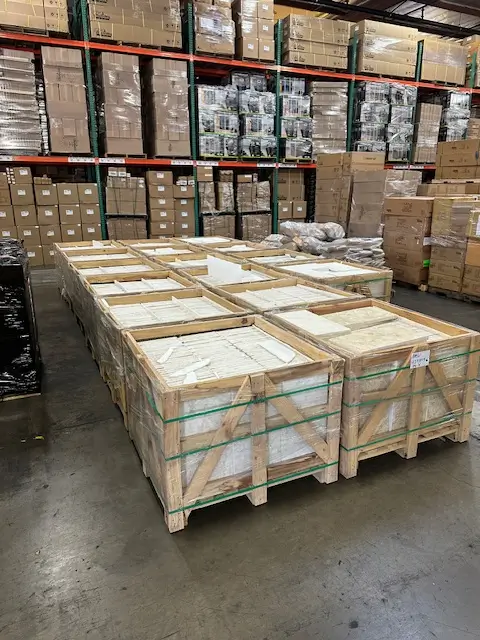
Citadel Stone maintains verified warehouse stock levels that installers can confirm before locking in project timelines. This matters more than most people realise: when an installer orders two slabs from the same batch one week and a third slab three weeks later to cover a measurement correction, there’s no guarantee the replacement comes from the same quarry run. Colour and veining consistency across multiple slabs requires coordinating warehouse inventory from a single confirmed lot, not sourcing opportunistically.
Your project planning should account for the difference between warehouse-ready stock and special-order material. Standard granite varieties in common thicknesses — typically 2cm and 3cm — are generally available with 1-to-2-week lead times from a well-stocked supplier. Rare granites, unusual thicknesses, or custom finishes may require 6 to 10 weeks if import sourcing is involved. An installer who doesn’t ask about lead times during the bid phase is either assuming material is always available or hasn’t thought through the scheduling implications.
- Ask the installer how they confirm slab lot consistency when multiple pieces are required
- Verify whether material delivery to the job site is included in their scope, or whether you need to arrange a separate truck
- Confirm how the installer handles a slab that arrives damaged at the job site — what’s the replacement protocol and who bears the delay cost?
- Ask whether they can hold reserved stock at the warehouse while fabrication is scheduled
- Check whether the installer has existing supply relationships that give them priority access during high-demand periods
Red Flags During the Selection Process
Pattern recognition is one of the most valuable skills you develop when you’ve been through enough granite installation projects. There are specific behaviours and responses during the selection process that consistently predict problems downstream — and recognising them early saves significant cost and frustration.
The first red flag is an installer who discourages you from visiting the shop. A professional fabrication facility welcomes site visits because the equipment and workspace reflect the quality of the operation. Reluctance to show you where the work happens is a reliable indicator that the operation doesn’t match the pitch. The second red flag is an installer who can’t name the granite variety and quarry origin for the slabs they’re proposing — material knowledge is fundamental to professional installation, and vague answers about “Italian grey” or “standard black” suggest sourcing practices that prioritise margin over material consistency.
Pricing that’s significantly below the competitive range deserves scrutiny rather than enthusiasm. Sub-market bids typically mean one of three things: unlicensed labour, undersized insurance coverage, or material substitution. None of those outcomes serves you well. A bid that’s 20 to 25 percent below the average of three comparable quotes warrants a direct conversation about what’s been excluded before you consider accepting it.
- Be cautious of installers who require more than a 30-to-40 percent deposit before work begins
- Avoid any installer who can’t provide a written scope of work before you commit
- Watch for vague warranty language — “we stand behind our work” means nothing without a specific defect period and defined remedy process
- An installer who dismisses your questions about code compliance is not operating at the professional level your project requires
- Pressure to decide immediately — “this price is only good today” — is not how reputable installation businesses operate
What Matters Most When Choosing Granite Installers
Choosing granite installers well comes down to separating technical competence from sales confidence — and those two qualities don’t always live in the same company. The questions you ask during the evaluation process are your primary diagnostic tool. A granite fitter who can walk you through their templating protocol, explain their seam placement logic, and describe exactly how they handle a field problem on the day of fitting is demonstrating the kind of operational maturity that produces installations worth the investment.
At Citadel Stone, we work with project owners and contractors across the country, and the pattern we see consistently is that the best outcomes happen when the material supplier and the installer are in communication early — before templating, before fabrication, and before delivery. Coordinating warehouse availability, slab lot selection, and delivery scheduling around the installer’s workflow eliminates the friction points that turn good projects into difficult ones. Understanding the fabrication side of the process is equally valuable — what granite fabricators actually do covers the production steps that happen between raw slab and finished installation, and that knowledge helps you ask sharper questions during installer selection.
Your final evaluation should include a direct conversation about how the installer handles day-of surprises — because they happen on every project. Slabs shift in transit, substrate conditions differ from what templating revealed, and plumbing rough-in positions don’t always match drawings. The installer who has a clear, practised answer to “what do you do when the template doesn’t match the fabricated piece?” is the one who has solved that problem before and will solve it professionally when it comes up on your job. When reviewing bids, buyers working with Citadel Stone are encouraged to ask each installer how they handle template discrepancies discovered on the day of fitting.