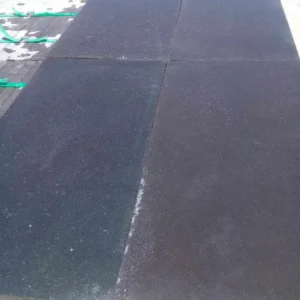
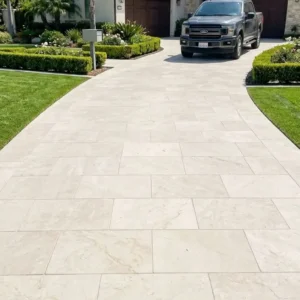
Granite fabricator services cover far more technical ground than most buyers realize when they first start sourcing stone for a project. The fabricator isn’t just the person who cuts your slab — they’re the precision engineer who translates a raw quarry block into a dimensionally accurate, surface-finished component that has to fit your layout within 1/16 of an inch. Understanding exactly what a qualified fabricator does at each stage helps you write better specifications, ask the right questions, and avoid the costly surprises that show up after delivery.
What Granite Fabrication Actually Means
Fabrication is the complete transformation process — from raw slab to finished piece ready for installation. It’s not a single operation. A full-service fabricator runs your material through templating, cutting, edge profiling, surface finishing, CNC routing, and quality inspection before anything leaves the shop floor. Each of those steps introduces variables that affect the final fit and performance of your stone.
The distinction between a stone yard and a fabricator matters here. A stone yard holds inventory and may offer basic cutting. A fabricator takes that inventory and machines it to your exact project specifications. Granite fabricator services sit at the intersection of precision manufacturing and material science — and the best shops treat it that way, calibrating their waterjet tables and bridge saws to tolerances that rival aerospace tooling.
- Slab inspection and grading before any cutting begins
- Digital templating using laser measurement or photogrammetry
- CNC-guided cutting for repeatable dimensional accuracy
- Edge profiling to match specified design details
- Surface finishing — honed, polished, or textured — to specification
- Quality hold points between each stage, not just at final inspection
Templating: The Foundation of Accurate Fabrication
Templating is where most fabrication errors originate — and where most experienced fabricators earn their reputation. The template captures every dimension, cutout, sink location, appliance opening, and edge transition in the actual installation space. A shop that uses digital laser templating rather than physical cardboard templates is giving you measurably tighter tolerances — typically within ±1/32 inch versus ±1/8 inch with traditional methods.
Your fabricator should visit the site before cutting begins, not after. Field conditions almost always differ from architect drawings: walls that aren’t perfectly square, substrate variations, plumbing rough-ins that shifted during construction. A fabricator who templates remotely from drawings and then cuts to those drawings is gambling with your material. The templating visit is non-negotiable on any high-value granite project.
- Laser digital templating captures square deviations in walls and cabinets
- Physical site visit confirms rough-in locations before cutting
- Template data drives the CNC program directly, reducing transcription errors
- Re-templating after any substrate or cabinet adjustment is standard practice
Cutting and CNC Operations
Modern granite fabricator services workflow runs through a CNC bridge saw or waterjet table for primary cuts, with secondary hand tools used for minor adjustments and scribing. The CNC programming stage translates your template data into toolpaths — this is where material waste is either managed or squandered. A skilled programmer nests your pieces across the slab to minimize offcuts while respecting the vein or pattern direction you’ve specified.
Waterjet cutting adds a dimension of precision that a bridge saw alone can’t match for curved elements, radius corners, or tight-tolerance inlay work. The abrasive waterjet cuts at pressures above 60,000 PSI without generating heat, which matters for granite because thermal stress at cut edges can introduce micro-fractures that aren’t visible until the stone is in service. According to NSI fabrication standards and certification, fabricators working to industry certification maintain documented procedures for both cutting methods to ensure consistent quality across production runs.
Ask your fabricator which cutting method they’ll use for each component of your order — not all shops have both capabilities, and some use waterjet only for decorative work while relying on the bridge saw for standard runs. Knowing their equipment determines what’s achievable on your project.
Edge Profiling: More Than Aesthetics
The edge profile on a granite countertop, coping piece, or threshold is a structural and safety decision, not just a design one. A sharp 90-degree arris concentrates impact stress at a single line — that’s the edge most likely to chip in service. A bullnose or eased edge distributes the same impact across a radius, dramatically reducing chipping risk. For exterior applications like pool coping or stair treads, your edge specification directly affects both the longevity of the stone and the safety of users.
Professional granite installers understand this trade-off and will often push back if you specify a sharp edge on high-traffic or exterior applications. That pushback is a quality signal — it means the fabricator is thinking about performance, not just executing the drawing. Common edge profiles and their applications break down this way:
- Eased edge: low-traffic interior surfaces, offers a slight safety buffer over a raw arris
- Bullnose: exterior coping, stair nosings, any surface where contact is frequent
- Ogee or dupont: decorative interior applications where the profile is a design feature
- Waterfall or mitered: contemporary full-thickness edge for countertop applications
- Beveled: a practical middle ground between square and rounded, suits both interior and exterior
Edge profiling is also where thermal cycling considerations surface in exterior applications. As daily temperature swings cycle through a range of 40–60°F or more, thin unsupported edges expand and contract at the outer arris. A tighter radius at the edge reduces the stress concentration at that point, which matters most in freeze-thaw regions where moisture infiltration into micro-fractures at the edge can cause spalling over time.
Surface Finishing Options and Performance Implications
Surface finish selection affects slip resistance, maintenance requirements, UV stability, and thermal performance simultaneously. This is one of the most consequential decisions in the specification process and one that granite fabricator services should address with technical data, not just sample boards. The four primary finishes used in professional applications each carry distinct performance profiles.
Polished granite achieves a mirror-like surface through progressive grinding down to 3,000-grit or finer. It offers the lowest porosity and best stain resistance of any finish because the surface crystal structure is compacted and sealed during the polishing process. However, polished granite can become dangerously slippery when wet — dynamic coefficient of friction (DCOF) values on polished granite typically fall below 0.42, the minimum threshold recommended by the ASTM natural stone fabrication and quality testing standards for wet floor surfaces. That makes polished granite a poor choice for exterior applications or any space where water is present.
- Honed finish: matte surface, DCOF typically 0.50–0.65, suitable for exterior and wet areas
- Flamed finish: thermally textured surface, highest slip resistance, common for exterior paving and stair treads
- Brushed finish: mechanically abraded texture, intermediate slip resistance, good for contemporary exterior cladding
- Leathered finish: tactile texture from diamond brushing, popular for kitchen countertops and outdoor surfaces
Thermal Cycling and Fabrication Tolerances for Exterior Granite
Exterior granite applications require your fabricator to build thermal movement into the specification — not leave it to the installer to figure out in the field. Granite’s linear thermal expansion coefficient runs approximately 4.4 to 7.9 × 10⁻⁶ per °F depending on mineral composition. Over a 24-inch countertop span, that’s a relatively small number. Over a 20-foot run of exterior granite paving or cladding, the cumulative movement through a 70°F diurnal temperature swing becomes significant — enough to open or close joints by 2–3mm through a seasonal cycle.
The practical fabrication implication is joint allowance. Pieces cut too tightly for an exterior installation will telegraph that stress into adjacent pieces when thermal expansion has nowhere to go. Experienced fabricators working on exterior granite projects will typically specify 3–4mm joint allowances for paving applications in regions with significant day-to-night temperature variation, versus the 1.5–2mm tolerances common in interior work. Freeze-thaw regions require particular attention because water infiltrating even a hairline joint at the fabricated edge can expand approximately 9% on freezing, forcing the joint open over successive cycles.
Here’s what most specifiers miss on exterior projects: the fabricator’s cut tolerance and the installer’s joint width have to be coordinated before the shop drawing is approved. A fabricator holding ±1/16-inch cut tolerance on pieces meant to be set at a 3mm joint is delivering pieces that could occupy anywhere from 2mm to 4mm of joint space — a 100% variation. That coordination conversation has to happen at the specification stage, not at installation.
- Specify joint allowance on shop drawings for all exterior applications
- Request thermal expansion calculations for runs exceeding 10 linear feet
- Confirm cut tolerance matches the designed joint width — the two are interdependent
- For freeze-thaw climates, specify a minimum joint width that accommodates moisture infiltration expansion
Quality Control and Inspection Protocols
A fabricator’s quality control system is the part of granite fabricator services that buyers rarely see but always feel in the final product. Professional shops run hold points at templating sign-off, after cutting, after edge profiling, and at final staging before truck loading. Each hold point compares the fabricated piece against the approved shop drawing — dimensional checks, edge profile verification, surface finish confirmation, and visual inspection for slab defects introduced during machining.
Your specification should require written quality documentation — a simple production record that travels with the material from the shop to the truck to the installation site. That document proves each piece passed its hold points and gives the installing crew a reference if something doesn’t fit on site. At Citadel Stone, we recommend buyers request this documentation as a standard delivery requirement, not an exception. It changes how a fabricator approaches the production run when they know someone will review it.
According to USGS dimension stone fabrication and wholesale industry data, granite remains the most widely fabricated dimension stone in the United States by volume. That scale means significant variation in shop quality exists in the market — the presence or absence of documented QC protocols is one of the clearest differentiators between commodity fabricators and specification-grade operations.
Granite Installers and the Fabrication Handoff
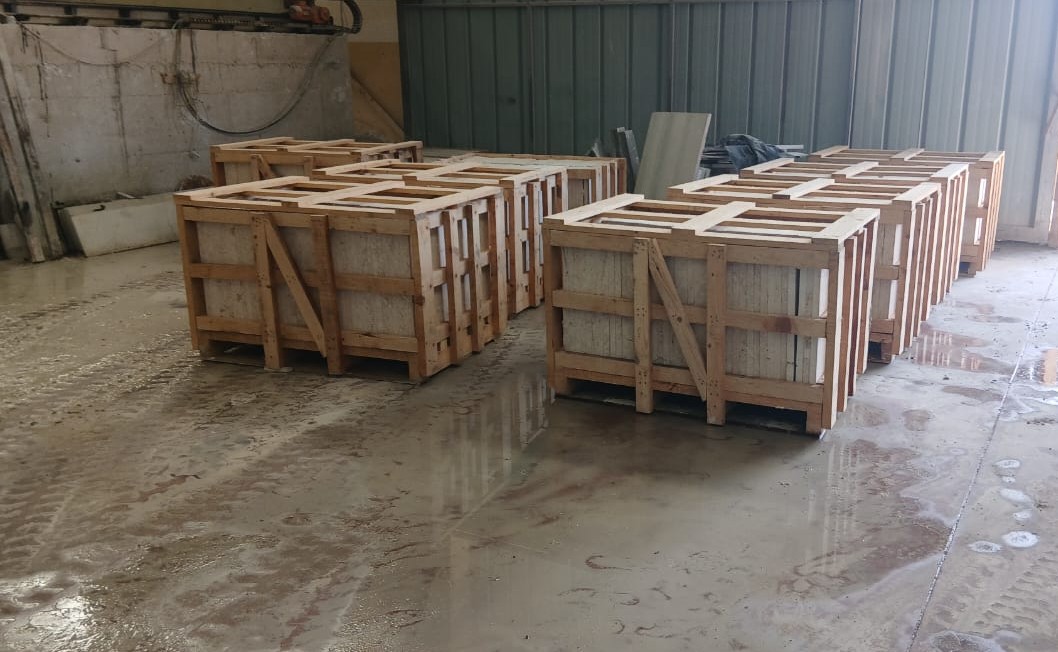
The handoff between the fabricator’s shop and the granite installers on site is one of the highest-risk moments in any stone project. Fabricated pieces arrive at the site on a truck, often in crates or A-frames, and the sequence of unloading, staging, and installation has to be coordinated precisely to avoid damage and installation errors. Pieces for countertop installations typically weigh 12–18 lbs per square foot at 3cm thickness — a 10-square-foot island section is over 150 lbs and requires two people minimum plus appropriate handling equipment.
Verify your truck access conditions before confirming a delivery schedule with the fabricator. Narrow driveways, low clearance, or soft ground conditions can prevent a standard delivery truck from reaching the installation point — if the truck can’t get close enough, your crew is hand-carrying heavy stone farther than planned, which increases breakage risk. The fabricator should know your site access constraints before they schedule the truck, not after it arrives.
- Confirm truck access dimensions: width, overhead clearance, ground bearing capacity
- Request a delivery manifest that matches the production documentation
- Inspect each piece at delivery against the manifest before the truck leaves
- Stage pieces in installation sequence to avoid unnecessary handling
- Report any transit damage within the delivery window specified in your purchase agreement
Getting the fabrication-to-installation handoff right is one of the areas where working with an experienced supplier pays dividends. our natural stone fabrication process includes coordinated delivery scheduling that accounts for site access constraints, reducing the last-mile handling risks that cause the majority of transit damage claims on large granite projects.

Material Selection Within the Granite Fabricators Workflow
The granite fabricators workflow doesn’t start at the saw — it starts at material selection, and a capable fabricator will be involved in that conversation before you commit to a slab. Not every granite behaves the same way under fabrication. Exotic granite varieties with large feldspar crystals and visible quartz seams require slower cutting speeds and modified tooling to avoid edge blow-out. Fine-grained granites cut cleanly at standard feed rates but may show micro-porosity patterns under certain finish types that weren’t visible in the raw slab.
Your fabricator should walk the slab yard with you or review high-resolution slab photography before purchase. They’re looking for existing fissures, included minerals that affect machinability, color variation that affects how pieces will look when matched at a seam, and thickness consistency across the slab. A slab with significant thickness variation — common in certain quarry operations — creates finishing challenges that translate directly into labor cost and schedule time.
The marble stone category presents similar inspection considerations when it appears alongside granite in a project specification. Marble stone’s softer crystalline structure and lower density compared to granite mean fabrication parameters differ substantially — feed rates, tooling, and cooling water volumes all adjust for the material type. A fabricator comfortable with both materials will adjust their workflow accordingly rather than running marble stone through granite cutting parameters, which causes edge chipping and surface scratching during the machining process.
- Inspect slabs for existing fissures before purchase — fabrication stress can propagate them
- Confirm thickness consistency across the slab, especially for waterfall or mitered edge applications
- Discuss vein direction and pattern matching requirements before the CNC program is written
- Request the fabricator’s assessment of machinability for any exotic or unfamiliar granite variety
Lead Times, Warehouse Stock, and Project Scheduling
Realistic project scheduling requires understanding the full pipeline from warehouse inventory through fabrication to truck delivery. Granite fabrication lead times for standard countertop work typically run 1–3 weeks from template approval to delivery. Complex exterior installations with custom edge profiles, multiple pieces, and tight tolerances can push that to 4–6 weeks depending on shop load and material availability. The variable most buyers underestimate is slab availability — if the warehouse doesn’t have your specified material in stock, you’re waiting on an import cycle that adds 6–10 weeks before fabrication even begins.
Citadel Stone maintains warehouse inventory across a national supply network, which typically reduces material availability lead times to 1–2 weeks compared to projects dependent on overseas import cycles. Confirming warehouse stock before you finalize your project schedule is a step that prevents the most common timeline failures in granite projects. Always ask for a confirmed warehouse availability date, not an estimated arrival date — those are very different commitments.
- Confirm warehouse stock before finalizing project schedule and subcontractor coordination
- Add a 15–20% schedule buffer for fabrication on complex or large-format pieces
- Coordinate truck delivery timing with the installation crew’s availability — granite waits for no one once it’s off the truck
- Request a shop drawing approval date to set the true start of your fabrication lead time
Getting Granite Fabrication Specifications Right
Understanding what granite fabricator services actually deliver at each stage — from templating through quality inspection to truck coordination — puts you in a fundamentally stronger position as a buyer or specifier. The technical decisions made in the fabrication shop determine whether your granite installation performs for 15 years or 40. Edge profiles that account for thermal cycling, surface finishes that meet real-world slip resistance requirements, joint allowances that accommodate seasonal movement, and documented quality hold points are all fabrication-stage decisions that can’t be corrected after installation. As you plan your next stone project, the broader context of material and budget planning matters equally — stone project cost planning covers the financial framework that supports smart material selection decisions across your full hardscape scope. From templating to final polish, Citadel Stone supports buyers in understanding every step a qualified fabricator should deliver before sign-off.