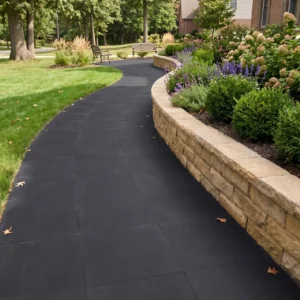
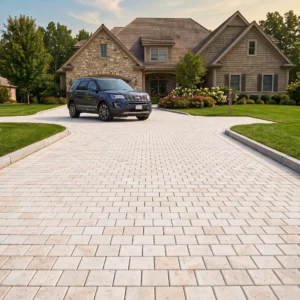
The gap between a landscape that holds up for thirty years and one that needs constant intervention usually comes down to one decision made early: which types of landscape stone you specify, and whether that choice was driven by genuine material knowledge or aesthetics alone. Stone behaves differently under load, moisture, freeze-thaw cycling, and UV exposure depending on its mineralogy, porosity, and surface finish — and those variables interact with your site conditions in ways that generic buying guides rarely acknowledge. Getting the material right before a single pallet leaves the warehouse saves you from the far costlier process of correcting failures after installation.
Why Stone Type Determines Long-Term Performance
Not all natural stone shares the same internal structure, and that internal structure is what drives performance over time. Sedimentary stones like limestone and sandstone form from compressed mineral sediments, giving them layered grain patterns that affect how they absorb water and resist surface abrasion. Metamorphic stones — slate and quartzite — have been subjected to intense heat and pressure, which typically produces a denser, less porous matrix. Igneous stones like basalt and granite crystallize from cooled magma, yielding exceptionally hard, low-porosity material with high compressive strength.
Your material choice needs to account for more than color preference. Surface coefficient of friction, absorption rate, thermal expansion coefficient, and flexural strength all vary substantially across stone families. For high-traffic paving applications, the Natural Stone Institute landscape stone variety selection guide provides technical benchmarks that align with real project demands. Factoring these properties into your specification from the start is how you avoid costly substitutions mid-project.
Limestone: The Workhorse of Landscape Stone
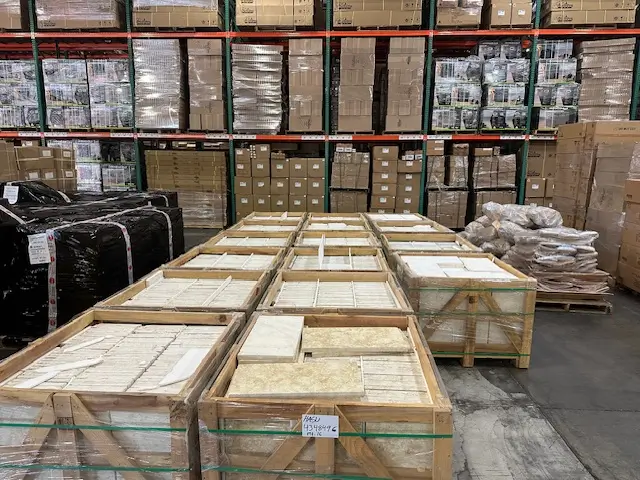
Limestone occupies a unique position among types of landscape stone because it balances workability, thermal performance, and aesthetic range in a way few other materials can match. Its compressive strength typically falls between 4,000 and 20,000 PSI depending on formation density, which means you need to verify the specific quarry grade before specifying it for load-bearing applications like driveway borders or structural step treads.
One property that surprises many specifiers is limestone’s thermal behavior. Light-colored limestone reflects a high proportion of solar radiation rather than absorbing it, which keeps surface temperatures significantly lower than dark igneous alternatives in high-heat conditions. That’s genuinely useful for bare-foot applications like pool surrounds and patio zones, but it also means the surface expands and contracts at a different rate than a dark basalt or granite placed adjacent to it. Your expansion joint spacing needs to account for that differential — typically 3/8-inch joints every 10 to 12 feet, rather than the standard 15-foot spacing often cited in generic installation guides.
- Compressive strength ranges from 4,000 PSI (soft formation) to 20,000+ PSI (dense quarry grades)
- Water absorption rate varies from under 1% in dense limestone to over 12% in high-porosity grades — verify absorption per ASTM C97 before specifying for wet environments
- Surface finishes include honed, tumbled, brushed, and natural cleft — each affecting both aesthetics and slip resistance
- Thermal expansion coefficient sits at approximately 4.4 × 10⁻⁶ per °F, lower than most concrete alternatives
- Requires sealing in high-moisture environments to manage staining risk from organic compounds
For patios, garden paths, and pool surrounds, honed or tumbled limestone delivers a coefficient of friction above 0.60 wet — the threshold most specifications require for outdoor pedestrian surfaces. The USGS limestone composition and construction data provides geological context on how formation origin affects density and absorption characteristics across different quarry sources.
Granite: High-Load Applications and Structural Demands
Granite consistently outperforms most other landscape stone types under sustained mechanical load. Compressive strength typically exceeds 19,000 PSI, and its low water absorption — generally below 0.4% — makes it one of the most freeze-thaw-resistant natural stones available. For driveway surfaces, vehicular pavers, and heavy-use hardscape zones, granite delivers a performance margin that sedimentary stones simply can’t match.
Your granite specification should differentiate between sawn, thermal, and bush-hammered finishes because the surface texture affects both slip resistance and maintenance requirements considerably. Thermal-finished granite opens micro-fissures in the surface crystal structure, creating a textured grip that performs well in exposed outdoor conditions. Bush-hammered finishes go further, producing a heavily textured surface appropriate for steep grade changes where slip risk is a structural concern.
- Compressive strength above 19,000 PSI — appropriate for vehicular driveway loading without additional thickness requirements
- Flexural strength typically 1,500–2,500 PSI — critical for spanning base irregularities without cracking
- Low absorption rate means less risk of efflorescence and spalling in freeze-thaw environments
- Available in sawn, thermal, bush-hammered, and flamed finishes — finish selection drives slip resistance rating
- Thermal expansion coefficient approximately 4.7 × 10⁻⁶ per °F — plan joint spacing accordingly
Granite cobblestones and setts deserve a specific note here. Their domed or pitched surface naturally channels water away from the joint plane, which reduces hydrostatic pressure buildup in climates with significant rainfall. That drainage geometry means you can often reduce the bedding sand depth by 10–15% compared to flat-format pavers without compromising long-term stability.
Basalt: Dense Igneous Performance for Demanding Sites
Basalt is among the most underspecified types of landscape stone given its actual performance profile. Formed from rapidly cooled volcanic lava, basalt has an exceptionally fine-grained crystal structure that produces compressive strengths typically exceeding 25,000 PSI — higher than most granite grades — combined with near-zero porosity. Its dark mineral content gives it a distinctive charcoal-to-black coloration that reads as contemporary in design terms, but the practical performance benefits extend well beyond aesthetics.
The density of basalt means it holds thermal mass differently than lighter sedimentary stones. In morning conditions, a basalt patio surface will retain overnight temperature longer, which can be a useful thermal buffer in temperature-extreme environments. At Citadel Stone, we’ve found that specifiers selecting basalt for pool surrounds sometimes overlook this thermal mass effect — specifying a light-colored limestone coping immediately adjacent to a honed basalt field tile creates a visible temperature differential between surfaces that barefoot users notice immediately.
- Compressive strength typically 25,000–35,000 PSI — among the highest of any landscape stone type
- Water absorption below 0.2% — appropriate for freeze-thaw climates without additional sealing
- Honed finish achieves a fine, smooth surface that suits contemporary and minimalist design schemes
- Basalt pavers and tiles perform well in seismic regions because the material’s density and low porosity reduce spall risk under movement stress
- Darker surface color absorbs more solar radiation — account for higher surface temperatures in sun-exposed applications
The USGS basalt volcanic rock properties and composition resource provides geological formation data relevant to understanding why basalt’s density varies across quarry origins — a detail that matters when you’re comparing multiple suppliers for a single project specification.
Travertine: Thermal Performance and Open-Pore Structure
Travertine occupies a distinct niche within types of landscape stone because of its open-pore matrix, which differentiates it fundamentally from denser alternatives. Those voids — formed during the stone’s original hot-spring deposition process — reduce the material’s thermal conductivity, keeping surface temperatures measurably lower than granite or basalt under direct sun. That characteristic makes it a genuine first-choice material for pool decks and patio zones in hot, dry climates where barefoot comfort matters.
Your travertine specification needs to address fill versus unfilled as a primary decision point. Unfilled travertine retains its natural pore openings, which creates a more textured surface grip but also requires consistent maintenance to prevent debris and organic matter from settling into the voids. Filled-and-honed travertine produces a smoother, easier-to-maintain surface, but the filler material — typically cement or epoxy — needs to match the stone’s thermal expansion rate or you’ll see filler dropout within three to five years in high-UV or freeze-thaw conditions.
- Thermal conductivity lower than granite or basalt — surface stays cooler in direct sun exposure
- Natural voids leave an open, textured face in unfilled form — wet DCOF test report on request
- Filled-and-honed finish delivers a cleaner visual but requires filler material matched to stone expansion rate
- Absorption rate varies from 3% to 12% depending on quarry grade — verify before pool-environment specification
- Lighter colorways (ivory, walnut, silver) reflect more solar radiation than darker grades
Specifying travertine for outdoor landscape use requires attention to thickness as well. For pedestrian-only applications, 1.25 inches (30mm nominal) is the working minimum. For applications near vehicular access or where edge loads are possible — such as driveway borders or service access paths — step up to 2 inches (50mm nominal) to prevent edge chipping under point loads.
Slate and Flagstone: Natural Cleft Character and Layered Strength
Slate’s metamorphic origin gives it a foliated structure — meaning it cleaves naturally along parallel planes, producing the characteristic thin, irregular pieces used in flagging and cladding applications. That cleavage plane is both the material’s visual signature and its primary structural consideration. Slate specified perpendicular to its cleavage plane (on edge) is substantially stronger than the same material in flat-lay paving orientation, where the natural split planes run parallel to the surface and can delaminate under freeze-thaw pressure if water penetrates the joints.
Flagstone more broadly describes any landscape stone rock split or cut into flat slabs suitable for paving — including limestone, bluestone, sandstone, and quartzite in addition to slate. What unifies the category is the installation logic: irregular flagstones require you to work with thickness variations, which means your mortar bed depth needs to be adjusted at each individual piece to achieve a level finished surface. Budget an extra 20–30% of installation labor time compared to dimensioned-format pavers when working with irregular flagstone.
- Slate flexural strength ranges from 6,000 to 15,000 PSI depending on grain orientation — specify grain direction for structural applications
- Natural cleft surface texture delivers excellent slip resistance in wet conditions — COF typically 0.65–0.75 wet
- Slate absorbs between 0.1% and 1.5% water depending on density grade — denser grades perform better in wet-climate applications
- Irregular flagstone requires variable mortar bed depth — typically 1–3 inches — to achieve level plane
- Sand-set flagstone requires minimum 4-inch compacted aggregate base per most building codes; mortar-set requires structural concrete slab substrate
Here’s what most specifiers working with flagstone for the first time underestimate: the time cost of pattern selection on site. Matching irregular pieces by thickness and edge profile before setting them is a skilled judgment call, and rushing that process is the single biggest cause of lippage failures in flagstone walkways. Allow for a dry-lay trial run before any mortar or adhesive is applied.
Building Codes, Base Depth, and Structural Specification
The structural side of landscape stone specification is where building codes enter the picture — and where many residential projects get into trouble. Most jurisdictions follow IBC-based standards for hardscape installation, but frost line depth requirements vary considerably across climate zones and directly affect how deep your aggregate base needs to go. In regions where frost lines reach 24 to 36 inches, your compacted base depth for a standard pedestrian paving application may need to be 8 to 12 inches of clean, angular aggregate — well beyond the 4-inch minimum cited in basic installation guides.
Seismic zone classifications add another layer of complexity. In designated seismic regions, natural stone paving installed on structural slabs — retaining walls, elevated decks, stairways — requires flexible setting beds rather than rigid mortar systems. A rigid mortar system in a Zone 3 or 4 seismic area will crack and spall during a moderate seismic event; flexible adhesive systems accommodate movement without joint failure. Verifying the seismic classification for your project site before specifying the setting system is a non-negotiable step.
- Frost line depth determines minimum base depth — verify local frost depth maps before specifying aggregate base thickness
- Sand-set applications: minimum 4-inch base in frost-free zones; 8–12 inches in hard-freeze regions
- Edge restraint requirements vary by jurisdiction — steel or concrete continuous restraint is required by code in many municipalities for vehicular-adjacent paving
- Seismic Zone 3–4 applications require flexible setting bed systems, not rigid mortar, for safety compliance
- ADA compliance applies to any public or semi-public hardscape — maximum 2% cross-slope and 5% running slope for accessible routes
- Stone thickness minimums: residential pedestrian 1.25 inches; light vehicular 2 inches; heavy load 3+ inches
For retaining wall applications specifically, IBC Chapter 21 governs natural stone masonry construction, including footing depth requirements and lateral load calculations. A retaining wall exceeding 4 feet in exposed height almost universally requires engineered drawings and a permit regardless of the stone type — that’s a project planning reality you need to address early, not after materials arrive on the truck.
Matching Stone Type to Application: A Practical Framework
The right framework for selecting among types of landscape stone starts with application load, then moves to drainage requirements, then aesthetic intent — in that order. Reversing that sequence (choosing by appearance first) is how misspecified materials end up on jobsites. For vehicular applications, minimum compressive strength of 15,000 PSI is a practical baseline; granite and basalt meet this comfortably, while softer limestone grades may not. For drainage beds and dry creek applications, porous or open-structured landscape stone rock like river rock or rough-split limestone allows water infiltration without the sealing requirements of dense-format pavers.
Exploring the full range of natural stone options at Citadel Stone gives you a direct look at how material properties align with specific outdoor applications — from high-load driveway zones to decorative garden beds. At Citadel Stone, we review quarry source documentation on every incoming pallet to confirm that density, absorption, and finish tolerance align with the performance data on file, so the material you specify is the material that actually ships.
For landscape stone rock used in drainage, erosion control, or ground-cover applications, dimensional precision matters far less than aggregate gradation. A well-graded river stone or crushed decomposed granite specified correctly for drainage velocity and void ratio will outperform a poorly matched but visually appealing alternative. Know the hydraulic function first, then select for aesthetics within the material class that meets it.
Ordering, Logistics, and Project Planning
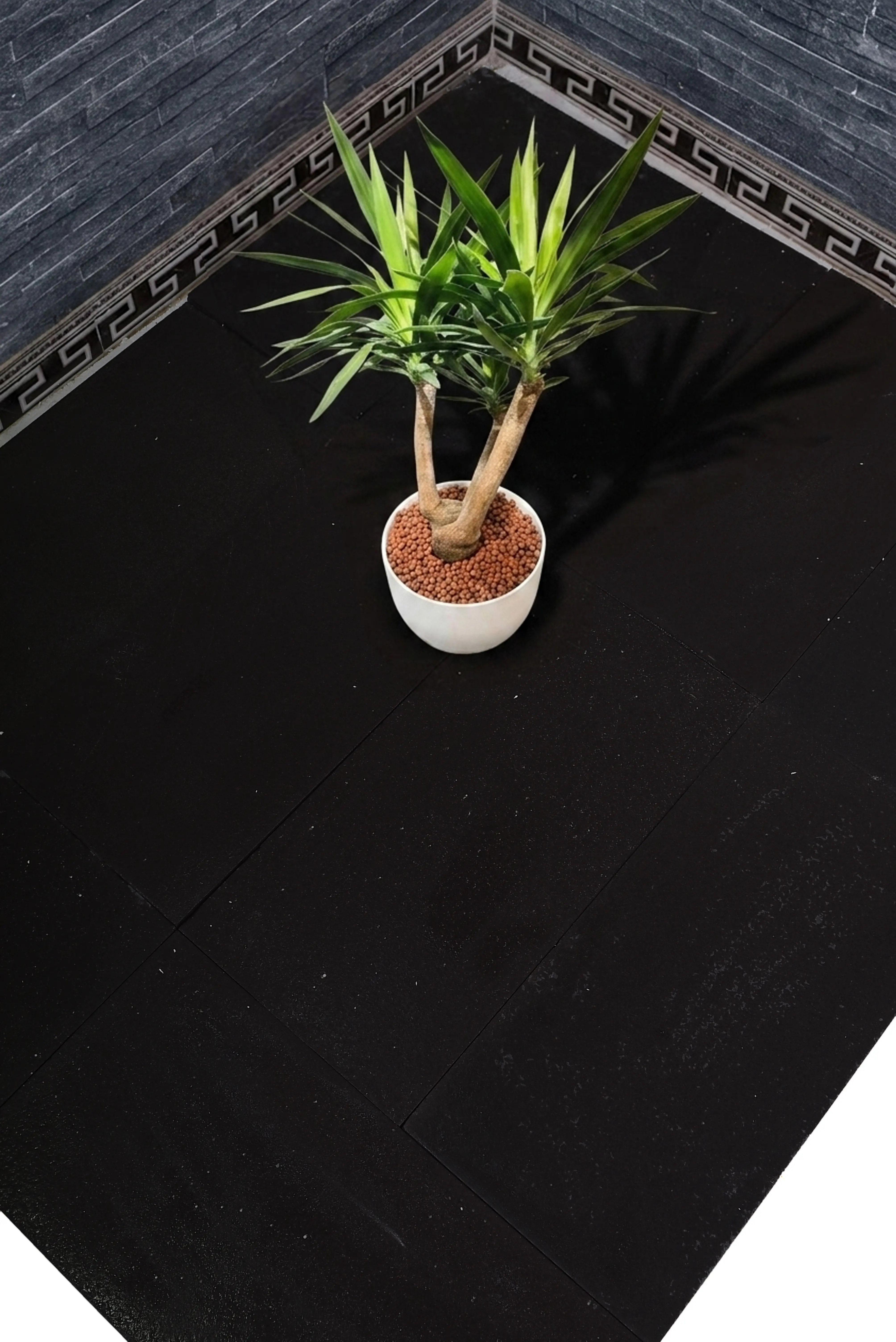
Material lead times vary significantly depending on whether the stone is warehouse-stocked domestically or sourced on a per-order import basis. Standard import cycles for cut stone run 6 to 10 weeks from order to delivery — a timeline that has compressed and stretched unpredictably in recent years. Citadel Stone cuts every order at its selected quarries, and the lead time for your specification is quoted with the order. That buffer matters when your installation window is weather-dependent or tied to a contractor schedule with multiple trades working in sequence.
Your truck access logistics need to be confirmed before ordering palletized stone. A standard flatbed truck delivering stone pallets requires a minimum 14-foot clearance height and a turn radius suitable for a 48-foot trailer. Residential sites with tight entry gates, low-hanging utilities, or unpaved access routes may require crane-off delivery or hand-bombing from the street — both of which add cost and time that should be in your project budget from day one. Confirm site access with your delivery coordinator before the truck is scheduled, not after it arrives.
- Warehouse-stocked material: 1–2 week lead time for standard orders
- Import-cycle material: 6–10 week lead time — plan accordingly for large-volume specifications
- Order 10–15% overage on all natural stone to account for cuts, breakage, and pattern waste
- Flatbed truck delivery requires 14-foot clearance and adequate driveway or street access for a 48-foot trailer
- Pallet weights for natural stone typically range from 2,500 to 4,500 lbs — verify ground bearing capacity at unloading point
- Store stone pallets on level, firm ground; never stack one pallet on another without manufacturer approval
Scheduling your stone order before finalizing your base preparation timeline is a common project management error. If the stone arrives before the base is ready, you’re paying for on-site storage and risking pallet degradation. Sequence your order so the warehouse ships approximately one week after your base preparation is complete — that timing keeps materials moving efficiently without creating bottlenecks.
Surface Finishes and Their Practical Impact
Surface finish selection is often treated as a purely aesthetic decision, but it has direct consequences for slip resistance, maintenance frequency, and long-term durability. A polished finish on limestone or travertine delivers a reflective, refined appearance — but it reduces the coefficient of friction significantly, typically dropping wet COF below the 0.50 threshold required for safe outdoor pedestrian use. Polished natural stone belongs in covered or indoor-adjacent applications, not exposed exterior paving that will receive rain or irrigation overspray.
Tumbled finishes provide the best combination of slip resistance and low maintenance for outdoor landscape applications. The tumbling process rounds sharp edges and micro-roughens the surface texture, producing wet COF readings consistently above 0.65 across most stone types. The rounded edges also reduce chipping risk from point loads — a practical benefit in high-traffic zones where dropped tools, furniture legs, and foot traffic concentrate stress at paver corners. The American Society of Landscape Architects natural stone hardscape guidance addresses finish selection in the context of outdoor surface safety and long-term performance expectations.
- Polished: COF wet typically 0.35–0.45 — not suitable for exposed exterior use
- Honed: COF wet typically 0.55–0.65 — suitable for covered patios, low-exposure outdoor areas
- Tumbled: COF wet typically 0.65–0.75 — appropriate for most outdoor pedestrian landscape applications
- Bush-hammered: COF wet typically 0.75–0.85 — preferred for steep grade changes and high-slip-risk zones
- Natural cleft (flagstone): COF wet typically 0.65–0.80 — varies with surface irregularity
Thermal finishing — the process of applying an intense flame to granite or basalt surfaces — is worth understanding specifically. The heat causes differential expansion between mineral crystals at the surface layer, opening micro-fissures that create a textured profile without mechanical grinding. The result is a surface that performs similarly to bush-hammered in terms of grip, with a slightly more uniform visual appearance. It’s a durable finish choice for granite driveway borders, step treads, and commercial landscape zones where long-term texture retention matters.
Final Considerations for Specifying Types of Landscape Stone
Material selection across types of landscape stone comes down to reconciling performance data with site-specific demands — and doing that analysis before any material leaves the warehouse rather than after installation reveals a mismatch. The practical checklist is straightforward: confirm compressive strength against load requirements, verify absorption against drainage and freeze-thaw exposure, check surface finish COF against slip risk, and validate stone thickness against code requirements for your application zone. Every one of those variables is knowable before you commit to an order.
As you move toward finalizing your specification, understanding cost structures across different stone types becomes the next practical question. Stone budget planning is often underestimated, and the variation between material families is significant enough to affect project feasibility. For a breakdown of what different natural stone materials actually cost per square foot, the patio stone cost comparison by material covers the pricing landscape across the most commonly specified options. Each stone type in the Citadel Stone range is selected for a distinct outdoor role, from drainage beds to decorative ground cover.