

Grain structure tells you more about a blue limestone’s field performance than any finish chart ever will. The three varieties that dominate serious project specifications — Belgian, Gascogne, and Moleanos — each carry a distinct mineralogical fingerprint that determines how they respond to load cycling, surface wear, and long-term UV exposure in open installations. Understanding the blue limestone types compared across these dimensions is the difference between a confident specification and a costly substitution six months into a project.
What Actually Makes Blue Limestone Blue
The blue-grey coloration in these limestones isn’t a surface treatment — it’s the result of fine clay mineral inclusions and organic compounds locked into the calcite matrix during lithification. The depth of that color, and its stability over time, varies significantly between varieties. Belgian blue limestone carries the densest concentration of these inclusions, producing its characteristically dark, near-slate appearance. Gascogne and Moleanos sit at progressively lighter points on the spectrum, with Moleanos trending toward a warm beige-grey that reads almost ivory in full sun.
That color behavior under UV exposure is worth understanding before you finalize a finish selection. In south-facing installations with high daily sun hours, all three varieties will experience some degree of surface oxidation — but the visual impact differs sharply. According to NSI limestone performance data, denser limestones with lower porosity tend to retain their surface appearance longer under prolonged UV exposure, making Belgian blue’s tight grain structure a genuine advantage in exposed outdoor applications.
Belgian Blue Limestone: Dense, Dark, Demanding
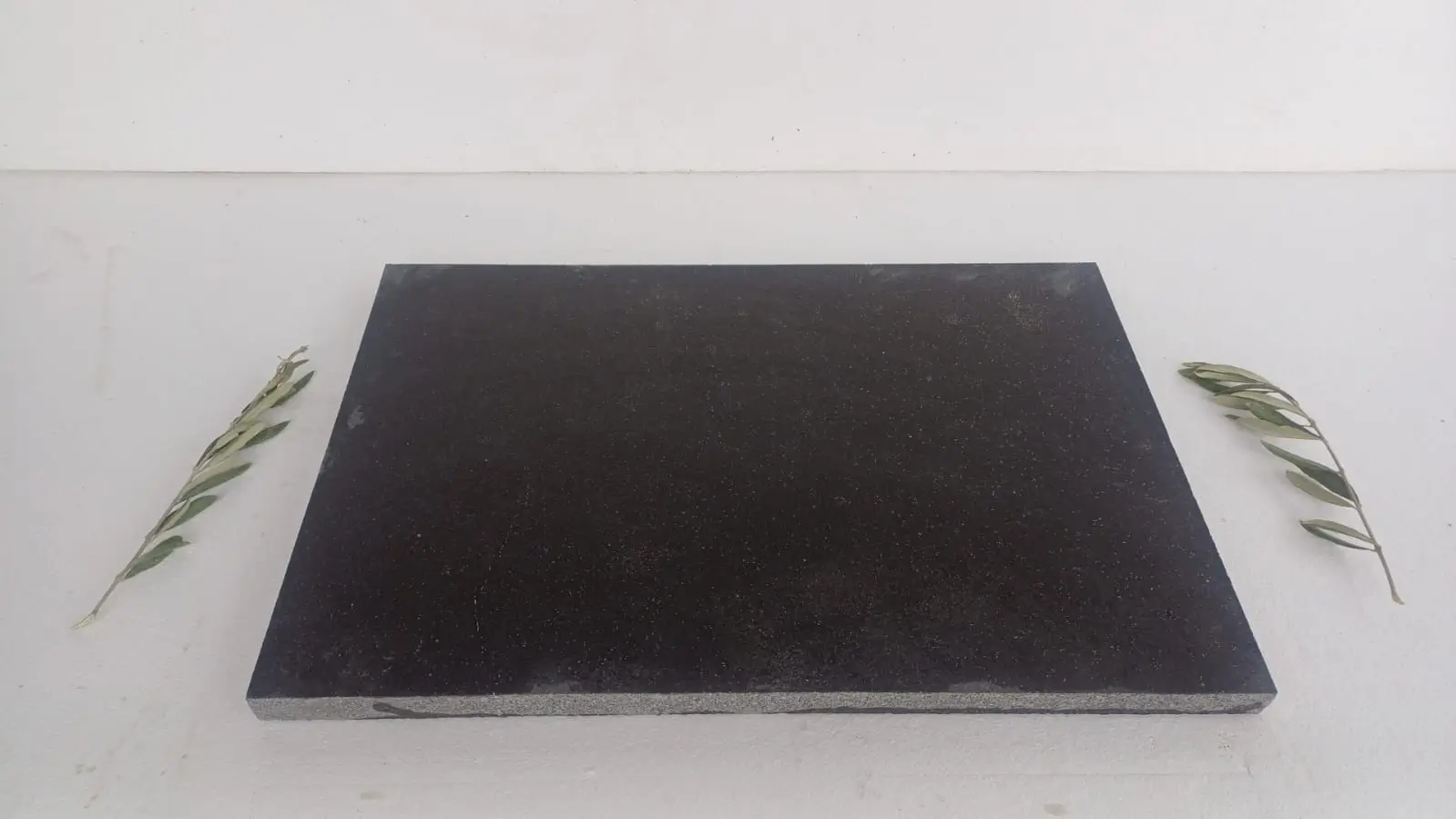
Belgian blue limestone — technically a Carboniferous-age calcilutite — is the benchmark that the other varieties are measured against. Its compressive strength typically exceeds 150 MPa, which puts it in the same structural bracket as many granites. The grain is extremely fine, almost imperceptible to the touch, and its water absorption rate runs below 0.5% by mass. That combination makes it one of the most dimensionally stable blue limestone types compared across outdoor paving applications.
The density that gives Belgian blue its performance credentials also makes it a challenging material to work with on site. It’s heavy — typically around 2,700 kg/m³ — and that affects your truck logistics from the moment you schedule delivery. Full-pallet orders on standard flatbeds work well, but you’ll need to confirm ground-bearing capacity for any laydown area before unloading. The material’s hardness also means blade wear accelerates during cutting, so budget for additional tooling if you’re doing significant on-site fabrication.
- Compressive strength: 150+ MPa — suitable for vehicular and high-traffic pedestrian applications
- Water absorption: below 0.5% — exceptional resistance to freeze-thaw cycling and efflorescence
- Surface finish options: sawn, honed, brushed, and flame — each with distinct slip characteristics
- Colour depth: deepest of the three varieties, may lighten slightly with years of UV exposure
- Density: approximately 2,700 kg/m³ — affects structural load calculations for elevated installations
Gascogne Blue Limestone: Mid-Tone and High-Versatility
Gascogne blue limestone originates from southwestern France and occupies a useful middle ground in the blue limestone types compared hierarchy. Its color sits several tones lighter than Belgian blue — a genuine blue-grey that reads well in both interior and exterior contexts without the stark contrast of its darker counterpart. Grain size is slightly coarser, and you’ll occasionally encounter subtle fossil inclusions that add character without compromising structural integrity.
The gascogne blue limestone specification tends to suit projects where visual warmth matters as much as performance. Pool surrounds, entry courts, and large-format interior floors all benefit from its more forgiving aesthetic. Compressive strength runs in the 80–120 MPa range, which is more than adequate for residential and light-commercial applications but worth noting if you’re specifying for heavy vehicle access. Water absorption is higher than Belgian blue — typically 1.5–3% depending on bed orientation and quarry zone — so sealing is a non-negotiable part of your maintenance plan, especially in installations facing sustained sun exposure.
- Compressive strength: 80–120 MPa — appropriate for pedestrian, light vehicle, and most commercial use
- Water absorption: 1.5–3% — requires penetrating sealer application before use and biennial resealing
- Colour tone: mid blue-grey with warm undertones — adapts well across interior and exterior contexts
- Fossil inclusions: occasional, add natural variation — specify accepted frequency if uniformity is critical
- Common sizes: available in large-format slabs suitable for stepped terraces and feature paving
For sealing schedules in high-UV installations, a silane-siloxane penetrating sealer applied every 18–24 months gives you reliable protection against surface oxidation and color bleaching in Gascogne. The lower density of this variety means UV-driven moisture cycling — where surface water evaporates rapidly under direct sun — can accelerate any unsealed surface’s weathering rate. Getting your sealing timing right at installation and sticking to the maintenance schedule is where long-term appearance retention is won or lost.
Moleanos Blue Limestone: The Lighter Alternative
Moleanos is a Portuguese limestone that carries “blue” in its commercial name somewhat loosely — in practice, it presents as a warm cream to light grey with occasional blue-grey veining. The moleanos blue limestone specification suits projects where designers want the structural credentials of a hard limestone without the visual weight of darker varieties. It’s widely used in high-end flooring, façade cladding, and exterior paving where a light, neutral palette is the brief.
What Moleanos trades in color depth, it compensates with workability. The grain is consistent and responsive to fabrication, producing clean arrises and tight tolerances that demanding installations require. Polished finishes on Moleanos achieve a reflectivity that rivals marble — worth knowing if you’re balancing a design that needs both outdoor durability and interior-quality aesthetics at thresholds or covered terraces. Compressive strength typically falls between 60–100 MPa, which suits most architectural applications but requires careful review if structural loading is a specification variable.
- Compressive strength: 60–100 MPa — well-suited to architectural paving, flooring, and cladding
- Water absorption: 0.8–1.8% — moderate, manageable with standard penetrating sealer
- Colour: warm cream to light grey — lightest of the three varieties, reads lighter still under strong UV
- Workability: excellent — consistent grain allows tight fabrication tolerances
- Finish range: honed and polished achieve high reflectivity — practical for interior and covered-exterior use
One UV-related consideration with Moleanos that’s easy to underestimate: its lighter base color means surface discoloration from organic deposits — algae, tannin staining from adjacent planting — is more visible than on darker varieties. In shaded installations this is manageable, but in open, sun-exposed positions where moisture evaporation is fast and organic debris accumulates, your cleaning and sealing schedule should be more frequent — annually rather than biennially.
Blue Limestone Types Compared: Performance at a Glance
Specifying across these three varieties becomes much cleaner when you lay their core performance metrics side by side. The blue limestone types compared below reflect typical quarry-grade material — individual batches can vary, so it’s always worth requesting test certificates from your supplier before committing to a large-quantity order.
- Compressive strength: Belgian blue (150+ MPa) > Gascogne (80–120 MPa) > Moleanos (60–100 MPa)
- Water absorption: Belgian blue (<0.5%) > Moleanos (0.8–1.8%) > Gascogne (1.5–3%)
- Density: Belgian blue (~2,700 kg/m³) > Gascogne (~2,550 kg/m³) > Moleanos (~2,450 kg/m³)
- Colour depth: Belgian blue (darkest) > Gascogne (mid blue-grey) > Moleanos (lightest)
- UV color stability: Belgian blue (highest, dense matrix) > Moleanos (moderate) > Gascogne (most susceptible without sealing)
- Workability: Moleanos (easiest) > Gascogne (moderate) > Belgian blue (most demanding)
- Frost resistance: Belgian blue (excellent) > Gascogne (good when sealed) > Moleanos (good when sealed)
These numbers guide your starting point — but project context refines the decision. A high-traffic commercial entrance in a freeze-thaw region points toward Belgian blue without much debate. A sun-drenched residential terrace where aesthetic warmth is the priority, with moderate foot traffic, puts Gascogne or Moleanos firmly in play. The USGS dimension stone data confirms that limestone composition and construction applications vary substantially by quarry zone and geological formation, which is exactly why batch-level testing matters when stakes are high.
Finish Selection and UV Resistance Across Varieties
Your finish choice interacts with UV exposure in ways that most specification documents don’t address clearly. Polished surfaces on any blue limestone will exhibit more visible color change over time in outdoor sun-exposed positions — the high reflectivity that looks striking initially becomes a mirror for any surface oxidation or mineral bloom. Honed finishes weather more gracefully in these conditions, developing a natural patina that reads as aged character rather than deterioration.
Brushed and tumbled finishes add another layer of practical advantage in sun-exposed applications: the textured surface breaks up UV reflection and reduces surface heat accumulation compared to polished slabs of the same material. For terraces and pool surrounds in regions with intense sun, a brushed finish on Gascogne or Belgian blue delivers better barefoot comfort and more forgiving slip resistance in wet conditions. You can explore the full range of surface treatments and slab formats through Citadel Stone’s blue limestone collection to match finish to application before finalizing your specification.
- Polished finish: highest UV sensitivity — best reserved for interior or covered-exterior positions
- Honed finish: balanced aesthetic and UV resilience — the most versatile outdoor specification
- Brushed finish: excellent UV and slip resistance — recommended for pool surrounds and sun-exposed terraces
- Flamed finish (Belgian blue only): maximum slip resistance and UV stability — suited to heavy-traffic outdoor use
- Sawn finish: workmanlike, raw surface — typically requires sealing before use in all three varieties
Thickness, Bedding, and Structural Specification
Thickness selection isn’t just a structural decision — it’s a logistics and handling decision that affects your entire installation workflow. Belgian blue’s high density means 30mm slabs are significantly heavier per square meter than equivalent Gascogne or Moleanos formats, and that affects both your warehouse staging plan and on-site labor productivity. At Citadel Stone, we recommend confirming slab weight calculations before finalizing pallet quantities, particularly for upper-level or roof terrace installations where structural load limits are fixed.
The minimum recommended thickness for pedestrian-only applications is 20mm for Belgian blue and 30mm for Gascogne and Moleanos, given the compressive strength differential. For vehicular applications — driveways, service roads, or commercial loading zones — 40mm is the baseline for all three varieties, with Belgian blue capable of performing at 30mm in well-compacted aggregate bases. Your base preparation quality determines more of the long-term performance outcome than slab thickness alone; a poorly compacted sub-base will fail a 40mm Belgian blue installation just as reliably as a 20mm Moleanos one.
- Pedestrian minimum: 20mm Belgian blue / 30mm Gascogne and Moleanos
- Vehicular minimum: 40mm for all three varieties in standard compacted aggregate bases
- Base depth: minimum 150mm compacted crusher run for pedestrian, 200mm for vehicular
- Bedding layer: 30–50mm sharp sand or semi-dry mortar — do not exceed 50mm or differential settlement risk increases
- Joint width: 3–5mm for sawn and honed formats; 8–12mm for brushed and tumbled formats
Ordering, Logistics, and Lead Times
Lead time management separates successful blue limestone projects from frustrating ones. Belgian blue is the most commonly stocked variety in North American warehouse inventory, which means standard formats in 30mm honed or brushed finish are typically available within one to two weeks. Gascogne and Moleanos in standard sizes follow a similar timeline for common formats, but custom dimensions or thicknesses outside standard production runs can extend to eight to twelve weeks depending on quarry scheduling.
Truck delivery logistics need to account for slab weight and offloading equipment availability. Belgian blue full-pallet orders typically require a forklift or telehandler for safe offloading — standard pallet jacks won’t handle the combination of weight and pallet footprint safely on uneven ground. Citadel Stone ships nationwide and can coordinate split deliveries for phased projects where laydown space is limited. Confirming your site’s truck access constraints early — overhead clearance, road surface, turning radius — prevents costly redelivery scheduling on large orders.
- Belgian blue standard formats: typically in warehouse stock, 1–2 week lead time
- Gascogne and Moleanos standard formats: 1–3 week lead time depending on format and volume
- Custom dimensions: 8–12 week lead time — confirm before publishing project program dates
- Offloading equipment: forklift or telehandler required for Belgian blue full-pallet orders
- Nationwide delivery: available through Citadel Stone — split-delivery options for phased site programs
The Britannica limestone formation overview provides useful background on why quarry zones produce such different material properties — relevant context when you’re evaluating why batch-to-batch variation exists and what to check on your material certificates before accepting delivery.
Blue Limestone Types Compared: Key Specification Decisions
Matching the right blue limestone to a project scope requires you to move past color preference and engage with the full performance profile. Belgian blue limestone delivers the highest compressive strength, lowest water absorption, and best long-term UV color stability of the three, making it the default choice for demanding structural or high-exposure applications. Gascogne offers mid-range performance with superior aesthetic versatility — well-suited to residential terraces and architectural paving where the warmer blue-grey palette is the design objective. Moleanos trades depth of color for workability and a lighter visual register, excelling in interior floors, cladding, and projects where fabrication precision is paramount.
Your sealing and maintenance program should be calibrated to the variety you select — Belgian blue is the most forgiving in sun-exposed positions without sealing, while Gascogne and Moleanos both reward a disciplined annual or biennial sealing schedule to protect against UV-driven color bleaching and surface oxidation. For a deeper look at how blue limestone’s geological structure drives its physical performance metrics, the technical detail in blue limestone geology and density is worth reviewing alongside your specification decisions. Belgian, Moleanos, and Gascogne blue limestone differ significantly in grain size and color depth — Citadel Stone can help buyers match the right variety to their project scope.