Why Your Edging Material Defines the Whole Design
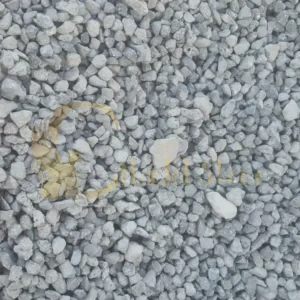
Pebble edging ideas succeed or fail based on one decision most people make last — the material itself. The pebble you choose determines the visual weight, the edge definition longevity, and whether the border holds its line after the first heavy rain or frost cycle. Rounded river pebbles read soft and naturalistic; angular crushed stone reads structured and contemporary. That distinction drives every other design choice that follows.
What often gets overlooked is how the size range within a pebble selection affects maintenance years down the track. A tightly graded 20–40 mm pebble sits more stably than a mixed-grade product where smaller stones migrate under foot traffic or irrigation flow. Your edging specification should call out a specific size range, not just a colour or finish.
Classic River Pebble Borders Along Garden Beds
The garden-bed border is where most homeowners first explore pebble edging ideas, and river pebbles remain the dominant choice for good reason. Their naturally smoothed profiles pack tightly without sharp edges, they don’t shift underfoot when you’re pruning along the bed, and the tonal variation in a single batch of river stone gives planting areas a layered, organic appearance that gravel or crushed rock simply can’t replicate.
For a clean garden-bed border, a two-row offset lay of 40–60 mm river pebbles in a compacted bedding sand gives you a defined transition without the rigidity of a kerb. You’ll want to excavate to at least 80 mm, set a geotextile membrane below the pebble layer to prevent grass rhizome migration, and keep the finished pebble surface 20–30 mm proud of the adjacent turf. That slight height differential is what makes the edge read clearly from a distance.
- Size range 40–60 mm provides the best balance of visual weight and stability for garden-bed applications
- Geotextile underlayment prevents weed strike and root migration from lawn edges
- Finished surface elevation 20–30 mm above adjacent turf maintains visible edge definition
- Tonal variation in natural river pebbles adds depth that uniform gravel lacks
Mosaic-Style Pebble Edging for Paths and Walkways
Mosaic pebble edging takes the concept further — instead of a loose-laid border, you’re setting individual pebbles vertically in mortar to create a densely packed, almost tessellated edge detail. This technique has a long tradition in formal European courtyard design, but it translates well to contemporary landscapes when you use a consistent pebble size and a controlled colour palette.
The specification for mortar-set mosaic pebble edging differs significantly from loose-laid borders. You’re working with a Portland cement-based bedding mortar (typically a 3:1 sand-to-cement ratio), setting pebbles to approximately two-thirds of their diameter depth, and keeping joints tight — under 5 mm where possible. According to ASLA edging and border stone design guidance, how you manage surface drainage at edge transitions directly affects the long-term performance of mortar-set stone borders. Plan your falls away from the path centreline at a minimum 1.5% gradient before you set the first pebble.
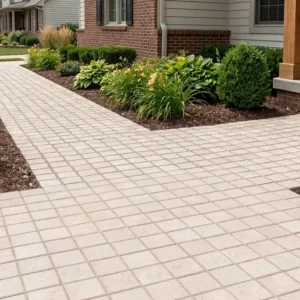
Pebble edging design ideas in the mosaic tradition work best when the path paving material has a contrasting texture — honed limestone or brushed concrete next to a rough-tumbled river pebble edge creates the visual separation that makes both elements read clearly.
Contemporary Linear Pebble Edging for Modern Gardens
Modern landscape design has shifted toward crisp, linear expressions — and pebble edging ideas have followed that direction. Rather than a naturalistic scatter, contemporary projects use a single row of consistently sized, colour-matched pebbles laid in a straight line to mark the transition between paving, lawn, or planted zones. The result is a clean, architectural edge that reads as a design element in its own right.
Black basalt pebbles in the 30–50 mm range are a particularly effective choice here. Their dense, dark tone creates strong contrast against light-coloured paving or pale decomposed granite paths, and their uniform volcanic composition means colour consistency across a full order — you won’t get the tonal variability that can make a contemporary edge look haphazard. For straight-line applications, a timber or steel edging restraint behind the pebble row keeps the line from drifting over time.
- Single-row linear edging in 30–50 mm pebbles suits contemporary low-planting schemes
- Black basalt offers the tonal consistency that naturalistic river pebbles can’t match
- Restraint edging behind the pebble row (steel or COR-TEN) prevents lateral drift
- Contrast between pebble colour and adjacent surface material sharpens the design line
Pebble Edging on Sloped and Terraced Sites
Terrain changes the entire calculation for pebble edging. On flat ground, gravity works with you — pebbles settle into position and stay. On a slope, loose pebble borders are essentially temporary; without a physical containment strategy, pebbles migrate downhill within one or two seasons, leaving a bare, eroded edge where you started.
For sites with a grade steeper than 5%, mortar-set edging or a stone kerb system is the only reliable approach. The USGS granite curbing and kerb stone dimension stone data confirms granite kerb elements perform reliably under the lateral forces that slope drainage creates — they’re worth specifying as the structural backbone of an edging design on difficult terrain, with pebbles used as an infill detail between kerb sections rather than as the primary containment element.
On terraced hillside gardens, stagger your edging lines with the terrace risers. Each level becomes a contained zone where pebble edging ideas can be applied more freely because the terrace structure itself handles the grade differential. Varying pebble colour or size between levels reinforces the terracing visually — lighter pebbles on upper levels, darker tones at the base creates a grounded, intentional composition.
- Slopes above 5% require mortar-set or kerb-retained edging — loose pebbles will migrate
- Granite kerb sections provide structural containment on challenging grades
- Terraced garden designs allow loose pebble edging within each contained level
- Varying pebble tone across terrace levels reinforces visual hierarchy on sloped sites
- Base preparation on slopes requires a compacted aggregate sub-base with positive drainage to prevent undermining
Pebble Edging Around Water Features and Ponds
The zone around a water feature or garden pond is one of the most rewarding applications for pebble edging — and one of the most technically demanding. You’re dealing with constant moisture, potential for freeze-thaw cycling in colder climates, and the visual requirement to create a natural-looking transition between water and planting.
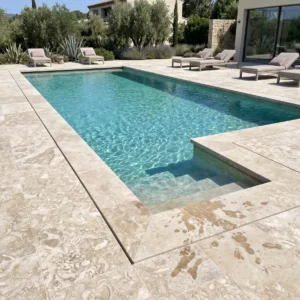
Material selection here needs to account for hydric conditions. Highly porous limestones or sandstones will absorb water and degrade faster at the water’s edge; dense basalt, granite pebbles, or naturally hard river cobbles are better suited to permanently wet zones. For the marginal planting area where water meets land, a loose-laid 50–80 mm cobble pebble edging in a concave profile channels water back toward the pond during heavy rain events rather than letting it sheet across adjacent planted areas.
At Citadel Stone, we recommend specifying a minimum 400 mm width for water feature edging — narrower than that, and the visual relationship between the stone and the water surface feels pinched. The Natural Stone Institute granite durability and application specifications outline the absorption and weathering resistance data that makes dense igneous pebbles the preferred choice for permanently wet edge conditions.
Choosing the Right Pebble Size and Finish for Your Project
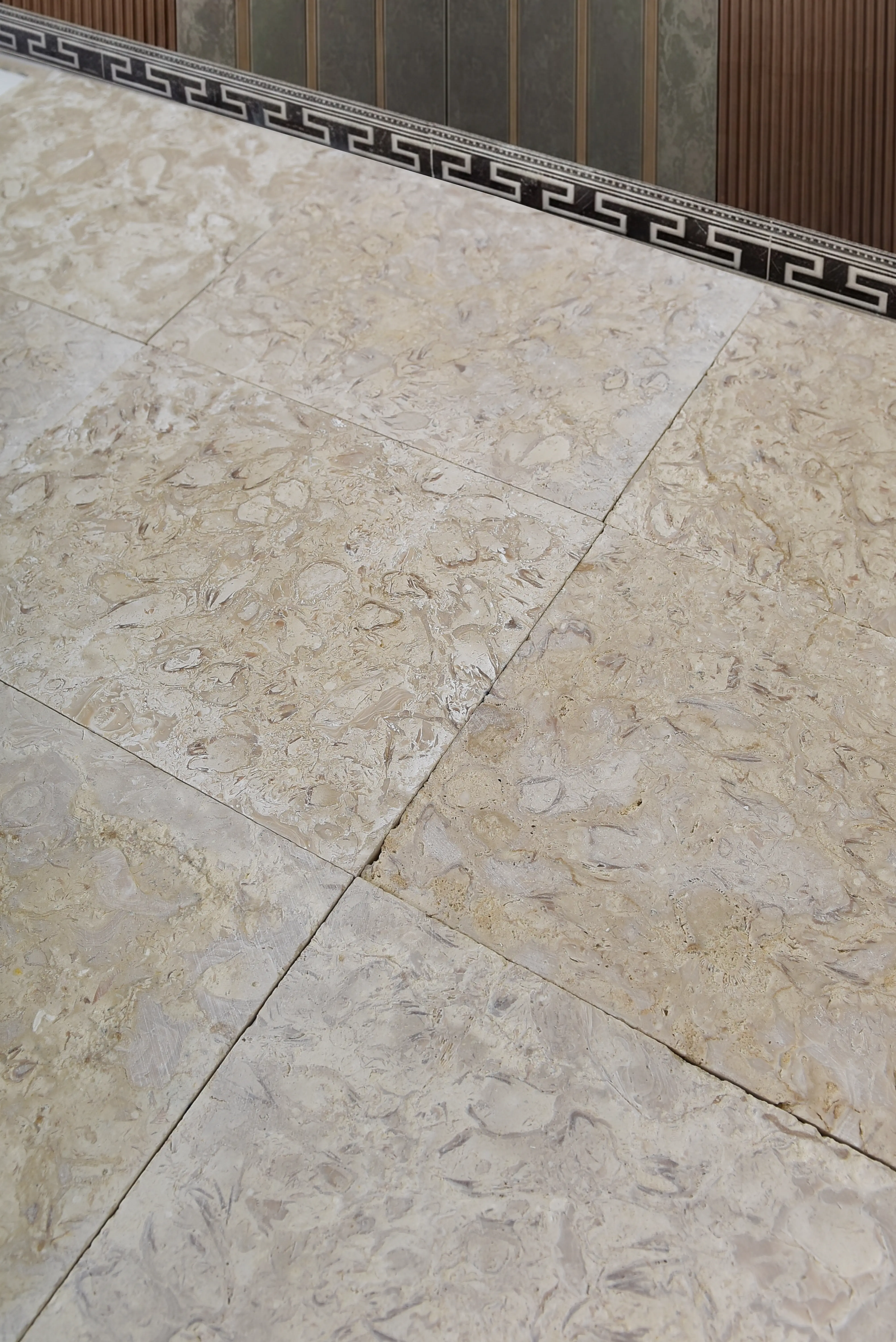
Size and finish selection is where pebble edging design ideas either reinforce or undermine the surrounding landscape. There’s a proportional relationship between the scale of the garden and the pebble size that experienced specifiers intuitively apply — a small courtyard garden with fine groundcovers calls for 20–30 mm pebbles, while a large-scale garden with bold plantings and generous paving areas can carry 60–100 mm cobbles without them looking oversized.
Finish matters as much as size. Tumbled pebbles have a softened, worn appearance that reads as naturalistic and relaxed. Machine-cut or sawn-edged stones feel structured and deliberate — better suited to formal or contemporary garden styles. Polished finishes can look striking in dry conditions but become a maintenance consideration in areas with algae growth, particularly in shaded or moist positions. For most outdoor edging applications, a natural or lightly tumbled finish is the most practical and durable choice.
Explore the full Citadel Stone pebble range to compare size grades, stone types, and finish options — having physical samples on site before you commit is worth the extra step, particularly when matching to existing paving or coping materials.
- 20–30 mm pebbles suit small-scale and fine-textured garden compositions
- 40–60 mm is the most versatile mid-range for general border and path edging
- 60–100 mm cobble pebbles suit large-scale garden and landscape applications
- Tumbled finish reads naturalistic; machine-cut reads formal and contemporary
- Polished finishes require regular maintenance in shaded or moist positions
Base Preparation: The Step That Determines Longevity
The most creative pebble edging ideas fail at the base preparation stage — and that failure shows up not immediately, but 18 months later when the edge has settled unevenly, pebbles have migrated, and the clean line you installed is gone. The base is the part of the job that nobody photographs, but it’s what separates a five-year installation from a twenty-year one.
For loose-laid edging applications, excavate to a minimum depth of 100 mm, compact the subgrade, and install a 50 mm layer of compacted crushed aggregate before setting your bedding sand. The aggregate layer is not optional — it manages subsurface drainage and prevents the frost heave or clay expansion that causes differential settlement. In heavy clay soils, increase your aggregate base to 75 mm and ensure positive fall across the entire excavation zone so water doesn’t pond beneath the edging.
Citadel Stone’s warehouse stock includes pre-graded pebble products ready for dispatch nationally, which means you can confirm material quantities and lock in your order before the base preparation begins — avoiding the timing gaps that occur when material arrives after the excavation window closes on a tight project schedule.
Getting Pebble Edging Specifications Right
Pebble edging ideas span a wide design spectrum — from loose-laid naturalistic borders to mortar-set mosaic details and structured linear contemporary edges — and the right choice depends on your site’s scale, style, terrain, and the materials already in the landscape. Getting the material selection and base preparation right from the start protects the design intent for decades, not just seasons. As you consider the broader scope of your hardscape project, related natural stone applications can inform your overall material palette — sourcing quality granite stone covers how Citadel Stone approaches natural stone supply for demanding landscape projects. Every well-executed pebble border starts with a material sourced to the right specification and a base prepared for the site conditions you’re actually working with. Pebble edging from Citadel Stone ships from premium quarries in Turkey and the broader Middle East region.
Related reading: cobblestone edging buyer guide · marble edging · pebble edging design ideas.