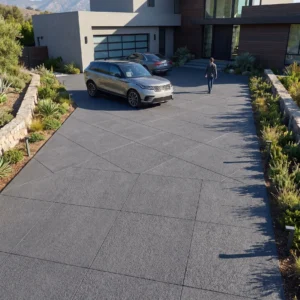
Sourcing natural granite suppliers who can deliver consistent quality across large-scale projects is where most specifications go wrong — not in the material selection itself, but in the vetting process before a single pallet leaves the warehouse. The difference between a supplier who ships matched batches and one who ships whatever’s available at dispatch can mean visible color breaks mid-installation that no amount of rearranging will fix. Your specification documents the material; your supplier selection determines whether that specification is actually honored.
What Separates Reliable Natural Granite Suppliers from the Rest
Granite’s compressive strength routinely exceeds 20,000 PSI, which makes it one of the most mechanically capable natural stone options available. According to Natural Stone Institute granite durability and application specifications, its density and crystalline structure give it superior resistance to surface abrasion, freeze-thaw cycling, and impact loading compared to softer sedimentary alternatives. But none of those material properties translate to project success if your supplier can’t back them up with traceability from quarry to delivery truck.
You’ll want to look for suppliers who can document the quarry of origin for each shipment, not just the country. Granite from the same country but different geological formations can vary significantly in mineral composition, absorption rate, and thermal expansion coefficient — typically ranging between 4.4 and 8.0 × 10⁻⁶/°C depending on the specific stone type. That variation matters when you’re detailing joint spacing for an exposed exterior installation.
Evaluating Supplier Quality Controls Before You Order
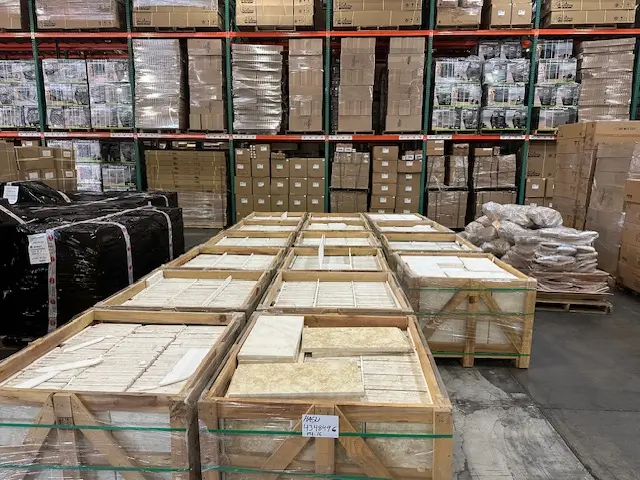
The quality control conversation with any natural granite supplier should go beyond certifications. Ask specifically about their batch management process — how they identify, segregate, and ship material from the same quarry block to ensure color and veining consistency across your order. Suppliers who batch-match inventory before dispatch are operating at a fundamentally different level than those who pull from general stock.
Consider these specific questions when vetting granite paver suppliers:
- Do they hold quarry documentation with each shipment, including extraction date and block reference numbers?
- Can they confirm that all pallets for your project will ship from the same warehouse inventory batch, not assembled from multiple arrivals?
- What is their process for handling calibration tolerance — acceptable variation in thickness for your specified nominal dimension?
- Do they conduct on-arrival inspection at their warehouse before releasing material to customers, or does QC happen only at the quarry?
- What is their policy when a delivered batch fails to match an approved sample?
At Citadel Stone, we conduct warehouse-level inspection on every incoming shipment — checking calibration tolerance, surface finish consistency, and batch color matching before any material is available for customer orders. That step is what the specification process assumes is happening, but it’s far from universal among suppliers.
Granite Paver Specifications Worth Confirming Before Procurement
Your project specification might call out granite pavers at a nominal 2-inch thickness, but nominal and actual are different conversations. Field tolerance on calibrated granite paver suppliers varies — expect ±1.5mm on premium calibrated product, but verify this against ASTM C615, the governing standard for granite dimension stone quality. Thickness variation beyond that tolerance creates lippage issues that compound across large-format installations, particularly in pedestrian traffic zones.
The ASTM C615 granite dimension stone quality standards provide the benchmark your procurement specification should reference directly. Quoting ASTM C615 compliance in your purchase order gives you a documented basis for rejecting non-conforming material — a protection that’s worth more than most people realize when a shipment arrives and something looks off.
Additional specifications to confirm with any supplier:
- Water absorption rate — quality granite should be below 0.4% per ASTM C97 testing
- Modulus of rupture — typically above 1,200 PSI for structural exterior applications
- Surface finish consistency — flame, bush-hammer, honed, or polished finishes must be uniform across all pieces in a batch
- Edge profile — whether factory-cut, sawn, or split-face, and whether all pieces in the batch match
Storm Loads, Wind Events, and Why Granite Holds Up Where Other Materials Don’t
For projects in regions that experience severe wind events, hail, or storm-driven debris impact, material density becomes a structural specification rather than just an aesthetic one. Granite’s high density — typically 2.6 to 2.7 g/cm³ — gives installed pavers substantial inertia resistance against wind-driven displacement. In open areas without full mortar bed adhesion, lighter materials migrate under sustained wind load; granite, even in sand-set applications with proper edge restraint, stays put.
Edge restraint integrity deserves specific attention in storm-exposed installations. You’ll need restraint systems capable of handling lateral forces generated by wind-driven water infiltration at joint interfaces. Wind-driven rain forces water horizontally into open joints at pressures that can undermine bedding sand over time — granite’s low absorption rate of below 0.4% means the stone itself doesn’t contribute to substrate saturation, but joint fill selection still matters. Polymeric sand with a binding agent prevents washout under these conditions; standard bedding sand will migrate after repeated storm events regardless of how well the base was prepared.
Hail impact on surface finish is another practical consideration. Polished granite develops micro-scoring from repeated hail strikes over time, shifting the light reflection profile of the surface. Flame-textured or bush-hammered finishes are mechanically more resilient to surface impact because the existing surface texture absorbs energy rather than concentrating it on a mirror face. For outdoor paving in hail-prone regions, specifying a textured finish from your natural granite supplier adds long-term durability that a polished finish simply won’t match.
Lead Times, Logistics, and Warehouse Inventory Reality
One of the most common project delays in natural stone procurement traces back to a mismatch between expected and actual lead times. Suppliers who import directly from overseas quarries operate on 8–12 week inbound cycles — adequate for long-lead project planning but incompatible with compressed timelines. Warehouse-stocked suppliers with domestic inventory can often turn orders in 1–2 weeks, but only if the specific material, finish, and format you’ve specified is actually in stock at the time of order.
Verify warehouse inventory availability before you confirm your project schedule, not after. Ask specifically:
- Is the material currently in warehouse stock, or does it need to be ordered from the quarry?
- What quantity is available, and is it sufficient to fulfill your full order from a single batch?
- What is the realistic truck delivery window from order confirmation to site delivery?
- Is the warehouse able to hold confirmed stock for a project start date 3–4 weeks out without risk of the inventory being sold to another buyer?
Citadel Stone maintains warehouse inventory nationally, which typically shortens the delivery gap significantly for domestic projects compared to the import cycle most international-source suppliers require. Your delivery scheduling should factor in truck access at your site as well — granite paver pallets run heavy, and sites with restricted access or narrow gates may require coordinated offload logistics that need to be discussed with your supplier before dispatch.
Matching Granite Finish to Your Application Context
The finish specification on your granite natural stone suppliers guide matters as much as the material grade itself. Flame-textured granite provides a coefficient of friction consistently above 0.6 — adequate for most exterior pedestrian applications — while honed finishes drop into the 0.4–0.5 range when wet. That reduction is manageable in covered areas but becomes a safety specification issue in any installation exposed to rain or irrigation overspray.
For driveway and forecourt applications, bush-hammered or sawn finishes balance traction performance with aesthetic refinement. Pool deck surrounds warrant specific attention — the USGS granite production and construction use statistics confirm granite among the most widely specified dimension stones for demanding exterior conditions, but wet-area traction should still be validated against ANSI A326.3 wet DCOF testing for your specific finish selection.
Match your finish selection to your application before approaching granite paver suppliers with a procurement request:
- Flame-textured: driveways, pathways, commercial plazas, high-foot-traffic exterior zones
- Bush-hammered: formal entrances, pool surrounds where grip matters but visual refinement is still required
- Honed: sheltered courtyards, covered walkways, interior threshold transitions
- Polished: interior flooring, feature walls, low-traffic display surfaces
Edge Restraint and Installation Detailing for Long-Term Performance
Your base specification defines the ceiling for installation longevity, but edge restraint detailing defines whether you reach that ceiling. Granite pavers without a properly anchored edge restraint system will migrate laterally over time — not dramatically in the first few years, but progressively enough to open joints, create trip hazards, and eventually compromise the bedding sand uniformity beneath the field.
For residential applications, a staked plastic edge restraint at 12-inch spike intervals is the minimum; for commercial or high-load installations, cast-in-place concrete edging or steel edge restraint with closer spike spacing handles the additional forces. In installations also exposed to storm wind loading or freeze-thaw cycling, the restraint system should be treated as a structural element of the installation, not an afterthought. Exploring the full range of options through Citadel Stone granite selection can help you identify the right edge and kerb solutions to complement your granite paver specification.
Joint width selection also interacts with structural performance in ways that aren’t always obvious. Narrow joints below 3mm are visually clean but provide less accommodation for thermal movement and make polymeric sand installation difficult to compact properly. A 5–8mm joint is the practical field standard for most granite paver applications — wide enough to allow proper joint fill compaction while tight enough to present a refined appearance and resist debris infiltration.
Supplier Reliability and Repeat-Order Continuity
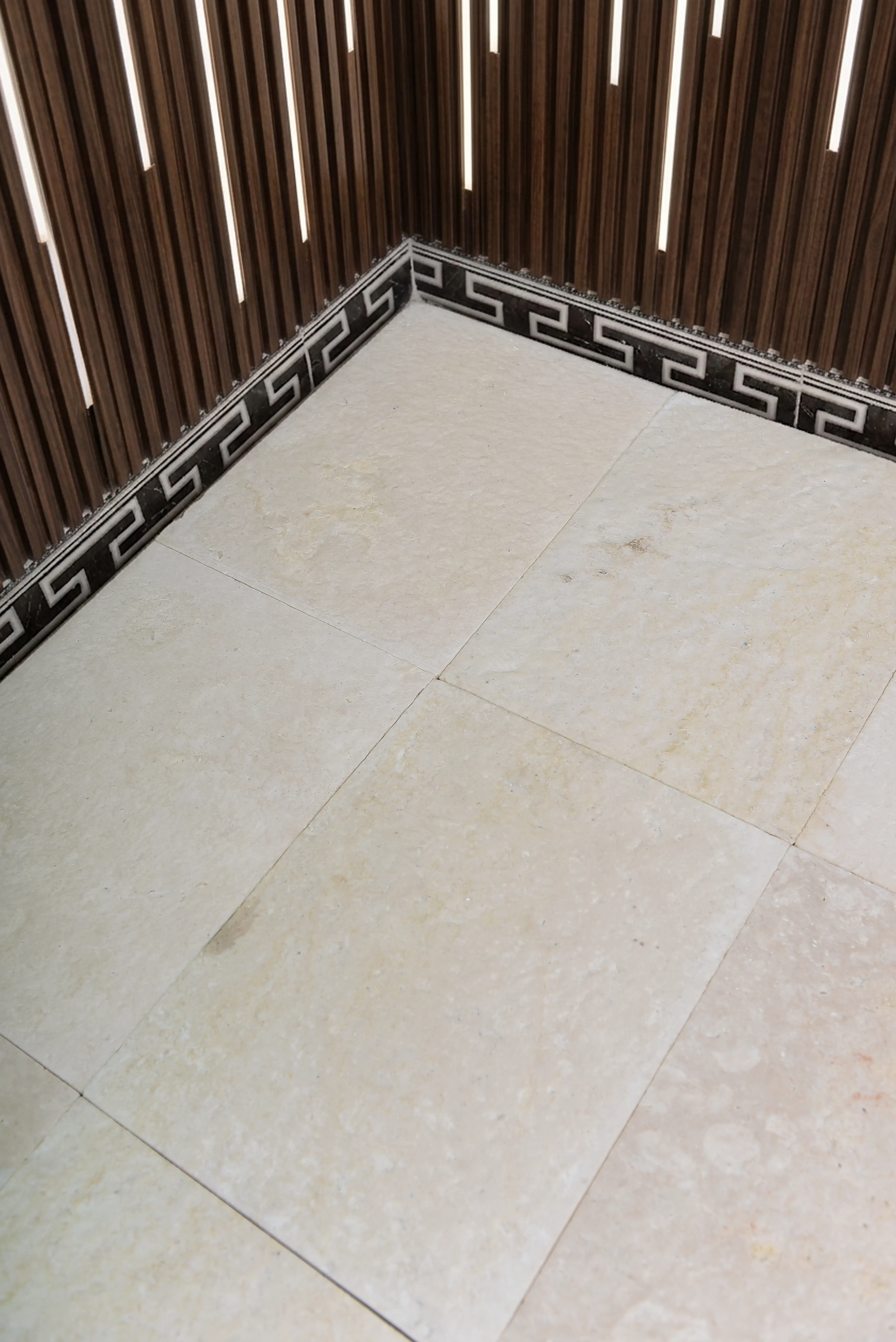
Here’s something that doesn’t appear in most supplier selection guides: your ability to match material in Phase 2 of a project — or a future repair — depends entirely on whether your supplier maintains ongoing access to the same quarry source. Natural stone quarries don’t produce indefinitely. A reliable natural granite supplier relationship means your supplier tracks quarry availability and notifies you proactively when a source is nearing depletion, so you can bank stock for future matching needs rather than discovering the problem when you need six replacement pieces two years after original installation.
Continuity should be an explicit conversation at procurement. Ask your supplier:
- How long has this specific stone been available from this quarry?
- Is there an anticipated depletion timeline or any known supply disruption in the quarry’s production schedule?
- Can you hold reserve stock at the warehouse under your project reference if you order additional material upfront?
- What is the supplier’s process for sourcing a closest match if the original material becomes unavailable?
These questions are standard practice on large-scale commercial projects. They’re equally valuable on residential work, where a cracked paver three years post-installation that can’t be matched is a visible defect with no clean resolution.
Parting Guidance for Specifying Natural Granite Suppliers
Choosing the right natural granite suppliers ultimately comes down to one question: does this supplier treat your specification as a commitment or as a starting point for negotiation? Material substitution, batch inconsistency, and undocumented finish variation are the three most common ways a granite specification erodes between order and delivery. Building your supplier vetting process around those three failure modes — rather than just comparing price per square foot — produces installations that perform as designed over the long term.
Your stone project may also involve complementary hardscape elements beyond the paving field itself. Edging integrity plays a long-term role in maintaining joint stability and preventing perimeter displacement — stone edging maintenance guidance covers how to preserve that performance across the life of your installation. Taking that whole-system view from the start of specification means you’re not solving preventable problems after the installation is complete. Granite from Citadel Stone is sourced from select natural stone quarries worldwide for even color batches.
Related reading: pebble edging design ideas · Interlocking Edging Stones: How to Choose · Why Kerb Stones Crack and How to Prevent It.