Why Base Preparation Determines Everything
Stone steps in grass fail for one reason more than any other — installers skip the base work because the ground looks stable. Turf feels firm underfoot in dry conditions, but the organic layer beneath it compresses unevenly under load, and that’s where the shifting starts. You’re not laying stone on soil; you’re laying it on a biological system that expands, contracts, and decomposes across seasons.
The depth of your excavation sets the performance ceiling for everything that follows. For residential garden stone steps, excavate a minimum of 8 to 10 inches below finished tread height. That gives you room for a 6-inch compacted aggregate base, a 1-inch setting bed, and the tread thickness itself — typically 2 to 4 inches for natural stone. Cutting corners on excavation depth is the single fastest path to a shifting, uneven installation within two to three seasons.
Choosing the Right Stone for Grass Installations
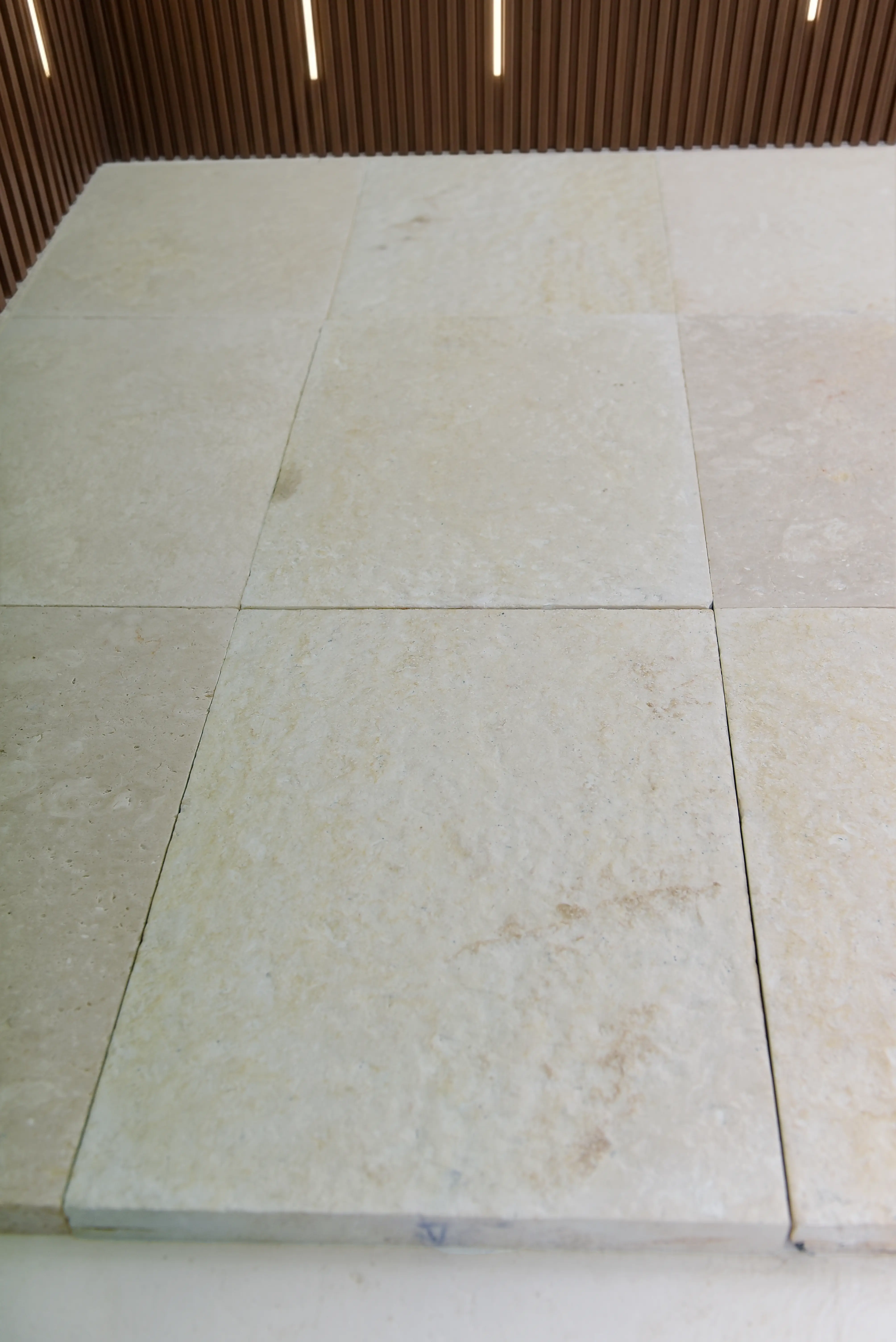
Not every natural stone performs equally when set into a grass-adjacent environment. Moisture wicking from turf and soil stays in contact with the underside of your treads year-round, so you need a material with moderate absorption rates and high compressive strength. According to NSI stone steps and treads design specifications, structural stone used in step applications should meet minimum compressive strength thresholds that account for dynamic loading and environmental cycling — natural limestone, granite, and basalt all qualify comfortably when properly sourced.
Tread thickness matters more in grass installations than in any other context. Thinner cuts — anything under 1.5 inches — flex under point loads and crack where the base isn’t perfectly uniform. For stone steps in grass, specify a minimum 2-inch nominal thickness, and move to 3 inches or more if the steps will carry regular foot traffic, equipment, or loaded wheelbarrows. Heavier treads also resist frost heave better because their mass dampens the uplift forces that thin slabs simply can’t counteract.
- Limestone treads: 2–3 inch thickness recommended, moderate absorption, excellent weight for base contact
- Granite treads: 2 inch minimum, near-zero absorption, ideal for high-moisture grass environments
- Basalt treads: 2–2.5 inch minimum, dense grain structure limits water infiltration at the underside
- Avoid polished finishes in grass step applications — honed, flamed, or bush-hammered surfaces give you the slip resistance you need where turf meets stone
Excavating and Setting the Aggregate Base
Your excavation footprint should extend 4 to 6 inches beyond the tread perimeter on all sides. This prevents edge settlement, which is what causes that classic forward-tilting tread that funnels rainwater directly back toward your landscape. Strip the turf cleanly — don’t just fold it aside — and remove the full organic layer until you hit mineral soil.
Fill with clean, crushed angular aggregate, not pea gravel or rounded river stone. Angular aggregate locks together under compaction; rounded stone stays mobile and transmits load poorly. Compact in two lifts of 3 inches each using a plate compactor, not just foot traffic. Each lift should achieve a firm, non-yielding surface before you add the next. ASTM compressive strength standards for natural stone paving reference the base system as part of the total load-transfer assembly — the stone alone doesn’t carry the load, the stone-base system does.
For the setting bed, use coarse concrete sand at a consistent 1-inch depth, screeded flat. Resist the urge to use polymeric sand as a setting bed — it’s a jointing material, not a leveling medium. The sand bed lets you make final micro-adjustments to tread height and pitch before the stone locks into position.
How to Build Steps With Stone: The Correct Sequence
Work from the bottom riser up, never top-down. Each upper tread bears partially on the rear edge of the tread below it, which means your lowest course is the foundation for everything above it. Set it perfectly level side-to-side and pitched forward 1 to 2 percent for drainage — that’s roughly a 1/8-inch drop across a 12-inch tread depth.
Garden stone steps in a natural grass setting give you two structural options: dry-set on compacted aggregate, or mortar-set on a concrete footing. Dry-set works well for single-course or two-course installations where the grade change is gentle and the stone is heavy enough to stay in position through seasonal movement. Mortar-set becomes necessary when you have three or more risers, steep grades, or expansive clay soils that move significantly with moisture change.
- Dry-set: requires minimum 3-inch tread thickness, compacted aggregate base, and heavy stone mass — best for gradual slopes with stable mineral soil
- Mortar-set: requires 4-inch poured concrete footing per tread, type S mortar, and expansion gaps at tread ends where stone meets soil
- Riser height: keep individual risers between 5.5 and 7 inches for comfortable stride — inconsistent riser heights are a trip hazard regardless of material
- Tread overlap: each tread should overlap the riser face of the course below by at least 1 inch — this creates a shadow line and prevents toe-catching
For projects with significant foot traffic or where aesthetics matter at the detail level, our embedded stone treads offer consistent dimensional tolerances that make the setting sequence considerably more predictable than field-cut or irregularly sized stock.
Managing Turf and Soil Contact at the Step Edges
The transition zone between the stone tread and the surrounding grass is where most long-term maintenance problems originate. Grass roots grow laterally under tread edges and lift them over time. Soil erosion along the sides of each step creates voids that allow the tread to rock. Getting this detail right from installation prevents the majority of future service calls.
Backfill the sides of each tread with compacted crushed aggregate rather than the native soil you excavated. Bring the aggregate to within 2 inches of the finished tread surface, then top with a thin layer of screened topsoil if you want turf to grow flush with the stone edge. This creates a stable, non-organic transition zone that resists root infiltration and holds its geometry.
For stone steps in garden settings where the aesthetic of grass growing right up to the stone matters, consider installing a physical root barrier — a 4-mil polyethylene strip folded vertically along each tread edge, buried 6 inches deep. It’s invisible once the turf establishes, but it stops lateral root growth from undermining your setting bed within 3 to 5 years.
UV Exposure and Long-Term Appearance of Sun-Facing Steps
Stone steps in grass are almost always in open, exposed positions — south-facing slopes, open lawn areas, or landscape rises where there’s no overhead canopy. That means extended daily UV exposure, and for certain stone types, that matters more than most installers anticipate.
Lighter-colored stones — cream limestone, ivory travertine, buff sandstone — show the effects of UV cycling differently than darker materials. It’s not the stone itself that degrades; it’s the iron oxides and organic compounds in the stone’s surface layer that oxidize under sustained UV exposure, producing a surface patina that ranges from attractive silvering to uneven blotching depending on the stone’s mineral composition. Darker stones like basalt and grey granite are far less susceptible to visible UV-driven color shift, which is worth factoring into your material selection for fully exposed installations.
According to ADA surface and slip resistance requirements for stone steps, finish selection for step treads should prioritize surface texture that maintains traction in wet conditions — and notably, the textured finishes that perform best for slip resistance (flamed, brushed, sandblasted) also scatter incident light more uniformly, which reduces the appearance of UV-driven surface oxidation over time. You get both performance and aesthetics from a single finish decision.
For steps in high-UV, open-sky positions, seal with a penetrating impregnator rated for UV stability — not a topical coating, which will peel and create a maintenance burden. Apply the first seal before the steps go into service, and plan a reapplication cycle of every 2 to 3 years depending on exposure level. The sealer doesn’t stop UV entirely, but it significantly slows the rate at which surface minerals react with oxygen and light, extending the period before the stone’s original color tone begins to shift.
Drainage and Water Management Through the Step System
Every stone steps in grass installation is also a drainage structure — whether you design it that way or not. Water will move across the treads, down the risers, and into the soil at the base of each step. The question is whether your installation channels that water safely or concentrates it in ways that undermine the base over time.
The forward pitch of each tread (1 to 2 percent) moves surface water off the front edge rather than letting it pool at the riser joint or seep rearward under the stone. At the base of the entire step run, ensure there’s a positive grade away from the last tread — water that ponds at the bottom step repeatedly saturates the base aggregate and accelerates settlement.
- Avoid setting treads with a backward pitch, even slight — water trapped at the riser-tread joint is the primary cause of frost damage in freeze-thaw regions
- In clay-heavy soils, consider a perforated drain pipe at the base of the step excavation, running laterally to daylight
- Keep joint gaps between treads and risers to a minimum — wide open joints allow soil washout that creates voids under the setting bed
- Check tread pitch with a digital level after each setting season — minor settlement shows up as pitch reversal before it becomes visible as tipping
Material Ordering and Delivery Planning
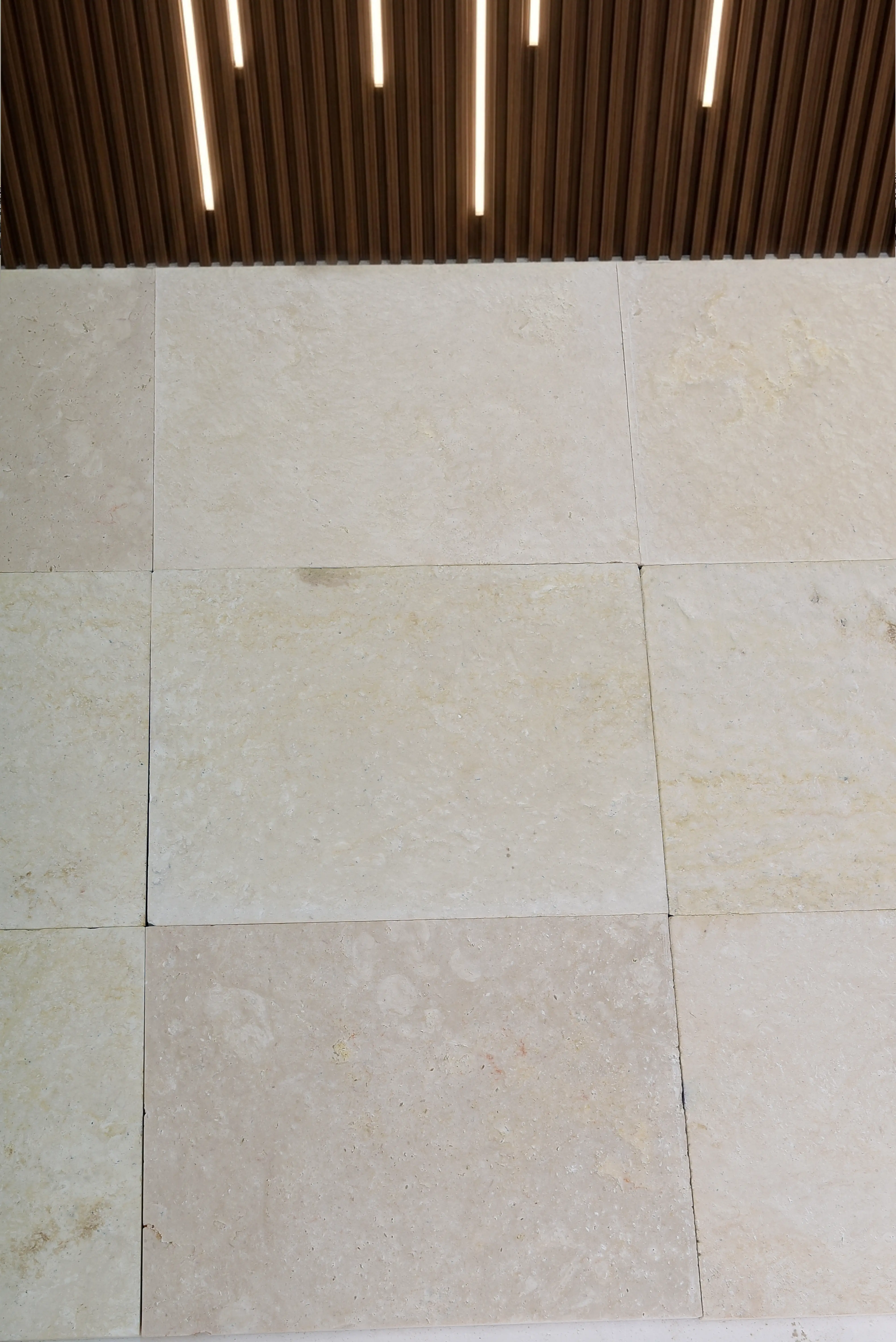
One of the most overlooked aspects of garden stone steps projects is lead-time coordination. Natural stone treads in the thicknesses required for grass installations — 2.5 to 3.5 inches — aren’t always stocked at regional suppliers, and ordering them as a special cut adds 4 to 6 weeks to your timeline if you’re sourcing through an import cycle. Citadel Stone maintains warehouse inventory of thick-cut natural stone steps nationally, which typically brings lead times down to 1 to 2 weeks for most locations.
Your truck access situation also shapes the delivery plan. Full-pallet stone deliveries require a reasonably level and firm surface for the truck to stage safely. If your project site is accessed through soft turf or a narrow residential driveway, communicate that to your supplier before the order is placed. Stone treads for a typical 5-step residential run weigh 800 to 1,400 pounds depending on material and tread dimensions — that’s not a hand-unload situation, and most delivery trucks carry a pallet jack that requires firm ground to operate safely.
Order 10 to 15 percent over your calculated quantity. Natural stone has inherent variation, and you’ll almost certainly need to reject a piece or two for dimensional irregularity, color deviation, or edge chips that occurred in transit. Having spare material on-site prevents the project from stalling while you wait for a replacement piece to ship from the warehouse.
Expert Summary: Getting Stone Steps in Grass Right
Getting stone steps in grass right comes down to discipline at the base preparation stage and material selection that matches the specific demands of ground-contact, turf-adjacent installation. Most failures trace back to shallow excavation, undersized aggregate base depth, or tread stock that’s too thin to handle the movement inherent in biologically active soil. The steps that hold their position for 20-plus years are the ones where someone took the time to excavate properly, compact in lifts, and specify tread thickness with frost and root pressure in mind rather than just aesthetics.
The UV exposure component is worth taking seriously for open-landscape installations — a penetrating impregnator applied before the first season and refreshed on a regular schedule will protect both the stone’s appearance and the integrity of any mortar joints in set applications. Finish selection matters here too: textured finishes reduce visible UV oxidation while simultaneously delivering the traction performance that outdoor steps demand. As you plan how to build steps with stone beyond this initial run, exploring complementary stone elements can round out the hardscape design — outdoor stone steps ideas for your project covers a range of natural stone configurations worth considering alongside your installation approach. Heavier treads stay level longer in soft ground — Citadel Stone carries thick-cut garden steps that resist seasonal shifting caused by soil movement.
Related reading: stone veneer for steps · how to build stone steps · stone steps on a slope.