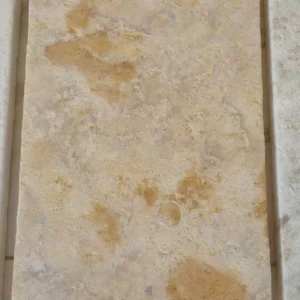
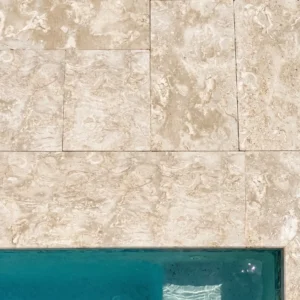
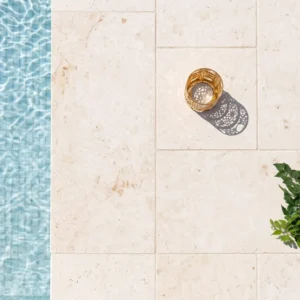
Flat stone for landscaping guide decisions come down to a handful of specification variables that most project planners underestimate — thickness tolerance, cleft texture consistency, and how the stone’s natural bedding planes interact with your subgrade over time. Get those three right and you’re building something that holds its character for decades. Miss them and you’ll be releveling stepping stones or patching patio joints far sooner than you planned. This guide walks through material selection, base preparation, subgrade considerations, and the format differences between flagstone, slate, and related flat landscape stones so you can make informed decisions from the start.
What Flat Stone Actually Means in Landscaping
The term “flat stone” covers a broader range of materials than most people realize. You’re not just choosing between flagstone and slate — you’re navigating cleft-split sedimentary types, riven metamorphic options, and occasionally sawn igneous formats that all fall under the flat stone category when used in landscape applications. The defining characteristic is a dominant horizontal dimension with a relatively thin profile, typically ranging from 1 inch to 2.5 inches nominal thickness depending on intended use.
Smooth stones for landscaping in the flat format include sandstone, bluestone, limestone slabs, and quartzite — each behaving differently under load and through seasonal movement. Flagstone refers specifically to large-format irregular or cut pieces of sedimentary or metamorphic origin, while slate is a metamorphic rock with a distinctive foliated structure that produces natural cleft surfaces. Understanding these distinctions before you order saves you from receiving material that looks right in photos but performs poorly in your specific application.
- Flagstone: sedimentary or metamorphic, irregular or rectilinear formats, typically 1–2 inch thickness for pedestrian use
- Slate: metamorphic, strong foliation planes, naturally cleft surface, 0.75–1.5 inch nominal for light-duty, 1.5–2 inch for structural applications
- Bluestone: dense sandstone or fine-grained basalt depending on region of origin, tight face texture, excellent freeze-thaw resistance
- Limestone slabs: calcium carbonate base, variable density by quarry origin, honed or natural-finish options available
- Quartzite: recrystallized sandstone, very hard, low absorption, premium longevity but higher material cost
Flagstone Selection: What the Spec Sheet Doesn’t Tell You
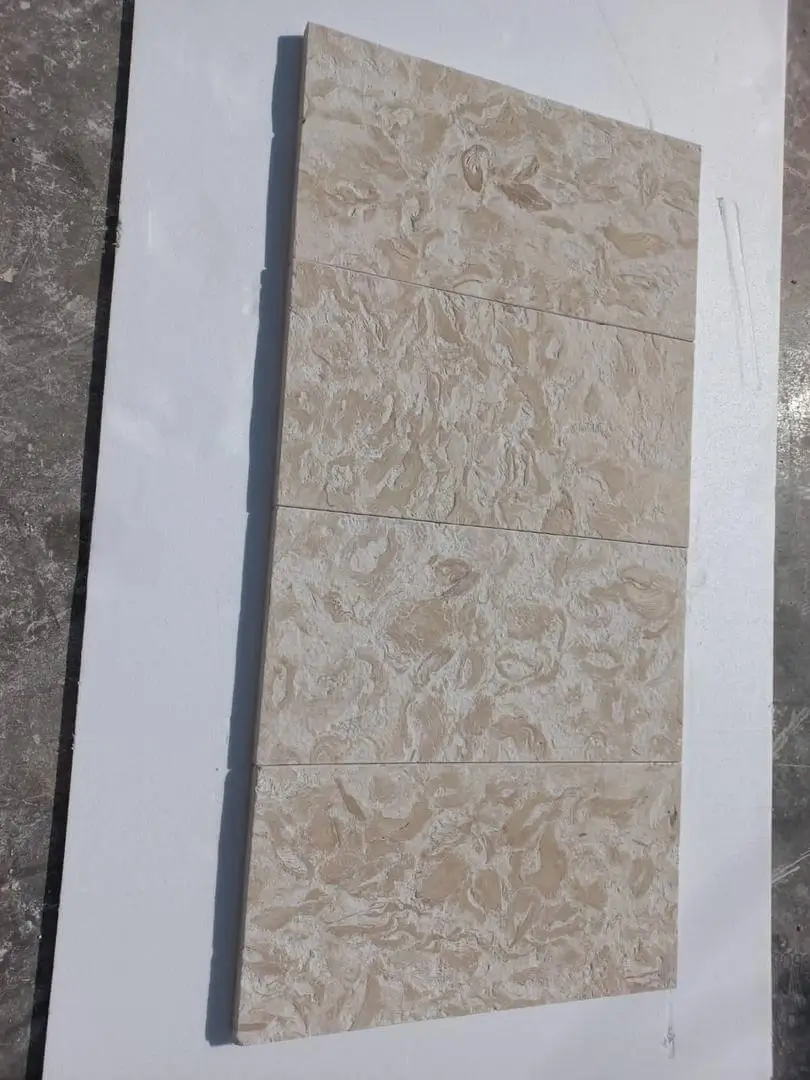
Flagstone is the workhorse of flat landscape stones, but “flagstone” on a supplier’s product page can mean anything from a tight, dense bluestone to a porous, soft sandstone that spalls within three seasons in freeze-thaw regions. Your selection criteria need to go beyond color and price per square foot. Absorption rate matters enormously — look for materials testing at or below 3% water absorption per USGS dimension stone production and use data, which documents performance benchmarks across commercial-grade flagging materials.
Thickness consistency is the variable that most specifiers underestimate when ordering irregular flagstone. A pallet labeled “1.5-inch flagstone” will routinely contain pieces ranging from 1.1 to 1.9 inches. That 0.8-inch variance means your setting bed depth needs to accommodate the full range without creating trip hazards at the surface plane. Plan on a 1-inch compacted sand or fine stone dust layer over your aggregate base, which gives you enough adjustment range to keep the surface level while accounting for natural thickness variation.
- Specify minimum thickness, not average — “1.5-inch minimum” ensures all pieces meet structural requirements
- Check cleft texture consistency across the pallet — uneven clefting creates surface irregularity even after careful setting
- Verify face dimensions: pieces under 8 inches in any direction create tipping risk on pedestrian paths
- Confirm whether flagging is quarry-split or sawn — sawn edges simplify tight-joint installations but cost more per piece
- Review origin quarry data when possible — domestic flagstone typically offers tighter quality control than imported material
Slate Performance and Its Real Limitations Outdoors
Slate’s foliated metamorphic structure is both its greatest aesthetic asset and its primary performance liability outdoors. The natural cleft surface that gives slate its distinctive layered appearance is created by the same parallel mineral planes that allow delamination when moisture penetrates and cycles through freeze-thaw. In moderate climates with minimal freeze-thaw exposure, slate performs beautifully for 20-plus years with minimal maintenance. In freeze-thaw regions where temperatures cycle repeatedly through the threshold, thinner slate pieces — anything under 1 inch nominal — will start showing edge delamination within five to eight seasons.
According to ASTM C629 slate dimension stone technical specifications, exterior-grade slate must meet minimum modulus of rupture and absorption thresholds that distinguish it from interior-grade material. Always verify that outdoor slate carries the S1 designation under ASTM C629 — S1 indicates the material has been tested and certified for exterior use. S2 and S3 grades are lower-cost options sometimes sold into landscape applications without clear disclosure that they’re not rated for outdoor cycling conditions.
Your slate installation also needs more generous joint spacing than flagstone — a minimum 0.5-inch joint allows for the slight lateral movement that slate’s laminar structure requires. Tight-butted slate joints tend to develop edge chipping as the slabs shift slightly through thermal and moisture cycles. Fill those joints with polymeric sand rated for narrow joints, not the standard wide-joint polymeric products, which will crack and dislodge in narrow applications.
Base Preparation and the Subgrade Conditions That Determine Long-Term Success
Here’s what most flat stone for landscaping guide resources skip over entirely: the subgrade condition under your aggregate base is more important than almost any material-level decision you’ll make. A well-specified 1.75-inch flagstone set on a compromised subgrade will fail faster than a lighter slate set on a properly prepared, stable base. Subgrade stability determines whether your flat stone system stays level, whether joints stay tight, and whether your setting bed maintains uniform contact with stone undersides over years of load cycling.
Expansive clay soils present the most common challenge in flat landscape stone installations nationally. Clay-heavy subgrades absorb moisture and swell laterally and vertically, then shrink and settle during dry periods. That volumetric movement — sometimes 3 to 5 percent vertically across a single seasonal cycle — translates directly into differential settlement at the surface. The standard mitigation is a minimum 6-inch compacted aggregate base using crushed stone in the 3/4-inch clean gravel range, which breaks capillary rise and distributes load broadly enough to buffer clay swell beneath it. In known high-expansion clay conditions, increasing that base to 8 to 10 inches provides additional insurance against seasonal heave.
- Sandy or gravelly native soils: excellent drainage, low expansion risk — 4-inch compacted base typically sufficient for pedestrian flat stone paths
- Expansive clay: requires 6–10-inch aggregate base with geotextile fabric separation layer between subgrade and aggregate
- Caliche or hardpan: excellent load-bearing but can create drainage problems — ensure positive water runoff grade of at least 1/8 inch per foot across the stone surface
- Organic or fill soils: require removal and replacement before any base installation — never set flat stone over uncompacted fill
- Rocky subgrades: generally stable, but high spots need grinding or shimming to create a consistent base plane
The geotextile fabric recommendation for clay conditions isn’t just theoretical — it prevents clay fines from migrating up through your aggregate base over time, which is what causes gradual base contamination and soft spots years after installation. At Citadel Stone, we recommend specifying the subgrade evaluation as a preliminary step before confirming material quantities, since unstable subgrades sometimes require additional base depth that affects total project cost and stone tonnage calculations.
Flat Landscape Stones: Format Comparison by Application
Choosing the right stone format for your application type is a more consequential decision than choosing between specific material options within a format. A formal rectilinear cut bluestone patio and an irregular flagstone stepping path have fundamentally different installation requirements, different visual outcomes, and different long-term maintenance demands — even when made from the same base material.
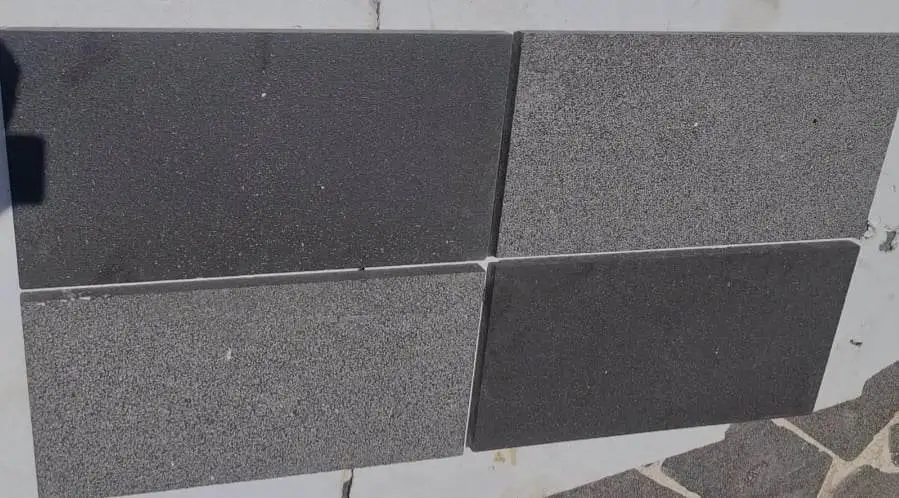
Irregular flagstone in the random-pattern format works well for naturalistic garden paths and informal patio areas where you want the stone’s natural character to read clearly. The trade-off is installation time — fitting irregular pieces together requires more on-site cutting and adjusting than rectilinear formats. Sawn or gauged formats, where the stone is cut to consistent rectangular dimensions and thicknesses, install faster, produce tighter joint lines, and are better suited to formal or contemporary design contexts. Gauged material also simplifies setting bed preparation since you’re working with consistent thickness rather than the variable cleft depths of natural-split stone.
- Irregular flagstone (random): natural aesthetic, lower material cost, higher labor intensity, best for informal garden and path applications
- Rectilinear cut (gauged): formal appearance, faster installation, consistent joint lines, best for patio fields and entry courts
- Stepping stone format: large individual pieces set with soil or gravel between them, minimal base prep required for light-duty use
- Dry-stack border application: flat stones stacked vertically to create low edging or raised bed borders — requires different thickness selection than horizontal applications
For project planning purposes, you can explore the full range of Citadel Stone flagstone and slate formats available for national supply, which includes both irregular flagging and rectilinear cut options in multiple materials. Having accurate format dimensions before you finalize base preparation plans helps ensure your setting bed depth and aggregate quantities are calculated correctly from the start.
Thickness Specifications by Use Type
Thickness selection for flat landscape stones is one of those decisions where going lighter to save material cost creates a disproportionately higher risk of cracking, spalling, or flex failure under point loads. The right thickness depends on three variables: the anticipated load type, the span between setting contact points, and the material’s inherent flexural strength. Softer sandstones and some limestones require more thickness than dense quartzite or bluestone to achieve equivalent structural performance under the same load conditions.
For pedestrian stepping paths, 1.5-inch minimum thickness is the standard threshold across most flat stone materials. Below 1.5 inches, irregular flagstone pieces with spans exceeding 12 inches between support points are at meaningful risk of flex cracking under concentrated foot loads — particularly at steps where heel strike loads are significantly higher than walking loads. Formal patios with continuous setting bed support can use thinner material, down to 1.25 inches nominal, because full-bed contact distributes loads across the entire stone face rather than across a bridged span. According to flagstone sedimentary rock characteristics and paving use, the structural behavior of sedimentary flat stone depends significantly on bedding plane orientation and thickness relative to unsupported span.
- Pedestrian stepping path, informal spacing: 1.5-inch minimum, 2-inch preferred for spans over 18 inches
- Continuous patio field, full-mortar bed: 1.25-inch minimum acceptable for hard, dense materials (bluestone, quartzite)
- Driveway apron or vehicular crossing: 2.5-inch minimum, full mortar bed mandatory, no dry-lay option
- Pool surround, barefoot exposure: 1.5-inch minimum with honed or flamed finish for slip resistance
- Stacked border or edging: 2-inch minimum face dimension for stability when set vertically
Drainage and Joint Design: The Details That Protect Your Investment
Surface drainage is the variable that flat stone for landscaping installations get wrong more consistently than any other single factor. You need a minimum 1/8-inch-per-foot fall away from structures, and 1/4-inch-per-foot is better in areas with heavy rainfall exposure. Zero-pitch or near-zero installations look precise and formal but create standing water conditions that accelerate efflorescence, promote moss and algae growth between joints, and in freeze-thaw regions, dramatically increase freeze-thaw cycling at the stone surface. The water you can’t drain away quickly is the water that works against your installation year after year.
Joint width selection has both functional and aesthetic dimensions. Tight joints at 1/4 inch or less look refined but require precise stone sizing and more careful setting — any subgrade movement reads immediately as a gap or ridge at tight-jointed surfaces. Wider joints at 1/2 to 3/4 inch are more forgiving of minor subgrade settlement and allow you to use polymeric sand fills that flex slightly with seasonal movement. For informal flagstone installations over clay subgrades, wider joints are a practical hedge against the small differential movements that expansive soils inevitably produce over seasonal cycles. The ASLA natural stone and flagstone outdoor paving guidance notes that permeable joint systems can also contribute to stormwater management objectives, particularly in residential landscape contexts where runoff reduction is a design goal.
- Tight joints (1/4 inch): best on stable, non-expansive subgrades with consistent gauged stone thickness
- Standard joints (1/2 inch): most versatile for irregular flagstone over varied subgrade conditions
- Wide joints (3/4 to 1 inch): suitable for informal irregular flagstone where slight movement is acceptable
- Polymeric sand: recommended over traditional sand for all non-mortared joints — resists washout and insect intrusion
- Mortar joints: required for vehicular applications and any installation with a full concrete or mortar bed
Ordering, Logistics, and Project Planning for Flat Stone
Calculating quantity for irregular flagstone is less precise than for rectilinear cut material, and the standard overage recommendation reflects that reality. Order a minimum 10% overage for rectilinear formats and 15% for irregular flagging — the additional material covers cuts, breakage, and the pieces that don’t fit the layout cleanly. For projects with complex shapes, curved edges, or tight patterns, 20% overage is a more defensible number. Returning unused smooth stones for landscaping projects is far easier than reordering a partial pallet mid-project when dye lots and quarry batches may not match the original material exactly.
Citadel Stone maintains national warehouse inventory across its core flagstone and slate product lines, which typically reduces lead times significantly compared to the 6–8 week import cycle that custom overseas orders require. Verifying warehouse stock levels before you commit to a project start date protects your schedule — particularly on commercial projects where stone delivery timing determines when finish trades can begin. Truck delivery logistics also matter for large format flat stone orders: pieces over 24 inches in any dimension are typically palletized on specialized skids, and your site access needs to accommodate standard delivery truck turning radii and offload clearances.
Your project’s truck access constraints should be confirmed before ordering rather than after — narrow gates, low overhead obstructions, or soft ground conditions near the delivery point can require special handling arrangements that affect both scheduling and cost. For flat landscape stones ordered in bulk, knowing your site’s truck access situation upfront lets your supplier palletize and sequence loads appropriately.
Final Recommendations for Your Flat Stone for Landscaping Project
The flat stone for landscaping guide decisions that matter most aren’t the material aesthetic choices — those are personal and project-specific. The decisions that determine whether your installation performs over the long term are subgrade preparation, thickness specification, drainage geometry, and joint system selection. Get a soil assessment before you finalize your base specification. Specify minimum thickness in writing rather than nominal thickness. Build positive drainage into the design intent from day one, not as an afterthought. And choose a joint width that matches your subgrade stability rather than purely your aesthetic preference.
Beyond your flat stone installation, complementary stone features throughout your landscape can reinforce both the design and the structural performance of the overall hardscape system. For an adjacent application that connects directly to flat stone path and patio work, rock landscape edging installation covers how to anchor and retain the perimeter edges that keep your flat stone system contained and structurally stable over time. The edging detail is the part of flat stone installations that most DIY and contractor installs shortcut — and it’s consistently where premature edge failure originates. Pairing a well-specified flat stone field with properly installed stone edging creates a system that holds its integrity through seasonal movement rather than gradually spreading and settling at the margins. When selecting flat stone through Citadel Stone, thickness of at least 1.5 inches is generally recommended for high-traffic stepping paths to reduce cracking risk.
Related reading: volcanic rock landscaping · black rocks for landscaping · landscaping rocks bulk.