

Specifying a modern white travertine pool deck comes down to understanding how the stone’s open-pore matrix interacts with a pool environment — not just its visual appeal. Thermal expansion coefficients for travertine run between 4.5 and 5.5 × 10⁻⁶ per °F, which means your joint spacing decisions at installation directly determine whether the surface stays flat or starts lifting in three years. The design ideas that perform best over two decades share a common thread: they treat material behavior and visual intent as inseparable, not sequential.
Why White Travertine Works Around Water
Travertine’s calcium carbonate base keeps surface temperatures measurably lower than dense igneous alternatives — a consistent advantage barefoot pool users notice within seconds on a hot afternoon. According to Natural Stone Institute travertine properties and outdoor suitability, its open-pore structure and characteristic absorption profile actively moderate surface heat in high-UV conditions. That thermal buffer is one reason white travertine tile outdoor applications have remained a top specification choice for pools across varied climate zones.
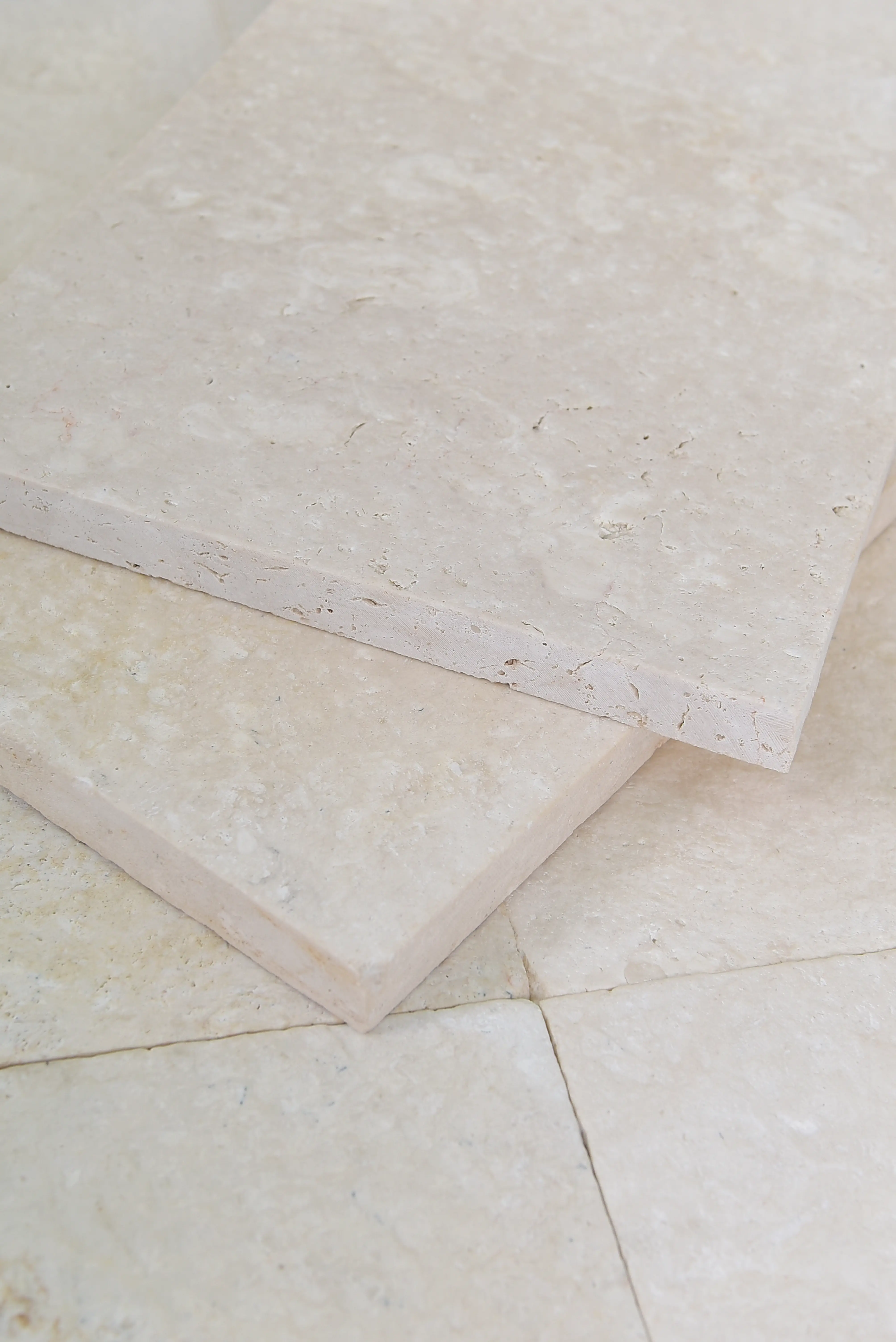
The pore structure also plays a slip-resistance role most designers underestimate. A honed or tumbled finish on white travertine tile outdoor panels gives more underfoot texture than a polished surface, which is what pool-deck surfaces call for. Brushed finishes push that figure slightly higher and add a textural contrast that looks intentional rather than purely functional.
Design Ideas That Actually Hold Up
Your design concept needs to survive the gap between a render and a real installation. Here are the ideas that translate reliably from drawing to finished deck.
- Continuous field with contrast coping: Run 12×24 snow white travertine field tiles in a running bond, then frame the pool edge with a thicker bullnose coping piece in a matching honed finish — the color stays unified while the profile shift creates clear visual depth.
- Directional layout for elongated pools: Orient 12×24 slabs with the long dimension running parallel to the pool’s length. The result is a perspective-lengthening effect that makes narrow rectangular pools read as more generous than their actual dimensions.
- Mixed-finish zoning: Use a tumbled finish in the primary walking zone for maximum grip, then transition to honed for a seating platform or fire feature surround nearby. The tonal difference between finishes on the same travertine white stone is subtle enough to feel curated, not mismatched.
- Inset accent strips: A single course of darker natural stone — charcoal limestone or black basalt — run as an inset border creates a strong geometric frame without competing with the bright field material.
- Oversize stepping-stone integration: Pair the 12×24 field with 24×24 slabs set flush at stepping intervals. This breaks visual repetition and subtly marks pathways without using a different material.
Finish Selection for Pool Decks
The finish you choose for a modern white travertine pool deck shapes both performance and the way light reads across the surface throughout the day. Honed finishes produce a matte, low-reflectance surface that photographs well and feels understated — ideal for minimalist pool designs where clean lines matter most. Tumbled finishes introduce micro-surface irregularity that catches afternoon light softly and pairs naturally with more relaxed, organic pool shapes.
Brushed travertine sits between the two: the surface has more tooth than honed but stops short of the rounded-edge character of tumbled. For a pool deck that borders an entertainment area and needs to feel continuous from wet zone to dry terrace, brushed travertine white stone on the deck and honed on the covered patio keeps the family of finishes cohesive while the slight finish shift signals the zone change naturally.
Polished finishes are rarely the right call for pool decks. They look exceptional in dry-interior images but become hazardous when wet and show every water spot and foot smudge as a maintenance liability.
Sizing and Layout Geometry
The 12×24 format dominates modern white travertine pool deck specifications for a practical reason: it’s large enough to minimize grout lines and feel contemporary, but dimensionally manageable for setting crews working around irregular pool edges. Larger formats — 16×24 or 24×24 — work well on open deck fields but demand tighter base tolerances; any variance greater than 3/16 inch over a 10-foot span will telegraph through the finished surface as lippage.
Layout geometry should account for cut management at pool edges before the first tile is set. Starting from the pool coping and working outward ensures the most-visible perimeter stays full or near-full cuts, while any awkward cuts migrate to the far edge where planting beds or fencing typically obscure them. This is a detail that separates installations that look professionally specified from ones that look like the layout was guessed.
- Running bond (1/3 offset): Most common for 12×24 — reduces visual busyness and is forgiving of minor setting inconsistencies
- Stacked bond: Contemporary and precise but demands perfect grout line alignment — any drift reads as an error from pool-level viewing angles
- Herringbone: Works with square formats; rarely appropriate for modern pool aesthetics but occasionally used in transitional design styles
- Random coursing: Avoid — the visual informality clashes with the clean geometry travertine white pool deck designs typically require
Subgrade Preparation and Soil Considerations
The most common failure point in natural stone pool deck installations isn’t the material — it’s what happens beneath it. Expansive clay soils cycle through wet and dry phases that generate uplift forces capable of cracking a bedded stone surface within two to three seasons if the subgrade isn’t properly addressed. Before any aggregate base goes down, you need a geotechnical read on what you’re working with.
Sandy or gravelly subgrades compact well and drain freely, which makes base preparation straightforward. Caliche-dominant soils in drier inland regions require scarification and recompaction — the natural cementation in caliche creates localized hard spots that prevent uniform load transfer to the base above. Silty soils present a different problem: they can appear adequately compacted during dry conditions but lose bearing capacity rapidly when saturated, which triggers differential settlement that shows as tile lift or cracking.
- Target a minimum 4-inch compacted aggregate base for pool deck applications — 6 inches where expansive soils are present
- Install a geotextile separator fabric between native soil and aggregate base to prevent subgrade migration under dynamic loading
- Slope the base a minimum 1/8 inch per foot away from the pool structure to direct subsurface drainage laterally
- Specify a bedding sand or fine-graded aggregate screeded to ±1/8 inch before setting stone — do not use this layer to compensate for base irregularities
- Allow compacted base to cure under load for a minimum of 72 hours before beginning stone installation in clay-heavy subgrade conditions
According to ASTM C1527 travertine dimension stone standard specifications, travertine set in outdoor applications must account for freeze-thaw cycling and differential subgrade movement in the installation design — not just the stone specification itself. That language points directly back to subgrade preparation as a co-equal specification responsibility alongside material selection.
Grout Joint, Filling, and Sealing Strategy
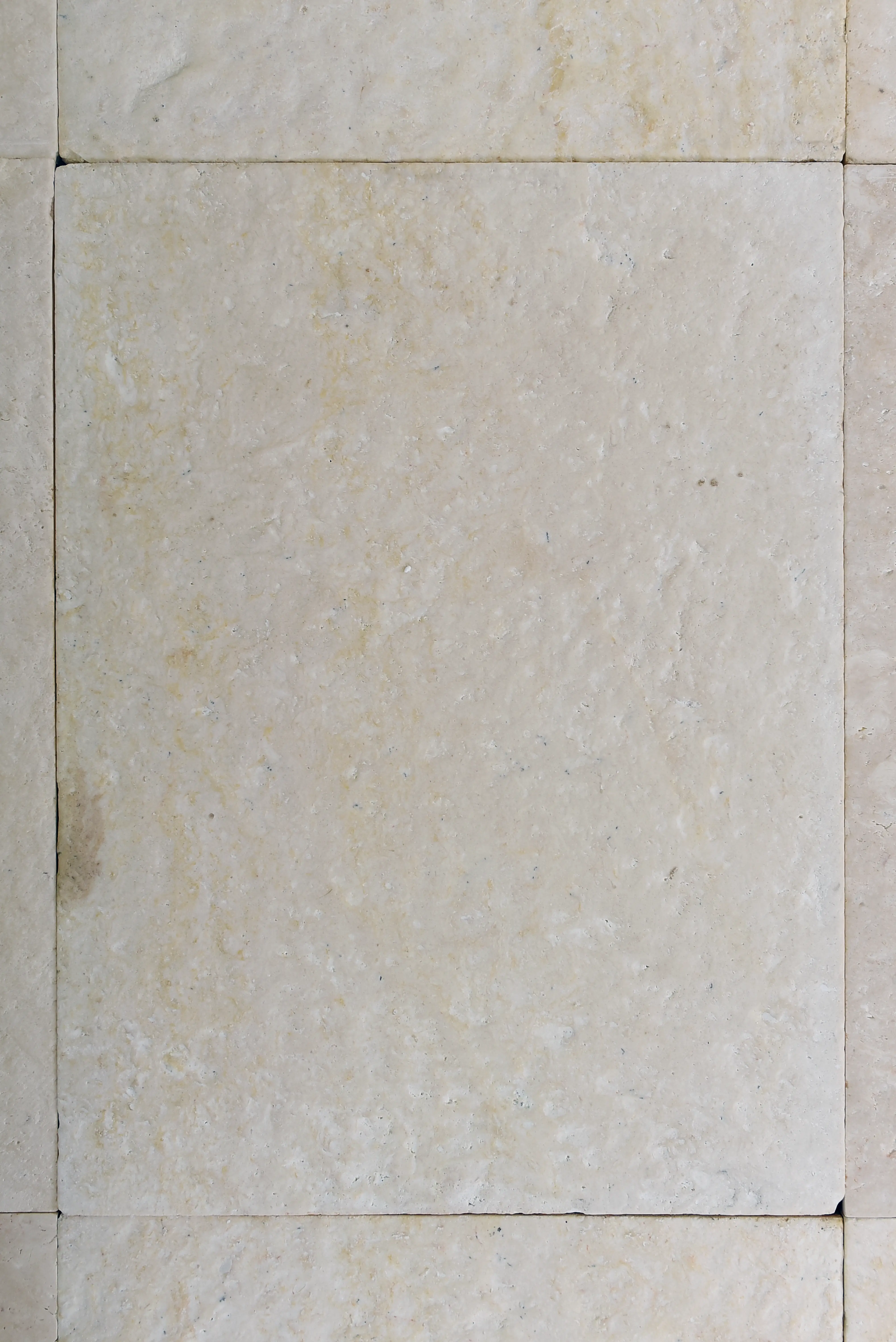
Travertine’s natural voids — the characteristic pitting that defines the material’s texture — require a consistent filling strategy before any surface sealer goes down. Factory-filled travertine has its voids pre-grouted with a Portland-based filler during processing, but field-installed slabs often need a second fill pass after installation settles, especially in outdoor environments where thermal cycling expands and contracts the fill material.
Sealing specification should start with a penetrating impregnator rated for outdoor travertine, applied to a clean, dry surface at least 72 hours after final grouting. Topical sealers trap moisture and tend to fail around grout joints in exterior applications — the penetrating approach leaves the surface breathable while blocking oil and water infiltration at the pore level. Reapplication every two years is a realistic maintenance expectation for pool deck environments with heavy use and chemical exposure from pool water.
Explore the full range of specifications through Citadel Stone travertine deck options to compare fill types, finish grades, and format availability before finalizing your specification.
Pool Coping Integration With the Deck Field
Coping and deck field integration is where a modern white travertine pool deck either looks polished or starts to feel disjointed. The coping piece needs to be thicker than the deck field tile — typically 2 inches nominal compared to 1.25 inches for the field — to create the overhang profile that defines a finished pool edge. That thickness difference means your setting bed depth has to be calculated independently for the coping course versus the field, or the finished surface heights won’t align.
Snow white travertine coping with a straight drop-face profile reads the most contemporary — avoid bullnose-only coping profiles in modern design contexts, as they tend to soften the geometry in a way that ages the look quickly. A chiseled-edge drop face on snow white travertine coping pairs naturally with the running bond field below and gives the pool a crisp, architectural finish that holds up visually across different lighting conditions.
- Coping overhang: 1.5 to 2 inches beyond the pool wall face for standard residential pools
- Drip groove: Specify a back-kerf or drip groove on the underside of coping to prevent water tracking back to the wall face
- Expansion joints: Install silicone-filled expansion joints at every coping-to-field transition — do not rely on grout alone at this interface
- Anchor detail: Coping should be mortar-set with mechanical clip anchors on pools with cantilever decks — adhesive-only applications have a documented failure rate in thermal cycling environments
Ordering and Lead-Time Planning
Project schedules depend on warehouse availability more than most specifiers account for in early project phases. At Citadel Stone, we recommend confirming stock levels before committing to a construction start date — national warehouse inventory for 12×24 white travertine tile outdoor formats moves quickly during peak pool construction seasons, and a two-week lead time can stretch to six if a replenishment shipment is in transit.
Order a minimum 10% overage on your calculated quantity for pool deck applications. Cut waste around the pool perimeter, coping notches, and equipment pad edges consistently runs higher than flat patio installations. Travertine white stone dye lots also vary subtly between production runs — having extra material from the same lot available for future repairs protects the visual consistency of the finished deck for the long term. Citadel Stone ships in consistent formats nationwide, which simplifies contractor logistics on projects where truck delivery scheduling is a constraint.
According to USGS limestone and travertine natural mineral formation data, travertine forms through calcium-rich spring deposition — a natural process that introduces inherent color and void variation between quarry extraction cycles. That geological reality is why lot consistency at the supplier level matters as much as specification precision on your end.
Decision Points
Every modern white travertine pool deck project reaches a point where a handful of specification decisions lock in the outcome — finish type, format, subgrade treatment, and coping profile are the four that matter most. Getting one of them wrong doesn’t always show immediately, but it tends to reveal itself within two to three seasons when thermal cycling, soil movement, or surface wear starts testing the installation’s weakest link. The design ideas that age well share tight alignment between aesthetic intent and technical execution — the visual choices and the performance specs reinforce each other rather than pulling in opposite directions.
As you refine your specification, pool tile material comparisons can sharpen your thinking on related surfaces. For a different perspective on pool-adjacent material performance, pumice and porcelain pool tile compared covers how alternative materials handle scale, cleaning, and long-term maintenance — context worth having before your final material decisions are locked. Sourced from quarries across the Mediterranean and Middle East, Citadel Stone’s white travertine pool deck stock ships in consistent 12×24 formats.
Related reading: How to Fix Pool Tile: Loose, Cracked, or Popped Tiles · tumbled travertine tile guide · travertine tile pattern ideas.