Contrast and Material Logic in Pool Design
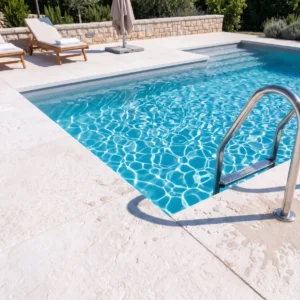
Black and white pool tiles create one of the sharpest visual statements available in any aquatic setting — but the pairing only works long-term when the surrounding coping material is chosen with equal precision. The contrast between dark and light tile intensifies at the waterline, which means the coping edge becomes the visual boundary that either anchors or destabilizes the whole composition. Travertine coping has emerged as the dominant companion for this palette because its warm, cream-to-buff tonality provides visual breathing room without competing with the tile’s graphic energy.
The calcium carbonate chemistry of travertine also works in your favor here. Its surface temperature stays measurably cooler underfoot compared to dense igneous stones, which matters when dark tile absorbs radiant heat near the pool shell. You’re essentially balancing a high-contrast black and white pool tile specification with a thermally moderate coping material — and that balance carries both aesthetic and functional weight.
Tile Finish Selection for Pool Environments
Your finish choice on black and white pool tile determines more than aesthetics — it drives slip resistance, maintenance frequency, and long-term legibility of the pattern. Polished or high-gloss tiles deliver the most dramatic contrast, but pool water chemistry and algae growth accelerate surface dulling. Most specifiers with field experience lean toward honed or matte finishes for submerged and splash-zone applications precisely because the contrast holds better over a five-to-ten-year window without aggressive maintenance.
- Honed finishes reduce specular reflection while maintaining sharp color definition between black and white fields
- Matte surfaces carry more underfoot texture — specify against 0.42, the ANSI A326.3 wet DCOF threshold for wet pool environments
- Polished finishes are best reserved for interior raised spa walls where immersion is partial and cleaning access is easier
- Textured or tumbled surfaces work well for perimeter bands but can make graphic patterns harder to read at the waterline
The PHTA pool deck safety standards provide specific guidance on surface friction requirements for pool coping and deck zones. Matching your tile finish specification to those thresholds before ordering saves costly redesigns during inspection.
Why Travertine Coping Works with This Tile Palette
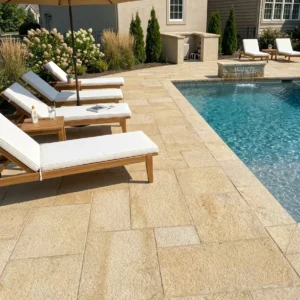
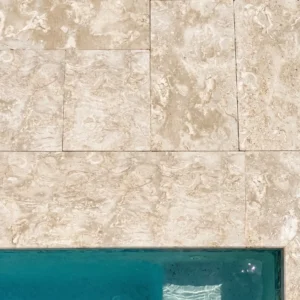
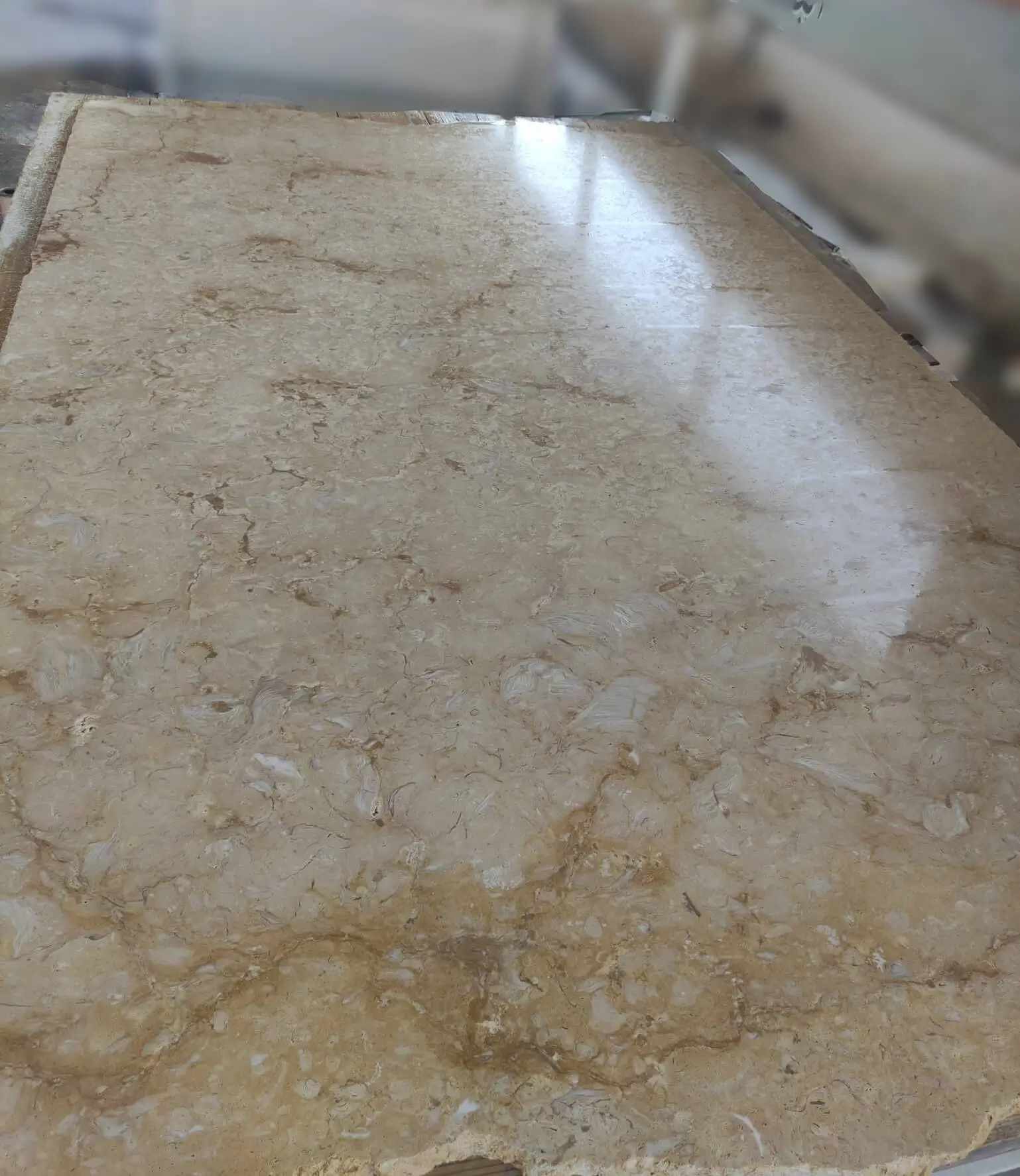
Travertine’s visual texture — its characteristic voids, cross-cut veining, and natural color range from ivory to walnut — softens the hard geometry of a black-and-white tile field without washing it out. The material acts as a visual transition between the tile’s precision and the surrounding deck or landscape. That transition is especially valuable in larger pool footprints where an unbroken run of high-contrast swimming pool tiles black-and-white pattern could feel clinical rather than residential.
From a specification standpoint, you’ll want to match the travertine coping profile to the tile thickness. Most black and white pool tiles run between 3/8 inch and 1/2 inch nominal, and coping units typically stock at 1-1/4 inch to 2 inch face heights. Confirm your tile setter’s bond coat depth is accounted for in that calculation — a 1/4 inch discrepancy at the coping-to-tile interface creates a drainage lip that traps debris and accelerates joint deterioration. For a closer look at compatible profiles and nosing options, explore our travertine coping for pool tile and confirm dimensional compatibility before finalizing your specification.
Grout Joint Color and Pattern Integrity
Here’s what most specifiers overlook when detailing a black-and-white tile layout: grout color is actually a third design element, not a neutral background. White grout with black tile reads as a grid. Dark grout with white tile does the same in reverse. Using a mid-tone grey grout — typically a #3 to #5 Munsell value — lets the tile pattern carry without the joint lines fighting for visual attention.
- Epoxy grout outperforms cementitious grout in pool environments due to its chemical resistance to chlorine and salt systems
- Grout joint width should stay at 1/16 to 1/8 inch for small-format mosaic tiles and 3/16 to 1/4 inch for field tiles above 4×4 inches
- Unsanded grout is appropriate for joints under 1/8 inch; sanded or epoxy mix is required above that threshold to prevent shrinkage cracking
- Allow full cure time — typically 72 hours minimum for epoxy — before filling the pool to prevent hydrostatic stress on fresh joints
According to TCNA natural stone tile installation standards, joint sizing and grout type selection for pool environments require compliance with method P102 or P108 depending on substrate type. Referencing those methods in your project specification protects both installer and owner if performance questions arise later.
Layout Patterns and Visual Scale
The layout pattern you specify for black and white pool tile reshapes the perceived size of the water surface. Diagonal or chevron patterns visually expand a narrow pool; grid patterns read as formal and architectural. A checkerboard in a small plunge pool can overwhelm the space, while the same pattern scales beautifully in a 40-foot lap pool where repetition creates rhythm rather than noise.
Bathroom applications using a swimming pool tiles black-and-white vocabulary follow the same principle. A bathroom with travertine tiles on the floor and black-and-white mosaic on the wet wall achieves a layered contrast that feels intentional — not chaotic — because the travertine’s organic texture absorbs the visual tension the tile generates. Scale the tile to the surface area: 1×1 inch mosaics for accent bands, 2×2 or 3×3 inch formats for full field applications, and 4×12 or subway formats for transitional wall zones.
Subgrade Preparation for Pool Surrounds
Soil composition around a pool shell directly affects how your black and white pool tile and coping installation performs over time. Expansive clay soils exert lateral and vertical pressure on pool shells during wet and dry cycles. That movement transfers to the bond between coping and shell, which is why you’ll see coping units rocking or grout popping in clay-heavy sites even when the pool structure itself shows no visible cracking.
- Sandy soils provide good drainage but require a compacted aggregate base of at least 4 inches under any coping bed to prevent settlement
- Rocky or caliche substrates offer excellent bearing capacity but can create drainage impedance — verify that pool deck grades flow away from the shell at a minimum 1% slope
- Expansive clay sites benefit from a geotextile separation layer between native soil and compacted base to prevent clay migration into aggregate
- Organic-rich soils near water features decompose over time and require full excavation and replacement with engineered fill before any stone work begins
These subgrade variables don’t change what black and white pool tiles look like, but they absolutely determine whether your installation is having a conversation with the structure at year three or year fifteen. Address the ground before you finalize any tile specification — it’s the detail that separates a solid long-term result from an early callback.
Ordering Logistics and Lead Times
Coordinating tile and coping delivery so both arrive on-site before installation begins sounds obvious, but it’s one of the most common scheduling failures on pool projects. Tile is typically ordered by the square foot with a 10–15% overage factor; coping is ordered by the linear foot with a 5–8% overage. These two materials often ship from different warehouse locations, and lead times can diverge by two to three weeks depending on origin and stock levels.
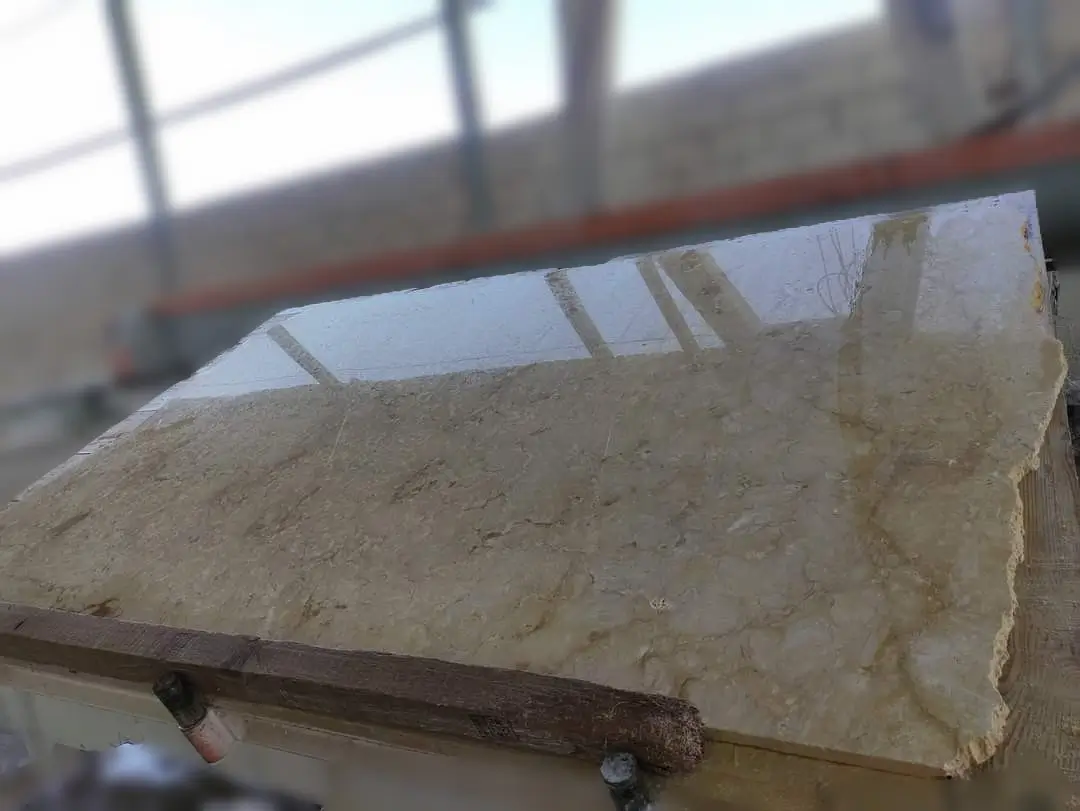
Citadel Stone maintains warehouse inventory across the national supply chain, which typically compresses lead times to one to two weeks on stocked travertine coping profiles. Verify warehouse availability on your preferred travertine finish — honed ivory is nearly always in stock, but specialty brushed or antique finishes may require a longer lead window. Build that into your project schedule before the tile contractor mobilizes, because delays in coping delivery stall the entire pool surround completion sequence.
Sealing and Long-Term Maintenance
Travertine coping adjacent to black and white pool tile requires a penetrating sealer — not a topical coating — applied to clean, dry stone before pool water contact. Topical coatings trap moisture vapor behind the sealer film, which leads to spalling and efflorescence in as little as eighteen months in high-humidity or splash-intensive zones. A quality impregnating sealer allows vapor transmission while blocking chlorinated water and mineral staining from penetrating the stone matrix.
- Reapply penetrating sealer every two years in heavy-use pool environments, annually in pools using salt chlorination systems
- Inspect grout joints annually for hairline cracking, especially at coping-to-tile transitions where differential movement is highest
- Clean travertine with pH-neutral stone cleaner — acidic cleaners etch calcium carbonate surfaces and permanently dull the finish
- Address any filled travertine voids that have opened with matching filler before water infiltration initiates subsurface deterioration
The Natural Stone Institute travertine performance data covers absorption rates and sealer compatibility in detail — reference those benchmarks when selecting a sealer product to confirm it’s rated for travertine’s specific porosity range rather than a generic stone category.
Your Action Plan for Black and White Pool Tiles
Getting black and white pool tiles right means treating the tile specification, coping selection, subgrade preparation, and maintenance plan as a single integrated system rather than four separate decisions. Start with the tile finish that meets your wet-zone slip resistance requirements, confirm the travertine coping profile aligns dimensionally with your tile thickness and bond coat depth, and verify that your site’s soil conditions are addressed before installation begins. Order both materials with realistic lead time buffers, confirm warehouse stock on your travertine finish before committing to a project schedule, and specify a penetrating sealer protocol before the pool is filled.
As you finalize the coping specification, the decision between tile-format coping and solid coping units carries its own technical trade-offs worth understanding — travertine coping format options covers those differences in practical detail. Plan your tile layout scale relative to pool dimensions, lock in your grout color as a deliberate design decision, and confirm your soil preparation before any stone work begins. Using a matte-finish travertine from Citadel Stone alongside black-and-white pool tile helps manage deck glare while keeping the design visually sharp.
Related reading: Gray Travertine Pool Coping for Modern Pool Designs · scabos travertine pool coping · travertine bullnose pool coping.