

What Long-Term Performance Actually Requires
Limestone tiling’s long-term finish depends almost entirely on maintenance protocol, not material weakness — most installations fail because the sealing and cleaning stage is treated as optional rather than structural. The calcium carbonate matrix that gives limestone its character also makes it reactive to acidic cleaners, standing water, and mineral-laden mopping solutions. Surface etching appears before structural degradation, which means the damage is cosmetic first — but it accelerates into absorption problems fast if you don’t intervene early.
Understanding Porosity Before You Clean
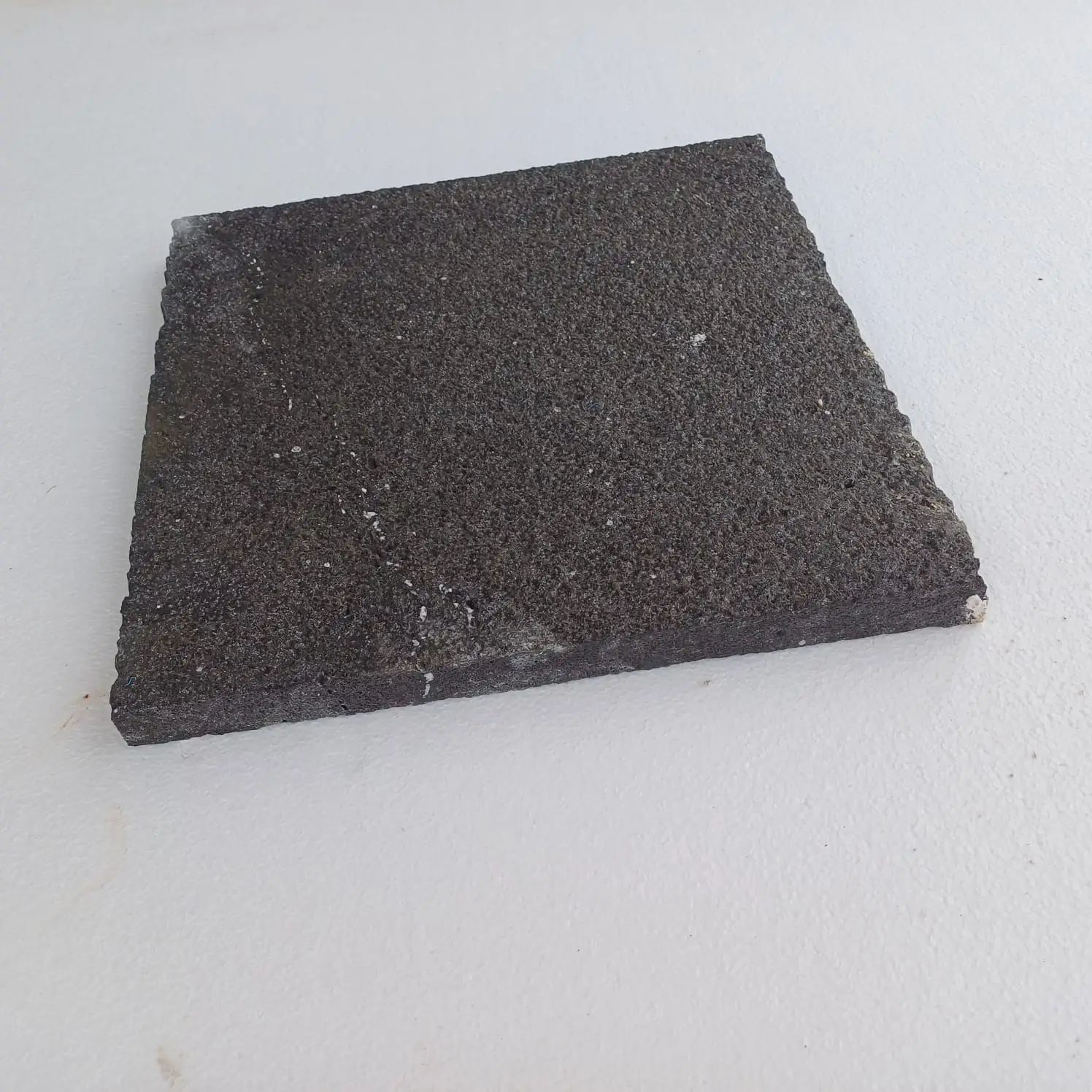
The interconnected pore structure of limestone is what makes it breathe beautifully in a floor application — and what makes it absorb contaminants if you approach cleaning carelessly. Porosity rates across commercial limestone tiles range from roughly 3% to 18% depending on density and finish, with honed surfaces sitting at the higher end because grinding opens the pore network slightly. Your cleaning method needs to account for this range, not treat all limestone tiling as identical.
Field performance data on limestone tiling maintenance consistently shows that the choice of cleaning agent determines whether you’re maintaining the surface or slowly degrading it. Neutral pH cleaners — sitting between 6.5 and 7.5 on the scale — are the only safe daily-use option. Stone soap concentrates formulated for calcium carbonate substrates work reliably, but you should dilute them more aggressively than the label suggests for weekly mopping: roughly half the recommended concentration reduces residue buildup on honed tiles significantly. According to NSI limestone care guidance, cleaning limestone with incompatible products is the leading cause of premature surface failure across residential and commercial installations.
Cleaning Limestone Tile Without Causing Damage
Your routine cleaning process should follow a consistent sequence that limits dwell time for any liquid on the surface. Dry dust-mopping before wet cleaning isn’t optional on limestone tiling — grit left on the surface acts as an abrasive during mopping, and on polished finishes it creates micro-scratching that dulls the surface gradually over months.
- Dry dust-mop or vacuum daily in high-traffic areas to remove abrasive particles before wet cleaning
- Use only pH-neutral stone cleaners — never vinegar, lemon-based sprays, or general-purpose floor cleaners
- Mop with a well-wrung, damp mop rather than a wet one — excess water sitting in grout joints accelerates efflorescence on porous limestone
- Blot spills immediately rather than wiping — wiping spreads acidic liquids like wine, citrus juice, and coffee across a larger surface area
- Rinse with clean water after cleaning limestone tile to remove any detergent residue, which itself can dull the finish over time
- Allow the floor to dry thoroughly before foot traffic — wet limestone is noticeably slipperier than dry, especially on honed finishes
One detail that often gets overlooked on commercial limestone tiling installations: entrance zones require more frequent cleaning than the rest of the floor because tracked-in chloride and de-icing residues from footwear are mildly acidic. A dedicated walk-off mat at every entry point reduces this contamination cycle considerably.
The Limestone Cleaning and Sealing Schedule That Actually Works
Sealing and cleaning limestone tile aren’t separate tasks — your limestone cleaning and sealing schedule directly determines how demanding your cleaning routine needs to be. A properly sealed limestone surface repels liquid penetration for 18 to 36 months depending on traffic volume, but the seal degrades gradually, and most building owners don’t notice until a coffee spill absorbs visibly rather than beading. That’s already too late for a clean reseal — you’ll need to clean deeply before resealing to avoid trapping residue beneath the new coat.
The limestone cleaning and sealing cycle for interior tile in moderate residential use runs approximately every two years. High-traffic commercial applications — hospitality lobbies, retail floors, institutional corridors — need annual resealing at minimum, and in some cases biannual if foot traffic exceeds several hundred people daily. Test your existing seal before committing to a resealing schedule: place a few drops of water on the surface and watch for 15 minutes. If the water absorbs or darkens the stone rather than beading, the seal has failed and resealing is overdue.
- Apply impregnating penetrating sealers rather than topical coatings — penetrating sealers don’t alter the surface sheen and don’t peel or flake with wear
- Prepare the surface meticulously before sealing — any residue, haze, or contamination sealed beneath the new coat becomes permanent
- Apply sealer in thin, even coats and remove excess within the manufacturer’s specified window — usually 3 to 5 minutes — to prevent hazing
- Allow full cure time before foot traffic — typically 24 hours for penetrating sealers, though low-porosity dense limestone can accept light traffic after 12 hours
- Test the seal in a low-visibility area first, especially on dark or fossil-bearing limestone where sealer interaction with embedded organic material can create unexpected tonal shifts
Limestone With Fossil: Special Care Considerations
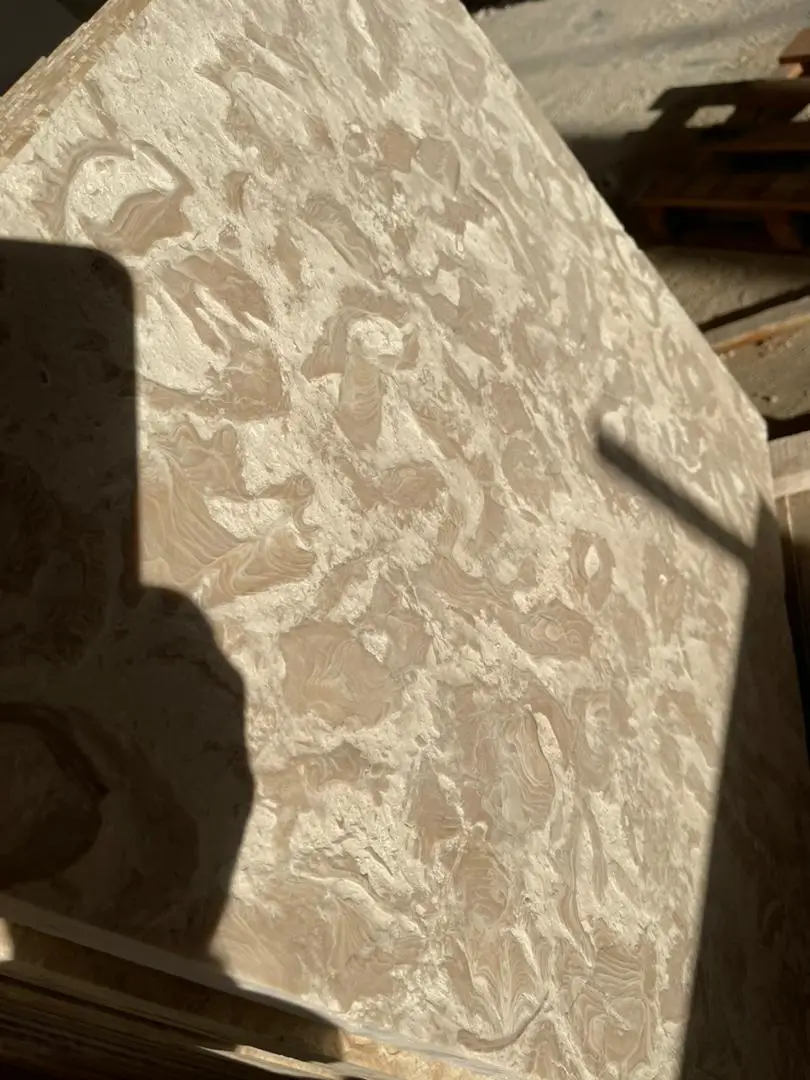
Limestone with fossil content adds visual character that makes every installation unique — but those embedded crinoids, shells, and organic inclusions behave slightly differently from the surrounding matrix during cleaning and sealing. The fossil material is often denser and less porous than the host limestone, which means sealer absorbs unevenly: the matrix drinks the product in while the fossil inclusions resist it. You’ll see this as patchy finish variation if you apply sealer without accounting for it.
For limestone with fossil content, a slower application technique works better. Apply sealer in smaller sections, allow 60 to 90 seconds of dwell time beyond the standard recommendation, and buff the surface lightly with a white pad before the sealer begins to set. This encourages even penetration across both the host stone and the inclusions. According to USGS limestone composition data, the calcium carbonate content and porosity of fossiliferous limestone varies significantly depending on the marine organisms present and the degree of diagenetic alteration — which explains why two fossil limestone tiles from different quarry sources can behave quite differently under the same sealer chemistry.
Cleaning limestone with fossil content follows the same pH-neutral protocol as standard limestone tiling — the inclusion material doesn’t require different chemistry. What it does require is gentler mechanical action: avoid stiff-bristle scrubbing pads on fossil zones because the boundary between inclusion and matrix can be a stress point that mechanical abrasion gradually widens.
Specification-Grade Products for Ongoing Maintenance
The maintenance products you specify matter as much as the installation products — and this is where projects often cut corners after the initial installation budget has been spent. pH-neutral concentrate formulated for natural stone typically costs more per litre than general-purpose floor cleaner, but the differential is negligible compared to the cost of remediation when a compromised surface needs professional restoration. Citadel Stone stone tiles are supplied with specific maintenance guidance that removes the guesswork from product selection, particularly for honed and fossil-bearing varieties where the sealer and cleaner pairing is critical.
Base Preparation, Code Requirements, and Structural Considerations
Your limestone tiling installation’s long-term maintenance performance connects directly to how well the substrate was prepared and specified at installation. This is where building code requirements intersect with maintenance outcomes in ways specifiers often don’t anticipate. An installation that flexes — because the substrate deflects under load beyond permissible limits — creates hairline grout joint failures that become contamination entry points. No cleaning or sealing protocol compensates for substrate movement.
The International Building Code addresses deflection limits for tile installations through its incorporation of ANSI A108 standards, which specify maximum substrate deflection of L/360 under live load for ceramic and natural stone tile. For limestone tiling specifically, the higher flexural tensile strength requirements apply — limestone’s modulus of rupture varies between approximately 900 and 2,400 psi depending on density and grain structure, which means thinner tiles over deflection-prone substrates are genuinely at risk of cracking under dynamic loads. TCNA installation standards provide detailed substrate classification guidance that maps deflection performance to appropriate tile thickness and mortar bed specification.
- Verify substrate deflection compliance before installation — remediation after tiling is significantly more expensive than correcting the subfloor beforehand
- In freeze-thaw regions, exterior limestone tiling must account for base depth below frost line to prevent heave that cracks grout joints and compromises the maintenance seal
- Seismic zone requirements in certain regions mandate additional expansion joint spacing — typically every 20 to 25 feet in both directions — which affects both installation and ongoing grout joint maintenance
- Edge restraint specifications influence joint integrity at perimeters, where differential movement concentrates; unsealed perimeter joints are a primary water intrusion point on ground-floor installations
- Load-bearing verification matters for heavy limestone tile formats — tiles in the 24-inch-by-24-inch range and above add meaningful dead load to floor assemblies, and your structural engineer should confirm adequacy before specification
Stain Removal and Restoration Without Surface Damage
Even well-maintained limestone tiling accumulates staining over years — organic stains from food and plant matter, rust from metal furniture legs, and oil-based staining from cooking environments all penetrate the surface at different rates and depths. Your removal approach depends on correctly identifying the stain type before applying any product, because the wrong chemistry can permanently set a stain rather than lift it.
Organic stains — coffee, wine, tea, leaf tannin — respond well to hydrogen peroxide-based poultice applied in a thick layer and left covered with plastic wrap for 24 to 48 hours. The slow dwell time draws the staining compound back out of the pore structure through capillary action. Oil-based stains need an alkaline paste — powdered whiting combined with acetone or a commercial oil-extraction compound — applied using the same poultice method. Rust staining is the most technically demanding and requires commercial rust remover products formulated specifically for natural stone; standard rust removers contain hydrochloric or oxalic acid at concentrations that etch limestone aggressively.
- Always test stain removal products in a concealed area — behind a toilet, inside a cabinet base, or under a removable floor register
- Apply poultice in one direction only and remove it cleanly — working back and forth redistributes the staining compound
- Surface etching from acid exposure can sometimes be addressed with professional diamond honing, but this is a specialist service, not a DIY repair option on most installations
- Deep scratches and chips in limestone tiling require colour-matched epoxy fill followed by regrinding — the repair window for invisible results is narrow, and early intervention produces far better outcomes than delayed repair
Ordering, Lead Times, and Matching Replacement Tiles
One of the most practical maintenance challenges for limestone tiling is sourcing matching replacement tiles years after installation. Natural stone varies between quarry batches, and the tiles installed three years ago may not precisely match current warehouse stock even from the same supplier. This is normal with natural material — it’s not a quality failure, it’s geology. The practical solution is to order surplus tiles during the initial installation: 10% overage for standard cuts, 15% for complex patterns or fossil-bearing material where matching character matters more.
Citadel Stone maintains consistent warehouse inventory drawn from established quarry sources, which narrows the variation between batches compared to spot-purchase suppliers who source opportunistically. Lead times from warehouse to delivery run approximately one to two weeks for standard limestone tiling formats, which is significantly faster than the six to eight week import cycle typical for special orders. For renovation projects where existing tile needs matching, bring a physical sample — photos don’t capture the tonal and texture variation that determines whether a replacement reads as a repair or as a seamless integration.
Keeping Limestone Tiling Performing for the Long Term
Limestone tiling’s long-term finish quality is almost entirely a function of how consistently you maintain it — the material itself is forgiving when treated correctly and unforgiving when neglected. Your cleaning protocol determines whether you’re investing in the material or slowly spending down its service life. Seal on schedule, clean with chemistry matched to calcium carbonate, address staining early before it sets, and your installation performs comfortably beyond the 20-year mark. For projects where finish tone and porosity vary — limestone with fossil especially — take the time to match your sealer to the specific surface rather than defaulting to a generic product. As you consider other natural stone applications alongside your limestone tiling project, white limestone paver options offer complementary performance data worth reviewing for exterior transitions and border applications. Product from Citadel Stone arrives with care notes so limestone tiling keeps its finish through regular household cleaning routines.
Related reading: how limestone weathers outdoors · choosing limestone for gardens · limestone crushed.