

What Limestone Actually Looks Like in the Field
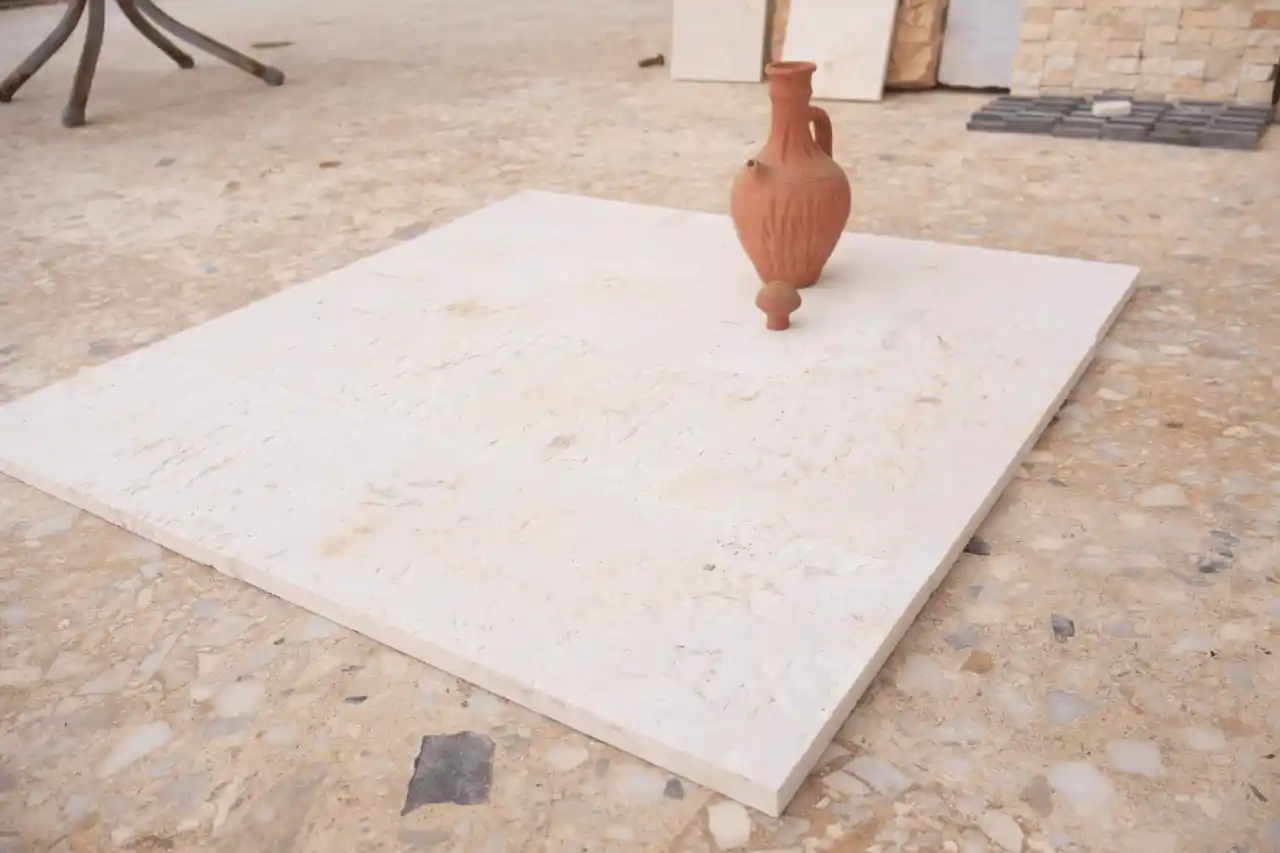
Learning how to identify limestone starts with surface texture, not color or weight — the way a stone’s face responds to raking light is your first honest indicator. Limestone forms almost entirely from calcium carbonate, precipitated from ancient marine environments, and that origin leaves a fingerprint you can read with nothing more than good lighting and a trained eye. The grain structure is characteristically fine and even, lacking the interlocked crystal growth you’d see in granite or the foliated layers of slate, which makes the face of a genuine limestone slab look almost sedated compared to igneous alternatives.
Surface markings on authentic limestone stone range from subtle fossil inclusions — shell fragments, coral imprints, crinoid stems — to faint ripple marks left by tidal movement millions of years before the stone was quarried. You’ll also notice that freshly cut faces have a slightly chalky or matte appearance even after honing. That’s the calcium carbonate matrix responding to the cut, not a finishing defect. Engineered alternatives, particularly porcelain tiles pressed to mimic limestone, can replicate the color but not that subtly absorptive surface character.
Color Range and What It Tells You About Composition
A picture of limestone in a quarry catalog will almost always show a warm buff, cream, or grey tone — and that’s accurate for the majority of commercial varieties. But the color variation within limestone is wider than most specifiers expect. Iron oxide content drives the stone toward brown and amber tones; organic matter pushes it into darker greys and near-blacks; and very pure calcium carbonate deposits produce the off-white and ivory shades common in high-end interior applications.
What you’re looking for as a distinguishing characteristic is the color’s internal variation. Genuine limestone stone rarely presents as a single flat shade across the face. You’ll see subtle tonal shifts — lighter veins of calcite running through a warmer matrix, or darker organic streaks that follow the original sedimentary banding. That internal movement is structural, not cosmetic, and it’s one of the hardest things for manufactured alternatives to convincingly replicate at scale.
- Cream and ivory tones indicate high calcium carbonate purity with minimal iron or organic content
- Buff and golden tones reflect iron oxide presence in the original sedimentary deposit
- Grey and blue-grey tones signal clay mineral content or increased silica percentage
- Brown limestone varieties show elevated iron and manganese concentrations throughout the matrix
- Near-black coloration typically comes from bituminous organic matter within the sedimentary layers
- Mottled or patchy color distribution is characteristic — uniform flat color across a full slab face is a warning sign
According to Britannica’s limestone formation overview, the chemical composition of limestone is predominantly calcite and aragonite, with impurities like silica, clay minerals, and iron compounds creating the color variation that makes each deposit unique. That variability is exactly what you’re using as an identification marker.
Texture and Grain Structure: The Hands-On Identification Test
Your fingertips tell you more than photographs do when learning how to identify limestone in the field. Run your hand across a freshly honed limestone surface and you’ll feel a slight drag — a fine, slightly porous resistance that differs noticeably from the slick glide of polished marble or the gritty pull of sandstone. That tactile quality comes from limestone’s interconnected micro-pore structure, which remains partially open even after honing unless the stone has been filled and sealed.
The grain under magnification — even a simple loupe will work — shows a uniform, interlocking matrix of calcite crystals or fossil fragments with no visible foliation or banding in the crystal structure itself. Compare this to travertine, which shares limestone’s calcium carbonate base but shows visible voids and open cavity networks from its hot-spring formation process. Travertine’s cross-section looks almost spongy; dense limestone’s cross-section looks compact and homogenous. That distinction matters when you’re specifying a limestone visual identification guide for procurement teams who may be reviewing multiple sedimentary stone options simultaneously.
- Honed limestone: fine, slightly dragging surface with low sheen — porosity is still partially accessible
- Polished limestone: higher gloss, but still less mirror-like than granite or marble at the same finish grade
- Tumbled limestone: worn, rounded edges with a naturally aged surface — grain structure shows micro-fracturing at edges
- Bush-hammered limestone: coarsely textured, directional surface marks — grain uniformity still visible between tool marks
- Sawn limestone: clean, directional saw marks with visible sedimentary layering when slab is viewed edge-on
Sedimentary Layering and Bedding Planes
One of the most reliable field identification markers for limestone is the presence of visible bedding planes — the horizontal lines that record each layer of sediment deposited over geological time. You’ll see these most clearly when viewing a stone slab edge-on or when examining a cross-section cut. The layers in limestone are typically consistent in thickness and parallel to each other, reflecting steady marine sedimentation rather than the chaotic crystalline growth of igneous rock.
These bedding planes are also where limestone’s structural vulnerability concentrates. Slab orientation relative to the bedding plane affects how the stone performs under load — a slab installed with bedding planes running horizontal to the surface is more resistant to delamination than one installed with planes running vertical. This is a detail that warehouse receiving teams should check at delivery, and it’s worth flagging in your specification documents before material ships to the job site.
The USGS limestone composition fact sheet confirms that limestone’s sedimentary origin produces this characteristic layered structure, which distinguishes it from metamorphic and igneous stone types that lack depositional banding. Fossil content within those layers — shells, coral fragments, sea urchin spines — further confirms the marine sedimentary origin that defines genuine limestone stone.
The Acid Test: Definitive Field Confirmation
The carbonate fizz test is the most conclusive field confirmation method available when determining how to identify limestone, and it costs nothing to perform. Apply a drop of dilute hydrochloric acid — or even household white vinegar as a slower-reacting alternative — directly to the stone surface. Genuine limestone reacts immediately, producing visible CO₂ effervescence as the acid dissolves the calcium carbonate matrix. The reaction on dense, high-purity limestone is vigorous and rapid. On dolomitic limestones with higher magnesium carbonate content, the reaction is slower and requires powdering the surface first to get a clear reading.
This test effectively eliminates engineered stone, porcelain tile, and most granite alternatives in seconds. It also helps you differentiate limestone from quartzite — another fine-grained stone that can look similar in a photograph but contains almost no carbonate minerals and won’t react to acid at all. Marble will react to the acid test as well, since it shares limestone’s calcium carbonate base, but marble’s crystal structure is immediately distinguishable by its recrystallized, interlocking grain pattern and the depth of its polish.
- Strong immediate fizzing: high-purity calcium carbonate limestone — dense, low-porosity varieties
- Slow or weak fizzing: dolomitic limestone with elevated magnesium carbonate content
- No reaction: quartzite, granite, basalt, engineered stone, or porcelain — not limestone
- Reaction only when powdered: dolomite or impure limestone — confirms carbonate content but signals composition variation
- Reaction plus staining: iron-rich or organic-rich limestone — the acid may highlight color differences in the matrix
Fossil Content as an Identification Marker
No manufactured stone product currently replicates embedded fossils convincingly at the scale you’d encounter in commercial limestone supply. Finding a recognizable shell fragment, a coral colony cross-section, or a crinoid stem segment in your stone is about as conclusive as identification gets without laboratory analysis. These inclusions aren’t defects — they’re geological provenance markers, and experienced specifiers use them as positive identification features in natural stone specifications.
Fossil density varies significantly by deposit. Some commercially quarried limestones are so dense with shell material that the whole face reads as a mosaic of biological fragments; others from deeper, higher-pressure deposits show only occasional inclusions within an otherwise homogenous matrix. For a limestone visual identification guide, fossil presence confirms marine sedimentary origin, but absence doesn’t eliminate limestone as a candidate — you need to combine fossil assessment with texture, color, acid reactivity, and grain structure for a complete identification picture.
Exploring Citadel Stone’s limestone collection gives you an immediate reference library for what genuine fossil-bearing and dense-matrix varieties look like across different deposit origins — useful for training procurement staff or calibrating visual expectations before samples arrive from the quarry.
Distinguishing Limestone from Common Look-Alikes
The materials most commonly confused with limestone stone in specification and procurement contexts are travertine, dolomite, quartzite, and high-quality porcelain. Each requires a different identification approach, and knowing the distinguishing markers saves costly specification errors.
- Travertine vs limestone: travertine shows open or filled voids from gas bubble entrapment during hot-spring formation — limestone has no equivalent void structure in dense varieties
- Dolomite vs limestone: visually nearly identical; the acid test is the only reliable field differentiator — dolomite reacts slowly or only when powdered
- Quartzite vs limestone: quartzite has a glassy, sparkling surface from interlocked silica grains — no acid reaction, harder scratch resistance, heavier feel per unit volume
- Marble vs limestone: both react to acid, but marble’s recrystallized grain creates a deeper, more translucent polish and lacks sedimentary layering and fossil content
- Porcelain tile vs limestone: consistent weight, no acid reaction, perfectly uniform surface texture under magnification, and no fossil inclusions — porcelain reads as mechanically perfect in a way natural stone never does
The Natural Stone Institute provides detailed limestone technical specifications and properties that clarify these distinctions at a material science level, including absorption rates, density ranges, and compressive strength parameters that further differentiate limestone from visually similar alternatives.
Reading Limestone in Landscape and Architectural Contexts
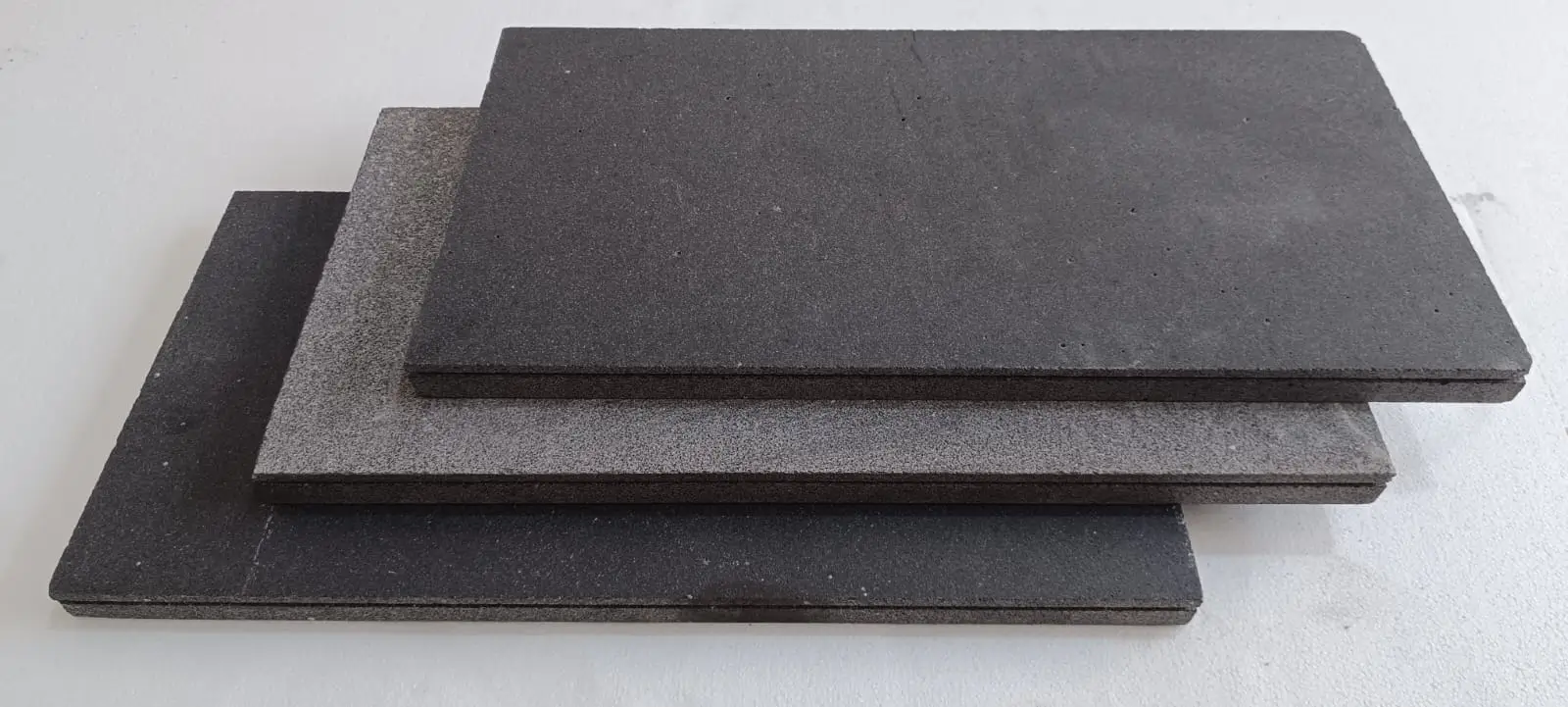
The aesthetic decisions surrounding limestone selection go well beyond identification — but understanding how limestone integrates into different design vocabularies helps you assess whether the stone in front of you matches the project’s visual intent. Limestone has a natural affinity for formal and traditional landscape design frameworks: colonial garden layouts, symmetrical terrace designs, and classical courtyard schemes all lean on limestone’s quiet, even tonality as a visual anchor.
Modern minimalist projects increasingly specify large-format limestone pavers for the same reason — the stone’s restrained grain structure doesn’t compete with architectural lines the way busier materials do. Dry garden styles often favor warm buff and brown limestone varieties because the stone’s color palette echoes surrounding gravel and earth tones without requiring visual contrast to read clearly. Tropical planting schemes, on the other hand, tend to favor lighter ivory and cream limestone that reflects heat and reads cleanly against dense green foliage canopies.
Knowing the intended design context also helps you verify authenticity. Porcelain alternatives pressed to mimic limestone are far more common in budget residential applications than in high-specification commercial or estate landscape work. A stone specified for a formal courtyard or a minimalist architectural terrace is more likely to be genuine — but verification through the identification methods above is still standard practice for responsible specification, regardless of project type or price point.
Ordering, Receiving, and Verifying at Delivery
Visual and tactile identification skills matter most at two project moments: before you commit a specification and when material arrives on site. At the warehouse receiving stage, you’re verifying that what’s been delivered matches the approved sample — same bedding plane orientation, consistent color range, matching grain character. This is worth doing systematically, not just eyeballing the top layer of a pallet.
Verify warehouse stock levels and request a current lot photograph before your order ships — color variation between production lots of the same limestone product can be significant, particularly for brown limestone varieties where iron oxide concentration fluctuates between quarry lifts. Citadel Stone sources directly from established quarry operations, which means our technical team can confirm lot-specific characteristics before material leaves the facility, reducing on-site rejection rates considerably.
- Request a sample from the exact production lot before committing to full quantities
- Check bedding plane orientation on arrival — slabs should be consistent for your specified installation direction
- Verify acid reactivity on two or three pieces from different parts of the delivery — not just the top slab
- Inspect edge cross-sections for consistent grain and layering that matches the approved sample
- Note any color variation range within the delivery lot and assess whether it falls within your project’s acceptable tolerance
- Document any obvious facial anomalies — deep pitting, unusual veining, or color breaks — before installation begins
For projects where truck delivery involves multiple pallet drops across an extended timeline, maintaining a reference sample on site allows field crews to cross-check each delivery against an approved standard without waiting for a specification review. This step prevents the gradual drift in material character that can occur when multiple production lots are combined across a long project schedule.
Applying Limestone Identification Skills on Every Project
Accurate limestone identification is a skill that compounds over time — the more material you handle and verify, the faster and more reliably you can read a stone’s character from surface markers alone. Your best approach combines the acid test for carbonate confirmation, grain structure assessment under magnification, sedimentary layering review on the slab edge, and fossil content check for definitive provenance. No single test is sufficient on its own, but together they give you a practical, field-deployable identification protocol that works without laboratory equipment.
Specifiers working across multiple project types benefit most from building a physical reference collection — sample pieces from verified limestone deliveries that represent the full color and texture range your projects typically require. That physical library calibrates your eye in a way that photographs and specification sheets never fully replicate. As you expand your stone project scope beyond identification into broader hardscape comparisons, how quarry tile compares to natural stone adds a useful dimension for evaluating alternative surface materials alongside limestone. Brown and buff limestone varieties available through Citadel Stone show the layered sedimentary patterning that distinguishes authentic stone from lookalike porcelain or engineered alternatives.
Related reading: travertine vs limestone · what type of stone is limestone.