

What the Honed Finish Actually Does to Your Countertop
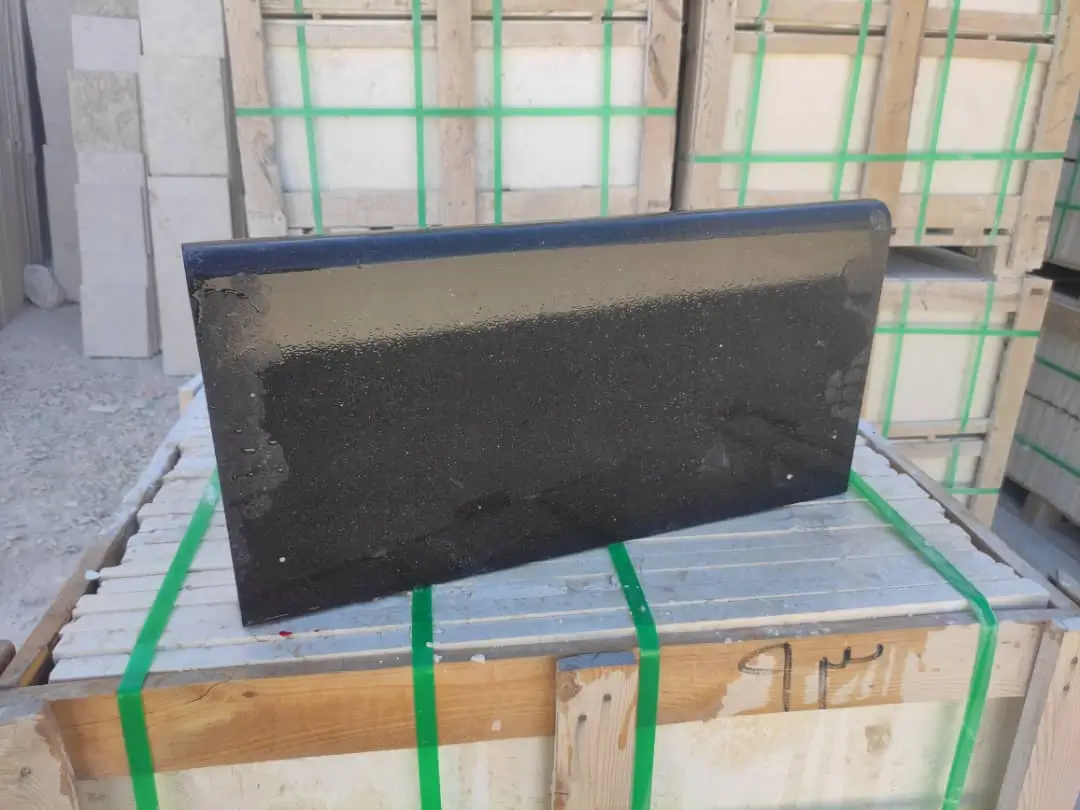
Honed black granite countertops get their matte character from an abrasive process that stops short of the polishing wheel — the surface is ground to a consistent flatness but the micro-crystalline peaks are left open rather than fused into a reflective layer. That open surface is exactly what makes the finish so visually compelling, and exactly what creates the maintenance dynamic you need to understand before day one. Unlike polished granite, which uses its glass-like surface as a first line of defense against liquids, a honed finish relies entirely on its sealant to do that work.
Daily Care: What Your Countertop Actually Needs
Your daily routine for honed black granite countertops is straightforward, but a few details make a real difference over time. The finish is unforgiving of acidic residue — coffee, citrus, wine, and vinegar-based cleaners will all work on the sealant faster than most homeowners expect. A pH-neutral stone cleaner applied with a soft microfibre cloth is all you need for daily wiping down. Avoid dish soap with surfactants; they leave a film that photographs as a haze on the matte black surface under certain light angles.
- Wipe spills immediately — especially acidic liquids like citrus juice and wine
- Use only pH-neutral, stone-safe cleaners — never vinegar, bleach, or ammonia-based products
- Dry the surface after cleaning to prevent water mineral deposits from building up
- Use cutting boards consistently — the honed surface can scratch from fine grit dragged across it
- Avoid placing hot pots directly on the surface; thermal shock can micro-fracture sealant layers
Sealing Schedule and Application Technique
The sealing schedule for honed black granite countertops differs from polished surfaces in one critical way: the open micro-pore structure of a honed finish absorbs sealant faster and depletes it sooner. On polished black granite, you might reseal every two to three years. On a honed surface, plan for annual resealing as a baseline — and test it every six months using the water bead test. Drop a tablespoon of water on the surface; if it beads into a dome within 30 seconds, you have adequate protection. If it spreads and darkens the stone within 15 seconds, reseal immediately.
Penetrating impregnator sealers — not topical coatings — are the correct product category here. Topical coatings sit on the surface and will peel or cloud on a matte finish, destroying the aesthetic entirely. Apply impregnator in thin, overlapping passes with a clean applicator pad, allow 10-15 minutes of dwell time, then buff off completely with a dry cloth before it hazes. A second coat applied 30 minutes after the first will significantly improve longevity. According to Natural Stone Institute granite specifications, proper penetrating sealer application remains the primary factor in long-term granite surface performance.
Matte Black Granite Countertops vs. Polished: Maintenance Differences Worth Knowing
The contrast between matte black granite countertops and their polished equivalents goes deeper than aesthetics. Polished surfaces have a Mohs-level hardness advantage at the very surface because the crystalline structure is compressed and densified during the polishing process. Black honed granite countertops retain the same base hardness of the stone — typically 6 to 7 on the Mohs scale — but without that compressed surface layer. That means scratches from fine particulates like quartz-bearing countertop grit are more visible on a honed surface, because they disrupt the uniform matte texture rather than reflecting away as they would on a polished face.
- Matte surfaces show fingerprints less but show fine scratches more than polished alternatives
- Polished granite can tolerate slightly more aggressive cleaning products due to its denser surface
- Honed surfaces require more frequent sealing — annually versus every two to three years for polished
- Water mineral deposits appear as whitish haze on matte black surfaces and are more visible than on polished
- Restorations on honed surfaces require professional re-honing rather than a simple buff-out
Why Some Specifiers Choose Black and Grey Marble Instead
The comparison between honed black granite countertops and black and grey marble comes up frequently, and it deserves a direct answer. Marble is a metamorphic rock with calcium carbonate as its primary mineral — that composition makes it reactive to acids in a way granite simply is not. Even a brief exposure to lemon juice will etch polished or honed marble, leaving a permanent dull spot that requires professional re-honing to correct. Granite, being predominantly silica-based, is chemically inert to the acids you encounter in a kitchen environment.
That said, black and grey marble offers veining and tonal variation that some designers prefer for high-end residential applications. The maintenance trade-off is real and ongoing — marble in a working kitchen requires quarterly sealing at minimum and careful daily management of all acidic contact. Granite’s chemical resistance gives you a wider maintenance window without sacrificing the dramatic visual effect. According to ASTM C615 granite dimension stone standards, granite’s silica-dominant mineral composition delivers superior resistance to the staining and etching agents present in typical kitchen environments.
Stain Removal and Poultice Methods for Honed Surfaces
Stains that penetrate a honed black granite surface require a different removal approach than surface-level residue. Because the open pore structure pulls liquids deeper than a polished surface would, you need to draw the stain back out rather than simply scrubbing the surface. A poultice — a thick paste of absorbent material and cleaning agent — is the correct method. For oil-based stains (cooking grease, cosmetics), mix diatomaceous earth or talc with acetone to a peanut butter consistency. For organic stains (coffee, wine), use the same carrier mixed with 12% hydrogen peroxide solution.
- Apply the poultice 6-8mm thick over the stain, extending 25mm beyond its edges
- Cover with plastic wrap and tape the edges to slow evaporation — the poultice needs to dry slowly to draw the stain up
- Leave in place 24-48 hours, then remove and rinse with clean water
- Repeat up to three times for deep stains before escalating to professional treatment
- Always reseal the treated area after poultice removal — the process depletes local sealant
For stone sourcing, explore our honed granite selection to review the material specifications before committing to a countertop project. Understanding the source material’s absorption characteristics will inform your sealing and maintenance plan from day one.
Thickness, Substrate Requirements, and Code Considerations
Honed black granite countertops are typically fabricated at 20mm (¾ inch) or 30mm (1¼ inch) nominal thicknesses for residential applications. The structural question that matters most is substrate support, and it’s one that code-conscious specifiers watch carefully. Granite’s dead load runs approximately 160-175 lb per cubic foot — a 30mm slab over a 600mm deep run of countertop generates meaningful point loads at unsupported overhangs. Most residential cabinet structures handle spans up to 300mm (12 inches) without additional support, but overhangs beyond that threshold require corbel or bracket reinforcement, and some jurisdictions codify this in their residential building standards.
For commercial installations — restaurant countertops, reception desks, hospitality applications — review local building code requirements for countertop substrate and attachment. IBC-compliant commercial builds often require documented substrate load capacity as part of the specification package. The stone fabricator and the general contractor need to coordinate on this early; discovering an undersupported substrate after the slab is delivered is an expensive problem. Seismic regions add another layer to this calculation: mechanical fastening of the countertop to the substrate becomes a code requirement in high-seismic zones rather than just a best practice, and the adhesive spec needs to accommodate lateral movement without slab cracking.
Ordering, Warehouse Stock, and Lead Time Planning
Your project timeline for honed black granite countertops should account for the sourcing and fabrication chain more carefully than most homeowners anticipate. Honed finishes are applied during fabrication — the slab is sourced, cut to template, and then processed through the honing sequence before delivery. That means your lead time starts from the date the fabricator receives your confirmed template, not from when you place the initial order. Citadel Stone maintains warehouse inventory of honed granite slabs nationally, which can reduce raw material lead times to 1–2 weeks compared to the 6–8 week import cycle for custom-sourced slabs.
Coordinate truck access at your delivery site before the slabs ship. Granite countertop slabs are heavy and rigid — a 30mm slab for a standard kitchen run can weigh 180-220 lbs, and the delivery truck will typically require a clear, level approach within 50 feet of the installation point. Narrow driveways, steps at the entry, or tight doorways need to be communicated to your supplier in advance. Fabricators can sometimes split slabs at seam points to manage access, but that decision needs to happen before cutting, not on delivery day.
Protecting Honed Black Granite Countertops Over the Long Term
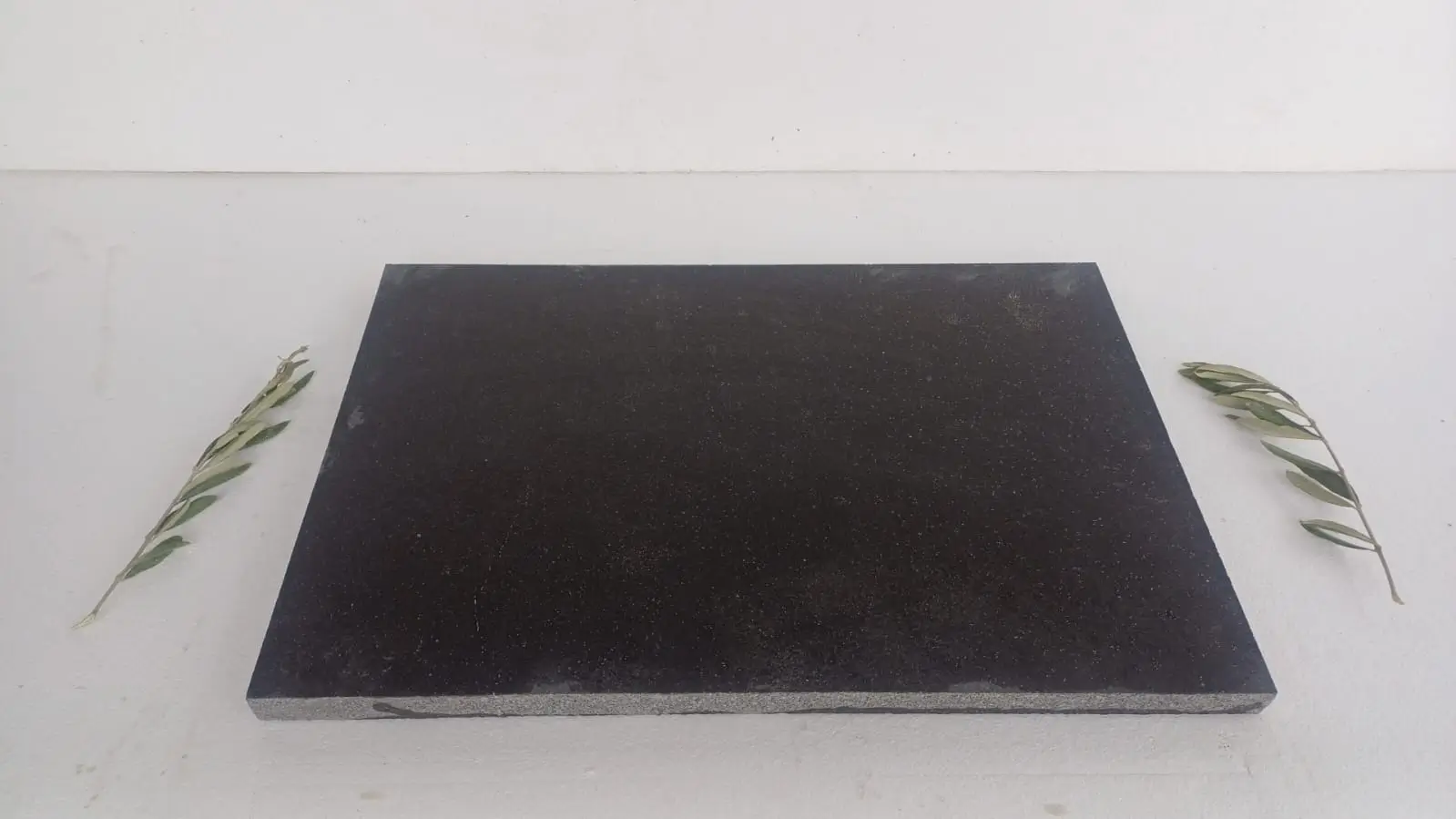
Long-term performance of honed black granite countertops depends on three maintenance variables working together: sealing integrity, cleaning chemistry, and mechanical protection. You can have a perfect sealant application undone within weeks by using a spray cleaner with citric acid as a preservative — read every label on any product that contacts the stone. The surface hardness of granite — confirmed by USGS dimension stone production data as one of the most abrasion-resistant natural materials in commercial use — means the stone itself will outlast your kitchen cabinets and appliances. The finish is what requires stewardship.
- Keep a dedicated stone cleaner at the countertop — reduce the chance of a household cleaner being used in a hurry
- Inspect the sealant annually with the water bead test described earlier
- Place silicone trivets near the hob — not because granite can’t handle heat, but because thermal cycling degrades sealant faster than almost any other stress factor
- Use felt pads under ceramic or metal decorative objects that sit permanently on the surface
- Avoid dragging appliances across the countertop — even the underside of a toaster can carry abrasive grit
Parting Guidance
The decision to install honed black granite countertops is a sound one when you go in with clear expectations about what the maintenance commitment involves. The aesthetic rewards — a sophisticated matte surface that reads differently under every light condition, that hides fingerprints far better than polished alternatives, and that anchors a kitchen palette with genuine visual authority — are matched by an honest maintenance requirement that isn’t burdensome if you stay on schedule. Annual sealing, pH-neutral cleaners, and immediate spill response will keep these countertops performing for 20 years and beyond without professional intervention. For a related dimension of black granite behaviour worth understanding before installation, why water marks form on black granite explains the underlying mechanism and what it signals about sealant condition. From internationally sourced quarries, Citadel Stone honed black granite countertops arrive with a low-sheen finish that hides fingerprints.
Related reading: does black limestone fade · black limestone sealer · black limestone restorer guide.