

Why Water Marks on Black Granite Form the Way They Do
Water marks on black granite reveal something most people don’t expect: the stone itself isn’t failing — your surface protection is. The deep, uniform color of absolute black granite acts like a high-contrast backdrop, making every mineral deposit, every dried water ring, and every oil transfer visible in a way that lighter stones simply don’t expose. Understanding why these marks appear is the first step toward preventing them for the long term.
The Chemistry Behind the Marks
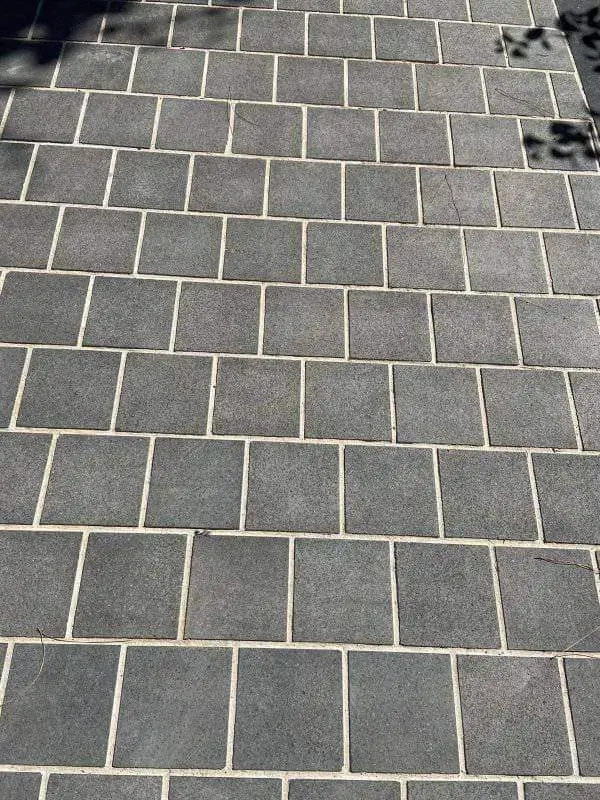
Tap water contains dissolved minerals — primarily calcium, magnesium, and silica — that remain on the surface after the water evaporates. On black granite, those white or grey mineral deposits stand out dramatically against the dark background. The stone’s relatively low absorption rate (typically 0.1–0.4% by weight per ASTM C97 testing) means water doesn’t soak in deeply, but it pools long enough to leave a concentrated mineral ring at the evaporation boundary. That ring is what you see as a watermark.
Hard water accelerates this dramatically. In areas with calcium carbonate concentrations above 150 mg/L, visible residue appears after a single contact event. According to NSI granite durability specifications, polished granite surfaces are less porous than most other natural stone types, which is a structural advantage — but it also means that whatever sits on the surface stays visible until actively removed. The marks aren’t absorption stains in most cases; they’re surface deposits riding on top of the finish.
Polished vs. Honed Finishes and Watermark Visibility
Your finish choice has a direct impact on how prominently black granite water stains appear. A polished surface — the standard mirror-gloss finish on most absolute black granite countertops — amplifies the contrast between the stone and any mineral deposit sitting on top of it. The reflective quality that makes polished granite so visually striking is exactly what makes watermarks so noticeable.
A honed or leathered finish reduces that optical contrast considerably. The matte texture diffuses light rather than reflecting it directly, which means mineral deposits don’t catch the eye as sharply. The trade-off is that honed surfaces have marginally higher surface micro-porosity than polished ones, which can make oil-based stains slightly more likely to penetrate if the stone isn’t sealed. For countertop applications where water contact is frequent — kitchens, bathrooms — many specifiers now recommend a honed finish with a penetrating impregnating sealer, precisely because the reduced watermark visibility outweighs the minor sealing trade-off.
- Polished finish: maximum visual impact, maximum watermark visibility, easiest to wipe clean
- Honed finish: reduced watermark contrast, slightly more porous surface texture, requires sealer maintenance
- Leathered finish: tactile surface variation, good at hiding minor marks, harder to deep-clean
- Brushed finish: directional texture reduces ring visibility, common on exterior applications
Sealing and Watermark Prevention
Here’s what most countertop installers don’t explain clearly: sealing black granite doesn’t prevent watermarks — it prevents stains. Those two things are different problems. A penetrating impregnating sealer fills the microscopic pore network below the surface, blocking oil and acidic liquids from penetrating the stone matrix. But mineral deposits from evaporated water form on top of the sealed surface, not inside it. No sealer stops that from happening.
What good sealing does accomplish is making the surface easier to clean. A properly sealed absolute black granite countertop allows you to wipe off mineral deposits with a damp cloth and mild stone cleaner without the residue bonding to the stone. An unsealed or under-sealed surface can allow those deposits to etch micro-channels into the finish over time, making them progressively harder to remove. Per ASTM C615 granite dimension stone standards, granite used in wet environments should be assessed for absorption and surface integrity — and your sealing schedule should reflect how much water contact the surface actually receives. For kitchen countertops, annual resealing with a high-solids impregnator is the practical standard.
Design Context and Material Selection for Dark Stone
Your design environment affects how much you’ll notice water marks on black granite day-to-day. In modern minimalist interiors — clean lines, monochromatic palettes, reflective surfaces — absolute black granite countertops create a striking focal point, but that same visual clarity means every smudge and mineral ring reads loudly. In contrast, spaces with layered textures, organic materials, and varied color introduce enough visual complexity that occasional water marks read as part of the material’s natural character rather than as a maintenance failure.
Landscape design follows a similar logic. For outdoor kitchen counters and exterior surfaces in xeriscaping or modern minimalist garden settings, black granite slabs create strong architectural contrast against pale hardscape and drought-tolerant plantings. In those open-air applications, rain and sprinkler overspray create repeated wet-dry cycles that deposit mineral residue quickly — often within weeks of installation if no protective protocol is in place. Pairing our black granite selection with a maintenance schedule tailored to your outdoor environment makes a meaningful difference in long-term appearance. Tropical or lush planted garden settings introduce organic acids from plant matter into the equation, which can etch polished finishes in ways that plain mineral deposits don’t — something worth factoring into your finish and sealing specification before installation.
Cleaning Water Marks Correctly Without Damaging the Surface
The instinct to scrub water marks off black granite with an abrasive pad or acidic cleaner is one of the most common damage patterns seen in the field. Acidic cleaners — including vinegar, lemon juice, and many multi-surface sprays — chemically etch the polished surface at a microscopic level. You remove the watermark but introduce a dull patch that catches light differently, which becomes its own permanent visibility problem.
- Use a pH-neutral stone cleaner — nothing acidic, nothing alkaline above pH 9
- Apply a small amount to the affected area, let it dwell for 30–60 seconds before wiping
- For stubborn calcium deposits, a dedicated stone-safe mineral remover works without etching
- Buff the surface dry with a microfibre cloth immediately — air-drying leaves the next ring
- Never use steel wool, abrasive pads, or standard bathroom cleaners on polished granite
For outdoor black granite surfaces, a periodic treatment with a water-repelling topical conditioner — applied over the impregnating sealer — creates a hydrophobic layer that causes water to bead and run off rather than pool and evaporate. This doesn’t replace your base impregnating sealer; it’s an additional surface-level layer that reduces the frequency of mineral deposit formation significantly. Reapply every three to six months depending on sun and rain exposure.
Granite Slabs: How Sourcing Affects Watermark Susceptibility
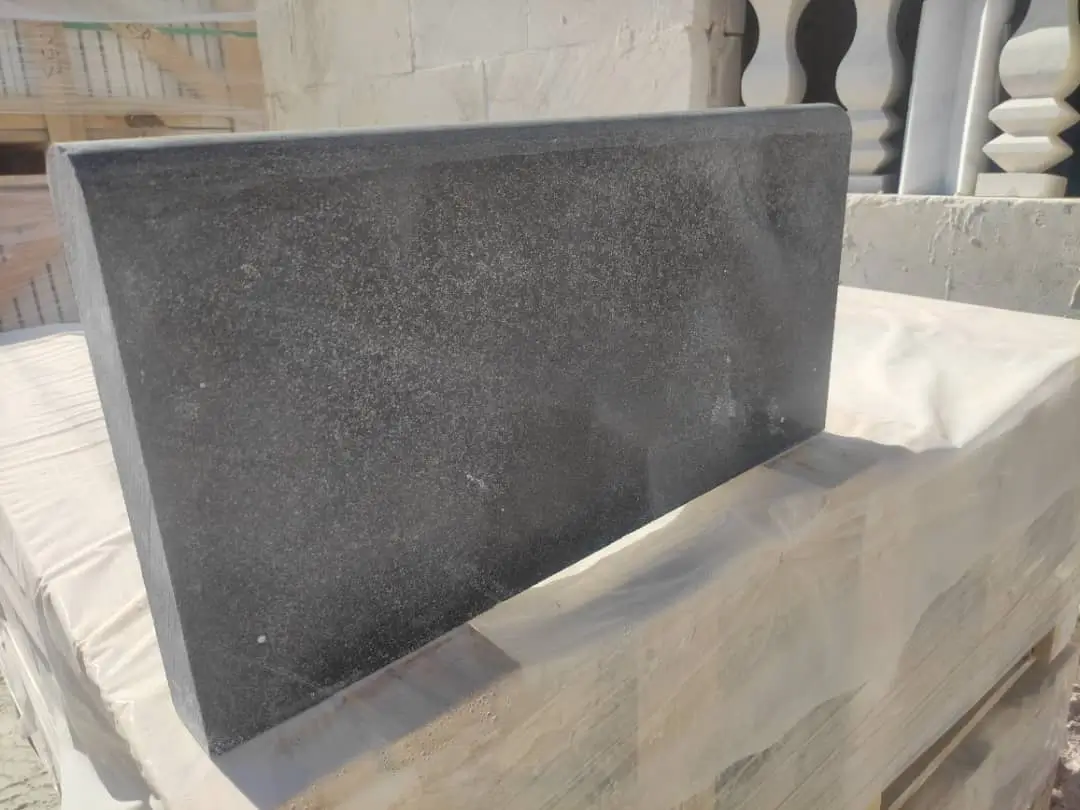
Not all black granite performs identically. The term “black granite” covers a range of igneous materials — true granite, gabbro, diabase, and anorthosite — that share a dark appearance but differ in mineralogy, porosity, and surface behavior. The absorption rate you get from your slab directly affects how your surface responds to water contact over time. Lower absorption rates mean mineral deposits stay on the surface rather than migrating into it, which makes cleaning more straightforward.
At Citadel Stone, we test warehouse stock against published absorption benchmarks before material ships, because sourcing variation between quarry runs is real. A slab labeled “absolute black granite” from one quarry source can have measurably different absorption characteristics than nominally identical material from another origin. According to USGS granite production and construction use data, dimension stone quality varies by quarry, processing method, and geographic source — which is why technical verification at the warehouse stage, rather than relying solely on trade name, gives you a more reliable specification baseline. Our technical team can provide absorption test results for specific granite slabs for sale when you’re specifying for high-contact applications.
Long-Term Maintenance for Black Granite Surfaces
Long-term results with black granite countertops and slabs come down to the consistency of your maintenance protocol, not just the quality of your initial sealing. A two-year maintenance cycle — which is what many fabricators recommend — typically doesn’t match the actual water contact volume that a kitchen or bathroom surface experiences. A more calibrated approach is the water bead test: apply a few drops of water to the surface. If they bead into a tight dome, your sealer is working. If they spread and flatten, reseal within the next few weeks.
- Water bead test: monthly check, takes 30 seconds, tells you exactly where your sealer stands
- Impregnating sealer reapplication: annually for high-use surfaces, every 18–24 months for low-contact areas
- Topical water-repelling conditioner: every 3–6 months on outdoor surfaces
- Daily wipe-down with pH-neutral cleaner: the single most effective watermark prevention step
- Immediate drying after any water contact: eliminates the evaporation stage where rings form
Citadel Stone maintains warehouse stock of compatible stone care products that ship alongside slab orders nationwide, which means your maintenance materials can be specified and delivered with your stone rather than sourced separately after installation. That coordination matters when your project timeline is tight and you need the surface ready for use quickly.
What Matters Most for Black Granite Water Stain Prevention
Water marks on black granite are a surface management issue, not a material deficiency — and that distinction changes how you approach specification, installation, and maintenance from the start. Your finish selection, sealing protocol, and daily care habits collectively determine whether your black granite surface looks pristine after a decade or shows its age within two years. Choosing the right finish for your specific use environment, verifying your slab’s absorption rate before purchase, and committing to a consistent maintenance schedule are the three decisions that separate long-term satisfaction from persistent frustration. As you refine your approach to dark stone surfaces, exploring black stone tile design ideas can also inform how finish and format choices interact with your broader design intent — particularly when black granite water stains and surface visibility are factors you’re working to manage across multiple material formats. Sourced from our selected premium quarries across multiple continents, Citadel Stone black granite is finished to reduce visible watermark buildup.
Related reading: Black Limestone Countertops: Cost, Care & Looks · Black Limestone Pavers: Sizes, Finishes and Uses · midnight black limestone paving.