

What Stone Grade Actually Tells You About Limestone Blocks
Limestone blocks carry compressive strength ratings that range from 1,800 PSI in soft chalky varieties to well above 12,000 PSI in dense, tight-grained commercial grades — and that spread determines everything from your footing depth to your mortar spec. The grade classification system for limestone blocks isn’t just a marketing tier; it reflects measurable differences in porosity, absorption rate, and freeze-thaw durability that directly affect how your wall or edging installation performs over a 20-year horizon. Your specification decisions in the first week of a project are the ones that determine whether you’re looking at a stable, attractive structure or a callback in year four.
Dense commercial-grade limestone blocks typically show absorption rates below 3%, which qualifies them for exterior wall applications in freeze-thaw regions without additional waterproofing treatment. Standard residential grades often run 7–12% absorption — still workable, but they require sealing within 90 days of installation and resealing on a 3-to-5-year schedule after that. Understanding where your material sits on that scale before it arrives on a truck is the kind of prep that separates experienced specifiers from those who learn the hard way.
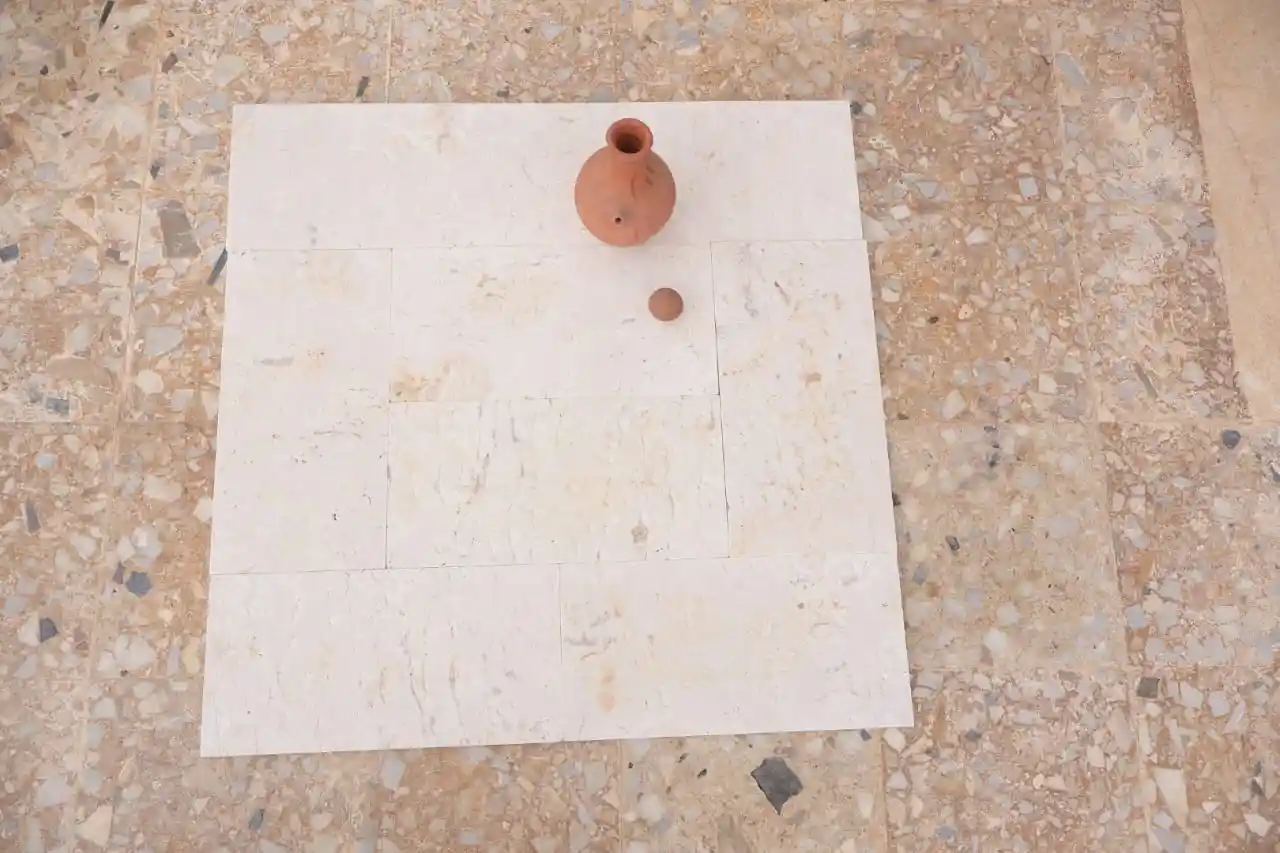
Stone Type Fundamentals: Reading the Limestone Family
Not all limestone blocks are the same mineral composition even when they carry the same name. The formation environment — shallow marine, lacustrine, or oolitic — produces measurably different crystalline structures, and those structures behave differently under load, thermal cycling, and sustained moisture exposure. According to limestone geological characteristics, the material’s calcium carbonate base gives it natural workability, but the degree of diagenesis — how completely the original sediment has recrystallized — is what separates a block that courses cleanly at 12 inches from one that spalls at the face after three winters.
Here’s what most buyers overlook when sourcing: the quarry location within a single formation can shift absorption and density by 15–20% depending on bed depth and overburden pressure. Blocks cut from deeper beds in any quarry tend to be denser and more consistent in color because they’ve experienced greater compaction. Surface beds yield material that photographs beautifully but often has the porosity profile of a medium-grade travertine. Ask your supplier for bed-depth sourcing data — if they can’t provide it, treat the material as standard residential grade regardless of the product name on the invoice.
Selecting Limestone Wall Blocks: Structure and Aesthetics Together
The structural requirements for limestone wall blocks shift significantly based on whether you’re building a dry-stacked retaining wall, a mortared garden wall, or a faced architectural wall. Dry-stacked applications demand material with tight dimensional tolerances — blocks that vary more than ¼ inch in bed height will create unstable courses regardless of how carefully you level the base. For mortared construction, you have more forgiveness on individual block dimensions, but the mortar type becomes critical: Type S mortar is the standard for below-grade and exterior exposure, while Type N is acceptable for above-grade, non-load-bearing garden walls in temperate conditions.
For retaining applications, minimum thickness should be 4 inches for walls under 24 inches in height, with a step-up to 6 inches for anything approaching 36 inches. Beyond that height, you’re entering engineered retaining wall territory where batter ratios, geogrid, and drainage design need professional input. The material itself — limestone wall blocks in a 100–200 lb per unit range — handles the compressive loads well, but shear at the base course is where failures originate, not at the wall face. Your base course needs to sit on 6 inches of compacted clean crushed stone, and the first course should be partially buried to prevent toe-out under hydrostatic pressure.
Browse our limestone wall blocks to compare dimensional options and surface finishes across the full range of structural applications.
The aesthetic dimension of wall block selection connects directly to the design vocabulary of the surrounding landscape. A modern minimalist garden with clean lines and restrained planting calls for sawn-face limestone wall blocks in consistent courses — the precision of the cut emphasizes geometry. A naturalistic or cottage-style planting scheme reads better with split-face or tumbled blocks that have irregular texture and softer arrises. At Citadel Stone, we recommend specifying your finish before committing to a block size, because the finish affects how the material is cut and therefore what dimensional tolerances are achievable from any given quarry run.
Handling Large Limestone Blocks: Weight, Delivery, and Site Access
Large limestone blocks — typically anything over 150 lbs per unit — introduce logistical variables that smaller format stone doesn’t. Your site access plan needs to account for truck turning radius, ground bearing capacity under a loaded delivery vehicle, and the mechanical handling equipment you’ll need to place blocks accurately. A fully loaded flatbed truck carrying large limestone blocks can weigh 50,000–60,000 lbs, which means you need to verify that any unpaved access route can sustain that load without rutting or base failure. Soft soils after rain are a particularly common problem — a delivery that was scheduled for a dry-weather window can turn into a ground repair job if the weather shifts.
- Confirm truck access dimensions: minimum 12-foot-wide clearance for standard flatbeds, 14 feet for articulated vehicles
- Verify overhead clearance if the delivery route passes under tree canopies or utility lines — 14 feet minimum for most loaded vehicles
- Plan for a telehandler or crane if blocks exceed 500 lbs — manual placement above that weight creates safety and accuracy problems
- Stage your receiving area on compacted gravel or concrete — placing heavy blocks on soft lawn creates settlement and makes repositioning difficult
- Check warehouse lead times before finalizing your installation schedule — large-format blocks are less commonly stocked than standard units
Citadel Stone ships large limestone blocks nationwide and maintains warehouse inventory that typically reduces lead times compared to direct import sourcing. Confirming stock availability before your project mobilizes is worth a quick call — a 2-week warehouse lead time is far easier to accommodate than a 6-week import cycle when your crew is already on site.
Limestone Edging Blocks: Precision at the Boundary
Limestone edging blocks serve a different mechanical role than wall blocks, and the specification criteria shift accordingly. The primary forces on an edging block are lateral — soil pressure from one side, paver or gravel migration from the other — so the key performance metric is bending strength rather than pure compressive capacity. NSI limestone specifications identify minimum modulus of rupture requirements for exterior dimension stone applications; for limestone edging blocks exposed to vehicular overhang or heavy foot traffic, target material with a modulus of rupture above 900 PSI to reduce cracking risk at corners and notch points.
The dimensional tolerance for limestone edging blocks matters more than most buyers anticipate. A straight edging run of 40 feet will telegraph any variation in block height as a visible wave along the top line — and once the surrounding material is installed, correcting it means pulling out the edging and starting over. Specify sawn tops and sawn beds as a minimum for any formal edging application; split-face sides are acceptable and create visual interest, but the horizontal surfaces that determine your grade line need to be mechanically cut for consistency.
- Standard edging depths run 3–4 inches; go to 5–6 inches in areas with significant frost penetration to reduce heave risk
- Set edging blocks on a concrete haunch — not compacted aggregate — when the edging borders a paved surface carrying vehicle loads
- Use a 3/8-inch open joint between units to allow for thermal movement; fully butted joints will crack at high ambient temperatures
- Tumbled limestone edging works well in naturalistic garden settings but sacrifices some dimensional consistency — account for this in your layout
- Seal cut edges within 60 days of installation to reduce differential weathering between sawn and natural faces
Surface Finish Selection for Walls and Edging
The surface finish on limestone blocks affects more than aesthetics — it changes the slip resistance profile, the sealing protocol, and how the material weathers over the first five years. For wall applications above eye level, finish is primarily visual and the choice is yours. For edging blocks at or near grade, particularly those bordering walkways or pool surrounds, slip resistance becomes a functional specification. Honed limestone surfaces are smooth and close-textured — usually fine for dry pedestrian traffic, but marginal once wet; request the wet DCOF test report for the finish you specify. Sawn-face and split-face textures are noticeably more open, which is the usual specification where rain or irrigation overspray is expected — confirm the wet DCOF test report against the 0.42 minimum in ANSI A326.3.
Thermal finishing — passing a flame-torch over the surface to cause differential expansion and micro-spalling — creates an aggressive, deeply pitted texture. It’s worth knowing that thermal treatment slightly accelerates surface weathering in limestone compared to granite, so you’ll see more color variation develop over the first decade. For most wall and edging applications, that patina is a positive — it integrates the stone into the landscape rather than reading as a manufactured product.
Color consistency across a limestone block order deserves specific attention. Natural color variation within a single quarry bed can span 3–4 tonal steps on a standard stone color chart, and those variations become very visible in a coursed wall. Request a full range sample — not just the median color — before approving a bulk order. What looks cohesive in a single 12-inch sample can read as mismatched in a 40-foot wall run if the quarry is pulling from the outer edges of a color band.
Integrating Limestone Blocks Across Landscape Design Styles
Your choice of limestone block type creates a dialogue with the broader landscape, and getting that dialogue right is what distinguishes a project that photographs well from one that actually lives well. Contemporary minimalist landscapes favor large-format limestone blocks in consistent courses with tight sawn joints — the geometry of the wall becomes the design feature, and the stone’s natural color variation provides enough visual interest without disrupting the clean lines. Traditional and colonial-style gardens tend to read better with smaller, irregularly coursed blocks that echo historic masonry traditions; random ashlar patterns with occasional quoining details reference architectural precedent without being literal about it.
Naturalistic landscape styles — including drought-tolerant designs with ornamental grasses and succulents — work exceptionally well with split-face or weathered limestone blocks because the rough texture complements the tactile quality of the planting. In these settings, limestone edging blocks often perform double duty as both boundary definition and a visual anchor that keeps the planting scheme from reading as formless. The warm cream-to-buff tones of most domestic limestone harmonize naturally with silver-foliage plants and terracotta-toned gravel, which is why the material is so consistently specified in dry-garden design. Darker grey limestone varieties carry a cooler tone that pairs well with blue-green foliage and modern planting palettes — worth considering if your project has a strong color direction.
Vertical wall elements in limestone create opportunities for planting integration that concrete block or timber can’t replicate. The natural surface of split-face limestone will colonize with moss and lichen in moist, shaded exposures over 3–5 years, which many designers deliberately cultivate as a design outcome. If you want to preserve the clean stone face, a penetrating silane-siloxane sealer applied annually will inhibit biological growth without changing the surface appearance significantly. If you want to encourage the living patina, leave the stone unsealed and allow the natural weathering process to run.
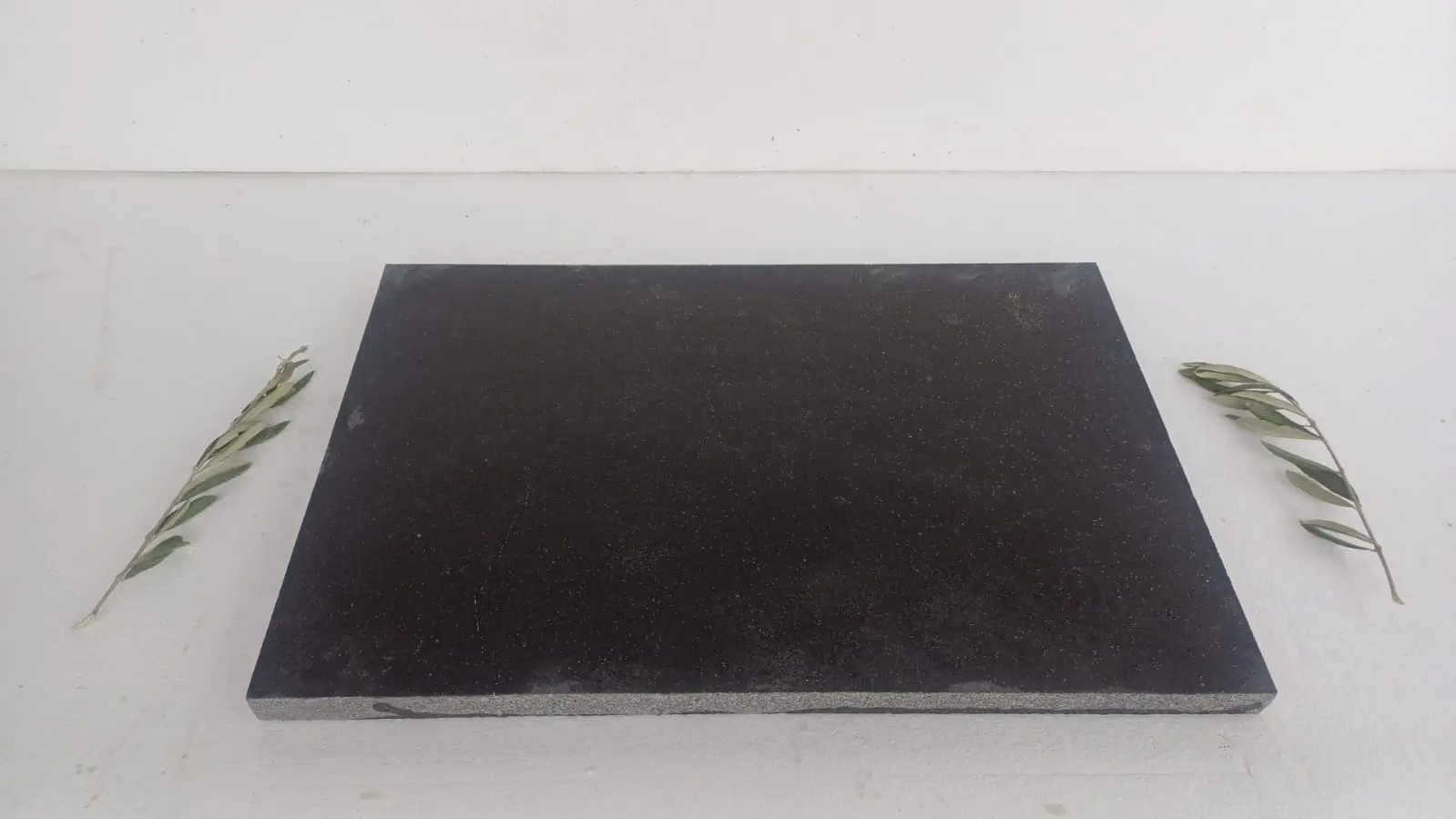
Base Preparation: The Variable That Determines Long-Term Performance
The most common failure mode in limestone block installations isn’t material failure — it’s base failure. Settlement, lateral migration, and frost heave all originate below the block, and no amount of material quality compensates for inadequate base preparation. For freestanding garden walls under 36 inches, a continuous concrete footing 12 inches wide and 8 inches deep, poured below frost depth for your region, provides the stable reference point that prevents differential settlement. Skipping the concrete and relying on compacted aggregate alone works for dry-stack decorative walls under 18 inches, but you’ll typically see 1–2 inches of settlement within the first two years as the aggregate consolidates under load and seasonal moisture cycling.
- Frost depth varies significantly across the country — verify local frost depth before specifying footing depth on any structural wall
- For edging blocks, a 4-inch compacted aggregate base (Class II or equivalent) is the minimum; concrete haunch is preferred for edging adjacent to paved surfaces
- Install a continuous perforated drain pipe behind retaining walls over 24 inches — hydrostatic pressure is the primary cause of wall blowout
- Allow concrete footings to cure for a minimum of 7 days before loading with block; 28-day cure is preferable for walls over 36 inches
- Check for clay-dominant subsoil before finalizing your footing design — expansive clays require deeper excavation and sometimes a layer of engineered fill
According to USGS data on limestone composition, the material’s density ranges from 135 to 160 lbs per cubic foot depending on formation type. That weight means a 40-foot-long, 36-inch-high wall with 12-inch-thick blocks is transferring roughly 15,000–18,000 lbs to your footing — a load that demands proper bearing capacity in the soil below. If you’re building on fill or disturbed soil, add a geotechnical assessment to your pre-project checklist.
Mortar, Jointing, and Sealing Protocols
Mortar selection for limestone blocks requires attention to compressive strength matching — you want mortar that is slightly weaker than the stone, not stronger. Counter-intuitive as it sounds, using a mortar with compressive strength significantly above the stone’s means that any movement in the wall will fracture the stone rather than the joint. Since joints are far cheaper to repair than blocks, mortar in the 750–1,500 PSI range is appropriate for most residential limestone wall applications. Type S Portland cement mortar blended with masonry sand at a 1:4.5 ratio by volume typically lands in this range and provides good workability in standard temperature conditions.
Pointing — the final finish applied to mortar joints — affects both the visual character of the wall and its water resistance. Raked joints (recessed 3/8 to ½ inch) create shadow lines that emphasize the individual block character and are a common choice for split-face or rough-dressed limestone blocks. Flush joints, struck smooth, give a cleaner look suited to sawn-face formal walls. Avoid deeply raked joints below 5/8 inch in exposed locations — they collect water and debris in a way that accelerates mortar deterioration. The Masonry Society’s wall construction standards provide detailed joint geometry guidance for various exposure conditions and wall types.
Sealing is optional on dense commercial-grade limestone blocks but recommended on standard residential grades. Apply a penetrating silane-siloxane impregnator — not a surface coating — as your first treatment. Surface coatings trap moisture behind the seal face, which accelerates spalling in freeze-thaw conditions. A penetrating sealer allows vapor transmission while reducing liquid absorption by 80–90%. Reapply every 4–5 years, or sooner if water no longer beads on the surface after rainfall.
Specifying Limestone Blocks Right: What the Long-Term Record Shows
Getting limestone blocks right for walls and edging comes down to knowing your grade before you spec your footing, matching your finish to both the functional environment and the design context, and treating base preparation as a structural decision rather than a cost to minimize. The material itself is forgiving in many ways — it cuts cleanly, bonds well, and ages gracefully — but it amplifies base and mortar decisions the way most natural stone does. Your long-term performance expectations should be realistic: a properly specified and installed limestone block wall with biennial sealing and good drainage design will perform for 30 or more years without intervention beyond cosmetic maintenance. Cut corners on the base or the mortar spec, and you’re looking at intervention in years 5–8 regardless of how good the stone was. For projects that also incorporate paving elements adjacent to your walls or edging runs, limestone outdoor paver installation guidance covers the complementary specification details worth reviewing before you finalize your design. Stone for nationwide projects includes large limestone blocks squared for stacking, giving landscapers reliable coursing for walls and raised beds.
Related reading: flamed limestone paving · Limestone Paving for Pool Areas: What Works · limestone crazy paving ideas.