

What Bulk Pricing Actually Measures in Paving Stone Supply
Paving stone supply pricing isn’t simply a function of material cost — it’s a composite number built from quarry yield rates, warehouse handling margins, freight geometry, and the volume thresholds that unlock supplier-tier discounts. Most buyers see a per-square-foot figure and treat it as fixed, but experienced specifiers know that number is highly negotiable and highly variable depending on how the order is structured. Understanding what goes into that figure is how you stop overpaying on bulk orders and start leveraging your volume correctly.
The margin between a competitive bulk price and a retail-tier price on the same natural stone can reach 25–40% once you cross meaningful volume thresholds. That spread isn’t arbitrary — it reflects real reductions in per-unit handling, truck utilization efficiency, and warehouse pick-and-pack labor. Knowing where those thresholds sit before you request a quote puts you in a fundamentally stronger position.
Volume Thresholds That Change the Number
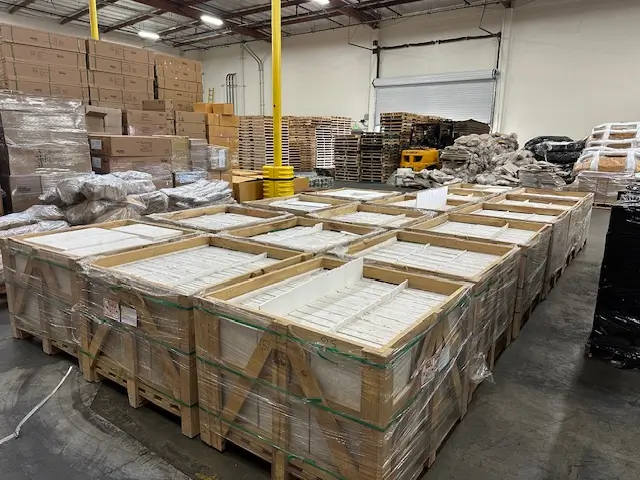
Yards and national stone suppliers typically operate on tiered pricing structures, though few publish those tiers openly. The first meaningful break usually appears around 500 square feet — enough to fill a partial pallet configuration and justify dedicated handling. The second break, where you start seeing genuine wholesale-adjacent pricing, typically falls between 1,500 and 2,500 square feet depending on the material and its country of origin.
For calibrated natural stone pavers — particularly limestone, bluestone, and basalt — full-pallet orders represent the cleaner pricing category because they eliminate the repacking labor that gets passed to smaller buyers. A full pallet of 2-inch nominal paving stone runs roughly 80–120 square feet depending on format size, and ordering in full-pallet increments often unlocks a per-unit reduction of $0.40–$0.80 per square foot simply by removing handling complexity from the equation.
- Sub-pallet orders absorb repacking and hand-stack labor costs — expect a 15–20% premium over full-pallet pricing
- Mixed-format orders on a single pallet may disqualify you from volume tier pricing even if the total square footage qualifies
- Ordering consistent thickness across a project — rather than mixing 20mm and 40mm — simplifies truck loading and frequently earns a logistics discount
- Orders that allow flexible delivery windows (72-hour rather than next-day) often qualify for consolidated truck runs, which suppliers pass back as a small per-unit reduction
According to Natural Stone Institute technical stone specifications, natural stone dimensions and calibration tolerances directly affect how efficiently material can be palletized and shipped — a factor that flows directly into bulk pricing structures at the supplier level.
Freight Geometry and Truck Economics
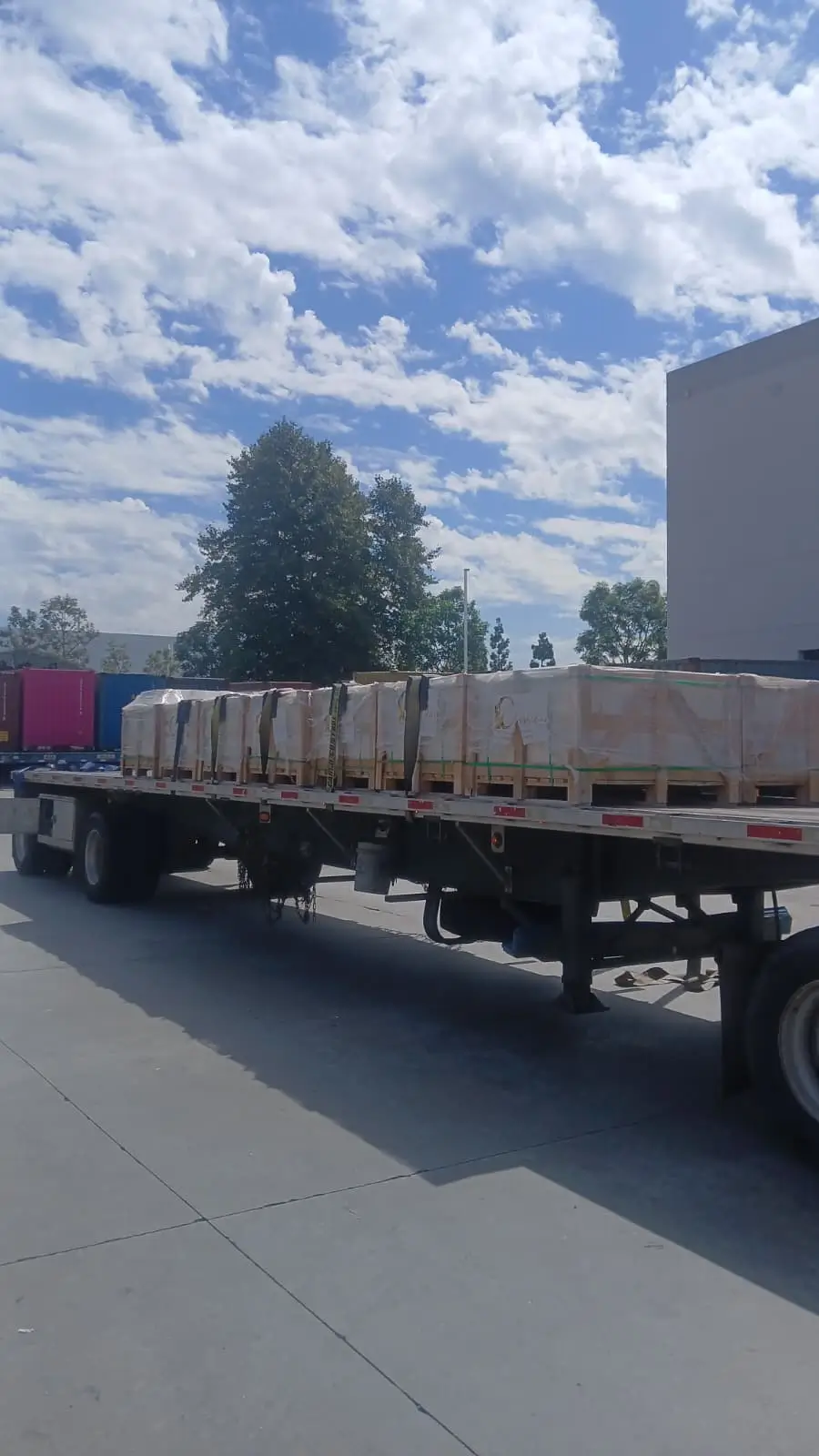
Here’s what most buyers don’t think about: a truck has a weight limit and a cube limit, and natural stone almost always hits the weight limit first. A standard flatbed truck handles roughly 42,000–45,000 lbs of payload. Dense materials like granite or basalt pavers can max out a truck at 60–70% of its physical cube — meaning you’re paying for a full truck without filling it volumetrically. Suppliers know this and price accordingly.
Your project’s truck access constraints matter here too. Sites that require lift-gate service, restrict truck length, or impose delivery-window limitations add costs that appear as line items or get absorbed into a freight surcharge. Getting clear on your site’s access conditions before you request a quote prevents those surcharges from arriving as surprises on the invoice.
For large-format natural stone pavers — particularly pieces running 24″x24″ or larger — crating requirements can add $0.15–$0.30 per square foot to the delivered cost. Crating protects corners and face surfaces during transit, which matters significantly for honed or polished finishes, but it also changes the dimensional footprint on the truck bed. Ask your supplier whether the quote assumes crated or banded-pallet delivery before comparing numbers from different sources.
- Flatbed delivery is the most cost-efficient truck format for large orders — it allows forklift off-load and eliminates per-piece handling
- Enclosed truck delivery is required for some urban sites and adds freight cost due to lower payload limits
- Multi-drop routes reduce your per-unit freight cost but extend lead time — worth considering for non-critical-path materials
- Confirm whether your truck quote includes tailgate delivery or curb-only drop — the distinction affects your unloading crew and schedule
How Material Selection Shifts Bulk Pricing
The stone type you select moves the baseline price dramatically before any volume negotiation begins. Domestic limestone typically carries the lowest freight premium because quarry proximity reduces haul distance, while imported basalt or premium bluestone carries an embedded ocean-freight cost that doesn’t compress much regardless of order volume. Understanding that split helps you calibrate expectations before you compare quotes across stone types.
Paving stone supply for large residential and commercial projects increasingly defaults to calibrated limestone or bluestone because those materials offer the most predictable thickness tolerance — critical for mechanized installation and for subbase preparation consistency. Irregular thickness variation forces installers to adjust mortar bed depth piece by piece, which adds labor cost that often exceeds any material savings from selecting a lower-grade stone.
The USGS dimension stone production and use data confirms that limestone and granite account for the dominant share of dimension stone shipped domestically — a reflection of both quarry availability and the logistics efficiency those materials offer at scale. For buyers structuring bulk orders, that market depth translates into more competitive pricing and shorter lead times compared to specialty stone types.
Finish Type, UV Weathering, and Long-Term Value Calculations
Finish selection affects more than aesthetics — it directly influences long-term maintenance cost and the resealing schedule that protects your material investment. For sun-exposed installations, UV exposure accelerates surface oxidation and color shift in ways that vary significantly by stone type and finish. A honed finish on beige limestone, for example, will show UV-driven color migration within 3–5 years in high-sun-exposure applications if left unsealed, while a bush-hammered or textured finish on the same stone tends to mask those changes more effectively because light diffuses across the irregular surface.
From a pricing standpoint, this matters because your upfront material cost needs to be evaluated against sealing frequency and product cost over a 10-year horizon. Penetrating silane-siloxane sealers applied every 2–3 years add roughly $0.08–$0.15 per square foot per treatment cycle. For a 2,000-square-foot installation, that’s a meaningful ongoing line item that belongs in your total project cost model — not an afterthought.
- Lighter-colored stones (cream limestone, silver travertine) show UV-driven fading more visibly than darker materials — factor this into finish and sealer selection for exposed paving
- Polished finishes amplify UV color shift because the reflective surface makes tonal variation more apparent to the eye
- Tumbled and brushed finishes on natural stone pavers tend to age more gracefully under sustained UV exposure, reducing the visual impact of surface oxidation
- Sealing schedules for high-UV-exposure applications should be accelerated to every 18–24 months rather than the standard 3-year cycle often printed on product literature
At Citadel Stone, we evaluate finish durability under UV conditions as part of our material sourcing process — because a stone that performs beautifully in a covered sample board can behave very differently after two seasons of direct sun exposure on an outdoor installation.
How Yards Calculate Waste and Overage in Orders
The standard waste factor applied to paving stone supply orders runs 10% for simple rectangular layouts and climbs to 15–20% for complex patterns, diagonal cuts, or irregular site boundaries. What yards don’t always explain clearly is that waste calculation methodology varies — some apply it to the net area, others apply it to the gross takeoff, and the difference can represent a meaningful quantity discrepancy on large orders.
Always specify your takeoff method when requesting a quote and confirm that the supplier’s waste allowance is calculated consistently. For projects using large-format natural stone pavers, cut waste is higher at perimeters and around site features like drains, columns, and pool equipment — areas where a 24″x24″ piece gets cut to a 6″ strip that can’t be reused elsewhere on the project. Budget those areas at a higher waste factor, not the project average.
Explore the full range of formats and thickness options available through Citadel Stone paving stone formats before finalizing your quantity takeoff — format selection affects both cut waste rates and freight efficiency on bulk orders.
Lead Times, Warehouse Stock, and Project Timeline Planning
Lead time is where bulk paving stone supply orders most frequently derail project schedules. Stock-held material at a supplier’s warehouse can ship within 5–10 business days under normal conditions. Import orders — material that must be sourced, processed overseas, and containerized — typically run 8–14 weeks from order confirmation to site delivery, and that timeline doesn’t compress well even with premium logistics arrangements.
Your project’s delivery window needs to be confirmed before the order is placed, not after. A truck arriving at a site that isn’t ready for off-load creates demurrage charges that can run $150–$400 per hour depending on carrier and route. Coordinating your subbase completion milestone with your warehouse delivery date is basic scheduling discipline, but it’s the kind of detail that gets skipped when procurement and site management aren’t communicating clearly.
- Confirm warehouse stock levels in writing before finalizing your delivery date — verbal stock confirmations are frequently inaccurate during peak construction season
- For phased projects, ask whether the supplier will hold reserved stock under a blanket purchase order — this protects dye-lot and calibration consistency across project phases
- Partial releases from a held warehouse order typically ship at the original bulk pricing, but confirm this in the purchase agreement before signing
- Allow a 2-week buffer between confirmed delivery and your installation start date to account for inspection, re-stacking, and any shortage reorder
Citadel Stone maintains active warehouse inventory across its product range, which allows bulk orders to ship significantly faster than typical import-cycle timelines — a meaningful advantage when project schedules are compressed.
Reading a Bulk Paving Stone Quote Correctly
A bulk paving stone supply quote contains several line items that are easy to misread or miss entirely. The material unit cost is the most visible number, but freight, fuel surcharges, liftgate fees, and crating charges can add 12–22% to the delivered cost per square foot on orders that don’t qualify for consolidated truck runs or that require specialized delivery equipment.
The ASTM dimension stone quality and testing standards define the physical characteristics — compressive strength, absorption rate, and flexural strength — that underpin quality grading in dimension stone supply. When a quote references a specific grade designation, those standards provide the baseline against which material performance is measured, which matters for specification compliance on commercial projects.
Your comparison framework when evaluating multiple paving stone supply quotes should include these components evaluated side by side rather than just the headline per-square-foot number:
- Material unit cost at the quoted quantity tier — and what happens to that price if your final order quantity comes in 10% below estimate
- Freight cost per square foot, stated separately — not bundled into material pricing in a way that obscures the split
- Payment terms and deposit structure — most large natural stone orders require 30–50% upfront with balance due prior to shipment
- Tolerance and rejection policy — what process applies if delivered material shows excessive calibration variance or cosmetic damage above a stated threshold
- Lead time guarantee in writing — and what remediation the supplier offers if that timeline slips
Expert Summary
Paving stone supply pricing at the bulk level rewards buyers who understand what drives the number before they request a quote. Volume thresholds, truck geometry, finish selection, material type, and warehouse stock status all feed into the final delivered cost per square foot — and each of those variables is negotiable or optimizable if you engage the supplier with specific knowledge rather than a general inquiry. The specifiers who consistently get competitive bulk pricing aren’t always buying the most volume — they’re structuring their orders to reduce supplier-side handling and logistics cost, and asking for that reduction to be passed through. As you evaluate your stone project’s full scope, understanding how complementary natural stone products are graded and specified can also inform your sourcing decisions — stone veneer grades and specification criteria covers another dimension of natural stone procurement worth reviewing alongside your paving selections. Citadel Stone carries paving stone in calibrated thicknesses ranging from 20mm to 40mm, which directly affects freight cost and subbase preparation requirements on any project.
Related reading: stone supply company comparison · stone veneer supply guide · paving stone supply cost.