

What the Supply Decision Actually Controls
The natural vs engineered stone supply conversation gets framed as an aesthetics debate more often than it should — but the real stakes are structural and logistical. Your material classification determines compressive strength ceilings, freeze-thaw cycle ratings, drainage compatibility, warehouse lead times, and the long-term maintenance burden your client will carry. Get the comparison right at the specification stage and you avoid costly field corrections six months after installation.
Natural stone and engineered stone occupy genuinely different performance envelopes. Understanding where those envelopes overlap — and where they diverge sharply — is the core of productive material selection for outdoor applications. The article works through both systematically, including where water management and drainage behavior push the decision in a clear direction.
Defining the Two Categories Clearly
Natural stone is quarried dimension stone — limestone, granite, basalt, travertine, bluestone, slate — processed by cutting, splitting, or grinding but chemically unchanged from its geological origin. Engineered stone, by contrast, is a manufactured composite: typically 90–95% crushed stone aggregate (often quartz) bound with polymer resins, pigments, and additives under controlled factory conditions.
The distinction matters for outdoor use specifically because engineered stone’s resin binder system is its primary performance variable, while natural stone’s crystalline or sedimentary matrix is its primary performance variable. Those are very different failure modes under UV, moisture cycling, and thermal stress. Track each one separately when evaluating long-term outdoor suitability.
- Natural stone: variable porosity, mineral-based color stability, zero synthetic binders, high compressive strength (commonly 8,000–25,000 PSI depending on stone type)
- Engineered stone: uniform dimensions, resin-dependent UV performance, controlled absorption rates, compressive strength typically 7,000–12,000 PSI in standard formulations
- Hybrid products (engineered with natural aggregate) occupy a middle category — treat them as engineered for specification purposes unless the manufacturer certifies outdoor-rated UV-stable resin
Compressive Strength and Load-Bearing Performance
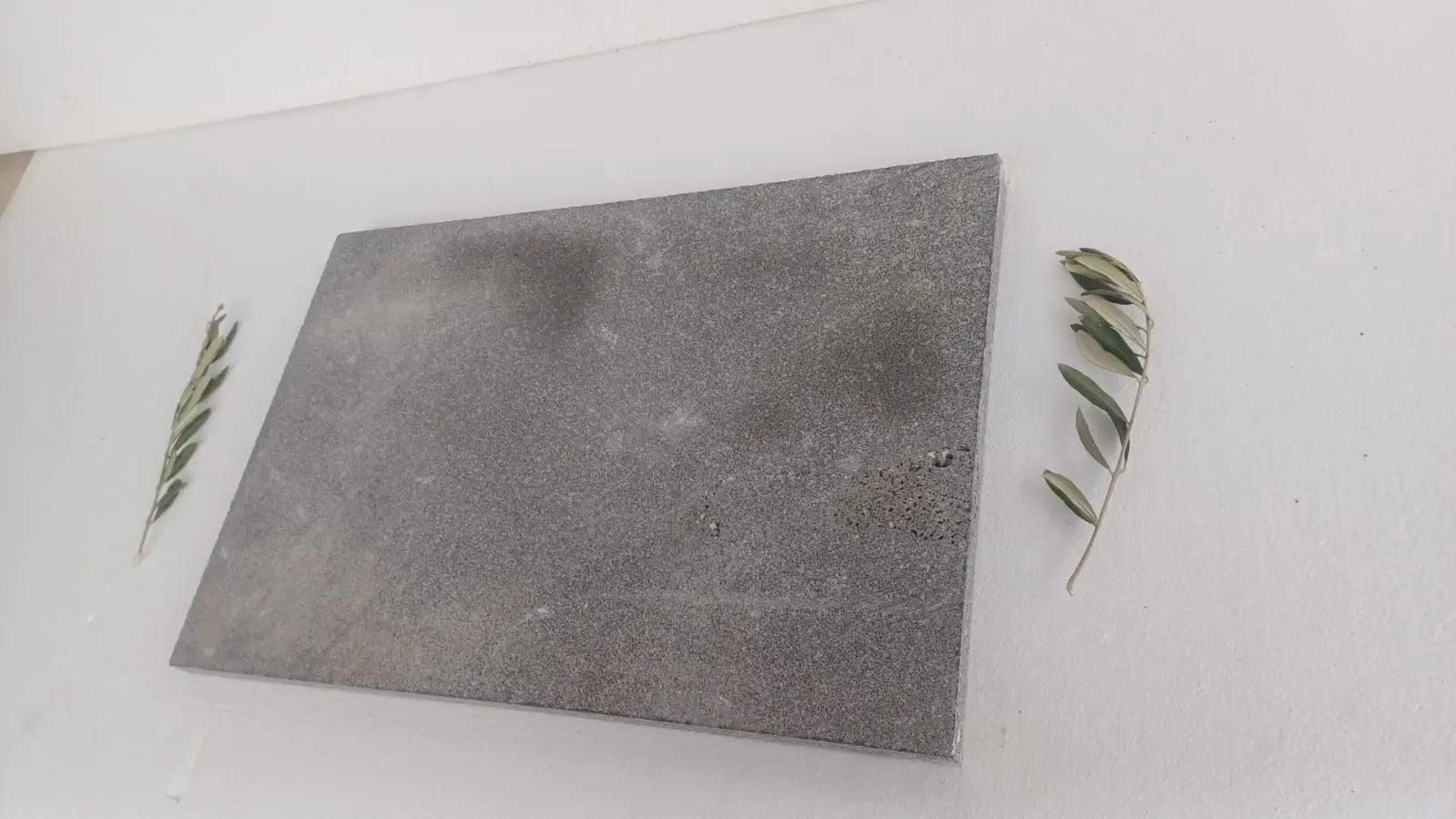
For outdoor hardscape — driveways, plazas, commercial walkways, pool surrounds — compressive strength governs how the material handles point loads and cyclic traffic stress. Granite consistently delivers compressive strength above 19,000 PSI, which is why it remains the default specification for high-traffic driveway applications. Dense limestone runs 12,000–17,000 PSI. Basalt sits at the upper end of natural stone supply categories at 20,000–25,000 PSI.
Standard engineered stone formulations for outdoor use land in the 7,000–12,000 PSI range. That’s adequate for pedestrian patio applications but leaves little margin in high-load or commercial scenarios. The resin matrix also introduces a creep component under sustained load that purely mineral-based natural stone doesn’t exhibit — relevant for any spec where concentrated loads are expected over time.
According to Natural Stone Institute technical stone specifications, dimensional stone classification and testing protocols distinguish natural stone varieties by density, porosity, and compressive strength — parameters that engineered composites are tested against differently. That testing gap matters when writing a spec that needs to hold up under contractor scrutiny.
Porosity, Drainage, and Moisture Management
This is where the natural vs engineered stone supply decision gets genuinely technical for outdoor use. Natural stone species vary widely in absorption rate — travertine runs 0.5–3.0% absorption by weight, dense granite sits at 0.1–0.4%, and some limestones reach 7–12% in their unprocessed form. Engineered stone manufactured for outdoor use typically falls in the 0.1–0.5% range by design.
Lower absorption sounds better until you consider drainage geometry. Highly porous natural stone — travertine and certain limestones especially — allows some moisture migration through the material itself, which reduces surface ponding in heavy rainfall events. Engineered stone’s near-zero absorption means all precipitation routes to the surface or the joints. In regions that see intense monsoon seasons, extended hurricane rain events, or concentrated high-volume precipitation cycles, that behavioral difference has real consequences for base design.
- High-absorption natural stone (travertine, porous limestone): requires sealed joints to control subsurface migration but naturally manages surface water better
- Low-absorption engineered stone: requires more aggressive joint drainage design and a steeper surface gradient — minimum 1.5% cross-slope for effective runoff
- Freeze-thaw regions: porous natural stone needs penetrating sealer applied before winter to prevent absorption-driven spalling; engineered stone’s low absorption provides built-in freeze-thaw protection
- Drought-cycle climates: engineered stone’s dimensional stability under moisture cycling is an advantage; some natural stones exhibit micro-cracking after repeated wet-dry expansion cycles without appropriate joint accommodation
Your base preparation has to account for whichever material’s drainage behavior you’re working with. Natural stone on a permeable aggregate base works well when surface porosity is moderate. Engineered stone typically wants a denser, more precisely graded base — the uniform dimensions and lower tolerance for differential settlement demand it.
UV Stability and Color Retention Outdoors
Engineered stone’s resin binder system is the performance variable most specifiers underestimate for outdoor projects. Indoor-grade engineered stone — the countertop products that dominate showroom floors — use resins that degrade under UV exposure. Yellowing, chalking, and loss of surface sheen are common within 18–36 months on non-UV-rated engineered products installed outdoors. That’s a warranty failure waiting to happen.
Outdoor-rated engineered stone uses UV-stabilized polyester or acrylic resin systems, which extend UV resistance significantly — but even certified products show measurable color shift at 5–7 years under sustained high-UV conditions. Natural stone’s mineral-based color is UV-stable indefinitely. Granite’s iron oxide and feldspar mineralogy doesn’t react to UV radiation. Limestone’s calcium carbonate base is equally stable. Basalt’s dark coloration comes from magnetite and pyroxene minerals that simply don’t bleach.
For any outdoor project where long-term color consistency matters — pool surrounds, high-visibility commercial courtyards, premium residential terraces — natural stone supply provides a permanence that engineered products can’t match structurally. Verify the UV rating certification explicitly if a client is pushing toward engineered options for an outdoor application.
Dimensional Consistency and Installation Logistics
Engineered stone holds a genuine advantage here that’s worth acknowledging honestly. Natural stone comes with inherent dimensional variation — thickness tolerances in quarry-cut limestone can run ±3mm, and some sandstone-based flagging varies ±6mm. That variation affects mortar bed depth calculations, joint consistency, and the time your installation crew spends adjusting individual pieces. For less experienced crews, natural stone’s variability adds real hours to a project.
Engineered stone is manufactured to ±0.5mm tolerances in most production lines. That precision reduces installation time, simplifies mortar bed preparation, and creates cleaner grout joint results. For large commercial projects where installation speed drives budget, that dimensional consistency has measurable cost implications worth running through your project economics.
For natural stone sourced by Citadel Stone, warehouse quality checks include thickness calibration and surface grading before material ships — reducing the dimensional variation your crew encounters on site and narrowing the gap with engineered product tolerances. That warehouse-level preparation step is something worth asking any natural stone supplier about directly before committing to a project timeline.
Thermal Performance and Surface Temperature
Surface temperature under direct sun is a specification variable that affects both safety and occupant comfort. Natural stone — particularly lighter-colored limestone, travertine, and white granite — reflects a significant portion of solar radiation rather than absorbing it. Light travertine surfaces in direct sun commonly run 15–20°F cooler than comparably colored concrete, and the open-pore structure provides additional evaporative cooling effect when moisture is present.
Engineered stone’s thermal performance depends on aggregate color and resin mass. Dark engineered products can reach surface temperatures that exceed dense dark natural stone under equivalent exposure — the resin matrix holds heat differently than a pure mineral surface. For pool deck applications, barefoot comfort zones, or any surface where users will make prolonged contact, factor measured surface temperature data into your finish selection.
- Light travertine: surface temp typically 95–110°F in direct summer sun — one of the best performers for occupied outdoor surfaces
- Light-colored engineered stone (UV-rated): comparable to natural limestone in reflectivity when aggregate is light-colored
- Dark engineered composite: can reach 140–155°F under peak solar exposure — requires textured finish minimum to manage contact comfort
- Granite (light grey or silver): 105–120°F typical range — good thermal performance with superior load-bearing characteristics
Maintenance Requirements Over Project Lifespan
The 20-year lifecycle cost comparison between natural and engineered stone supplies more nuanced data than the upfront material cost suggests. Natural porous stone — travertine and limestone specifically — requires penetrating sealer application every 2–3 years to maintain stain resistance and moisture control. Dense natural stone (granite, basalt) needs sealer every 4–6 years. Miss those cycles and you accelerate surface degradation and staining ingress.
Engineered stone marketed as low-maintenance has a genuine claim — its low absorption rate resists staining without annual sealing. But the resin surface is more susceptible to abrasive wear than mineral stone. Surface scratching from foot traffic on grit-contaminated outdoor surfaces accumulates faster on engineered composites than on hard natural stones like granite or basalt. According to USGS dimension stone production and use data, natural granite and basalt remain the dominant specification choices for high-traffic commercial outdoor installations — a reflection of their abrasion resistance and long-term maintenance economics.
Your maintenance specification should include joint sand replenishment for natural stone on aggregate bases — joint sand loss from precipitation runoff is one of the primary field maintenance issues regardless of stone type. Design your drainage gradients to carry surface water to perimeter drains rather than routing it longitudinally through joint lines, and your joint maintenance cycle drops significantly.
Stone and Supply Chain Considerations
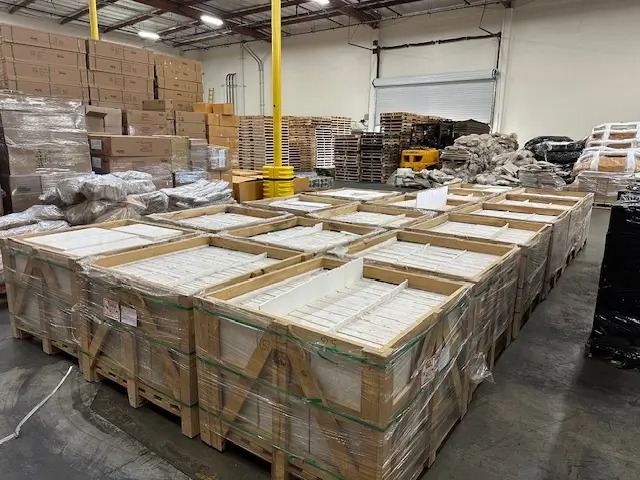
The practical stone and supply chain reality affects project scheduling more than most specifications account for. Imported natural stone — particularly Brazilian granite, Turkish travertine, and European limestone — runs 8–12 week lead times from confirmed order to warehouse delivery. Domestically quarried natural stone typically ships within 2–4 weeks. Engineered stone from major domestic manufacturers usually ships in 1–3 weeks for standard sizes and colors.
Stone granite supplies in standard grey and black colorways maintain the deepest warehouse stock domestically — you’ll find these easiest to source on short lead times. Specialty natural stone in non-standard sizing, unusual colorways, or bookmatched slab configurations can extend lead times to 14–16 weeks for imported material. Build that buffer into your project schedule explicitly rather than absorbing it as a contingency.
Stone supplies in natural categories also carry batch variation considerations that engineered products don’t. Natural stone from different quarry pulls — even the same product name from the same supplier — can show variation in veining pattern, background color, and crystalline texture. Order your full project quantity from a single quarry pull, confirm the batch number in writing, and verify the warehouse holds that batch under hold until your full delivery is confirmed. Splitting a project across two batches creates visual inconsistency that’s nearly impossible to correct after installation.
- Confirm quarry batch number for all natural stone orders over 500 square feet
- Request a warehouse hold on reserved inventory — don’t assume stock allocation without written confirmation
- For engineered stone, verify outdoor UV certification is for the specific product line, not the brand generally
- Factor truck access constraints into your delivery scheduling — large format stone slabs require flatbed delivery with adequate site access for offloading equipment
- Request thickness calibration certificates for natural stone orders where ±1mm tolerance matters to your installation method
When Each Material Wins the Specification
Natural stone supply is the clear specification winner when: long-term UV color stability is non-negotiable, compressive strength requirements exceed 12,000 PSI, thermal comfort under direct sun is a design priority, or the project lifespan target exceeds 25 years. Granite, basalt, and dense limestone deliver performance envelopes that no current engineered composite matches for demanding outdoor applications. At Citadel Stone, we see the most consistent long-term field performance from natural stone in exactly these high-demand categories — and our technical team advises specifying natural material as the default for any outdoor application where client longevity expectations exceed 20 years.
Engineered stone earns its specification when: dimensional precision is critical for installation efficiency, the application is moderate pedestrian traffic on a covered or partially shaded surface, the project budget favors a lower upfront material cost, or a specific consistent color tone isn’t achievable in natural stone. Outdoor-rated engineered products have genuinely improved in UV stability — dismissing them entirely from commercial specification would be an overcorrection. Specify them carefully, with UV certification documentation in hand and a maintenance plan that accounts for resin surface care rather than mineral stone care.
The drainage design angle is worth calling out explicitly: in high-precipitation applications — sites that experience concentrated seasonal rainfall, flood-risk zones, or drainage-constrained installations — natural stone’s variability in absorption behavior gives you more specification tools to work with. Travertine or porous limestone can be selected specifically because the material itself contributes to surface water management. Engineered stone gives you a single drainage behavior — surface routing only — which requires more precise civil engineering in the base and gradient design to compensate.
According to ASTM dimension stone quality and testing standards, outdoor stone specifications should reference material-specific testing protocols rather than applying generic hardscape standards. That distinction matters when writing a spec that contractors will be held to — and it’s one area where natural and engineered stone supply categories genuinely diverge in the applicable test methods and acceptance criteria.
Making the Right Natural vs Engineered Stone Supply Decision
The natural vs engineered stone supply decision for outdoor use isn’t a simple better-or-worse judgment — it’s a performance mapping exercise. You’re matching material characteristics to project-specific demands: load profile, UV exposure, precipitation intensity, maintenance tolerance, lifespan target, and installation logistics. Natural stone wins on durability ceiling, UV permanence, and thermal performance. Engineered stone wins on dimensional consistency, stain resistance without maintenance, and lead time predictability. Understand those envelopes clearly and you’ll specify the right material category every time rather than defaulting to whichever product has the better showroom presentation. Before placing any bulk order, it’s worth knowing what questions to ask your supplier — how to vet a stone supply yard covers the supplier qualification process in detail and will help you avoid the batch variation and lead time problems that derail projects at the ordering stage. Citadel Stone focuses exclusively on natural stone supply, allowing for deeper material expertise across categories like travertine, basalt, limestone, and granite.
Related reading: stone supply company · Stone Veneer Supply Guide: Grades, Formats & Suppliers · paving stone supply cost.