Why Thickness Drives Every Other Decision
The flagstone paver thickness guide most installers reference gets one thing fundamentally wrong — it treats thickness as a final detail rather than the foundational specification. Get thickness right first, and your base depth, mortar bed configuration, and edge support details all follow logically. Get it wrong, and you’re looking at cracked slabs within the first freeze-thaw season regardless of how well everything else was executed. Flagstone doesn’t fail at the surface; it fails at the cross-section.
Natural flagstone varies significantly in how it handles bending stress. Unlike manufactured concrete pavers, which are cast to uniform caliper, natural stone carries internal variability — grain orientation, bedding planes, and micro-fissures that affect how a slab performs under load. Your thickness specification has to account for that variability, not just the nominal slab dimension on the purchase order.
Standard Thickness Ranges by Application
Flagstone thickness specifications differ meaningfully across applications, and conflating them is one of the most common field errors. Here’s how the numbers break down by use type:
- Foot-traffic patios and garden paths: 1.5 inches (38mm) is the practical minimum for dry-lay; 2 inches is safer for irregular shapes and thinner flagstone species like slate
- Residential driveways with passenger vehicles: 2.5 to 3 inches minimum — anything thinner introduces unacceptable flex under rolling loads
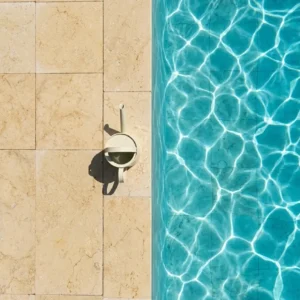
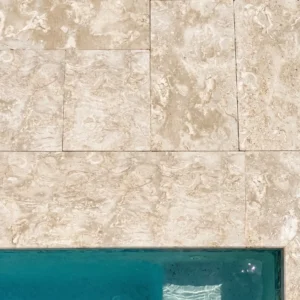
- Commercial pedestrian areas and pool decks: 1.5 to 2 inches on a compacted mortar bed — the rigid base compensates for slab thickness more than in loose-lay applications
- Stepping stones in soft landscape beds: 2 inches minimum to resist differential settlement and edge chipping under foot impact
- Decorative wall-cap flagstone: 1 to 1.5 inches is acceptable since bending loads are minimal and the spec governs visual weight rather than structural performance
One nuance that rarely appears in generic guides: the shape of the flagstone matters as much as the thickness. A large irregular slab — say, 24 by 36 inches — needs proportionally more thickness than a smaller 16 by 16 piece carrying the same load. Span-to-thickness ratios apply to stone the same way they apply to structural beams. For irregular flagstone wider than 18 inches in any single dimension, add at least a quarter inch to whatever minimum thickness the application category calls for.
How Thick Should Flagstone Pavers Be for Driveways vs Patios
The flagstone depth for driveways vs patios is where most residential projects either succeed or struggle. A patio slab rarely sees loads exceeding 250 to 300 pounds per square foot from furniture and human traffic. A residential driveway bears point loads from tire contact patches that concentrate vehicle weight into a surprisingly small area — a standard sedan exerts roughly 35 PSI at each tire contact zone, and SUV and truck weights push that further. That’s a fundamentally different structural demand.
For patios, your 1.5-inch minimum holds well on a properly compacted 4-inch aggregate base with a 1-inch setting bed. For driveways, the slab needs to carry those point loads without flexing past its modulus of rupture. Field data on flagstone paver thickness guide applications consistently shows that 2.5-inch slabs on an 8-inch compacted aggregate base outperform thinner slabs on deeper bases — the stone itself needs to be rigid enough to distribute load across the base rather than bending into soft spots.
You can review USGS flagstone and dimension stone paving data for broad context on how flagstone performs across paving applications nationally. The underlying geology of the stone type — sandstone, quartzite, limestone, or slate — also influences the minimum thickness you can safely specify for a given load scenario.
Minimum Flagstone Thickness for Foot Traffic
The minimum flagstone thickness for foot traffic depends on three variables that most specification sheets never combine: the stone species, the installation method, and the slab’s unsupported span. Understand all three before you commit to a purchase quantity.
- Sandstone and quartzite flagstone: 1.5 inches minimum for pedestrian use on a stable compacted base — these species have good tensile characteristics for their weight
- Limestone flagstone: 1.75 to 2 inches recommended because limestone’s grain structure makes it more susceptible to flexural cracking than quartzite at equivalent thicknesses
- Slate flagstone: 2 inches minimum despite slate’s reputation for thinness — slate splits along cleavage planes under point loads at thicknesses below 1.75 inches
- Dry-lay (sand/gravel base): add 0.25 to 0.5 inches to any mortar-bed minimum — loose-lay bases allow micro-movement that induces cyclic bending stress
- Mortar-set on concrete: you can reduce thickness by 0.25 inches from dry-lay minimums because the rigid substrate eliminates flex entirely
What often gets overlooked is how foot-traffic load patterns change with use. A garden path sees distributed walking loads. A commercial entry threshold sees concentrated heel-strike loads from hard-soled shoes — a small contact area that multiplies PSI dramatically. For any application where stiletto heels or rolling equipment like luggage carts are realistic, treat the specification as a light commercial application and add 0.5 inches to the residential minimum.
Base Preparation and Thickness Interaction
Your base prep and your slab thickness aren’t independent variables — they interact in ways that let you trade one against the other within limits. A deeper, better-compacted base allows you to use thinner flagstone; a thicker slab can compensate for a base that’s adequate but not optimal. Here’s the practical framework:
For standard residential patios on stable native soil, a 4-inch compacted aggregate base with a 1-inch setting bed and 1.5-inch flagstone performs reliably. On expansive clay soils, either increase aggregate base depth to 6 inches or increase flagstone thickness to 2 inches — the base expansion cycle will introduce bending stress that the thinner slab can’t absorb. According to ASLA natural stone and flagstone outdoor paving guidance, proper base design is as critical as surface material selection for long-term outdoor paving performance.
The setting bed depth also matters. A sand setting bed compresses under load over time, creating low spots that concentrate stress in flagstone slabs. A cement-stabilized setting bed (1 part Portland to 6 parts sand) resists this consolidation and lets you maintain consistent support across the full slab face. For any flagstone thinner than 2 inches, a stabilized setting bed is strongly advisable rather than optional.
Stone Paver Sizing for Outdoor Projects: Thickness in Context
Thickness is only one dimension of stone paver sizing for outdoor projects — length and width create span conditions that directly influence how much thickness you need. Think of it as a table analogy: a narrow plank spanning a short distance holds weight easily; the same plank spanning twice the distance deflects under the same load. Flagstone follows the same physics.
The practical rule: keep your unsupported span-to-thickness ratio below 12:1 for pedestrian applications and 8:1 for driveway applications. A flagstone measuring 24 inches across its shortest dimension needs at least 2 inches of thickness for pedestrian use (24÷12 = 2) and at least 3 inches for driveway use (24÷8 = 3). Applying this ratio check to every large-format piece before it ships saves significant site-level rework.
You can check flagstone sedimentary rock characteristics and paving use for background on how flagstone’s layered sedimentary structure influences its flexural behavior — understanding why the stone splits along particular planes helps you make smarter sizing decisions for large-format applications.
For detailed information on the specific flagstone products we stock and their available thickness ranges, review our flagstone material specs at Citadel Stone — the product pages include caliper ranges and typical slab dimensions for each stone type we carry.
UV Exposure, Finish Selection, and Long-Term Appearance
Sun-exposed flagstone installations face a weathering challenge that thickness alone can’t address: UV degradation and surface oxidation that affect color retention and finish integrity over time. The stone’s thickness governs structural performance, but your finish selection governs how the surface looks and maintains in years three, five, and ten.
Natural cleft flagstone — the most common finish for outdoor paving — develops a surface patina under UV exposure as iron minerals oxidize and silica particles bleach slightly. This process is natural and generally adds character, but it accelerates on unsealed surfaces exposed to direct sun. Flagstone pavers installed in full-sun conditions without a penetrating sealer can show measurable color shift within 18 to 24 months. A quality penetrating impregnator sealer applied within 30 days of installation and reapplied every 2 to 3 years dramatically slows this process without creating a surface film that traps moisture beneath the stone.
- Natural cleft finish: highest UV resistance due to textural variation that scatters light — color appears consistent even as patina develops
- Honed finish: more vulnerable to UV bleaching on lighter stone species like sandstone — requires more frequent sealer maintenance in full-sun exposures
- Brushed or sandblasted finish: moderate UV performance — opens the surface pore structure slightly, which means the sealer penetrates more effectively and performs better long-term
- Thermal/flamed finish: excellent UV stability — the heat treatment densifies the surface layer, reducing the porosity that allows UV-driven oxidation to penetrate
Flagstone paver thickness also indirectly affects UV performance because thicker slabs retain more thermal mass. In full-sun applications, thicker stone stays cooler through part of the day by absorbing heat more slowly — reducing the thermal cycling that can stress surface sealers and accelerate micro-cracking at the surface.
Ordering, Logistics, and Thickness Tolerance
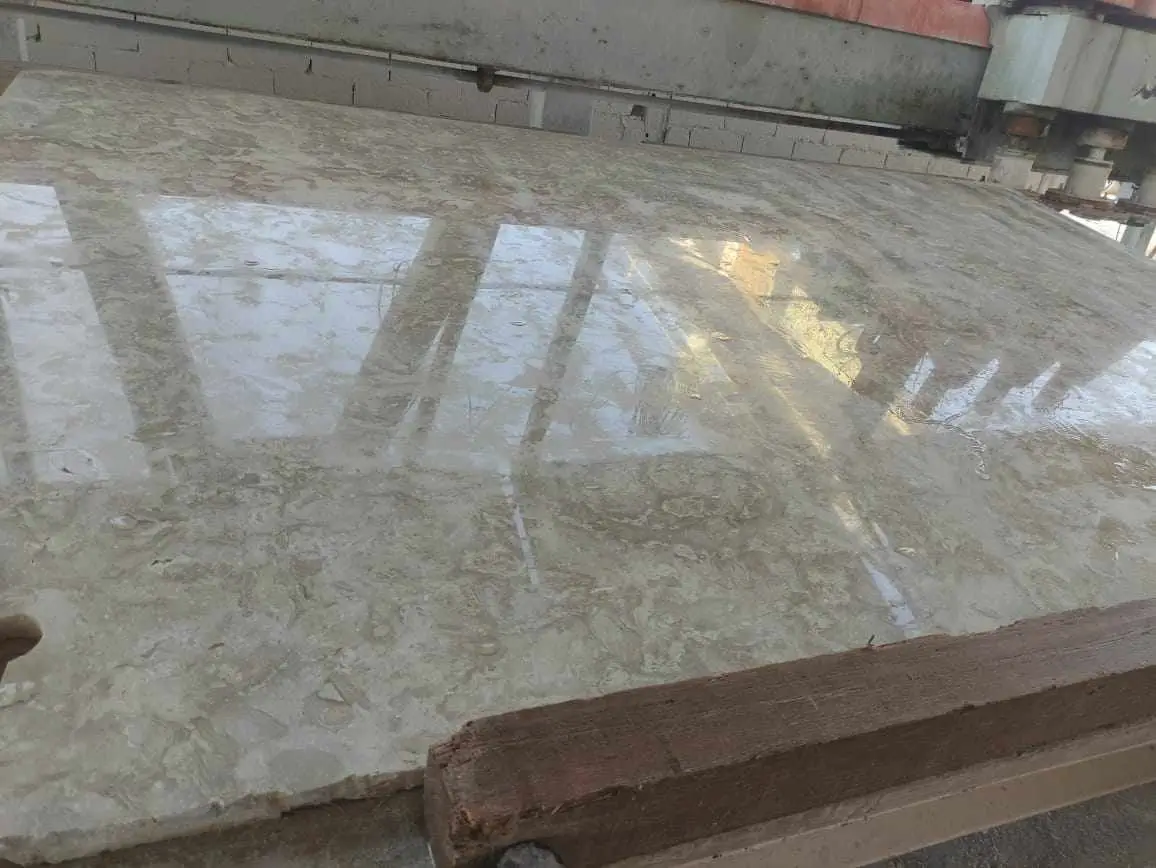
Specifying flagstone paver thickness on paper and receiving consistent caliper at the job site are two different things unless you work with a supplier who quality-checks material before it ships. Natural stone varies at the quarry, and if slabs aren’t sorted and calibrated before dispatch, you’ll receive a mix of thicknesses that complicates your setting bed depth uniformly across the installation area.
Citadel Stone maintains warehouse stock of flagstone products in standard thickness ranges, which allows you to order with confidence that the material arriving on your truck matches the specification you placed. Lead times from warehouse stock typically run 1 to 2 weeks — substantially faster than the 6 to 8 week import cycle that comes with sourcing uncalibrated material from overseas. For time-sensitive projects, the difference between confirmed warehouse availability and an open ocean-freight order is often the difference between hitting a construction schedule and missing it.
Your truck access conditions on-site also deserve consideration at the ordering stage. Full pallets of 2.5-inch flagstone weigh considerably more than thinner material — a standard pallet of 2.5-inch flagstone covering 100 square feet can weigh 1,800 to 2,200 pounds. Confirm that your delivery access allows for that load before the truck arrives, particularly on residential driveways or landscaped areas with weight restrictions.
Common Thickness Mistakes and How to Avoid Them
Field experience with flagstone installations surfaces the same set of errors repeatedly. Most are preventable with upfront specification discipline rather than remediation after the fact.
- Specifying the thinnest acceptable slab to reduce material cost — the labor cost of replacing cracked flagstone after the first year far exceeds the material savings at the initial order stage
- Using the same thickness specification for dry-lay and mortar-set applications — the rigid substrate in a mortar-set installation genuinely allows thinner stone, but that reduction doesn’t transfer to a sand-set application
- Ignoring slab size when selecting thickness — small offcut pieces from a large-format order may be well within thickness tolerance, but the full-size pieces from the same batch may fall below the span ratio threshold for driveway use
- Ordering without confirming caliper tolerance from the supplier — a nominal 2-inch flagstone with a ±0.5-inch tolerance can legally arrive at 1.5 inches, which is below minimum for driveway applications
- Failing to account for thickness variation in the setting bed — if your flagstone varies from 1.5 to 2 inches across a batch, your setting bed needs to absorb that range without creating lippage at joints
The last point is operationally significant. A tight caliper tolerance — ideally ±0.25 inches — makes setting bed adjustment manageable. A loose tolerance requires your installer to continuously adjust screeded bed depth, which slows installation and introduces inconsistency at transitions between slabs. Always confirm caliper tolerance before finalizing your order, not after the material arrives on site.
Final Recommendations for Your Flagstone Paver Thickness Specification
Pulling together this flagstone paver thickness guide into actionable specification decisions: start with your application load category, apply the span ratio check to your largest-format pieces, add the appropriate base system depth to match your soil conditions, and confirm caliper tolerance with your supplier before any purchase order is finalized. Those four steps eliminate the vast majority of field failures. For patios, 1.5 to 2 inches on a properly compacted base is the reliable specification range. For driveways, 2.5 to 3 inches is non-negotiable. For commercial pedestrian applications, 2 inches on a mortar bed with a cement-stabilized setting bed gives you the performance margin that demanding traffic patterns require.
On the UV and weathering side, pair your thickness specification with a finish selection appropriate for sun exposure. Natural cleft holds up best in full-sun conditions with minimal sealer intervention. If your project calls for a honed or polished finish, build a more aggressive sealer maintenance schedule into the project specification from the start — typically annual application rather than the biennial schedule appropriate for cleft surfaces. Your long-term appearance goals and your structural goals need to be addressed in the same specification document, not treated as separate decisions. If you’re also evaluating flagstone against manufactured alternatives for your project, a useful next step is reading about how flagstone compares to brick pavers — the structural and aesthetic trade-offs between natural stone and clay brick are more nuanced than most project briefs acknowledge. Stone from Citadel Stone is inspected for consistent caliper so installers receive slabs within a predictable thickness tolerance across each order.