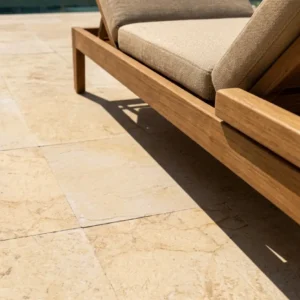
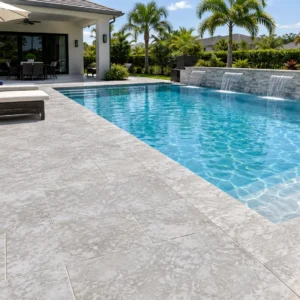
The surface texture of flagstone pavers vs brick pavers tells you more about long-term performance than most comparison guides let on. Brick exits the kiln with a uniform, predictable friction profile — flagstone arrives with a naturally cleft face that varies in depth, angle, and micro-texture from piece to piece. That variability isn’t a defect; it’s a structural characteristic that shapes how each material responds to foot traffic, moisture, and the kind of thermal cycling that quietly destroys poorly specified paving over a decade or two.
Material Composition and Structural Differences
Brick pavers are manufactured from kiln-fired clay or shale, producing a dense, relatively uniform unit with predictable compressive strength typically ranging from 8,000 to 12,000 PSI. Flagstone pavers, by contrast, are quarried sedimentary or metamorphic materials — sandstone, limestone, slate, quartzite — each with its own mineralogical composition and therefore its own performance envelope. You’re not choosing between two similar products; you’re choosing between a manufactured unit and a geological one.
That geological origin matters structurally. Flagstone’s layered formation creates natural cleavage planes, which is why it splits cleanly and why its face texture is inherently varied. According to Britannica’s coverage of flagstone sedimentary characteristics, this cleavage is a direct product of the compaction and mineral alignment that occurred during formation — not a manufacturing variable you can control or replicate in a kiln.
Brick’s uniformity is both its advantage and its limitation. Consistent dimensions make installation faster and joint alignment cleaner. But that same uniformity means every brick in a patio responds identically to ground movement — and when subsidence or heave occurs in a clay subgrade, the failure pattern is often uniform too, meaning you’ll see it across a wide area rather than isolated to one or two units.
Surface Texture, Slip Resistance, and Finish Options
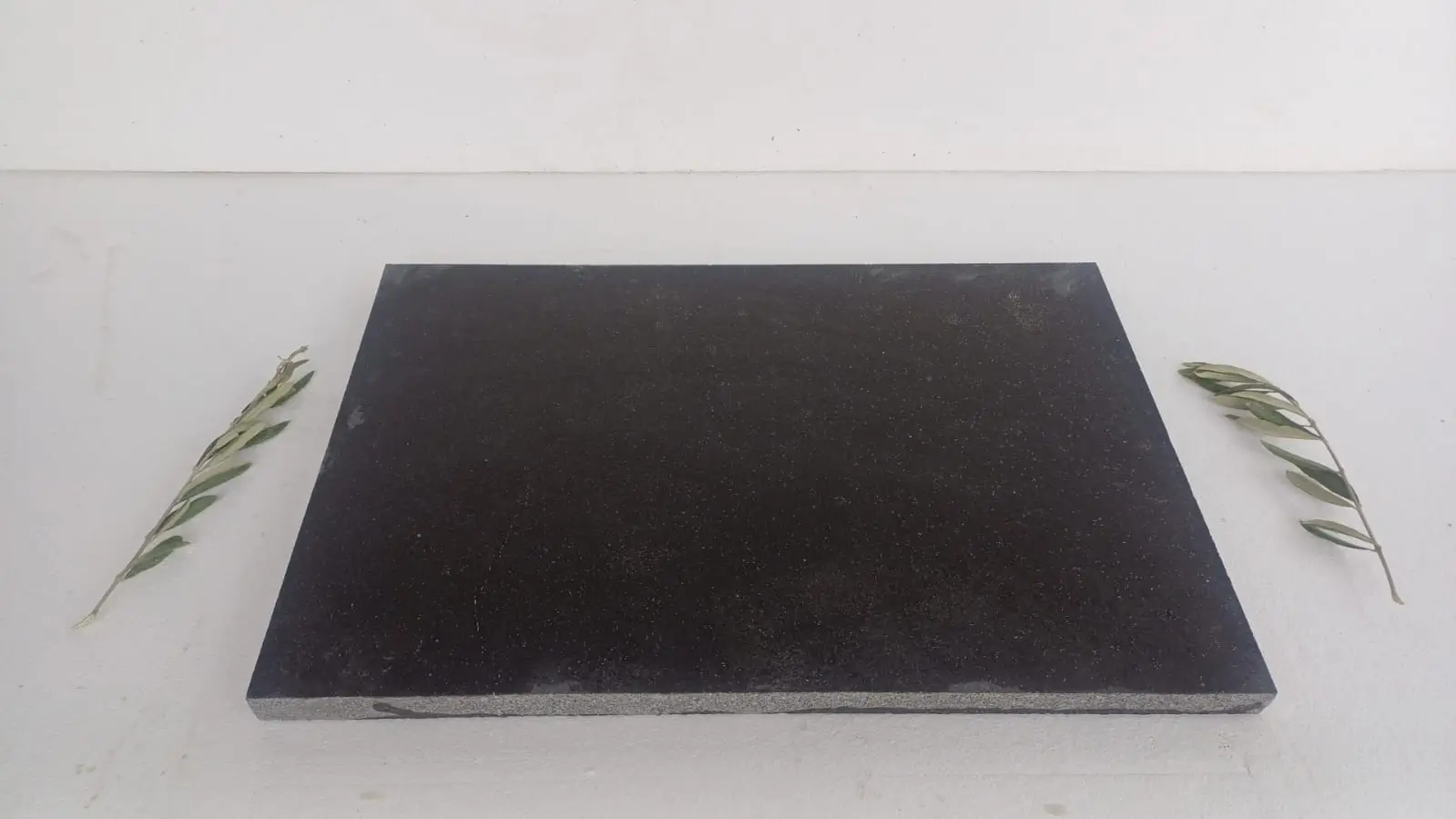
Slip resistance is where the comparison between flagstone pavers and brick pavers becomes genuinely consequential for outdoor applications. A naturally cleft flagstone surface carries an open, textured face without any additional treatment — this is the result of micro-ridges and planes created during quarrying and splitting. Brick, depending on its surface treatment, typically falls between 0.50 and 0.70, and smooth-faced or tumbled brick can drop below that range when wet. This distinction in natural stone versus clay brick paving performance is one the industry under-discusses relative to its practical significance.
- Naturally cleft flagstone provides inherent grip without requiring scoring or surface modification
- Honed or sawn flagstone finishes reduce COF significantly — always specify cleft-face for exterior wet zones
- Brick pavers often require wire-cutting, scoring, or surface roughening to meet COF thresholds for pool surrounds or sloped walkways
- Brick’s consistent face means predictable COF across an installation — flagstone’s variation means you need to review each slab type’s tested friction values
- Tumbled finishes on either material soften edges but can reduce slip resistance on flat faces
The ANSI A326.3 test protocol for determining the static coefficient of friction is the standard reference for both materials in commercial and high-traffic residential specifications. For projects with any wet exposure, you should verify COF values for the specific finish and stone type you’re specifying — not rely on category-level generalizations.
Comparing Stone and Brick Paver Durability Over Time
Durability comparison between these two materials hinges almost entirely on how you define durability. Brick’s kiln-fired matrix resists surface abrasion exceptionally well — foot traffic and vehicle loading compress the face rather than scratch it. Flagstone, particularly softer varieties like limestone or sandstone, can show surface wear in high-traffic corridors over 15 to 20 years, though harder types like quartzite or slate outperform brick on abrasion resistance. When comparing stone and brick paver durability across the full service life, the gap between material types narrows considerably once you control for stone variety and installation quality.
Porosity is the more critical long-term variable. Dense brick absorbs water at rates below 5%, which contributes to freeze-thaw resilience in regions where temperatures cycle repeatedly through the freezing point. Many flagstone varieties — particularly limestone and sandstone — exhibit absorption rates of 8% to 15%, which matters enormously when water infiltrates a paver, freezes, and expands approximately 9% in volume inside the pore structure. That expansion generates internal stress that standard compressive strength ratings don’t capture. You need to look at the stone’s freeze-thaw durability rating, not just its PSI number.
For projects in freeze-thaw regions — even those that experience only moderate seasonal temperature ranges — flagstone selection requires additional scrutiny. Denser flagstone types like quartzite or hard slate absorb less than 3% and perform comparably to brick under cycling conditions. Softer sedimentary flagstones installed in freeze-thaw regions without sealing will show spalling at joints and surface pitting within five to eight years. USGS dimension stone production data confirms that durability performance across flagstone varieties varies significantly by rock type and formation, making material-specific specification essential.
Thermal Expansion and Freeze-Thaw Performance
Temperature cycling — both the seasonal amplitude and the daily swing between peak and trough — is one of the most underspecified factors when comparing flagstone pavers vs brick pavers. Brick’s thermal expansion coefficient runs approximately 3.3 × 10⁻⁶ per °F. Most flagstone types fall between 4.0 and 7.0 × 10⁻⁶ per °F depending on mineral composition. Over a 10-foot run, a 60°F temperature swing produces roughly 0.024 inches of movement in brick versus up to 0.042 inches in a high-expansion flagstone like quartzite.
That differential sounds small until you consider that it accumulates across every joint in a large installation. A 500-square-foot patio with flagstone pavers laid on a rigid mortar bed without adequate expansion joints will develop cracking at the weakest points — typically the mortar joint perimeters — within three to five years in installations subject to 40°F or greater daily temperature ranges. The joint design that manages this movement must account for the specific thermal expansion coefficient of the flagstone variety you’re specifying, not a generic sedimentary stone average.
- Specify expansion joints every 10 to 12 linear feet for flagstone on mortar beds in thermally active installations, not the 15 to 20 feet common in generic specifications
- Sand-set installations accommodate thermal movement more forgivingly than mortar beds — but require more precise base compaction to prevent rocking under load
- Brick’s lower and more consistent expansion coefficient makes it more tolerant of imprecise joint spacing across a broad range of temperature conditions
- Freeze-thaw cycling compounds thermal expansion stress — the combination of volume change from ice formation and differential thermal movement requires an integrated joint design approach
- Polyurethane-modified joint compounds handle movement better than rigid portland-based mortars in thermally active conditions
Here’s what often gets missed in thermal performance discussions: day-to-night temperature swings in arid regions can exceed the seasonal range in temperate ones, producing more freeze-thaw and thermal cycles per year even without extreme cold. A flagstone installation in a dry, high-elevation region may cycle through 200+ temperature swings annually, each one stressing joints and substrate. That cumulative fatigue is what separates a 10-year installation from a 25-year one.
Flagstone or Brick for Walkways and Patios: Application-Specific Guidance
The application context shapes this decision more than any single material property. For formal, rectilinear patio designs with consistent joint lines and a structured aesthetic, brick pavers deliver easier installation, tighter dimensional control, and a finished appearance that reads as intentional and refined. For naturalistic, organic, or heritage-style designs — particularly irregular flagstone layouts — you gain visual richness that no manufactured product replicates. The question of flagstone or brick for walkways deserves the same application-specific evaluation: each setting imposes different demands on surface stability, dimensional tolerance, and long-term joint integrity.
Walkways demand a harder look at surface stability under lateral foot loads. Brick’s consistent thickness and uniform bearing surface make it reliably stable underfoot on properly compacted bases. Irregular flagstone requires careful thickness grading during installation — pieces that vary by more than ¼ inch in thickness within a walkway create trip hazards and rocking units that worsen with freeze-thaw cycling. Uniform-thickness flagstone slabs, either sawn or selected for consistency, eliminate this issue without sacrificing the natural aesthetic.
Exploring the full range of naturally cleft and sawn formats available helps you align material selection with the application’s specific demands. Citadel Stone natural stone paving options include flagstone varieties suited to both formal and naturalistic layouts, with thickness ranges appropriate for walkways, patios, and light-vehicle areas alike. Matching format to application upfront prevents the retrofit complications that come from specifying a highly irregular material in a context that demands dimensional consistency.
Natural Stone Versus Clay Brick Paving: Aesthetics and Design Range
Aesthetic longevity favors natural stone in nearly every formal design evaluation. The natural stone versus clay brick paving distinction becomes most visible over time rather than at installation — brick weathers in a predictable, well-understood way: the surface color mellows, mortar joints darken, and the installation takes on a settled character. Flagstone evolves more dramatically. Iron-rich sandstones develop warm amber patinas; limestone ages to a pale silver-grey; slate retains its dense blue-grey over decades. These aren’t defects — they’re the material expressing its mineral content over time.
Color consistency within a flagstone installation is worth addressing directly. Quarried stone exhibits natural variation that no two pallets will perfectly match. For phased installations — where you’re expanding an existing patio or walkway — this matters practically. Brick, with tighter production controls, offers more reliable batch-to-batch color consistency. You should factor warehouse lead times into this consideration: ordering your complete flagstone pavers requirement from a single warehouse pull reduces variation risk significantly compared to sourcing across multiple shipments.
- Flagstone’s color variation reads as richness at the landscape scale — it’s a feature, not a flaw, when properly embraced in design
- Brick’s color consistency makes it easier to match existing masonry — a relevant factor for building-adjacent paving
- Natural stone finishes — cleft, honed, brushed, tumbled — provide a finish range brick’s fired surface cannot replicate
- Large-format flagstone slabs create a sense of spatial expansiveness that individual brick units cannot achieve at the same scale
Installation Requirements and Base Preparation
Base preparation requirements differ in ways that affect both project cost and long-term performance. Brick pavers are typically installed over a compacted aggregate base of 4 to 6 inches for pedestrian applications, with a 1-inch bedding sand layer providing final leveling. The system is well-standardized, contractor familiarity is high, and the installation tolerates minor base inconsistencies through the forgiving nature of the sand bed.
Flagstone pavers, particularly larger irregular pieces, demand a more precisely engineered base because each slab spans a unique footprint area. A 24-inch by 36-inch flagstone piece bridges subgrade irregularities differently than a 4-inch brick unit, and voids beneath that span create flexural stress on a material that, despite its compressive strength, has limited tensile capacity. Your aggregate base for flagstone should be a minimum of 6 inches for pedestrian use, with 8 inches recommended for freeze-thaw regions where frost heave is a genuine concern.
The ASLA guidance on natural stone outdoor paving reinforces that base preparation quality, not surface material specification, determines the majority of long-term paving performance outcomes. This is a point that experienced installers understand intuitively — the stone you see is only as good as the aggregate you can’t.
Maintenance, Sealing, and Long-Term Care
Brick’s maintenance profile is genuinely low-effort. Repointing mortar joints every 8 to 12 years and occasional cleaning with a pH-neutral masonry cleaner covers most maintenance requirements for a well-installed brick paver surface. Sealing brick is optional in most applications and primarily affects stain resistance rather than structural integrity.
Flagstone pavers introduce a more variable maintenance equation depending on stone type. Limestone and sandstone flagstone in outdoor applications should be sealed with a penetrating impregnator sealer at installation and re-applied every 3 to 5 years depending on traffic and exposure. Quartzite and slate are far more self-sufficient, requiring sealing primarily for stain resistance rather than structural protection. The sealing interval for any flagstone pavers installation increases in regions with significant temperature cycling, where water infiltration and freeze-thaw action accelerate the deterioration of unsealed porous stone.
- Always match sealer chemistry to stone porosity — a film-forming sealer on dense quartzite traps moisture beneath the surface and causes spalling
- Joint sand maintenance is as critical as stone sealing — degraded joint sand allows water infiltration that undermines the base and accelerates freeze-thaw damage
- Brick pavers exposed to acid rain over time may show surface dusting — a diluted muriatic acid wash every 10 years restores the surface without structural risk
- Flagstone surfaces with biological growth (moss, algae) should be treated with non-bleach biological cleaner before sealing, as bleach disrupts some stone mineralogy
At Citadel Stone, we recommend specifying the maintenance protocol alongside the material — especially for commercial or HOA-managed installations where maintenance responsibility changes hands. A flagstone pavers installation without a documented sealing schedule is a liability, not an asset, five years after completion.
Cost, Sourcing, and Project Planning
Material cost comparison between flagstone and brick isn’t straightforward because flagstone pricing spans a wider range than brick. Standard clay brick pavers run $3 to $8 per square foot at the material level, with minimal variation across sources. Flagstone pavers range from $4 per square foot for common sandstone up to $18 or more for premium quartzite or slate, depending on origin, thickness, and finish. The mid-range flagstone options — limestone, tumbled sandstone — compete directly with mid-grade brick on material cost, but installation labor for irregular flagstone typically adds 20 to 35% over brick labor costs.
Truck access and delivery planning affect both materials differently. Brick typically arrives on standard pallets sized for efficient truck loading, with predictable weight per pallet making logistics straightforward. Large-format flagstone slabs require more careful truck loading and often single-layer pallet stacking to prevent breakage — a practical consideration that affects delivered cost and scheduling. You should confirm truck access constraints at your project site before finalizing material selection, particularly if the installation area is not directly accessible from the street.
Citadel Stone maintains consistent warehouse inventory of flagstone varieties across multiple formats and thicknesses, which reduces the lead time risk that often delays projects waiting on imported stone. Coordinating your order from a single warehouse pull also protects color and thickness consistency across the installation. According to Natural Stone Institute stone variety specifications, natural stone performance ranges vary significantly by type, reinforcing why sourcing consistency matters beyond just visual matching.
Expert Summary
The flagstone pavers vs brick pavers decision distills to a clear framework once you move past aesthetic preference. Brick delivers dimensional consistency, lower maintenance demands, and predictable thermal and freeze-thaw performance — it’s the right choice when installation speed, cost control, and formal geometry are the primary drivers. Flagstone delivers material authenticity, surface texture that no manufactured unit replicates, and a performance ceiling that brick can’t match when you specify the right stone type for the application.
Your specification should start with the site conditions: freeze-thaw exposure, base drainage characteristics, intended traffic loading, and the maintenance commitment the project owner will realistically sustain. Those factors narrow the material selection before aesthetics enter the conversation. For projects where both materials remain viable after that evaluation, the surface texture and long-term visual character of flagstone typically justifies the additional specification and installation care it requires. For your next natural stone paving project, choosing flagstone for patios covers the variety-specific selection decisions that determine long-term performance outcomes. Citadel Stone carries flagstone varieties with naturally cleft surfaces that provide grip levels brick pavers typically require additional scoring to achieve.