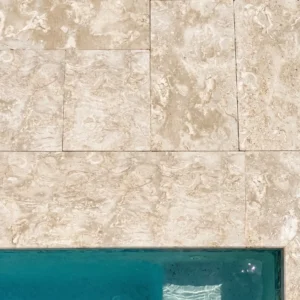
Thickness is the variable that separates a travertine installation that holds its geometry for decades from one that begins rocking, cracking, or settling within a few seasons. A solid travertine paver thickness guide doesn’t start with aesthetics — it starts with load, substrate, and the physics of how stone transfers force into a base. The 30mm dimension has become a benchmark in specification conversations for good reason, but it’s not a universal answer, and understanding exactly when it applies — and when it doesn’t — is where real project performance is won or lost.
Why Thickness Drives Everything in Travertine Specification
Your paver’s thickness determines how it distributes load across the base below. Thinner stone concentrates point loads at edges and corners, which is exactly where travertine’s natural voids and pore channels create vulnerability. A 20mm piece may look identical to a 30mm piece in a sample slab, but the structural behavior under foot traffic or furniture load is fundamentally different — the thinner piece flexes slightly under load, and over time that micro-flex fatigue propagates through the crystalline structure from weak points in the pore matrix.
The material’s calcium carbonate composition means it’s exceptionally durable in compression but comparatively less so in tension. Any installation scenario that introduces bending stress — an uneven base, a bridging condition across a drainage gap, or a cantilevered edge — punishes thin travertine disproportionately. That’s why the thickness specification has to account for base continuity, not just the surface load rating.
According to NSI travertine paving properties, travertine’s open pore structure also affects how stress concentrates at the surface, making base preparation and consistent bearing the most critical installation variables for outdoor applications.
Standard Thickness Options in a Travertine Paver Thickness Guide: How 20mm, 30mm, and 40mm Compare
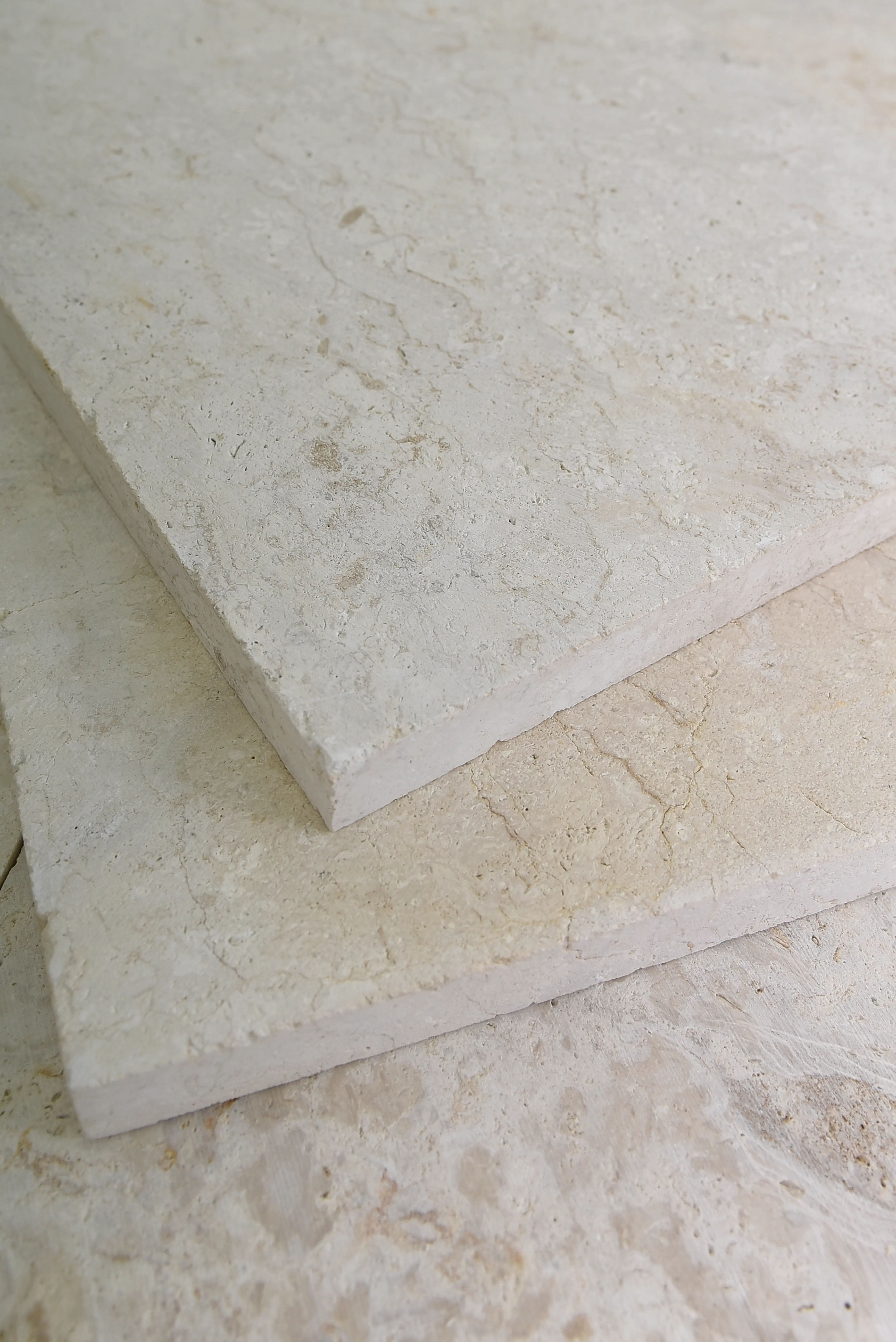
Most residential and commercial travertine paver specifications fall into three nominal thickness bands, and each one suits a different application profile. Understanding the trade-offs between them is central to any travertine paver thickness guide worth following.
- 20mm (nominal ¾ inch): suited for interior flooring on well-prepared concrete subfloors, light residential patios with full mortar bed support — not appropriate where any bridging condition exists
- 30mm pavers (nominal 1¼ inch): the standard specification for outdoor residential patios, pool surrounds, and walkways on compacted aggregate base — handles the dynamic loads of foot traffic, outdoor furniture, and service equipment without requiring a poured concrete subbase
- 40mm (nominal 1½ inch): specified for light vehicle areas, commercial applications with rolling loads, and installations over granular base where long-term settlement risk demands additional structural reserve
The 30mm option hits a practical sweet spot for most outdoor projects. It’s heavy enough to remain stable under use without full mortar-bed support, yet light enough that a single person can set and adjust individual pieces during installation — a practical advantage that affects both labor cost and the ability to re-level without a full lift-out.
When 30mm Is the Right Call — And When It Isn’t
The 30mm specification performs reliably across a broad range of residential outdoor scenarios. Patio, pool deck, and pedestrian walkway projects almost all land squarely in the 30mm range — provided the base preparation meets the bearing capacity requirements that travertine demands.
Here’s what most specifiers get wrong: they treat the thickness decision as independent from the base system. A 30mm paver on a poorly compacted base will fail faster than a 20mm paver on an engineered aggregate system. Thickness buys you structural reserve, not compensation for poor substrate work. The base needs to achieve consistent compaction — typically 95% standard Proctor density for the aggregate layer — before the thickness of the stone above it matters.
The scenarios where 30mm falls short are specific:
- Any driveway or vehicle area where car or light truck traffic is expected — step up to 40mm and a mechanically compacted aggregate base at minimum 150mm depth
- Installations over clay-heavy soils with high shrink-swell potential — the base movement that clay introduces can create bridging conditions that 30mm stone isn’t designed to span
- Pool coping overhangs beyond 40mm — the unsupported cantilever introduces bending stress at the nose that thicker stone handles more reliably
- Heavily frosted regions where freeze-thaw cycling creates rapid heave — 30mm holds its own in most freeze-thaw environments, but saturated base conditions amplify the problem significantly
Base Preparation: What 30mm Travertine Actually Needs
The base system design for 30mm travertine pavers follows a well-established aggregate layering principle, but the execution details are where most installations succeed or fail. Your aggregate base depth should sit between 100mm and 150mm of compacted crushed stone, graded to shed moisture laterally rather than allowing it to pool beneath the stone layer.
Bedding sand depth matters more than most people realize. The TCNA standard for natural stone paver bedding is 25–50mm of coarse washed sand — not fine play sand, which compacts too densely and resists the lateral drainage you need. That sand layer allows minor elevation adjustment during installation while maintaining even bearing across the full underside of each paver.
According to ASTM C1527 travertine dimension stone specifications, dimensional tolerances for travertine pavers should be confirmed against the project specification — thickness variation across a batch directly affects how consistently the bedding layer distributes load. Checking thickness tolerances at the warehouse receiving stage, before the stone goes on site, prevents the adjustment problems that compound during installation.
Drainage, Moisture, and How Water Behavior Affects Your Thickness Decision
The relationship between water management and paver thickness specification is underappreciated in most residential spec conversations. In high-rainfall climates — coastal regions with hurricane seasons, areas with monsoon patterns, or zones with concentrated spring melt — the base beneath your travertine faces hydrostatic pressure cycles that compact aggregate alone doesn’t fully address.
Drainage design needs to work with the stone’s inherent porosity, not against it. Travertine’s open voids allow some surface water infiltration, which actually reduces runoff velocity — but that same porosity means water that enters the pore structure needs a clear path to exit laterally through the bedding layer. A sealed paver on a poorly draining base traps moisture below the surface, where freeze-thaw cycling or root pressure can work against the stone from beneath.
- Maintain a minimum 1.5% surface slope across all travertine paving to direct runoff away from structures and prevent ponding at paver joints
- In flood-risk zones or areas with seasonal heavy rainfall, extend aggregate base depth to 150mm minimum and incorporate perimeter drainage channels to relieve hydrostatic pressure after heavy precipitation events
- In drought-cycle climates, soil shrinkage creates bridging voids beneath pavers — check and re-compact base material every few years, particularly at perimeter edges where soil movement is most pronounced
- Drainage gaps at large-format paver joints (10mm minimum in high-rainfall areas) allow surface water to escape without building pressure at the paver underside
The 30mm thickness provides enough structural mass to bridge minor settlement voids that drainage-induced base compaction creates, but it isn’t a substitute for designing the drainage system correctly from the start.
Finish Selection and Its Interaction With Thickness
Surface finish doesn’t change the structural performance of a 30mm paver, but it does affect how you manage the stone long-term — and that has practical implications for your specification.
Tumbled and brushed finishes create surface texture that improves the water-shedding behavior of each individual paver, reducing the time that standing water contacts the stone surface. This matters in outdoor applications where the surface interface — not the base — is the primary exposure zone. Honed finishes produce a smoother surface that requires more attention to finish upkeep, particularly in shaded areas where moisture lingers.
Finish selection also affects how the stone responds to the sealing cycle. A filled travertine — where the surface voids are grouted before finishing — behaves differently than an unfilled open-face piece when it comes to moisture absorption at the surface layer. The fill material in contact-filled travertine can absorb moisture differently than the surrounding stone, which over time can create differential movement at the fill boundaries if the sealant layer degrades. For outdoor 30mm pavers, re-sealing every two to three years keeps the fill matrix stable and maintains the surface’s ability to shed water efficiently.
Ordering, Warehouse Stock, and Planning Your Project Timeline
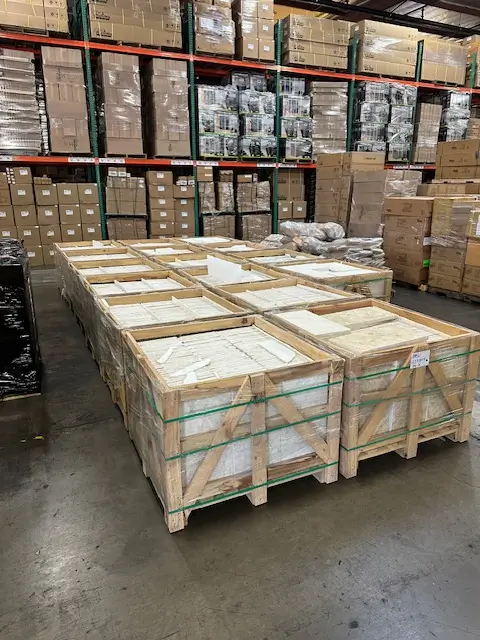
The practical side of a travertine paver thickness guide always includes logistics — because specifying the right thickness only matters if you can actually get the material when your base work is ready. Natural stone in a specific thickness dimension is a warehouse stock item, not a made-to-order product, which means availability fluctuates with import cycles.
Citadel Stone maintains warehouse inventory of 30mm travertine pavers drawn from our selected quarries in the Mediterranean and Middle East, which typically keeps lead times well below the 6–8 week import cycle you’d face sourcing independently. That said, confirm stock levels before you commit your project to a pour schedule — warehouse levels for specific thickness grades can move quickly on large regional orders, and having your truck delivery schedule tied to an out-of-stock item creates expensive delays.
- Order 10–12% overage above your calculated square footage to account for cuts, waste at perimeter edges, and replacements during installation
- Verify thickness tolerance consistency across the batch at the time of warehouse pickup or delivery — thickness variation greater than ±2mm creates leveling problems that compound across large installations
- Confirm truck access to your site before scheduling delivery — full pallets of 30mm travertine are significantly heavier than 20mm material, and delivery truck requirements may differ from what your driveway or site access can accommodate
- Stage material on-site in a covered area and allow it to reach ambient temperature before installation — cold stone set in warm mortar creates differential expansion at the bond layer
The USGS dimension stone production data provides useful context on how import supply chains for natural stone operate — federal dimension stone supply and production data confirms the dependency on overseas quarry output that affects thickness-specific inventory across the US market. Planning your material procurement 4–6 weeks ahead of your installation window is the reliable approach.
Light Vehicle Applications and the 40mm Boundary
One of the most common specification errors in residential projects is applying 30mm travertine to areas that will see vehicle use. The physics here are unambiguous: a standard passenger vehicle imposes roughly 2,000 lbs per axle at the tire contact patch — a load concentration that 30mm travertine on aggregate base is not designed to handle reliably over time.
The 40mm thickness, combined with a well-compacted aggregate base of 150mm minimum depth, brings the structural capacity into the range where light vehicle traffic becomes sustainable. Some specifiers opt for a concrete sub-base in these areas and reduce back to 30mm — that’s a valid approach, but it adds cost and reduces the drainage flexibility of the installation. The straight 40mm-on-aggregate specification is generally more resilient to long-term base movement because it doesn’t create the rigid-over-flexible interface that can cause differential cracking.
For a driveway apron or service area adjacent to a 30mm patio installation, you can transition thickness at a defined control joint — keep the two zones structurally separated so base movement in the vehicle area doesn’t propagate into the pedestrian zone.
Getting Travertine Paver Thickness Specifications Right
Thickness is the foundational decision in any travertine installation, and the travertine paver thickness guide framework comes down to this: match the thickness to the load and base system, not to cost or aesthetic preference. The 30mm specification serves the vast majority of outdoor residential and commercial pedestrian applications reliably when the base is prepared correctly and drainage is designed to move water away from the substrate. Where vehicle loads or marginal base conditions enter the picture, step up to 40mm and increase your aggregate depth to match.
Long-term performance also depends on the sourcing quality of the stone itself — thickness tolerances, fill consistency, and finish quality all vary significantly between quarry sources. At Citadel Stone, we assess material against specification requirements before it ships from our selected quarries, which means you’re not discovering dimensional inconsistencies after the truck has pulled away from your site. As you refine your hardscape material decisions, white paver design inspiration explores how lighter travertine tones work across a range of outdoor settings — a useful reference point as you finalize your overall paving palette. For patios, walkways, and light vehicle areas, Citadel Stone offers thickness options cut from carefully selected Mediterranean and Middle Eastern quarry stock.