How a Cool Floor Actually Works
A floor does not really have a temperature so much as a rate. Skin gives up heat to whatever it touches, and dense stone carries that heat away faster than timber, vinyl or carpet, so the same room reads cooler the second you step off a rug. In Saint Lucia that difference is felt every afternoon, whether the house sits above Rodney Bay or on a slope inland from Dennery.
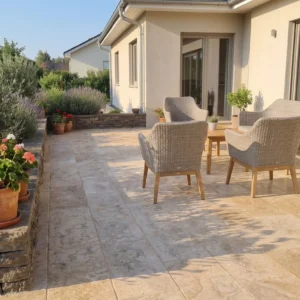
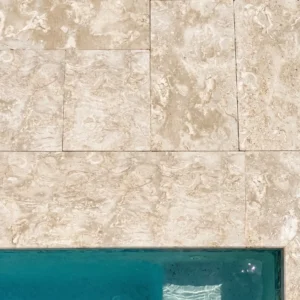
Limestone lands in a useful spot. It is dense enough to move heat steadily, pale enough to send daylight back out instead of banking it, and stable enough to stay flat on a screed that lives in humid air all year round.
Thermal Mass in a House That Never Freezes
Thermal mass is usually explained with winter examples, which is no help at all here. In a tropical house the mass is doing something else: it flattens the daily swing, taking on warmth through the hottest hours and letting it go once the evening air moves. A stone floor bonded to a solid base works with that rhythm. A thin floating floor over a void does not.
- Mass performs best where the tile is bedded on a solid slab rather than suspended over an air gap
- Rooms shaded by mid-afternoon give back their stored warmth quickly once the sun drops
- Ceiling height and cross ventilation decide how fast that released warmth actually clears
- Covered terraces extend the effect outward when the same family of stone continues through
- Air-conditioned rooms behave differently again, because the mass is being cooled, not aired
Shade Comes First, Then the Floor
No floor can rescue a room that takes direct sun through a wall of glass all afternoon. Deep overhangs, shutters, planting and orientation do the heavy lifting, and the floor finishes the job. That order matters when you are budgeting, because a well-shaded room with a stone floor feels genuinely cool, while an unshaded one with the same tile simply stores the heat and hands it back at night. Treat the floor as the last part of a shading strategy rather than a substitute for one.
Pale Tones and the Light Off the Water
Light in Saint Lucia is strong and it bounces. A pale limestone floor spreads that light around a room instead of soaking it up, which keeps interiors bright without pushing the glazing bigger. It also changes how a space feels at the hottest part of the day.
- Light tones read cooler and hide the fine dust that blows in through open doors
- Mid-toned stone hides foot traffic marks better in a busy hallway or a rental villa
- Very dark surfaces gain heat quickly in sun and are best kept for shaded interiors
- Matte and lightly textured faces cut glare where a room opens onto water
Windward and Leeward Rooms Are Not the Same Job
The Atlantic side of the island and the calmer Caribbean side ask different things of a floor. East-facing rooms around Dennery or Micoud take steady trade winds, driven rain and salt-laden air through open doors, so grit gets tracked in and joints work harder. West-coast houses near Castries, Marigot Bay or Soufriere sit in gentler air but hold humidity longer in the lee of the hills. A single specification for the whole house is usually a compromise; splitting it by aspect is not extravagant, it is simply accurate.
Where Stone Earns Its Keep in the Plan
Stone is not the right answer in every room, and pretending otherwise wastes money. It pays back hardest where heat, traffic and cleaning all meet in the same place. For a specification that reflects your own plan and exposure, our team can size pale limestone tile underfoot against the rooms you actually use.
- Open-plan living areas that connect straight through to a veranda
- Entrances and circulation, where sand and grit arrive first
- Kitchens and pantries that stay warm through cooking hours
- Guest suites in rental villas, where cleaning speed matters more than novelty
- Covered outdoor dining, using a textured version of the interior stone
Local Aggregate Below, Imported Surface Above
Saint Lucia has a genuine quarry industry. Wilrock at Saphyr Estate in Laborie, Concrete and Aggregates, Quarry Products, RG Quarry and Shuga Sand and Stone between them supply the crushed rock, sand, blocks, filter stone, armor stone and ready-mix that hold the island together. That is the base course, the slab and the structure. Imported dimension stone is not a rival to any of it. It is the calibrated wearing surface that sits on top of work those quarries already make possible, and the two belong in the same specification.
Landing Material at Castries or Vieux Fort
Saint Lucia receives ocean freight directly, and SLASPA runs both commercial seaports. Port Castries handles most container traffic on a compact ten-acre site that has been congested enough to prompt an off-site container storage facility at Cul de Sac. Vieux Fort, near Hewanorra and the free zone, is the sensible option for southern sites. If you want landed planning tied to your own build program, the Saint Lucia stone hub can walk through routing and paperwork.
- Pre-arrange haulage rather than assuming a same-day container pull at Castries
- Castries cargo hours run 08:00 to 16:00, with overtime available on request
- Southern projects around Vieux Fort or Laborie can avoid the west-coast mountain road
- Build entry, clearance and haulage into the schedule before the tiling crew is booked
Design the shade first, then let a pale, dense floor do the quiet work of keeping the room comfortable.