Humidity is a surface problem before it is an air problem
Ask anyone who has crossed a shaded patio in Rio Grande after a squall. The stone was fine. The film of water on top of it was not. Sound limestone does not rot, warp or delaminate in humid air, so the real question in a tropical house is never whether the material survives. It is what happens in the thin layer where a wet foot meets a finished surface. That layer is created entirely by the finish, which makes finish selection the highest-leverage decision on the whole order.
What each finish actually does when wet
Finish names get thrown around loosely. What matters is the physical texture left on the face and how it behaves under a film of water.
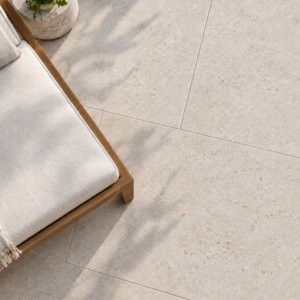
- Honed leaves a smooth, low-sheen face that is easy to wipe and calm to look at, and it belongs indoors, under cover, away from splash.
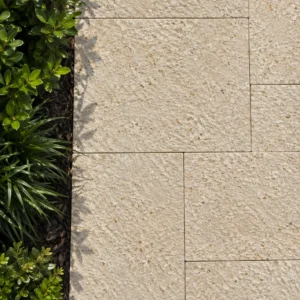
- Brushed carries a fine directional texture that gives water somewhere to go, which is the workhorse choice for covered terraces and poolside walkways.
- Tumbled softens edges and roughens the face, reading as older and more forgiving underfoot, and it hides the traffic of a busy family entrance.
- Sandblasted and bush-hammered take texture further for ramps, steps and anywhere a fall would matter more than usual.
Where slip risk actually concentrates
Risk is not spread evenly across a house. It clusters in a handful of predictable places, and specifying those places correctly matters more than choosing one finish for everything.
- The step down from an interior floor to a terraza, where a dry foot meets a wet surface without warning.
- Pool coping and the first stride of the surround, which stays wet all afternoon in season.
- Shaded stairs on the north side, which dry slowest and pick up biological film fastest.
- Kitchen and laundry thresholds, where water arrives regularly and nobody is looking down.
- Covered entries where wind-driven rain still reaches a good stride past the door line.
The coastal edge adds salt to the water
On the north coast, in Rincon and along Isla Verde, the film on your floor is rarely just rain. Salt aerosol settles on everything within reach of the surf and leaves a faint sticky residue that grabs dust and dulls a surface between cleanings. A heavily textured face holds that residue longer; a very smooth face sheds it easily but offers less grip. The workable middle is a light, even texture combined with a habit of rinsing with fresh water, which is standard practice on coastal properties across the region. Covered areas need that rinse far less often than an open roof deck, so split the routine by exposure instead of running one schedule for the whole property.
Finish and maintenance are one decision
Every step you add in texture buys grip and costs a little cleaning effort. That trade is worth making consciously rather than by accident, and it is the point at which most buyers ask for samples of honed and brushed limestone tiles side by side.
- Smooth faces wipe fast and show water marks, which suits interiors that are dried after mopping.
- Light textures rinse clean with a hose and a soft brush and are the practical default outdoors.
- Deep textures grip best but want a stiffer brush and a more regular routine, especially in shade.
- Mixing two finishes in one tone gives you grip where it matters and calm where it does not.
Matching finish to the rooms islanders actually use
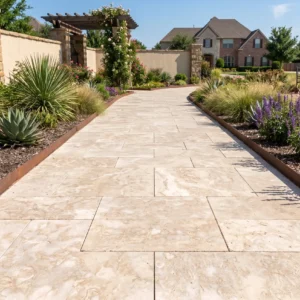
An open living area running out to a terraza wants continuity of tone with a change of texture at the door line. A shaded interior stair takes a light texture even though it never sees rain, because wet feet come inside. A rooftop deck in the metro area gets the most exposed treatment on the property. Bedrooms and studies can be as smooth as you like. If you want the full vocabulary of surface treatments and how they are produced, our guide to stone surface finishes sets them out in order.
Ordering, and what the island adds to the price
Because Puerto Rico sits inside US customs territory, a mainland shipment is domestic freight and never touches a customs duty line. The costs that do apply are worth knowing before you compare quotes.
- Jones Act carriage means US-flag, US-built and US-crewed vessels, which raises freight but supports frequent scheduled sailings into San Juan.
- IVU sales-and-use tax is 11.5 percent, made up of 10.5 percent state and 1 percent municipal, calculated on total landed cost including shipping and insurance.
- Filing runs through Hacienda’s SURI portal with an electronic declaration of imports; use tax is due at filing unless a bond is in place.
- Vieques and Culebra add a barge leg from Ceiba, which is worth building into the schedule from the start.
Test it wet, never dry
Showroom lighting flatters every finish equally. Water does not. Wet the sample, tilt it, stand on it in bare feet, and let it dry in the sun to see what the surface looks like afterward. That five-minute exercise tells you more than any specification sheet, and it costs nothing but the postage on a small piece of stone. The finish you choose with wet feet is the finish you will still be happy with in five years.