What Absorption Really Tells You
Every quarried stone carries a water absorption figure, and on a dry island in the hurricane belt that one number does more work than anything else on the data sheet. Absorption describes how much water the stone draws into its pore structure when it is soaked. A low figure means the pore network is tight and poorly connected, so wind-driven rain, pool splash and salt spray sit near the surface and then leave again. A high figure means the stone behaves like a sponge with a long memory, holding moisture and everything dissolved in it for days after the sky clears.
In Antigua and Barbuda that memory is the whole problem. Rain arrives in short violent bursts, the sun returns within the hour, and the water is driven back out leaving behind whatever it carried in.
Density and the Weight You Can Feel
Density is the companion figure to absorption. A denser unit has less internal void, which usually means lower absorption, higher breaking strength and a heavier pallet. Weight is not a nuisance on an island site; it is part of the design.
- Heavier units resist being lifted or shifted by storm-driven water on open terraces.
- Denser stone carries service vehicles without dishing or chipping at the corners.
- A tight pore structure slows the migration of salts and staining liquids into the body.
- Higher mass evens out the swing between a scorching afternoon and a cool night.
- Dense blocks cut cleanly, so trimming around coping and drainage channels stays crisp.
Salt Replaces Frost as the Enemy
Anyone who has specified paving in a cold climate learned to ask about freeze-thaw cycling. Delete that question here. Water inside a paver in Antigua and Barbuda never freezes, never expands as ice, and never splits the stone from within. The mechanism that matters instead is salt crystallization. Aerosol off the windward coast, splash from a pool, and groundwater drawn up through a badly drained bed all deliver dissolved salt into the pore network. When the surface dries, that salt crystallizes and grows, and crystal growth inside a pore pushes outward with the same patient force ice uses in a colder place. Low absorption limits how much salt ever gets in, which is why the number leads the specification.
Paving That Feeds a Cistern
There are no permanent streams or rivers on either island. Fresh water comes from surface storage, groundwater and rain caught at the property, new houses are fitted with rainwater collection and storage, and most sites are expected to hold water in a cistern. That reaches straight into your paving detail, because a hard surface is part of the catchment.
- Choose jointing products that will not leach into runoff heading toward stored water.
- Set falls deliberately so clean water reaches the inlet and dirty water goes elsewhere.
- Keep sealers off catchment surfaces unless the specifier has cleared them for that duty.
- Detail a silt trap where a driveway discharges toward a storage tank.
Absorption Tolerance Changes Across a Site
One property can carry three different specifications without looking incoherent, as long as the color family and the format hold together. Our dense limestone units built for salt are graded so that a single shipment can cover more than one of these zones.
- Windward north and west edges: the tightest stone you can get, bedded and bonded, non-ferrous fixings only.
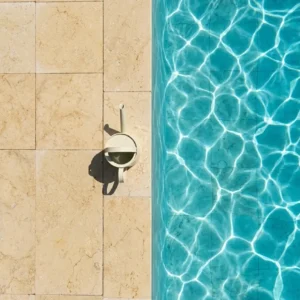
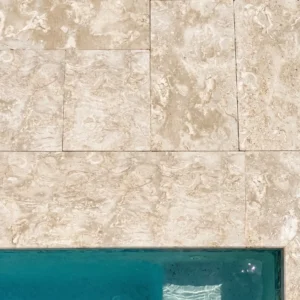
- Pool surrounds: low absorption plus a textured face, because splash is constant and chemically loaded.
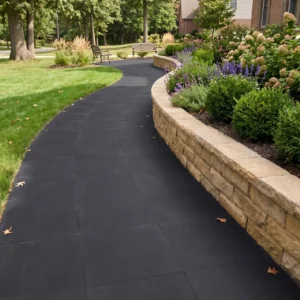
- Driveways: density first, since wheel load and point stress outrank spray.
- Sheltered inland courtyards: absorption can relax, which widens the palette and usually trims the budget.
Questions to Put to the Supplier
Ask for evidence rather than adjectives. A supplier who handles the material daily will hand over the figures without being chased, and will say which production run they came from.
- Absorption and density results for the batch you are actually being offered.
- Thickness options, since extra thickness buys margin on a drive or a service route.
- Finish choices, and how each one changes surface behavior once it is wet.
- Pallet weights, which drive the handling plan the moment the container is on the ground.
Landing the Order at Deep Water Harbour
Freight into the country is more straightforward than in several neighboring markets. Deep Water Harbour at St John’s takes direct sailings from the Port of Palm Beach, so a pallet order is not waiting on space aboard a feeder from somewhere else. Barbuda is a separate leg: cargo moves from the ferry dock at the bottom of High Street on small vessels and lands at River Wharf, where there is no container crane, so unit size and pallet weight have to suit hand and light-equipment offloading. Talk to us about the Antigua stone hub before the shipment is sized.
Building the Spec Around the Number
Duty is assessed on the CARICOM Common External Tariff, and stone quarried outside the region pays the full rate for its classification. Antigua and Barbuda Sales Tax has stood at seventeen percent since 1 January 2024, calculated on landed value plus duty and other government charges. A Revenue Recovery Charge applies alongside levies including a Throughput Levy and solid-waste and environmental levies; confirm the current rates with your broker. Customs requires a broker once a shipment passes EC$5,000 or six lines, and any pallet quantity of stone clears that threshold comfortably. Specify the number rather than the adjective, and the paving will still be there when the season turns.