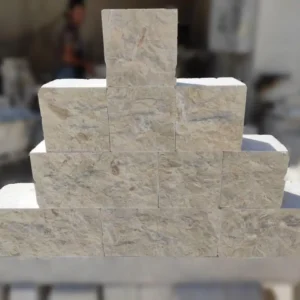
Most island stone shipments end where the ship does. In St. Vincent and the Grenadines they usually begin there: Kingstown receives the ocean freight, and then the chain takes over — ferries to Bequia, consignment channels to the private islands, inter-island services south to Canouan and Union. Supplying this market well means treating the second voyage with the same seriousness as the first, and this guide walks the whole route, leg by leg.
The ocean leg: Kingstown fundamentals
The first stage runs on the cluster’s standard rails. Freight mode follows scale — palletized and groupage for villa work, full containers at roughly 24–26 tonnes for resort and estate phases — and the paperwork trio of commercial invoice, packing list and bill of lading goes to your Vincentian customs broker at quote stage, so duty and landed cost are priced before the vessel sails. Projects under approved developments should raise the concession question with the broker early; the island’s investment framework can matter to the arithmetic, and brokers know the current answers. With clean, consistent documents, Kingstown clearance runs routinely; with vague ones, every query costs days that the onward legs then inherit.
Bequia: the ferry economy
Bequia’s hour-south position makes it the chain’s most connected out-island, served by ferries and freight runs that move building materials daily. The stone disciplines are packaging and timing: crates weighted for the island’s handling equipment rather than Kingstown’s, consignments booked onto the freight services rather than assumed onto them, and a confirmed receiving plan — transport from the jetty, dry staging at site — before the first leg even sails. Bequia builders run this route constantly and well; the supplier’s job is delivering crates that fit their system, documented so nothing waits on a question.
The private islands: consignment by appointment
Mustique and the chain’s other managed islands receive freight the way they do everything — through their estate systems, on their schedules, to their standards. Consignments are booked, documented to the island office’s format, and received by infrastructure teams who stage and secure them; nothing arrives unannounced and nothing should. For the supplier this is a paperwork discipline above all: packing lists that match booking manifests exactly, crate markings to house convention, and batch documentation filed with the estate so future phases and repairs reference it. The private-island supply model has its own guide; the shipping chapter’s summary is simple — book early, document perfectly, let the island’s machine do what it does.
The southern legs: Canouan, Union and beyond
The southern Grenadines ride the inter-island services, and their legs reward the small-island playbook at full strength: more crates at lighter weights for small-equipment destinations, generous program buffers against weekly-rhythm schedules, self-sufficient receiving plans, and — in the Beryl rebuild era — patience and coordination with islands whose infrastructure is still catching up with their determination. Stone suits these routes better than almost any cargo: it stores outdoors indefinitely, shrugs handling that would bruise finished joinery, and arrives ready to wait for its crew without complaint.
- More crates at lighter weights, matched to small-equipment destinations.
- Generous program buffers against schedules that run on a weekly rather than daily rhythm.
- A self-sufficient receiving plan, since nothing can be bought at the far end.
- Consumables, blades and fixings shipped with the stone rather than sourced locally.
- Coordination with rebuild traffic, which competes for the same boats.
Verification at the true destination
The multi-leg market’s one special rule: the arrival inspection happens where the stone will be laid, not where it first touched SVG. Crates counted against the packing list at the final island, transit questions photographed before anything moves, one crate per type opened against the approved samples — and escrow, for new clients, releasing on that confirmation rather than on Kingstown’s. The discipline protects everyone across the extra handling, and it costs the same fifteen minutes it costs everywhere else in the cluster.
- Crates counted against the packing list at the island where the stone will be laid.
- Transit questions photographed at each transfer, not only at the final stop.
- One crate per stone type opened and checked against the approved samples.
- Damage attributed to a leg, which is what makes an insurance claim straightforward.
- Spares landed with the main consignment, because a single replacement piece travels badly.
Planning the whole chain
The successful SVG order is planned backwards from the laying date through every leg: production weeks, the ocean sailing, Kingstown clearance days, the island service’s next departure, the receiving plan’s readiness. Each link is knowable in advance, which is the entire point of quoting them together — the SVG supply page prices the full chain in one conversation, and the projects that let it are the ones whose stone arrives boring, complete and on schedule, whichever island finally gets to walk on it.
Sailing season and the freight calendar
The Grenadines run on a sailing calendar as real as any monsoon, and freight planning that respects it lands more smoothly than planning that discovers it. The high season — winter through spring — fills the chain with charter fleets and superyachts, and its effects reach cargo in practical ways: inter-island services carry fuller manifests, jetties and landings prioritize passenger and provisioning traffic at peak hours, island trades book out on villa-turnover work, and the private islands tighten their consignment windows around occupancy. Regatta weeks concentrate everything further — Bequia’s Easter regatta being the calendar’s famous marker — when the wise consignment simply waits a week rather than competing with an island’s biggest party for its jetty.
The planning translation is straightforward: major stone movements favor the shoulder and green seasons, when services run lighter, crews are hungry for work and staging space is abundant; high-season deliveries book earlier and expect their slots to be honored rather than improvised; and the storm season overlays its own standard discipline — early arrivals, insurance, buffers — on the chain’s southern legs especially. The deeper habit is thinking like the chain: every island’s week has its rhythm of ferry days, market days and fuel-barge days, and local agents carry that calendar natively. A supplier who asks “when does this island want cargo?” rather than “when can we ship?” consistently lands stone into welcoming logistics — and on small islands, arriving welcome is worth a week of schedule. The Kingstown-and-legs guide plans the mechanics; this calendar decides their timing.
What the national port system actually is
Freight planning for this country starts with knowing that Kingstown is not one facility but several. The St. Vincent and the Grenadines Port Authority sets out what it operates.
- The Port of Kingstown, handling the country’s general cargo traffic.
- The Campden Park Container Port, which is where container work is concentrated.
- The Cruise and Ferry Terminal, through which the inter-island passenger and freight services run.
- A single national entry point, which makes the onward leg the variable rather than the ocean crossing.
- Broker and agent appointed for the correct facility, not simply for the country.
Timing the ocean leg around the season
An import that crosses the Atlantic hurricane season carries schedule risk that has nothing to do with the supplier. The National Hurricane Center publishes the Atlantic climatology every island program should work around.
- The season runs June 1 to November 30, which brackets the cautious window.
- Climatological peak activity falls on September 10.
- Most activity concentrates between mid-August and mid-October.
- An average season produces fourteen named storms, seven hurricanes and three major hurricanes.
- Inter-island legs suspend first in bad weather, so the second leg carries the larger risk.
Building the landed-cost stack for a two-leg journey
A square-meter price means very little here, because the interesting costs sit after the ship berths.
- Stone ex-works, priced against a complete cutting list.
- Ocean freight to Kingstown, with the receiving facility named.
- Duty and charges as calculated by your Vincentian broker.
- Inter-island freight to the destination island, quoted rather than estimated.
- Offload and site delivery at the far end, including any barge or beach landing.
Shipping stone to St. Vincent in the right order
One port and many islands is a simple description of a genuinely two-stage journey, and almost every problem in this market comes from planning only the first stage. Book the ocean leg and the island leg together, size crates for the handling equipment at the destination rather than at Kingstown, inspect where the stone will actually be laid, and hold spares on the island. Do that and the chain becomes an advantage rather than an obstacle. When material selection is next, our St. Vincent and the Grenadines stone supply guide covers palette and lead times. Plan the second leg first and the ocean crossing takes care of itself.