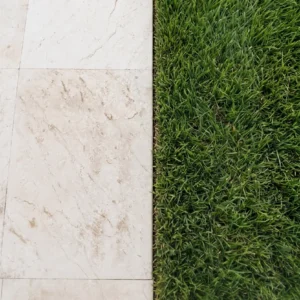
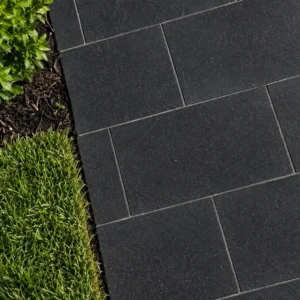
St. Barths eats outdoors, expensively, and in public – the beach clubs of St. Jean and Flamands, the harbor rooms of Gustavia, the hillside tables that watch the sun go down over Colombier. The restaurant terrace is the island’s theater, photographed nightly and reviewed globally, and its floor is a working surface pretending to be a stage set. The stone specification behind that pretense is hospitality engineering of a high order, and it repays study.
Two Audiences, One Floor
A restaurant floor serves diners and staff simultaneously, and their briefs conflict: diners want beauty, atmosphere and a surface that flatters the golden-hour photograph; service wants grip under speed, resilience under dropped trays, and cleanability at one in the morning. Stone resolves the conflict better than any surface in the trade – dense limestone in a fine textured finish photographs warm, grips a sauced shoe, and washes down to neutral before the lunch service – which is why the island’s enduring rooms stand on it.
The Service Canon
The working rules are the commercial canon tuned for hospitality speed:
- Texture graded by zone – finest where chairs slide and heels land, grippier along service runs and at any wet transition.
- Falls that drain a washdown fast without ever tilting a table – the two-percent argument every terrace has, settled by leveling the dining zones and draining the margins.
- Thresholds and bar fronts in the order’s hardest stone; they take the concentrated punishment.
- Same-batch attic stock held on premises – a cracked flag in week two of the season is an overnight fix or a season-long review note.
surfaces built for service crowds works the same canon at duty-free-capital intensity, and its lessons scale down to a fifty-cover room perfectly.
The Beach Club Register
The beach clubs run the hardest version of the brief: barefoot guests and sandy feet at noon, heels and linen by night, salt mist throughout, and a floor that transitions from sunbed service to dinner theater in an afternoon. Pale textured limestone carries the day shift – cool underfoot, forgiving of sand – and lighting carries the transformation, washing the same stone warm as the room turns over. The detailing rule is the anse rule: joints and edges that release sand to the broom rather than hoarding it.
Harbor Rooms and the Quay Interface
Gustavia’s dining rooms open onto the quay, and their floors negotiate with the public walk: levels meeting cleanly, materials shifting at the lease line without tripping anyone, the restaurant’s polish stepping up from the promenade’s wear. The interface detail matters commercially – the threshold is the restaurant’s handshake, and a generous stone entrance landing, lit warm and kept immaculate, sells the room to every passer-by the season long.
Back of House in Stone
The unphotographed half of the floor plan works harder than the front: kitchen lines, pass corridors, bar service runs and the washdown yard. Stone earns its place there on pure durability – dense, textured, coved where regulation asks, draining to its own gullies – and the specification is written with the chef, not just the designer. A back-of-house floor that fails mid-season closes the room; nobody reviews the reason, only the closure.
The One-Window Rule
Restaurants live the island’s calendar at its most unforgiving: the room earns from November to April and rebuilds in the September window, and a terrace that misses the window opens late into its own high season. Stone orders follow the commercial sequence – confirmed in spring, transshipped by late summer, installed and sealed before the first booking of the season. The discipline is identical to the September refresh discipline the villas keep, with a lease’s pressure behind it.
Glare, Chairs and the Golden Hour
West-facing rooms sell the sunset and pay for it in glare: the hour before the photograph is an hour of low sun straight into diners’ eyes, and the floor participates in the problem or its solution. Honed pale stone scatters low light softly where polished surfaces would mirror it into the room; shade structures are angled for the seven o’clock sun, not the noon one; and table placement drawings actually consider the solar line, because the best table at eight is the worst at six-thirty. The furniture interface is the floor’s other daily negotiation – hundreds of chair movements a service, metal and timber feet on stone – and the specification answers with density, fine texture that forgives the drag, and glides checked as part of the opening routine rather than after the first scratch season. The golden hour itself repays all of it: warm light raking across textured pale stone is the island’s house lighting scheme, free of charge, every clear evening of the season.
The Stage Holds
The island’s great rooms share a floor philosophy: stone specified for service, dressed by light, maintained on a calendar and repaired invisibly. Build the terrace as theater and engineer it as a workplace, and the room earns its reviews from the floor up – season after photographed season.
The Private Dining Court
The island’s rooms increasingly keep a private court – the chef’s table corner, the proposal table, the twelve-cover celebration space bookable months out – and its stone brief runs a register above the main floor because the premium is the point.
- The court’s floor upgrades finish rather than material – the same family as the main room, honed finer under full cover.
- Enclosure comes from stone screen walls and planting, holding intimacy without sealing off the evening air.
- Service access is its own discreet run, so the court’s privacy survives its own waiter.
- Lighting drops to candle-adjacent levels, with the pale floor quietly doubling the glow.
Commercially the court is outsized: it books first, prices highest and photographs its way through every anniversary on the island. The stone contribution is atmosphere with a maintenance schedule – a finer surface, protected by cover, that stays flawless because the specification put it where weather cannot argue with it.
The floor is part of the performance
Dining here is deliberately visible. Terraces are open, tables sit close, and the ground plane is in every photograph taken across an evening. That gives the surface two jobs that pull against each other: it has to look considered under low light and it has to take a full service shift without showing it. The venues that manage both tend to have made the same choice, which is a quiet, consistent floor with the interest supplied by lighting, planting and the view rather than by the paving pattern.
- Color checked under the venue lighting, not only in daylight
- A single format and finish across the whole terrace
- Level changes marked so guests read them without looking down
- Furniture points and heater bases set out before the paving pattern
- Cable routes for lighting kept under liftable units
Wet, oily and busy at the same time
The contamination profile on a restaurant terrace is unusual. Water, wine, citrus, oil and cleaning chemistry all arrive within the same few hours, often onto a surface that is already damp from spray. Guidance on testing frictional properties of natural stone walking surfaces sets out the ANSI A326.3 wet method and a benchmark dynamic coefficient of friction of at least 0.42 for level interior floors expected to be walked on wet. A service line carrying trays at nine in the evening sits well past that reference case.
- Wet values on the exact finish supplied, with margin on service routes
- Low-absorption stone anywhere food and drink are carried
- Joint materials chosen for degreasers as well as for appearance
- A cleaning method issued to the closing team rather than improvised
Choosing restaurant terrace stone that survives the season
These terraces are repaired between services, not between seasons, so the build-up has to allow it. Guidance on detailing natural stone paving for lasting durability puts installation method alongside material choice, and here that means units light enough to lift overnight and a bedding system that tolerates daily washing.
- Units two people can lift and reset before the next service
- Bedding that tolerates repeated wash-down without softening
- Drainage sized for hose volumes as well as for rain
- Attic stock held on the island so a chipped unit never waits on freight
Our St Barths stone supply guide sets out the formats, finishes and lead times that suit this island. A terrace that cleans back to the same color every morning is worth more than any pattern.