On Antigua, a pool deck is revenue infrastructure: villa bookings are won on photographs of that deck and kept by how it feels underfoot at noon. Choosing its stone is therefore a business decision wearing a design costume — and the criteria are refreshingly objective.
The 2 p.m. test guests never forgive
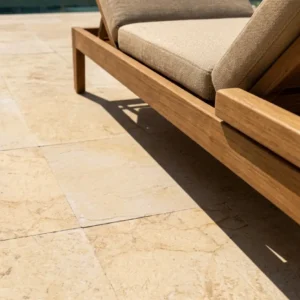
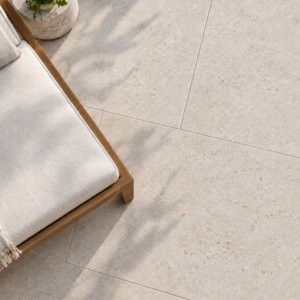
Dark decks fail at checkout reviews: stored solar heat makes them impassable barefoot at the exact hour guests want the pool. Light white limestone reflects that energy and stays walkable all afternoon — the single specification choice with the highest guest-experience return.
Photograph-ready, slip-safe
Bright stone photographs the water tropical-blue and lifts every listing image. But smooth photogenic finishes are a liability where children run wet: specify brushed or bush-hammered textures in splash zones — grip cut into the stone, invisible in photos, decisive on a wet afternoon. Liability starts at the deck surface; texture is the cheapest insurance a rental villa buys.
Durability the housekeeping team will bless
Rental decks are cleaned constantly, and density decides how they respond:
- Dense, low-absorption limestone releases sunscreen, spilled cocktails and organic debris with neutral cleaner and water
- Porous surfaces drink those stains and hold them
- Salt air on the coasts makes density doubly valuable, because the crystallization mechanism that pits porous stone barely touches it
The coping completes the picture
Guests grip the pool edge with hands and trailing feet all day: natural stone coping in bullnose profile is the comfortable, cool, family-safe edge — and cut from the deck stone it makes the whole surround read designed. The full natural-versus-precast argument is in our Antigua coping guide.
Absorption is the number that separates one limestone from another. The Natural Stone Institute records a range running from under one percent to over ten across the family, and notes that dolomitic stones generally carry higher density, lower absorption and better abrasion resistance — the industry variety data sets this out. That spread is why two stones sold under the same broad name can behave nothing alike underfoot.
Format for the drone shot
Large formats — 24 x 24 through 36 x 36 in — read resort-grade from eye level and from the drone photos every listing now leads with. Three rules make them work:
- Lay with tight, consistent joints
- Hold a 1.5–2 percent fall away from the water
- Add shellstone where the brief says barefoot-luxury texture rather than crisp white
Sample like an owner, decide like a manager
Get samples (3 working days), leave them in full sun for an hour, press a palm, splash them, then photograph them beside your pool tile. Every criterion above resolves in ten minutes. Freight to St. John’s, escrow and ordering: the Antigua supplier guide.
The review economy, quantified
Run the arithmetic that makes deck stone a business line. A villa renting 30 weeks a year lives or dies on its listing conversion, and pool photographs lead every listing; management companies consistently report outdoor amenities among the top drivers of nightly rate. Now price the alternative: one season of guest complaints about a scorching deck, one negotiated refund, one three-star review citing “couldn’t use the pool area at midday” — against a one-time stone specification done right. The deck is not landscaping expenditure; it is revenue infrastructure with a measurable payback, which is why the professional operators specify it like plant, not décor.
Turnover-day durability
Rental decks endure what home decks never see: weekly deep cleans, furniture dragged for photographs, sunscreen at industrial volume, and the occasional party. Specify for the abuse: dense stone that releases oils with neutral cleaner, textures that hide the week’s scuffs, solid coping whose chips dress out invisibly between bookings, and attic stock on the property so housekeeping can swap a damaged unit without a supplier call. The measure of a rental deck is not its best day but its hundredth changeover.
Installation method matters as much as the stone itself. Industry guidance separates mortar-set work, sand-set exterior paving and pedestal systems, and stresses that drainage, movement and substrate condition drive long-term performance more than the material name does — the detailing guidance is worth reading before you specify.
Safety, liability and the paper trail
Guests plus water plus stone is a liability equation, and the deck specification is your first line:
- Documented slip-resistant finishes in every wet zone
- Consistent step geometry with textured nosings
- A maintenance log showing the surfaces are kept clear of algae
None of it is onerous — it is the same good practice this guide already argues — but written down, it converts an incident conversation from exposure into evidence.
Photography day: designing for the lens
Listings are shot once and earn for years, so give the camera its due at specification: light stone lifts water to postcard blue and bounces fill light into shaded seating; a basalt border reads as crisp graphic lines in aerials; and consistent joints photograph as calm texture where busy patterns read as noise. Ask the photographer’s two favorite hours — early and golden — and confirm the deck’s falls leave no puddle glare from the overnight dew in frame. Small decisions, permanent assets.
The owner’s one-page deck standard
For portfolio owners: write the deck standard once and apply it to every property.
- 3 cm dense white limestone
- Defined texture zones
- Matching bullnose coping
- Falls of 1.5–2 percent
- Felt-padded furniture
- 3 percent attic stock
- A neutral-cleaner-only housekeeping rule
- A quarterly inspection walk
One page turns every future villa, and every future order, into a repeat of a solved problem.
Changeover day: the deck’s weekly exam
Rental decks live by the changeover, and a two-line addition to the housekeeping runsheet keeps the stone guest-ready indefinitely:
- Hose the deck and coping, and spot-treat sunscreen patches with the neutral cleaner
- Note any chipped or loose stone on the maintenance sheet
Ten minutes inside the existing clean, no specialist visit, and the textured dense stone keeps looking like the listing photographs.
Ranking the next amenity dollar
Owners upgrading progressively ask what follows the deck itself, and the returns rank consistently:
- Shade — a pergola or sail over part of the lounging field extends usable hours and photographs beautifully
- Lighting — the low, warm scheme that sells evening ambience in listings
- An outdoor shower on the same stone family — two square meters of luxury guests mention in reviews
- Only then, the exotic extras
The documentation folder that protects the asset
Professional rental operations keep a deck file, and it is worth imitating:
- The stone specification and batch reference
- Dated photos from each quarterly walk
- The housekeeping product rule
- Incident notes — what, when, and the action taken
- The attic-stock count
The folder’s value compounds: smoother insurance conversations, instant answers for management companies, and evidence of diligence if an incident ever escalates.
The decisions that define a pool deck in Antigua
Antigua’s booking calendar breathes, and the quieter months are the deck’s service window: the annual deep-clean and biocide pass, sealant-joint renewal at the coping shell line, any course swaps from attic stock, and re-texturing of traffic lanes if years have polished them. Scheduling this maintenance against low occupancy — rather than reacting mid-season — is the operational habit that separates villas that “never seem to age” from the ones apologizing to guests while trades walk the deck. A deck that works in low season works all year.