What makes a deck slippery here
A pool deck in the Virgin Islands is rarely dry for long. Swimmers carry water out, afternoon rain arrives through the wet season, salt air leaves a film on anything within reach of the sea, and sunscreen reaches the surface soon after the first guest sits down. Slip resistance is therefore a wet and contaminated condition problem rather than a dry one. The finish has to be chosen for the worst state the surface will reach, not the state it is in on the day it is handed over. That shift in thinking heads off the disappointment that tends to show up in the first season of use.
The finish families and what they do
Most outdoor stone finishes fall into a few groups, and the differences are easy to feel with a wet sample in your hand. Names vary between suppliers, so treat the description as a starting point and judge the physical piece rather than the word on the price list:
- Sawn: flat and even, the baseline before any texture is added
- Honed: smooth and matte, comfortable but the least aggressive once wet
- Brushed or antiqued: gently worn, with enough texture to break a film of water
- Bush hammered: a peened face with real bite, strong on ramps and slopes
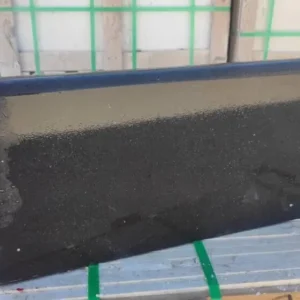
- Flamed: an open thermal texture that grips hard and reads darker in tone
Grip against bare feet
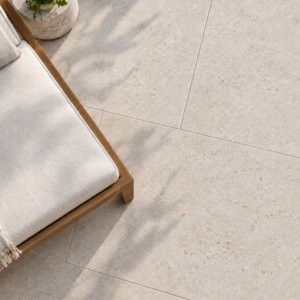
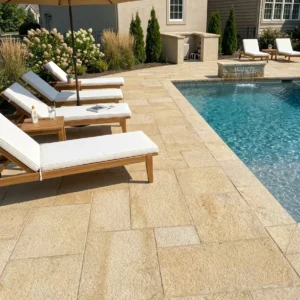
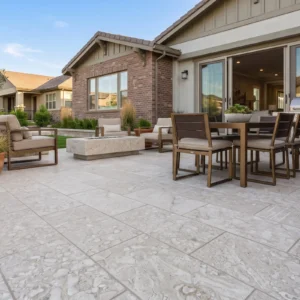
The trap is assuming more texture is always better. A face aggressive enough for a loading ramp is unpleasant on wet skin and hard on knees, and it traps sunscreen and grit that then need scrubbing out. For a pool surround the comfortable answer usually sits in the middle: enough relief to break the water film, fine enough that a child can run across it without injury. It is worth agreeing that balance with the client in front of two wet samples rather than on a phone call, because the words people use for texture mean very different things to different people. That balance is why we steer clients toward limestone paving for wet barefoot traffic rather than the most textured face on the list.
Coping, steps and the first strides
Most incidents happen in a narrow band: the coping, the top two steps and the strip where people turn out of the water. That band is walked on with the wettest feet, in the worst light of the day, by people who are not concentrating. Treat it as its own specification rather than as the edge of the main deck.
- Give coping and step treads more texture than the open field behind them
- Use a bullnose or eased edge so a wet foot cannot catch a sharp arris
- Keep riser heights consistent, since bare feet judge a step by feel alone
- Fall the deck away from the water so rinse and rain do not sheet across the coping
Coastal work is a CZM matter
Anything inside the coastal zone brings the Coastal Zone Management division of DPNR into the picture, alongside the Division of Permits that administers building codes. The territory enforces the International Building Code and International Residential Code editions adopted by DPNR, with applications handled through the CitySquared system or on paper. The same division also covers floodplain management and flood insurance matters, which frequently touch shoreline work. Ask early which permits the site attracts. A pool deck close to the shoreline can carry a longer approval path than the same deck further inland, and a schedule should plan for that instead of absorbing it late.
Drainage through the wet season
Rain concentrates from May through October and it arrives hard. Standing water is both a slip risk and the mechanism that drives salt and staining into stone.
- Set falls that genuinely move water rather than the minimum shown on a drawing
- Size outlets for a heavy tropical downpour, not for an average month
- Keep joints full so water runs off the surface instead of into the bedding
- Check that runoff has somewhere to go on steep ground before a storm finds out for you
Cleaning without closing the texture
A textured face only keeps its grip while the texture stays open. Sunscreen, body oils and organic film gradually fill a surface and make it feel slick even though nothing about the stone has changed. A simple routine keeps performance where it started:
- Rinse the deck often, especially the band nearest the water
- Use a neutral cleaner with a stiff brush instead of harsh acids
- Avoid film forming coatings that level out the very texture you paid for
- Test any new product on an offcut before it reaches the finished surface
To compare faces before ordering, our finishes guide sets out finish textures compared for grip side by side.
Test the finish wet, on site
Every finish decision for a pool deck should end with a wet sample under a bare foot in real light. Order a small piece, soak it, tilt it and stand on it, ideally with the client alongside you. Five minutes of that settles questions no data sheet can answer, and it costs nothing but a little patience early in the job. Tell us the pool layout, the coping detail and the island, and we will shortlist the finishes worth wetting.