The Hour That Decides a Terrace
Ask a household which part of their outdoor space they actually use, and the answer is rarely the part with the best view. It is the part they can cross barefoot at lunchtime. Sun angle here is high, shade moves fast, and a surface that reads as pleasant at eight in the morning can be unwalkable by noon. That single fact quietly settles more paving decisions than any showroom conversation.
Color is the lever. Reflectance, thermal mass and finish all play a part, but tone does most of the work, and it is the one variable you cannot change after installation.
Why Light Stone Runs Cooler Underfoot
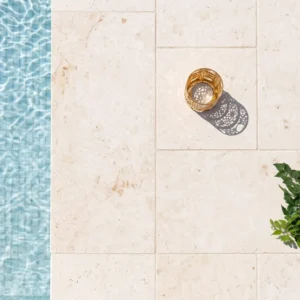
A pale surface reflects a larger share of the sunlight striking it, so less of that energy converts to heat in the stone. Dark surfaces absorb more and hold it longer, releasing warmth into the evening. Both behaviors have their uses. On a plunge pool surround or a lunch terrace, the pale option keeps the surface inside the range where skin tolerates it.
- Pale, honed limestone in open sun: usually the most forgiving barefoot surface
- Mid-tone stone under partial shade: comfortable, with more visual depth
- Dark stone in full midday sun: striking to look at, punishing to stand on
- Any tone in deep veranda shade: heat stops being the deciding factor
Glare Is the Other Half of the Problem
Reflectance cuts both ways. A very pale, very smooth surface on the west coast, with afternoon sun coming off the water as well as the sky, can produce glare fierce enough to send people back indoors. This is where finish rescues color. A honed or lightly brushed face scatters light instead of bouncing it as a sheet, so you keep the thermal benefit of the pale tone without the squint.
- West coast sites take reflected light off the water as well as from the sky
- A slight surface texture removes the squint without darkening the stone
- Polished paving outdoors is rarely a kindness in this climate
- Planting and low walls break long, uninterrupted stretches of bright surface
Where the Trade Winds Help, and Where They Do Not
Barbadian houses have long been designed to move air, with louvers, jalousies and deep verandas doing the work air conditioning does elsewhere. Moving air over a warm surface makes it feel cooler, which is why a breezy east-facing terrace can carry a slightly darker stone than a still courtyard on the leeward side. The corollary matters more: an enclosed courtyard with high walls, no cross breeze and full overhead sun is the harshest heat case on most properties, and it deserves the palest stone you are willing to live with. Before settling the palette, stand in that courtyard at noon and notice how still the air is compared with the front of the house.
Reading Tone in Barbadian Light
Stone shown under showroom lighting is a different material outdoors. Island light is bright and unfiltered, and it flattens subtlety that looked rich indoors. Warm creams read closer to white, gray undertones can go cold, and the fossil detail people fall for up close often disappears at walking height.
- View every sample outdoors, dry and wet, at midday and again at dusk
- Set it against the wall color and roof tone it will actually sit beside
- Look at it from standing height, not crouched over a table
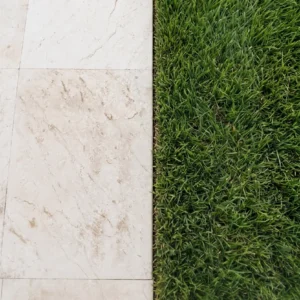
- Check how it reads next to green planting, which shifts perceived warmth
Layout Choices That Buy Back Comfort
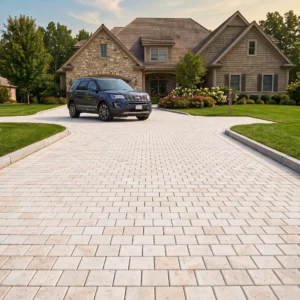
Color is not the only tool. A layout that puts the most-used route in the shadow the house already casts will beat a heroic pergola added later. Planting, level changes and even the direction of the coursing can shift how a terrace behaves at noon. Where a dark accent is wanted for character, keep it out of the barefoot path and let it work as an edge or a border. Homeowners weighing limestone paving for Barbadian terraces often find the answer is a pale field with a restrained darker trim rather than a single tone everywhere.
Get a Sample Into the Real Light
The only reliable test is the unglamorous one. Put a small piece on the plot, leave it in the sun through the middle of the day, and touch it. Then do it again after rain, when the surface has cooled and the tone has deepened.
- Compare two tones side by side rather than judging one in isolation
- Time your touch test between eleven and three, not in the cool of the morning
- Note how quickly the surface sheds heat once cloud passes over
- Check the finish for grip while it is wet, since comfort and safety travel together
Comfort Belongs in the Specification
Nobody regrets a terrace that stays usable. They regret the one that photographs beautifully and empties at noon. Tone, finish and layout are all decided before anything ships, and none of them can be corrected cheaply afterward. If the palette is heading darker than the exposure can carry, look again at white limestone paving surfaces and let the darker material take the borders instead. Choose the stone your family can actually stand on, and the rest of the design will follow.