What Marble Remnants Actually Are — and Why They Matter
Marble remnants for small projects represent the off-cuts and leftover slabs from large commercial fabrication runs — pieces that are structurally identical to full slabs but cut to irregular dimensions that fabricators can’t easily resell at standard pricing. You’re getting the same quarried material, the same veining, the same compressive strength above 15,000 PSI in most commercial-grade stock, but at a fraction of the cost because the size doesn’t fit a kitchen countertop template. That price gap is real and significant — typically 40–60% below equivalent full-slab pricing when you source strategically.
The material itself follows ASTM C503 marble building stone specifications, which define minimum flexural strength, absorption rates, and surface finish tolerances. Remnants sourced from compliant fabrication stock meet those same standards — the spec doesn’t change because the piece is smaller. What changes is your purchasing leverage, and for projects under 25 square feet, that leverage is substantial.
Project Fit: Where Remnants Work Best
Your best applications for marble remnants fall into a predictable category — projects where a single contiguous slab isn’t structurally required and where the decorative impact of natural veining justifies the material premium over ceramic or engineered stone. Bathroom vanity tops under 36 inches, fireplace hearths, bar tops, accent shelving, and custom niche inserts are all excellent candidates. The size constraints that make remnants unsellable to large fabricators make them perfectly sized for these applications.
- Vanity tops: most single-sink vanities fit within a 22″ × 48″ footprint — well within standard remnant dimensions
- Fireplace surrounds and hearths: typically 12″–18″ deep runs that a remnant covers without seams
- Kitchen accent pieces: prep station inserts, pastry slabs, and island end panels under 20 square feet
- Bathroom shelving and niches: 12″ × 24″ cuts that maximize a single remnant piece
- Tabletops: side tables, coffee tables, and console tops under 15 square feet where veining continuity adds design value
Where remnants don’t work as well is in applications requiring matched book-matching across multiple pieces, or flooring runs over 50 square feet where lot consistency becomes critical. For those projects, full slab purchasing with controlled lot numbers is the right approach.
Understanding Remnant Pricing and Grading
The pricing structure for marble remnants for small projects follows the same grading logic as full slabs — Commercial, Standard, Select, and First grades under the Natural Stone Institute classification system — but the remnant discount applies on top of that base price. A First-grade Calacatta remnant will still cost more than a Commercial-grade Carrara remnant, so you need to clarify grade with your supplier before assuming any remnant is interchangeable with another.
According to Natural Stone Institute marble grades and technical specifications, grade classifications account for veining consistency, surface pitting, edge chipping tolerances, and fill quality in voids. For a vanity top or fireplace surround where the entire surface is visible, you want Select or First grade. For a utility shelf or a piece that will be partially built in, Commercial grade at a steeper discount is perfectly defensible.
- First grade: tight grain, minimal pitting, consistent veining — best for high-visibility horizontal surfaces
- Select grade: minor fill repairs acceptable, slight veining irregularity — good for most residential applications
- Standard grade: fills and repairs present, veining variable — appropriate for backsplash or utility applications
- Commercial grade: heaviest fill and repair presence — use only where aesthetics are secondary to function
Thickness Specifications for Common Small Project Types
Thickness selection is where small project specifications most often go wrong. The default assumption — that 3/4-inch (20mm) is universal — leads to cracked vanity tops and undersized hearth slabs. Your spec needs to match the load condition, span, and support structure, not just the surface finish you want.
Vanity tops spanning more than 24 inches without a center support rail should be specified at a minimum of 1-1/4 inches (30mm) to handle point loading from faucet fixtures and daily impact. Fireplace hearths that extend more than 16 inches from the firebox face need at minimum 1-1/2 inches (38mm) if they’re cantilevered — thinner profiles will flex under thermal cycling and foot traffic. Tabletops with leg-only support structures and spans exceeding 36 inches perform best at 1-1/2 inches with a 3mm backing mesh or a structural epoxy bond to a substrate panel.
- 3/4 inch (20mm): wall applications, fully supported countertops, accent shelving with continuous support
- 1-1/4 inch (30mm): vanity tops, kitchen inserts with standard base cabinet support
- 1-1/2 inch (38mm): hearth slabs, cantilevered counters, freestanding tabletops over 30 inches
- 2 inch (50mm): exterior applications, heavy-use surfaces, or where code requires structural stone
Code and Structural Requirements That Affect Remnant Use
Building codes don’t typically regulate interior countertop stone thickness directly, but they do govern structural requirements that affect how your remnant installation performs long-term. For exterior remnant applications — a custom threshold, an outdoor table cap, or a window sill — frost depth and freeze-thaw specifications in cold regions become relevant. Stone installed within 6 inches of grade in freeze-thaw regions should have water absorption below 0.5% by weight, a threshold that most commercial-grade marble exceeds. That means exterior remnant use in cold climates requires either a sealed, low-absorption piece or a protected location.
For fireplace hearths, the International Residential Code specifies minimum hearth extension dimensions based on firebox opening size — typically 16 to 20 inches in front of the firebox and 8 inches on each side. Your remnant needs to cover that full code-required extension as a single piece or as a properly grouted, structurally continuous assembly. Seamed hearths require a substrate that eliminates differential movement, or the grout joint will crack within the first heating season.
- IRC Section R1001: hearth extensions must be non-combustible — marble meets this requirement without qualification
- Absorption testing per ASTM C97: specify below 0.5% for any exterior or moisture-exposed application
- Seismic zones: in high-seismic-activity regions, adhesive-set stone on walls requires flexible-format thin-set per ANSI A108.02 to accommodate building movement
- Load path documentation: for cantilevered stone features in permitted renovation work, structural engineering sign-off may be required regardless of stone type
At Citadel Stone, we review technical specifications with clients before shipping any remnant intended for permitted work — particularly hearth applications where the inspector will verify material compliance.
How to Assess Remnant Quality Before Purchase
The single most important quality check for marble remnants is a sound test — tap the surface with a knuckle or a coin and listen for a hollow or dull thud rather than a clear ring. A hollow sound indicates internal fracture, resin fill over a structural void, or delamination in layered pieces. This test catches problems that visual inspection misses, especially in remnants stored vertically in a warehouse rack for extended periods where hairline cracks can develop from improper support.
Beyond the sound test, check the back face under good lighting. Fabricators typically apply epoxy resin fills to the front face before polishing, so the back reveals the true condition of the stone. Excessive fill on the back — visible as amber or clear resin patches covering more than 5% of the surface area — suggests a piece that has been heavily stabilized and may not perform reliably under load. A small amount of resin fill is standard and acceptable; heavy fill on a load-bearing piece warrants a different selection.
- Sound test: firm knuckle tap across the full surface — listen for hollow zones that indicate internal voids or fracture
- Back-face inspection: check resin fill coverage — under 5% is normal, over 10% warrants rejection for structural applications
- Edge condition: check cut edges for feathering or micro-fracture — these indicate the slab was cut under poor coolant conditions and may propagate under installation stress
- Moisture content: remnants stored outdoors or in unheated warehouse bays can carry absorbed moisture that affects adhesive bond times — allow 24-hour acclimation before setting
- Flatness check: lay a straight edge across the face — warpage over 1/8 inch per 48 inches requires substrate correction before installation
Sealing and Maintenance for Remnant Marble Applications
Marble’s absorption rate — typically 0.2–0.5% for commercial grades per ASTM C97 testing — means sealing is always recommended for horizontal surfaces regardless of finish. Polished marble has a denser surface than honed or brushed finishes, but polished surfaces still benefit from penetrating sealer application because the polish reduces but doesn’t eliminate absorption at microscopic pore level. The practical difference: polished marble typically needs resealing every 2–3 years on moderate-use surfaces; honed marble needs annual resealing on the same use profile.
The sealer selection matters more than the sealing frequency. Use a fluorocarbon-based impregnating sealer rather than a topical coating on polished marble — topical coatings create a surface film that dulls the polish and peels under thermal cycling. Impregnating sealers penetrate 2–4mm below the surface and protect without altering the finish. Test in an inconspicuous area first to confirm no clouding — some lighter Calacatta and Statuario grades react to alcohol-base carriers in certain sealers.
- Apply sealer within 48 hours of installation before the surface is put into service
- Use a marble-specific fluorocarbon impregnating sealer — avoid all-purpose stone sealers with wax additives
- Re-seal polished surfaces every 2–3 years, honed surfaces annually, or after any abrasive cleaning event
- Clean with pH-neutral stone cleaner only — acidic cleaners (vinegar, citrus-based) etch the calcium carbonate matrix permanently
Sourcing, Logistics, and Lead Times
Sourcing marble remnants for small projects differs from standard slab purchasing in one critical way — inventory turns over fast and unpredictably. Remnants at most stone yards move in days, not weeks, because they’re priced to clear. Your approach to sourcing needs to account for that velocity. If you’re specifying a remnant for a project four weeks out, confirm warehouse availability and request a hold with a deposit rather than assuming the piece will still be there at project start.
You can also review our leftover marble pieces to assess current inventory before committing to a project timeline — this saves a significant amount of back-and-forth when your schedule is tight.
Delivery logistics for remnants differ from full slab shipments because piece weights are lower — a typical 15-square-foot remnant at 1-1/4 inch thickness weighs approximately 140 lbs, within the capacity of a standard residential truck delivery with liftgate service. You won’t need a flatbed or a crane for most small remnant pieces, but you should confirm the delivery truck’s liftgate capacity against piece weight before scheduling. For second-floor installations, factor stair access into your logistics planning — pieces over 100 lbs need two-person handling minimum.
- Request a material hold with deposit for any remnant needed more than one week out
- Confirm piece weight with supplier — most suppliers can provide weight from slab thickness and square footage
- Verify truck delivery access to your job site — liftgate service handles up to 500 lbs in most cases
- Allow 24–48 hours for acclimation after delivery before adhesive-setting any piece stored in temperature-extreme conditions
Citadel Stone maintains consistent warehouse inventory of remnant material sourced from Middle East quarries and domestic fabrication stock, which keeps availability more predictable than single-yard sources that depend on project flow.
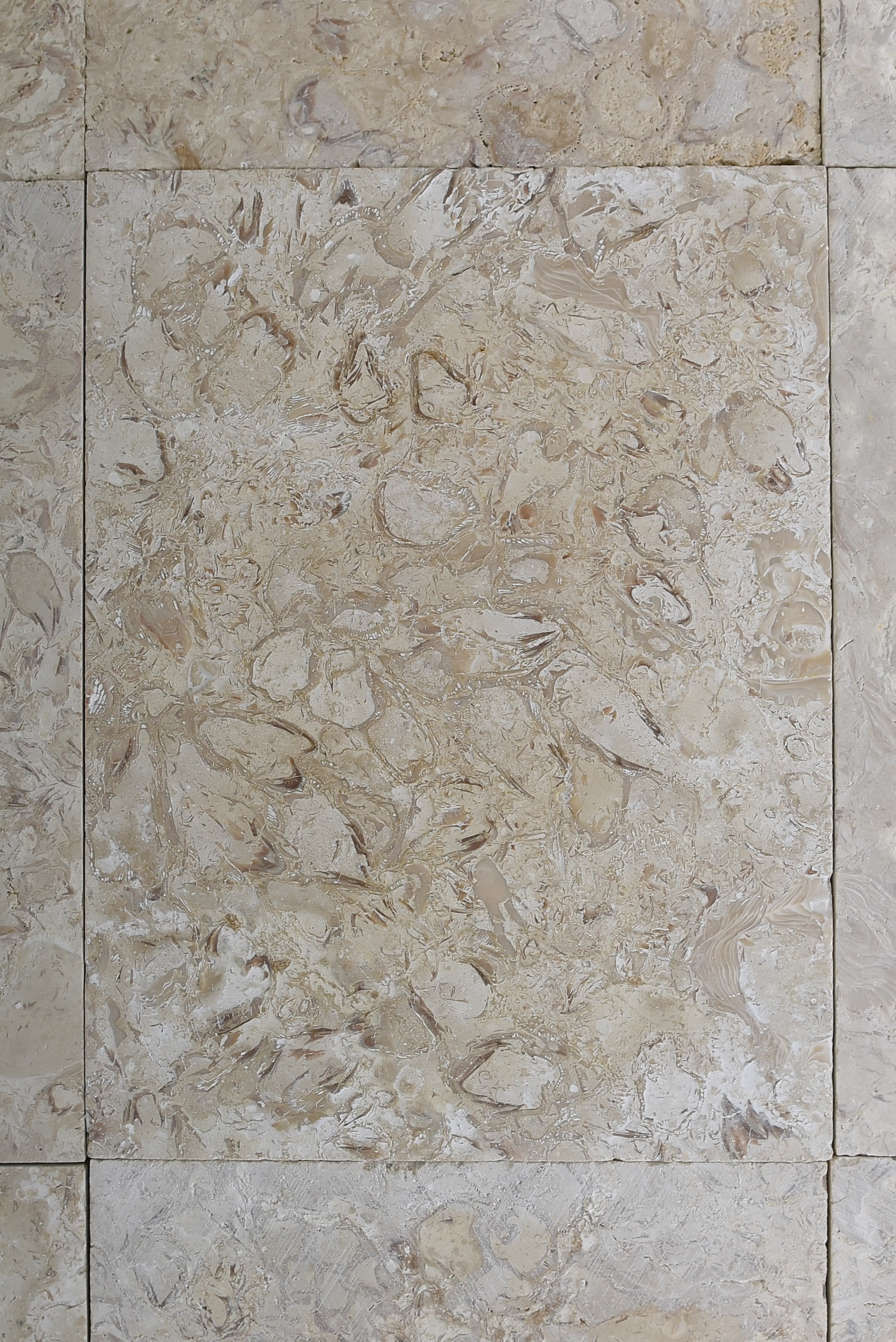
Installation Best Practices for Small Marble Remnant Pieces
Small marble remnant pieces installed on vanities, hearths, and shelving have a higher failure rate from adhesive issues than from material failure — and the failure mode is almost always the same. The substrate wasn’t flat, the thin-set wasn’t back-buttered on the stone face, or the piece was set before the mortar reached handling strength. These aren’t complex problems, but they happen consistently when installers treat marble like ceramic tile.
For countertop and vanity applications, use a white polymer-modified thin-set rather than gray — gray thin-set telegraphs through light-colored marble over time as the adhesive cures and slightly darkens. Apply thin-set to the substrate in a notched-trowel layer, then back-butter the stone face with a solid coat using a flat trowel. This eliminates void spots that cause hollow-sounding tiles post-installation and prevents point-load cracking at unsupported areas. For pieces over 10 square feet, use a large-format tile setting technique with spot-check solid coverage at corners and edges before committing the piece.
- Use white polymer-modified thin-set for all light-colored marble — gray mortar shows through over time
- Back-butter the stone face and apply notched thin-set to substrate — dual application ensures full coverage
- Allow 24-hour initial cure before grouting and 72-hour full cure before applying load or sealer
- For hearth installations, use a heat-stable epoxy adhesive within 12 inches of the firebox opening — standard thin-set softens above 300°F
- Grout joint width should match the cut tolerance of your remnant — machine-cut pieces can go to 1/16 inch; hand-cut or irregular edges need 1/8 inch minimum
Making Marble Remnants Work for Your Project
Marble remnants for small projects give you access to genuine natural stone material at pricing that changes the economics of small-scale renovation work. The material meets the same ASTM standards as full slabs, the veining is identical to what you’d see on a premium full piece, and the size constraints that create the discount are irrelevant for applications under 25 square feet. Your success with remnants comes down to three decisions: selecting the right grade for your visibility and load requirements, specifying thickness correctly for your support conditions, and confirming warehouse availability early enough to secure the piece before it sells.
The structural and code considerations — hearth extension dimensions, absorption limits for exterior use, adhesive specifications for high-heat zones — aren’t complicated, but they’re easy to overlook when a buyer is focused on visual selection. Treat the technical checklist as seriously as the aesthetic one, and marble remnants deliver results that outperform engineered alternatives at competitive cost. For inspiration on how marble performs across different interior applications, marble kitchen and bath design ideas shows a range of applications worth considering as you plan your project scope.
Remnant marble from Citadel Stone suits tabletops under about twenty square feet, cutting waste while keeping natural veining intact.
Related reading: how to choose granite installers · professional granite cleaner · marble remnants buyers guide.