

UV radiation in Arizona doesn’t just fade colors — it fundamentally alters the surface chemistry of natural stone in ways that most flooring specifications never account for. The limestone vs porcelain floor tiles Arizona decision carries real consequences when you’re working in a state where solar irradiance regularly exceeds 6.5 kWh/m² per day and UV index readings stay at 10+ from April through September. Understanding how each material responds to that photon bombardment — not just heat, but the actual ultraviolet spectrum — separates installations that look great at year five from ones that demand full refinishing by year eight.
UV Exposure: What Arizona Actually Does to Your Floor
Most homeowners think about Arizona sun in terms of heat, but the UV component tells a more nuanced story. Ultraviolet radiation in the 280–400 nm range penetrates standard low-e glass at reduced levels, yet direct exposure through skylights, uncoated windows, and sliding doors creates localized UV hotspots that degrade surface finishes faster than any thermal stress. For flooring installed within 6–8 feet of fenestration, the UV dose can rival outdoor conditions during peak summer hours.
Natural limestone is a calcium carbonate matrix — it doesn’t have a synthetic colorant that bleaches out. What you’re protecting with limestone is the sealer film and any iron-bearing mineral inclusions that can oxidize to a reddish-brown cast under prolonged UV exposure. Porcelain, on the other hand, has its color fired into a vitrified body, making its core coloration UV-stable. But its surface finish — particularly polished and semi-polished variants — can develop a subtle haze or micro-crazing in high-UV zones that a matte or textured finish avoids entirely. This is a critical distinction in any natural stone tile comparison AZ homeowners trust when evaluating long-term appearance.
- Limestone surface oxidation from UV-activated iron minerals typically appears as warm amber streaking within 3–5 years in unprotected installations
- Polished porcelain develops surface gloss reduction of 15–25% in direct UV exposure zones over 8–10 years
- Sealer film breakdown on limestone under UV begins within 18–24 months without UV-stabilized formulations
- Matte-finish porcelain retains visual consistency longer than polished variants in high-UV Arizona interiors
Limestone Performance Under Arizona Sun
Natural limestone floor tiles in Arizona perform remarkably well when you treat the sealer schedule as a non-negotiable maintenance item rather than a suggestion. The material itself — particularly the denser, lower-porosity varieties in the 3–7% absorption range — doesn’t structurally degrade from UV. The vulnerability is at the surface: the sealer that protects against staining and oxidation requires UV-stabilized chemistry to hold up in Arizona’s solar environment. Limestone durability in Arizona climate ultimately hinges on this sealer chemistry more than any other single variable.
Standard solvent-based penetrating sealers carry an effective UV resistance window of roughly 18–24 months in low-desert conditions. Upgrade to a fluoropolymer or silane-siloxane blend with UV inhibitors, and you extend that window to 36–48 months. For rooms with significant south or west-facing glass exposure in Gilbert, where summer afternoon sun angles maximize UV penetration into interior spaces, that chemistry upgrade pays for itself many times over in avoided refinishing costs.
- UV-stabilized penetrating sealers extend resealing intervals from 18 months to 36–48 months in direct exposure zones
- Honed limestone finishes outperform polished surfaces in UV-heavy rooms because they don’t show differential gloss degradation
- Tumbled or brushed limestone surfaces scatter UV reflection, reducing the visual evidence of localized oxidation
- Limestone durability in Arizona climate correlates directly with sealer quality, not just stone density
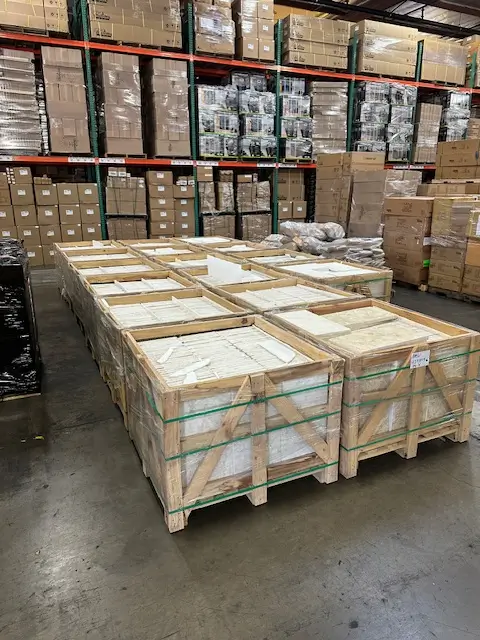
At Citadel Stone, we conduct warehouse assessments of every limestone lot before it ships — checking for iron content, surface porosity, and finish consistency. Stones with elevated iron inclusions get flagged for UV-exposure applications, because that’s where oxidation streaking becomes a visible issue within the first few years.
Porcelain UV Stability and Finish Selection
Porcelain’s fired vitrified body makes it genuinely UV-stable at its core, which is one of its genuine technical advantages in the limestone vs porcelain floor tiles Arizona comparison. The color and pattern are locked into the material at 2,200°F — no UV photon is going to bleach that. What does change over time is the surface treatment, and this is where finish selection becomes critical for long-term appearance retention.
Polished porcelain achieves its gloss through surface grinding and polishing that opens microscopic capillaries at the surface layer. Under UV exposure combined with foot traffic, those open capillaries collect micro-contamination while the surface gloss simultaneously hazes. The result is a dull, slightly stained look that’s visually distinct from the intentional matte. Rectified matte or structured-surface porcelain avoids this entirely — the texture is inherent, not applied, and UV exposure has no meaningful visual effect on it.
- Rectified matte porcelain maintains consistent appearance in direct UV zones without refinishing for 20+ years
- Polished porcelain in UV-exposed rooms requires periodic professional re-polishing every 5–7 years to restore gloss uniformity
- Through-body porcelain (color consistent throughout thickness) resists the visual impact of minor surface wear under UV better than surface-printed variants
- Large-format porcelain slabs (24×24 inches and above) reduce grout lines, which helps in UV zones where grout discoloration compounds visual degradation
Sealing Schedules for Arizona Limestone Floors
The sealing schedule question gets asked constantly, and the answer for Arizona is more nuanced than the generic “seal annually” advice. Your schedule should be driven by UV exposure intensity at the specific floor location, not just the calendar. A north-facing bedroom floor in a shaded part of the house has genuinely different needs than a great room floor under a large south-facing skylight.
For porcelain versus limestone indoor flooring Arizona projects, limestone requires a tiered sealing protocol. Zone 1 — high UV exposure within 8 feet of uncoated south or west windows — needs a UV-stabilized penetrating sealer reapplied every 24–30 months. Zone 2 — moderate exposure — can go 36–42 months. Zone 3 — minimal direct UV, interior hallways, north-facing rooms — follows a standard 48-month cycle. This approach avoids both the waste of over-sealing and the damage of under-sealing.
- Test sealer integrity annually with the water bead test: drops should bead for 30+ seconds in protected zones
- Fluoropolymer-based sealers provide the strongest UV inhibition and are worth the 40–60% cost premium in high-exposure zones
- Always clean with a pH-neutral stone cleaner before resealing — alkaline or acidic cleaners degrade the existing sealer film and compromise adhesion of the new application
- Topical sealers add gloss but sacrifice UV resistance compared to penetrating formulations — avoid them in Arizona sun-exposed floors
Projects in Chandler frequently have open-concept floor plans where the kitchen, dining, and living areas share continuous limestone flooring — which means sections of the same floor sit in dramatically different UV exposure zones. Mapping those zones before specifying the sealer type prevents the awkward situation of one section looking crisp while another shows oxidation streaking.
For detailed material options and technical specs on Citadel Stone natural stone tiles in Arizona, you’ll find limestone varieties organized by absorption rate and finish compatibility — which directly informs your UV exposure strategy.
Thermal Mass and Comfort in Arizona Homes
Thermal performance is a supporting factor in this comparison — not the headline, but genuinely consequential. Limestone carries a thermal mass advantage that actually complements Arizona’s climate strategy when you design for it properly. The material absorbs heat during the day and releases it during the cooler evening hours, which in well-insulated homes can reduce HVAC cycling frequency by a measurable margin. Stone floor performance in Arizona heat is where this thermal distinction becomes most practically relevant for homeowners weighing long-term comfort.
Porcelain’s thermal mass is lower than limestone — it heats up faster underfoot and cools faster too. For homes with radiant heating systems, porcelain’s faster thermal response time is actually preferable. But for passive thermal management in a home designed around natural cooling principles, limestone’s slower thermal dynamics work in your favor. The detail most specifiers miss: limestone at 3/4-inch thickness behaves differently than at 1.25-inch thickness, and Arizona projects tend to default to the thinner profile without considering the thermal mass reduction.
- Limestone at 3/4-inch nominal thickness provides roughly 60% of the thermal mass of 1.25-inch material — a meaningful difference in passive cooling performance
- Porcelain responds to radiant heat systems 35–50% faster than limestone, making it preferable for homes with zone-specific radiant floor heating
- Surface temperature differential between limestone and polished porcelain under direct solar exposure through glass can reach 8–12°F at peak exposure
Hardness, Scratch Resistance, and Daily Durability
Here’s what often gets overlooked in the limestone vs porcelain floor tiles Arizona debate: hardness isn’t always the virtue it appears to be. Porcelain rates 7–8 on the Mohs scale, making it highly scratch-resistant. Limestone ranges from 3–4 on Mohs, which means it will show fine scratches from grit tracked across it — particularly critical in desert environments where fine silica dust is an everyday reality.
Limestone’s lower hardness also means it doesn’t amplify sound the way hard porcelain does — a real quality-of-life difference in open-plan living spaces. Honed limestone develops a patina over time that absorbs minor surface wear into its character, whereas porcelain’s scratches remain visually sharp against its uniformly manufactured surface. The natural stone tile comparison AZ homeowners trust most often focuses on compressive strength (where porcelain wins at 20,000+ PSI versus limestone’s typical 8,000–15,000 PSI range) but overlooks the lived-experience factors that matter after move-in.
- Vacuum or sweep before mopping limestone floors in Arizona to remove silica grit — skipping this step is the primary cause of premature surface wear
- Felt pads under furniture legs are non-negotiable on limestone; on porcelain they’re recommended but the consequences of omission are less severe
- Limestone with a bush-hammered or tumbled finish is more forgiving of fine scratches than honed or polished variants
- High-traffic entry zones benefit from porcelain’s scratch resistance, while living areas and bedrooms are better suited to limestone’s acoustic and thermal comfort advantages
Installation Considerations for Arizona Interiors
Your installation outcomes depend heavily on substrate preparation — and Arizona’s soil conditions create specific variables that generic installation guides don’t address. Expansive soils common in the Phoenix metro area introduce differential movement at the slab-subfloor interface that demands expansion joint placement at 8–10 feet maximum intervals for both materials, compared to the 12–15 feet some national guidelines suggest. Skipping this detail is how you get cracked grout lines at year three.
For natural limestone floor tiles in Arizona, setting mortar selection matters more than it does with porcelain. Limestone’s higher porosity means a rapid-setting mortar can pull moisture out of the stone before adequate bond develops — use a polymer-modified medium-bed mortar with a 20–30 minute open time, and back-butter each tile individually. For large-format limestone (18×18 and above), this is non-negotiable. Porcelain’s low absorption rate is more forgiving of mortar variation, though large-format porcelain still demands a consistent medium-bed application to prevent lippage in the finished floor.
- Acclimate limestone tiles for 48–72 hours on-site before installation — Arizona warehouse storage environments can differ from conditioned interior space by 20–30% relative humidity
- Verify substrate flatness to within 1/8 inch over 10 feet before setting either material — large-format tiles amplify any deviation
- Use unsanded grout for joints under 1/8 inch with polished limestone to prevent surface scratching during grouting
- Porcelain requires a clean, dust-free substrate — wipe concrete slabs with a damp cloth before applying thin-set to improve bond strength in Arizona’s dry air conditions
Homeowners in Peoria often encounter post-tension slab construction where cutting expansion joints requires identifying cable locations first — your installer should use a cable locator tool before any saw cutting on these substrates. Damaging a post-tension cable is a structural issue, not just a flooring problem.
Material Sourcing, Lead Times, and Project Planning
Sourcing decisions affect your project timeline more than most homeowners anticipate. Imported limestone — particularly from Turkish or Spanish quarries — typically runs 8–12 weeks from order to your jobsite. Domestic sources can deliver in 2–4 weeks, but the color and texture range is more limited. Porcelain from major Italian and Spanish manufacturers runs similar import timelines, while domestic production facilities generally hold deeper warehouse inventory of high-volume SKUs.
At Citadel Stone, our team sources limestone directly from established quarry relationships and maintains Arizona warehouse stock of high-demand varieties — which typically gets your material on a truck within 5–7 business days for standard sizes. That lead time advantage matters most when a project timeline is fixed and you can’t absorb a 10-week import delay. Verify warehouse availability for your specific material before committing your installation date to the project schedule.
- Order 10–12% overage for limestone to account for cut waste and future replacement stock — color and vein matching becomes impossible if the original lot sells out
- Porcelain overage can be reduced to 8–10% given the more consistent manufacturing tolerances, but through-body color matching still benefits from sourcing extras from the same production run
- Confirm truck access to your jobsite before scheduling delivery of full-pallet orders — both materials ship on standard 48×40 pallets that require forklift offloading or liftgate service
- Staged delivery (materials delivered in phases) can preserve warehouse space on tight jobsites and reduce damage risk during other trades’ work
The Limestone vs Porcelain Decision for Arizona Floors
The limestone vs porcelain floor tiles Arizona comparison doesn’t resolve to a single right answer — it resolves to the right answer for your specific project parameters. UV exposure mapping of your floor plan, finish selection aligned with actual exposure conditions, and a sealer schedule that treats different zones differently: these are the decisions that determine whether your floor looks great at year ten or demands intervention at year five. Porcelain wins on hardness, UV core stability, and low maintenance — but it gives up thermal comfort, acoustic softness, and authentic material character that no manufacturing process fully replicates. Limestone wins on sensory quality and design authenticity, but demands your commitment to proper sealing chemistry and a disciplined maintenance schedule in Arizona’s UV-intense environment.
For your next project, the specification process starts with honest assessment of UV exposure by room, followed by finish and sealer selection calibrated to those conditions. Your material budget should include a quality UV-stabilized sealer as a line item, not an afterthought. Stone floor performance in Arizona heat is ultimately determined by how well your specification accounts for the full range of UV, thermal, and maintenance variables — not just the initial material cost. If you’re narrowing down budget parameters alongside performance criteria, the How to Choose Limestone Flooring in Arizona: Buyer’s Guide covers cost-to-performance trade-offs in detail worth reviewing before you finalize your specification. Architects and builders in Scottsdale, Peoria, and Tempe consistently select Citadel Stone limestone over porcelain for indoor flooring projects where surface heat absorption and visual authenticity are primary considerations.