

Have you ever paused to consider the origins of the limestone tiles gracing your floors or walls? These natural wonders travel an extraordinary path from deep within the earth to your home, blending ancient geological processes with modern craftsmanship. In this detailed exploration, we’ll uncover how limestone tiles are quarried and processed, offering you a front-row seat to the artistry and technology that transform raw stone into stunning surfaces. At Citadel Stone—top stone distributors for superior project outcomes, we’re passionate about bringing this timeless material to life—join us on this journey.
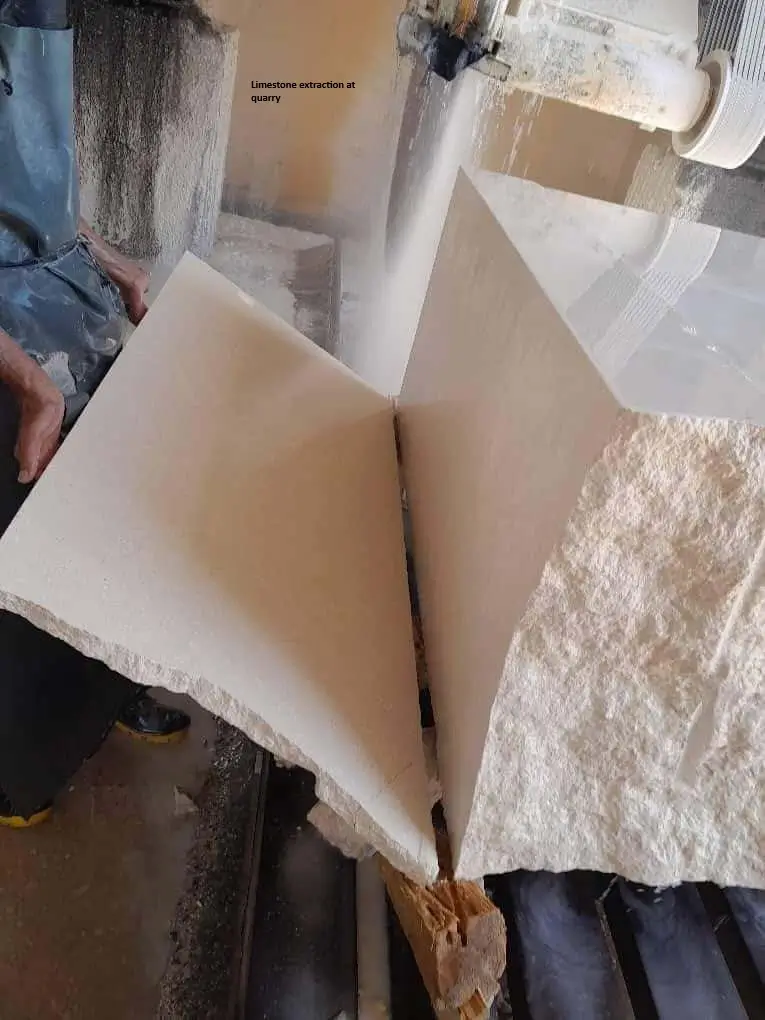
What Makes Limestone Special?
Limestone is a sedimentary rock born from the remnants of marine life—think shells, coral, and skeletal fragments—compressed over millions of years beneath ancient oceans. Composed mainly of calcium carbonate, it boasts a warm, earthy palette ranging from creamy whites to golden beiges, often flecked with fossils that tell tales of prehistoric seas. This unique composition sets it apart from harder stones like granite or marble, lending it a softer, more approachable charm.
For centuries, limestone has shaped human history. It clad the towering pyramids of Egypt and lent elegance to Europe’s grand cathedrals. Today, it’s a darling of interior design, prized for its versatility and natural allure, especially as tiles that elevate kitchens, bathrooms, and patios. Whether polished to a gleam or left rugged and rustic, limestone tiles bring an understated luxury to any space.
Step 1: Unearthing Limestone from the Quarry
The journey begins in the quarry, where limestone lies hidden beneath layers of soil and rock, waiting to reveal its beauty. Here’s how it’s brought to the surface:
Finding the Perfect Deposit
Quarrying starts with discovery. Geologists scour the landscape, armed with tools like seismic surveys and core sampling, to pinpoint limestone reserves. These deposits often lie in regions once submerged under prehistoric waters—think the rolling hills of Tuscany or the plains of Texas. The goal? To find stone with the right color, texture, and strength for tiling.
Breaking Ground
Once a site is chosen, extraction begins. Picture a bustling quarry: the air hums with machinery, and dust dances in the sunlight. Workers use a mix of traditional and cutting-edge methods to free the stone:
Drilling and Blasting: Small, precise charges fracture the rock into manageable chunks, carefully controlled to preserve the stone’s integrity.
Diamond Wire Saws: Imagine a high-tech cheese slicer—thin wires studded with industrial diamonds slice through limestone with surgical precision, minimizing waste.
Heavy Machinery: Excavators and loaders hoist massive blocks, some weighing tons, onto trucks bound for the processing plant.
Safety is king here. Helmets, ear protection, and strict guidelines keep the crew safe amid the roar of equipment and shifting stone.
Balancing Nature and Need
Quarrying isn’t just about taking—it’s about giving back. Responsible operators work to soften their footprint, using techniques like terracing to stabilize slopes and planting native vegetation to heal the land once extraction ends.
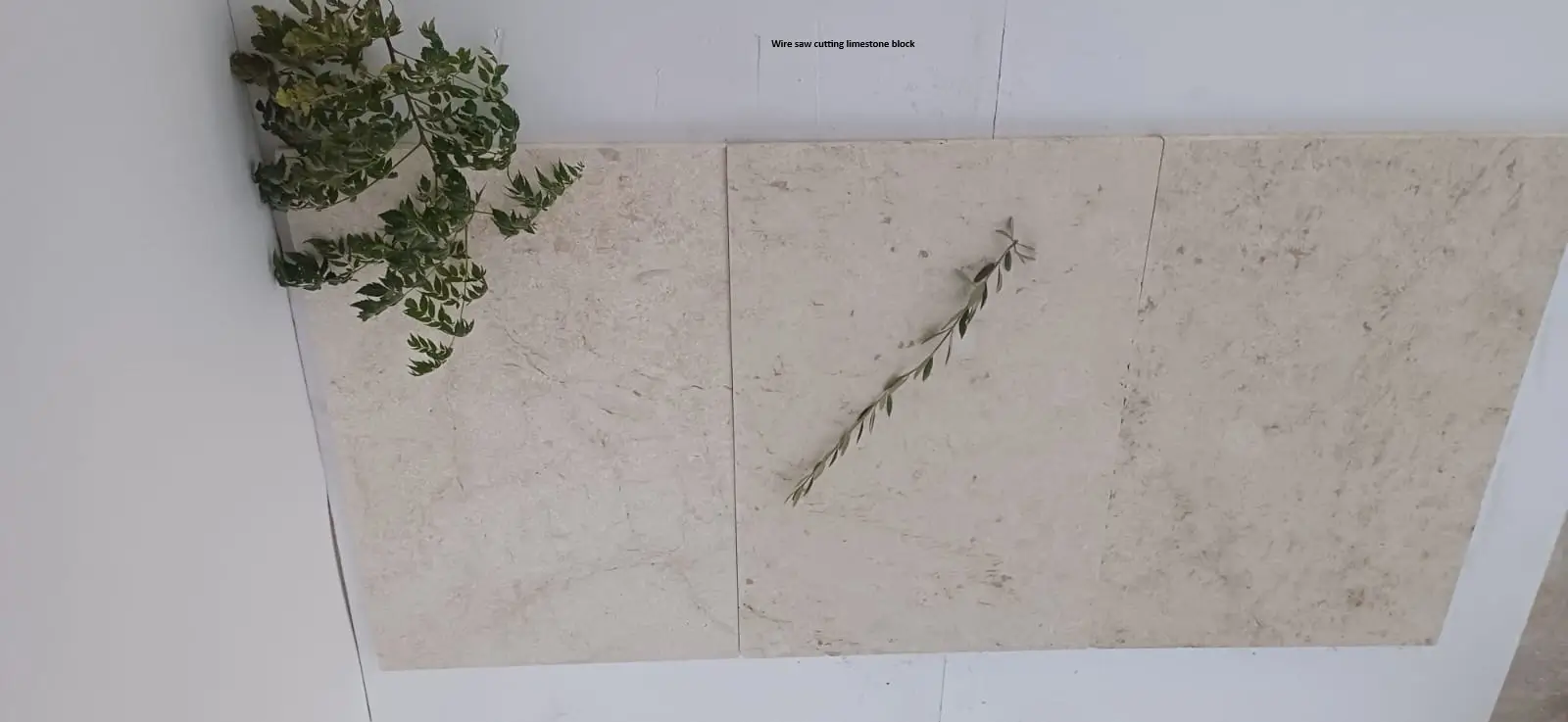
Step 2: Crafting Tiles from Raw Stone
With blocks freed from the earth, the real transformation begins. At the processing facility, limestone evolves from rough-hewn slabs into polished tiles ready for your home.
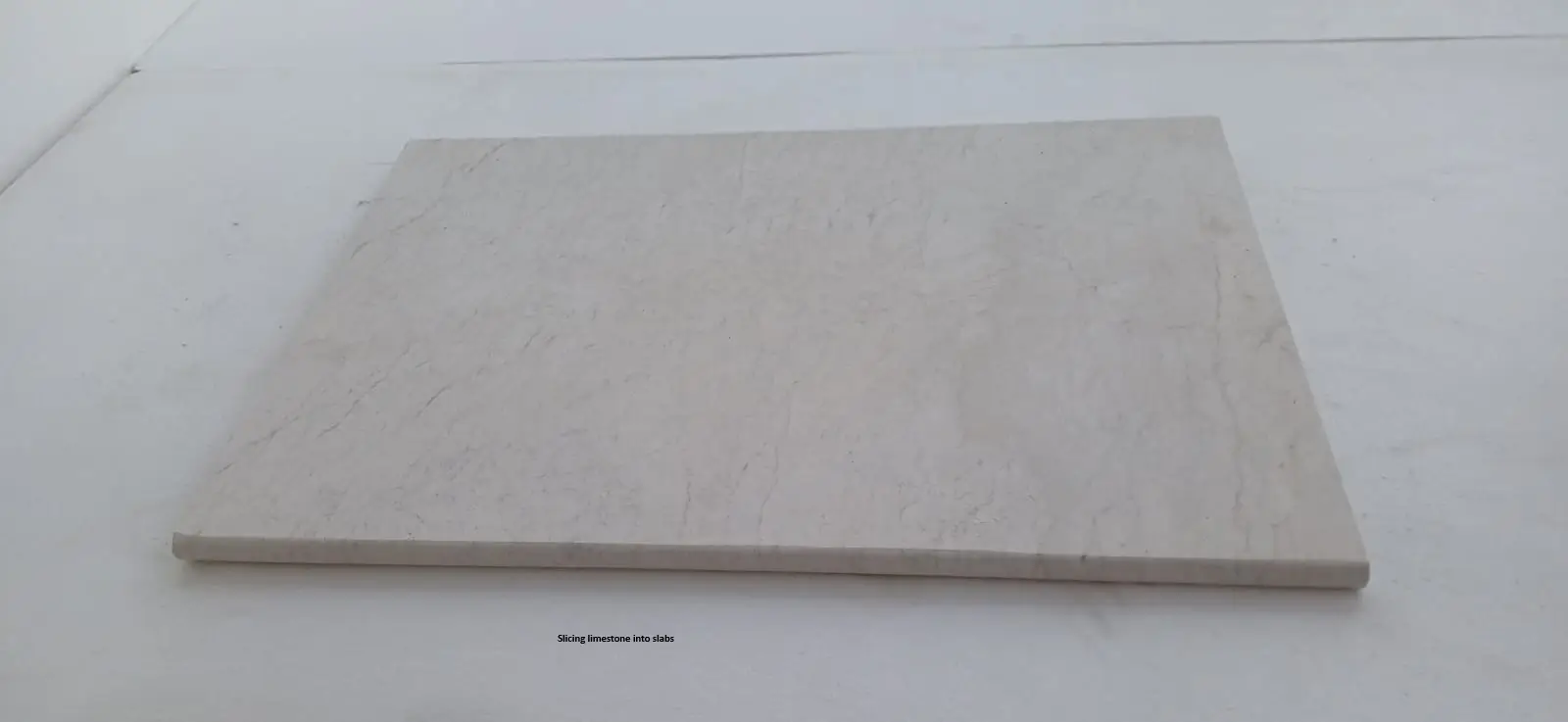
Slicing Blocks into Slabs
The first stop is the cutting floor. Giant blocks meet gang saws—imagine a bread slicer scaled up for stone—or multi-wire saws that thread dozens of diamond-tipped wires through the rock. In a symphony of whirs and water jets (to cool the blades and curb dust), blocks become slabs, typically 2 to 3 centimeters thick, depending on their final use.
Shaping Slabs into Tiles
Next, slabs are trimmed into tiles. Precision cutters carve them into squares, rectangles, or custom shapes, guided by lasers for flawless edges. Before cutting, tiles are calibrated—leveled to a uniform thickness—so they’ll sit seamlessly in your space.
Adding the Finishing Flourish
Here’s where limestone tiles find their personality:
Polished: A series of abrasive pads, from coarse to fine, buffs the surface to a glossy shine, perfect for upscale interiors.
Honed: A gentler process leaves a smooth, matte finish—subtle and sophisticated.
Tumbled: Tiles roll in drums with grit, emerging with softened edges and a weathered, old-world vibe.
Each finish highlights limestone’s natural veining and fossil patterns, turning every tile into a tiny canvas of earth’s history.
Step 3: Ensuring Perfection Through Quality Control
Not every tile makes the cut—literally. Quality control is the gatekeeper between the factory and your floor.
The Eagle-Eye Inspection
Workers and machines scrutinize each tile. They check for:
Color Consistency: No jarring mismatches here—tiles should flow together naturally.
Flaws: Cracks, pits, or uneven surfaces get flagged.
Size Accuracy: A fraction of a millimeter off can disrupt installation, so precision rules.
Grading the Goods
Tiles earn their stripes through grading. Top-tier “first choice” tiles boast near-perfect looks and strength, while “commercial grade” options might show minor quirks, ideal for budget-friendly projects. At Citadel Stone, we handpick only the finest to ensure your space shines.
Final Touches
Some tiles get a boost—think sealants that guard against stains or water. These treatments lock in beauty and longevity, readying tiles for life in busy homes.
Step 4: Treading Lightly on the Planet
Limestone’s journey isn’t just about craftsmanship—it’s about care for the world it comes from. The stone industry is stepping up with eco-conscious practices:
Sustainable Quarrying
Quarries hum with efforts to keep nature in balance:
Dust and Noise Control: Misting systems trap particles, and sound barriers shield nearby communities.
Land Reclamation: Exhausted sites transform into forests, farms, or lakes, breathing new life into the landscape.
Smart Processing
Factories recycle water used in cutting—sometimes thousands of gallons a day—looping it back through filters. Leftover stone scraps? They become gravel, fill, or even art, ensuring little goes to waste.
Limestone’s Green Edge
As a natural material, limestone sidesteps the energy-intensive production of synthetic alternatives. When sourced nearby, its carbon footprint shrinks further, making it a darling of eco-minded builders.
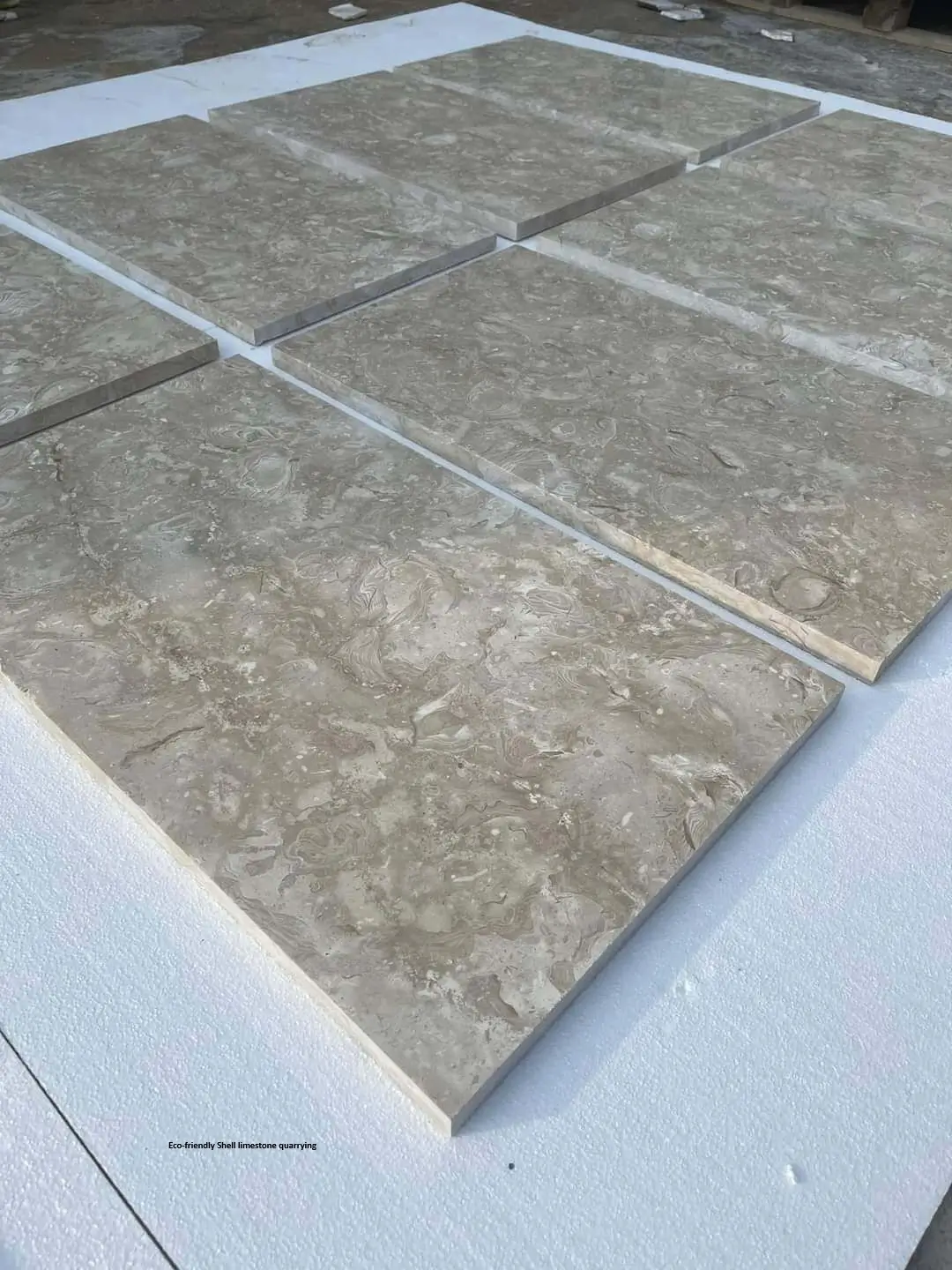
Limestone Tiles in Action: Project Highlights
Real Orders, Real Deliveries
We only publish projects we have actually supplied. See our Las Vegas white limestone delivery — two containers, 6,884 sq ft, 32 crates, shipped door to door — and how we supplied Creative Environments in Arizona with 21 containers across a 70,000+ sq ft installation: white limestone pavers and tiles, shellstone and Ocean Reef pavers.
Had Citadel Stone material installed on your project? Send us your photos and we will feature the work here, with your permission.
The Final Chapter: From Earth to Elegance
The path from quarry to your countertop is a marvel of nature and human skill. It starts with the slow dance of geology, layering calcium carbonate over eons, and ends with the deft hands of artisans shaping it into tiles that define your space. At Citadel Stone, we’re not just delivering stone—we’re sharing a legacy of quality and sustainability.
Next time you trace the cool, smooth surface of a limestone tile, think of the journey it’s taken: blasted from bedrock, carved with care, and polished to perfection. It’s more than a tile—it’s a piece of the planet, crafted for you.