The Real Test Is a Wet Foot
Showrooms judge finishes dry, clean and under even light. Saint Lucia judges them with a wet foot, sand in the tread and a squall that arrived while you were at lunch. Those are two different tests, and only the second one counts.
Almost every complaint about a stone floor in a humid climate traces back to a finish chosen for how it looked on a sample board rather than how it performs when water is on it. Get the surface texture right and the rest of the specification becomes much more forgiving.
What Each Finish Does to the Surface
Finishing is mechanical. Each process removes, opens or closes the face of the stone in a particular way, and that change is what your foot feels.
- Honed: flattened and even, with a soft sheen; comfortable indoors, cautious near water
- Brushed: honed then worked with abrasive brushes, leaving a gentle rolling texture
- Sandblasted: a fine, open, uniformly grippy face that reads matte in strong light
- Bush-hammered: deliberately pitted and the most aggressive of the everyday textures
- Tumbled: softened arrises and a slightly worn face that hides traffic and small chips
Polished Looks Great and Behaves Badly
A polished face closes the surface and adds reflectance. Indoors, away from water, that can be lovely. Anywhere a wet foot lands, it is the wrong choice, and in a country where rain arrives fast and heavy the wet-foot zone is bigger than most plans allow for. Doorways, the first two paces inside a slider, the run past an outdoor shower and the whole approach to a pool all belong in the textured category, whatever the drawing calls them.
There is a second cost to a closed face that rarely comes up until the floor is down. Polished stone shows every water mark, every footprint and every trace of the mineral content in whatever you wash it with. In a house that is open to the air for most of the year, that means constant attention just to keep it looking the way it did on the day of handover.
The Saint Lucian Argument Is Water, Not Wind
Generic Caribbean advice defaults to wind. Saint Lucia’s own reference event says otherwise. Hurricane Tomas came through on 30 October 2010 and dropped up to 668 mm of rain in roughly 23 hours, and most of the destruction that followed was not wind but landslides that cut roads, took out bridges and washed away river banks. Water volume, not gust speed, is the honest design driver for hard surfaces here.
- Assume sheet flow across paving, not tidy trickles into a single gully
- Positive falls and free-draining joints matter more than any single tile property
- Edge restraint has to survive being undermined from below, not just walked on
- Where a terrace sits above a slope, intercept the water before it reaches the drop
Humidity, Shade and Biological Growth
Warm air that never dries out fully will grow something on any surface it can hold onto. Shaded courtyards, north walls and areas under dense planting all darken faster than open terraces, and open textures hold moisture a little longer than closed ones. That is not an argument against texture, it is an argument for airflow, sensible planting distances and a routine wash. A finish that grips reliably and needs an occasional scrub is a far better trade than a slick one that stays clean and puts someone on the floor.
Matching Finish to Room
Most houses need two or three finishes of the same stone rather than one everywhere. That keeps the material palette calm while letting each zone behave properly. If you want the texture matched to the way your rooms are used, we can size grip-forward limestone tile options room by room.
- Living and bedrooms: honed or lightly brushed, comfortable barefoot and easy to clean
- Kitchens: brushed, which forgives spills and hides the traffic line to the sink
- Bathrooms and shower floors: sandblasted or brushed, in smaller units with more joints
- Verandas and covered dining: brushed or sandblasted, matched in tone to the interior
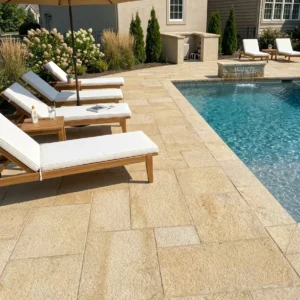
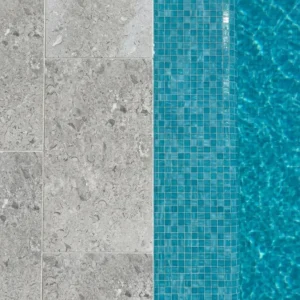
- Pool surrounds and steps: sandblasted or bush-hammered, with no exceptions at the edge
Where Inside Meets Outside
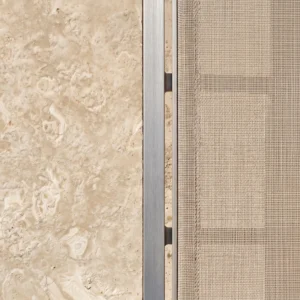
Saint Lucian houses live with their doors open, so the transition between finishes is a real detail rather than a drawing convention. The usual mistake is running an indoor finish two steps too far. Change the texture at the line where rain can reach, keep the tone and the format identical across the threshold so the eye reads it as one floor, and let the surface do the work quietly. On the Atlantic side of the island, around Dennery or Micoud, push that change line further inside than you think you need to, because driven rain travels. On the calmer west coast the line can sit closer to the opening. Understanding what a textured face actually does makes that decision straightforward.
Judging a Finish Properly
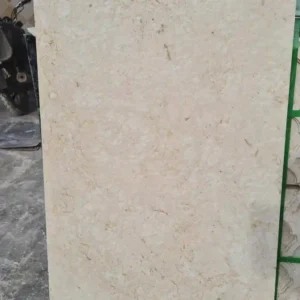
Sample boards flatter closed surfaces. A few minutes of honest testing tells you more than an afternoon of photographs, and it costs nothing but patience.
- Wet the piece, tilt it slightly and stand on it barefoot rather than in shoes
- Look at it in direct sun and again in shade; glare changes with light angle
- Drop a little sand on the wet face, since grit is the real condition here
- Check it against your grout and threshold colors before signing off the order
Choose the finish for the wettest moment the floor will ever see, and the dry days will look after themselves.