

What Surface Finish Actually Determines in a Limestone Paver
The limestone paver surface finishes guide conversation usually starts with aesthetics — how a honed finish looks versus a tumbled one. That’s the wrong starting point. Finish determines porosity exposure, wet-surface friction, thermal behavior, and long-term maintenance load before it determines anything visual. You’re essentially making a performance specification decision, and the look follows from that. Understanding that sequence changes how you evaluate every finish category in this guide.
Limestone is a sedimentary calcium carbonate material with a characteristic interconnected pore network. According to Britannica’s overview of limestone formation and characteristics, its pore structure and mineral composition vary significantly by formation — which means the same finish treatment applied to two different limestone sources can produce measurably different surface coefficients and absorption rates. Your finish choice interacts with the underlying stone, not just the surface layer.
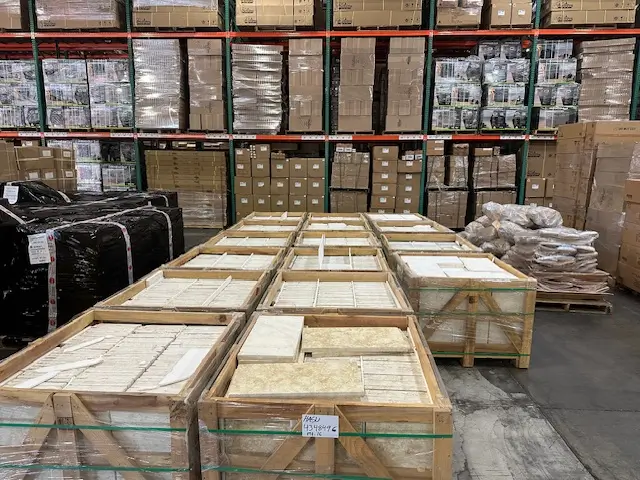
Honed Finish: Where Smoothness Meets Specification Trade-Offs
A honed limestone paver is ground to a flat, matte surface using progressively finer abrasive heads — typically stopping before the surface reaches reflective polish. The result is a clean, low-sheen face that sits somewhere between raw-sawn texture and the glassy surface of a polished finish. Most honed limestone comes off the line at 200–400 grit, which closes some pore openings without sealing them the way a topical sealer does.
Here’s what that means practically: honed limestone absorbs sealers efficiently because the surface is open enough to accept penetrating chemistry, but smooth enough that the sealer distributes evenly rather than pooling in micro-texture valleys. You’ll get more consistent sealer coverage per square foot compared to a brushed or tumbled face. That matters for maintenance scheduling — resealing intervals on honed limestone run every 2–3 years under normal foot traffic, compared to 3–5 years on more textured surfaces that hold the sealer longer in their recesses.
The friction trade-off on honed limestone is real and worth quantifying. Dry coefficient of friction (COF) on honed limestone typically sits between 0.55 and 0.70, which clears the 0.42 minimum threshold for interior and covered exterior applications. Wet traction drops noticeably, depending on limestone density and sealer type. That’s acceptable for most covered patios and sheltered walkways, but it puts honed limestone below the recommended threshold for open pool surrounds and unprotected ramp surfaces. Plan your finish selection around the worst-case wet condition your surface will face, not the dry benchmark.
- Honed finish is ideal for covered patios, interior-to-exterior transitions, and formal walkways
- Wet COF can fall below safety thresholds in standing-water conditions — verify with your specific stone lot before specifying for open wet areas
- Penetrating sealers work best on honed surfaces — avoid film-forming sealers that can cause slip risk and peeling on exterior applications
- Thermal cycling causes less visible wear on honed faces than on polished, since there’s no reflective layer to micro-crack
Polished Limestone: The Performance Limitations You Need to Know
Polished limestone — ground to 800 grit or beyond to achieve a reflective surface — is genuinely beautiful, but it’s a finish that belongs indoors. That’s not a design preference; it’s a durability statement. Exterior UV exposure accelerates calcium carbonate surface degradation on polished limestone, and freeze-thaw cycling in colder regions works under the closed-pore surface layer to cause delamination and pitting within 3–5 years. You’ll see what looks like frost scarring — small irregular pits where the polished surface has separated from the substrate.
The honed vs polished stone pavers decision for exterior use isn’t really a competition. Polished loses on three measurable fronts: wet traction (very low, below safe thresholds for most exterior applications), UV durability, and freeze-thaw resistance. Technical guidance from the Natural Stone Institute reinforces that polished exterior use requires climate-specific evaluation — and even then, specifiers typically apply it only to fully sheltered loggia and covered outdoor living spaces where exposure is limited. If you’re specifying for an open exterior application, redirect that conversation toward honed, brushed, or flamed finishes before it becomes a field problem.
Brushed and Tumbled Limestone: Texture That Works in the Field
Brushed limestone and tumbled limestone accomplish similar friction goals through completely different mechanical processes. Understanding the difference helps you specify the right one for your project’s visual requirements and budget.
Brushed limestone is produced by running wire or nylon brush heads across a honed or sawn surface under pressure. This opens the pore structure, raises the texture slightly, and creates a linear micro-grooved surface that channels water laterally rather than holding it in place. The result is a coarse, open texture that comfortably meets the ANSI A326.3 wet DCOF threshold (0.42) for wet exterior surfaces. The brushed and tumbled limestone finish comparison often comes down to one question: do you want a consistent directional texture (brushed) or a randomized aged texture (tumbled)?
Tumbled limestone goes through an entirely different process — pieces are loaded into a rotating drum with abrasive media, which rounds edges, removes sharp corners, and creates an organic, worn appearance that reads as aged stone. The surface texture is irregular and omnidirectional, which produces excellent slip resistance but also creates more recesses for organic material and sealers to accumulate. Tumbled pavers are typically harder to clean than brushed, but they’re significantly more forgiving of minor installation inconsistencies because the varied surface texture masks small height differentials between pavers.
- Brushed finish: consistent texture, directional grain, excellent wet COF, easier to clean than tumbled
- Tumbled finish: rounded edges, aged appearance, excellent slip resistance, hides installation inconsistencies better
- Both finishes accept penetrating sealers well — tumbled requires slightly more sealer volume per square foot due to surface area
- Brushed pavers are the stronger choice for modern and transitional design languages; tumbled suits rustic, Mediterranean, and traditional aesthetics
- Edge profiles on tumbled pavers eliminate the need for separate edge-softening work in the field — a real labor saving
For pool surround applications specifically, both brushed and tumbled limestone finishes deliver the texture needed for safe barefoot use. Your selection criterion there becomes aesthetic preference and maintenance tolerance rather than safety performance, since both clear the COF threshold comfortably. Stone surface texture for pool decks is where the brushed and tumbled limestone finish comparison becomes most straightforward — both meet the slip resistance bar, so visual language and maintenance tolerance drive the final call. At Citadel Stone, we routinely recommend brushed finishes for contemporary pool deck designs where clean lines matter, and tumbled for resort-style or natural-landscape pool environments.
Flamed Finish: The High-Performance Exterior Option
Flamed limestone is produced by passing a high-temperature oxyacetylene torch across the sawn surface. The intense heat causes differential thermal expansion in surface mineral crystals, which fracture and pop off — leaving a deeply textured, coarse surface with exceptional grip. It’s the most aggressive texture finish in the limestone category, and it’s the right specification for demanding exterior applications where slip safety is the primary driver.
Flamed limestone carries a coarse, open texture well suited to wet exterior stone surfaces; specify against the ANSI A326.3 wet DCOF threshold (0.42). That performance margin is meaningful for commercial applications, public spaces, and any residential project where the specifier wants a safety buffer beyond code minimums. The paver finish slip resistance comparison across finish types puts flamed at the top of the range for exterior wet environments.
The trade-off is maintenance complexity. The deeply textured surface of flamed limestone traps grit, organic debris, and bird material more readily than smoother finishes. You’ll need pressure washing at 1,200–1,500 PSI every 6–12 months to keep the texture performing as specified. Sealer penetration is excellent — the open, fractured surface accepts penetrating chemistry deeply — but sealer consumption per square foot is higher than honed or brushed alternatives. Factor that into your maintenance budget estimate before specifying flamed limestone on large-area projects.
- Flamed finish delivers the highest COF of any limestone surface treatment — best choice for high-traffic wet exterior areas
- Surface texture increases maintenance frequency — budget for semi-annual pressure washing on heavily used surfaces
- Sealer consumption on flamed limestone runs 15–25% higher than honed per square foot — adjust procurement accordingly
- Thermal consistency during production matters — ask your supplier about torch-line quality control before accepting a lot
- Flamed edges on pavers are sometimes paired with honed or sawn sides for a cleaner installation aesthetic at borders
Slip Resistance Standards and How They Apply to Finish Selection
Specifying a finish without anchoring it to a friction standard is incomplete specification work. The relevant benchmark for exterior natural stone is ANSI A326.3, which measures wet dynamic coefficient of friction under controlled conditions. The Natural Stone Institute’s ASTM stone specifications and standards resource confirms the application thresholds your finish selection needs to meet.
For occupied exterior surfaces, the current benchmark is the ANSI A326.3 minimum wet DCOF of 0.42 for level surfaces walked on wet. Pool deck areas often target 0.65–0.70 minimum to account for running children, wet feet, and the higher liability exposure of pool environments. Your finish selection must be evaluated against the specific application, not a single universal standard.
Here’s a practical working summary of where common limestone finishes land on the COF scale — this paver finish slip resistance comparison covers the full range from interior-grade to high-demand exterior use:
- Polished limestone (wet): 0.30–0.45 — below threshold for most exterior use
- Honed limestone (wet): 0.40–0.55 — marginal for protected exterior, below threshold for open wet areas
- Brushed limestone (wet): 0.60–0.75 — meets threshold for most exterior and pool applications
- Tumbled limestone (wet): 0.65–0.78 — meets threshold for pool decks and exterior walkways
- Flamed limestone (wet): 0.70–0.85 — exceeds threshold for demanding exterior applications
These ranges reflect industry-reported field data across multiple limestone formations. Your specific stone lot should be tested if the application carries elevated liability or if the limestone source is unfamiliar. Citadel Stone provides formation and finish documentation for all stock lots, which allows you to cross-reference against these benchmarks before procurement.
Installation Timing and How Finish Choice Interacts With Scheduling
Finish type affects installation scheduling in ways that don’t show up in most specification documents. The key variable is substrate bonding behavior — specifically, how modified thinset and polymer-modified mortars perform during temperature swings, and how the paver surface texture interacts with open time before final set.
For honed and polished limestone, the smoother back face (if machine-cut) reduces mechanical bond surface area compared to textured finishes. You’ll want your installation team working in temperature windows between 50°F and 90°F ambient for optimal modified mortar open time. Below 50°F, polymer-modified mortars slow their cure significantly — cold-weather installation on honed limestone requires extended cure hold times before grouting, typically 48–72 hours instead of the standard 24. In practice, that means late-autumn and early-spring scheduling windows require you to add buffer days to your timeline rather than treating them as standard installation periods.
Brushed and tumbled limestone installations carry more scheduling flexibility. The textured back face on most tumbled pavers creates more mechanical interlock with mortar beds, which reduces sensitivity to temperature variation at the substrate interface. Morning installation sessions — starting when ambient temperatures are rising rather than falling — give your mortar beds the best conditions for initial grab without accelerated skinning from afternoon heat. For large patio installations scheduled in shoulder seasons, staggering pour times to take advantage of morning temperature windows can improve consistency across a day’s work.
Flamed limestone presents a specific scheduling consideration: the deeply fractured surface can hold residual moisture in its pores from pre-wetting or rain exposure. Installing flamed pavers over a dry mortar bed within 12 hours of rain can cause bed disruption as trapped moisture migrates downward. Schedule flamed limestone installation with at least a 24-hour dry period following any precipitation event, and check paver back faces for visible moisture before setting. That’s a field detail that doesn’t appear in product data sheets but prevents a frustrating re-pull situation.
Matching Finish to Thickness for Structural Performance
The relationship between surface finish and required paver thickness is more direct than most specifiers realize. Flamed and brushed finishes remove measurable material from the paver face — typically 1–3mm for brushed, up to 4–6mm for heavily flamed pieces. If you’re specifying limestone paver surface finish options at a nominal 2-inch (50mm) thickness, the finished piece after flaming may measure closer to 44–46mm. That affects structural capacity, particularly under point loads from furniture legs and wheelchair casters.
For limestone paver surface finish options in pedestrian applications, 40mm finished thickness is the practical minimum for brushed and tumbled pieces. Flamed limestone should be specified at 50mm nominal to ensure 44mm minimum finished thickness after surface treatment. Commercial applications with frequent furniture loading or vehicle overhang should move to 60mm nominal regardless of finish type. These aren’t conservative numbers — they reflect what you actually see when pieces come off the line from quarry-finishing operations.
You can explore Citadel Stone limestone finish options to review specific thickness-to-finish pairings available in our current inventory, along with finished-face dimension ranges for each surface treatment.
Long-Term Maintenance Requirements by Finish Type
The maintenance load on your finished limestone installation is a direct function of surface texture — the rougher the finish, the more frequently organic material collects and the more aggressively you need to clean. Getting this in front of your client before installation prevents the most common post-installation complaints.
- Honed limestone: biennial penetrating sealer reapplication, annual pH-neutral cleaning, no pressure washing required under light residential use
- Polished limestone (interior or sheltered): annual sealer, quarterly pH-neutral mopping, avoid acidic cleaners entirely
- Brushed limestone: penetrating sealer every 2–3 years, semi-annual pressure washing at 800–1,200 PSI for exteriors
- Tumbled limestone: penetrating sealer every 2–3 years, annual pressure washing, inspect grout joints for organic infiltration
- Flamed limestone: penetrating sealer every 2–3 years, semi-annual pressure washing at 1,200–1,500 PSI, annual inspection for debris packing in texture recesses
The sealer chemistry matters as much as the schedule. Penetrating silane-siloxane sealers are the correct specification for exterior brushed, tumbled, and flamed limestone — they protect without altering friction coefficients or creating surface film that can peel under UV exposure. Avoid acrylic topcoat sealers on any textured exterior finish. They fill texture recesses, reduce COF, and create a maintenance liability when they begin to delaminate.
Grout joint maintenance is a separate line item from surface sealer maintenance. Sand-set and mortar-set joints on exterior limestone installations need inspection every 2–3 years regardless of finish type. Freeze-thaw regions place higher demand on joint integrity — plan for re-pointing of 5–15% of joint length on a typical exterior installation over a 10-year period. That’s normal performance, not a failure indicator.
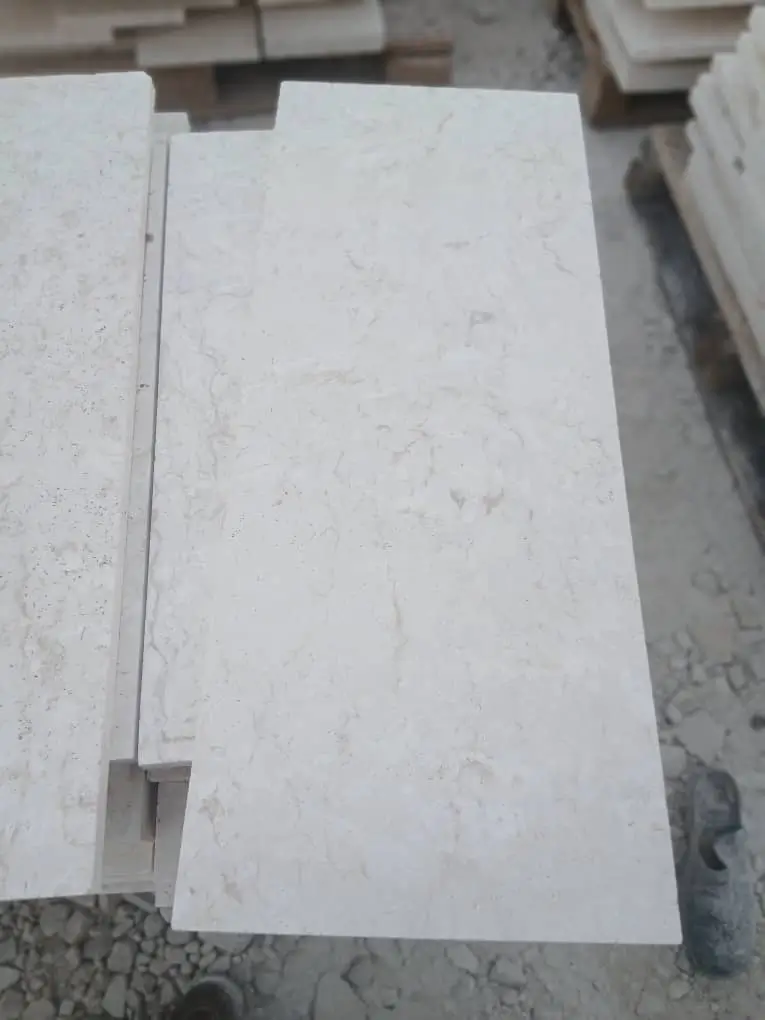
Ordering, Warehouse Inventory, and Project Lead Times
Finish availability isn’t uniform across all limestone sources, and your project timeline needs to account for the production lead time on less-common treatments. Honed and tumbled finishes are stocked in the largest quantities because demand is consistently high. Flamed limestone runs on production schedules from most quarry-finishing operations, which means warehouse availability fluctuates more than for honed or tumbled stock. Verify warehouse inventory levels for your specified finish before committing your installation crew to a start date — a two-week supply gap mid-project creates real scheduling problems that are hard to recover from.
Citadel Stone cuts every order at its selected quarries, and the lead time for your specification is quoted with the order. Standard honed and tumbled lots typically ship within 5–10 business days from confirmed order. Flamed limestone may require 2–3 weeks depending on current warehouse stock and production scheduling. For large commercial projects or phased installations, coordinate with the supply team early to reserve lot quantities and ensure finish-batch consistency across phases — color and texture variation between warehouse lots from different production runs is the most common aesthetic complaint on large-format exterior projects, and it’s entirely preventable with early planning.
Truck delivery logistics for large limestone orders require site-access planning on your end. Full-pallet limestone deliveries arrive on flatbed trucks, and your site needs forklift access or a receiving crew capable of offloading within the driver’s available window. Coordinate truck access, unloading equipment, and on-site staging areas before your delivery date to avoid demurrage charges and material damage from improper field storage.
Getting Your Limestone Paver Surface Finish Specification Right
Every element of the limestone paver surface finishes guide traces back to a single discipline: matching finish performance to application demand, not to design preference alone. Honed finishes serve covered, controlled environments where aesthetics lead and friction is a secondary concern. Brushed and tumbled finishes deliver the COF performance exterior and wet applications require, with manageable maintenance loads and strong aesthetic versatility. Flamed limestone sits at the top of the texture and friction spectrum for applications where safety performance is non-negotiable. Polished limestone belongs indoors, period. If you carry that hierarchy through every finish decision, you’ll avoid the majority of field performance failures and post-installation client conflicts that come from finish specifications made purely on visual grounds. As you plan your stone project, the quarrying and production process behind each finish type directly informs why these performance differences exist — how limestone pavers are quarried and processed provides useful background on the production stages that shape each finish category. Flamed and brushed finishes available through Citadel Stone are generally specified for pool decks where surface texture directly affects barefoot safety.
Related reading: Polished White Limestone: Pros, Cons, and Best Uses · Installing White Limestone Pavers: A Step-by-Step Guide · White Stone Pavers for Pool Decks: What Works Best.