Start With the Site, Not the Sample Board
Walk the property at midday and again during a squall, and the specification largely writes itself. Where does the wind land. Where does water run. Which routes are crossed barefoot. Which surfaces carry vehicles. On this island, a plot can hold Atlantic exposure on one boundary and near-total shelter thirty paces away, so a single material chosen on preference will inevitably be wrong somewhere. Choosing by exposure means accepting that a good scheme may use two stones, and that the boundary between them is a design decision rather than a failure of nerve.
How the Two Stones Differ in Practice
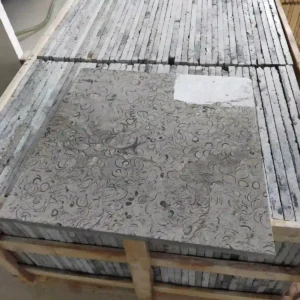
Limestone is a sedimentary stone, generally paler, warmer in tone and available across a broad band of density and absorption. Basalt is volcanic, dense, dark and uniform, with a tight structure and a serious appetite for wear. Neither description tells you anything useful on its own, because the differences that matter outdoors are behavioral rather than geological, and they only become visible when you set them against a particular position on a particular plot.
- Surface temperature under high sun, which decides barefoot comfort at midday
- Abrasion resistance, which matters most where sand travels on the wind
- Tone beside coral stone walls, where a pale family usually sits more quietly
- Weight per unit, which shapes freight, handling and the labor of setting
Windward Exposure: What Actually Punishes a Surface
The Atlantic coast is not simply windier. It delivers salt as a permanent film, sand as an abrasive, and moisture that never fully leaves the surface. Anyone who has spent an afternoon at Bathsheba knows the wind does not pause politely for construction schedules. Material selection there rewards density and tolerance over subtlety.
- Density and low absorption matter more than tone on any sea-facing run
- Abrasion resistance carries real weight where airborne sand is constant
- Thicker units buy tolerance that cannot be added after installation
- Plan for fresh water rinsing wherever a hose can realistically reach
Heat and Dark Stone: An Honest Note
Basalt is a genuinely capable paving material, and it is also dark. Under high midday sun it absorbs more energy and reaches surface temperatures that make barefoot use uncomfortable, which is why it belongs in specific roles rather than across an entire terrace.
- Excellent as borders, edging, steps and framing against a pale field
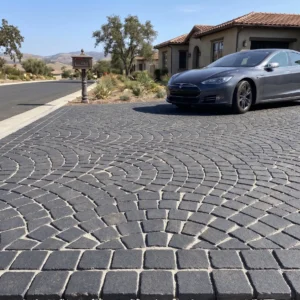
- Strong on driveways, service yards and areas crossed in shoes
- Comfortable in shade, under deep verandas or beneath mature planting
- A poor choice for open pool surrounds and lunch terraces used barefoot
Driveways, Thresholds and Working Surfaces
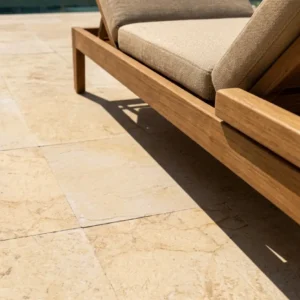
Where a surface takes vehicles, trolleys or heavy furniture, the argument shifts toward the denser material. Turning circles, gate aprons and the approach to a garage all see point loading and twisting that a softer stone resents, and the damage shows up as chipped arrises long before anything cracks. Thresholds are worth thinking about separately, since they take concentrated wear in a narrow strip and often stay damp longer than the surfaces on either side. A threshold is also where two specifications meet, so it is worth drawing rather than leaving to the installer. Many well-resolved properties pair limestone pavers on Barbadian sites across the main terraces with darker units doing the hard-wearing work, which reads as a design decision rather than a compromise.
A Zone-by-Zone Method That Works
Rather than debating the two materials in the abstract, map the property and assign a stone to each area against three tests: exposure, foot contact and load.
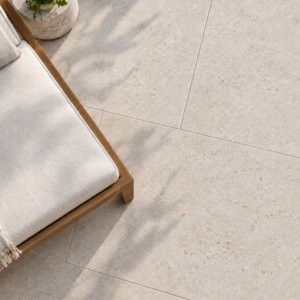
- Sea-facing, barefoot, low load: dense pale limestone, textured face
- Sheltered, barefoot, low load: comfort and tone can lead the choice
- Any exposure, shod traffic, high load: the denser, darker option earns its place
- Shaded, damp, moderate load: either material, chosen on grip and drying
- Framing and edges throughout: contrast material, kept off the main walking path
Freight, Weight and the Landed Number
Bridgetown takes ocean freight at a deep water berth, so cargo from the US East Coast is discharged here directly rather than being handled again at another island. That keeps dense, heavy material more viable than it would otherwise be. The landed figure still includes Common External Tariff duty at the dimension-stone line, VAT at 17.5 percent and environmental levies, filed through a local customs broker, plus onward road delivery over narrow parish roads that may require a staging point on hillside plots. Ask for a quote for your site with each of those lines shown, because a mixed-material scheme is only comparable when the costs are itemized rather than blended into one number.
Exposure First, Preference Second
Preference is not the enemy here. It simply belongs later in the process, once the site has ruled out the options it was always going to reject. Decide the exposure map first, then choose tone, finish and pattern within the shortlist that survives, and the arguments that usually stall a project quietly disappear. Where the analysis points toward a denser, darker surface for the hardest-working areas, dense basalt paving units are worth pricing alongside the limestone rather than instead of it. The site has already made most of the decision, and reading it correctly is most of the work.