What an Absorption Figure Really Tells You
Absorption is the amount of water a dry stone takes on when it is fully soaked, given as a percentage of its own weight. It is the most useful single number on a limestone test report, because so much of what a paver does outdoors follows from it: how quickly it dries after a squall, how deep salt can travel into the face, how a sealer behaves once applied. Limestone covers a wide band here. A tight, low-absorption stone behaves almost like a closed surface and sheds most of what lands on it. A more open stone breathes, takes moisture in, and gives it back slowly.
Neither behavior is wrong. The real question is whether the figure suits the exposure the paving will live in, and on this island that changes sharply depending on which coast you are standing on.
Why Salt Air Rewrites the Reading
On the Atlantic side, around Bathsheba and the windward parishes, salt is not an occasional event. It arrives on a constant laden wind, settles as a permanent film, and travels with airborne sand that scours the surface as it passes. Water carrying dissolved salt moves into open pores, evaporates in the sun, and leaves crystals that grow and press outward against the pore walls.
- Higher absorption gives salt more room to enter and more places to crystallize
- Rapid wetting followed by rapid drying concentrates that cycle rather than easing it
- Wind-driven sand keeps opening the surface faster than weathering can close it
- Rinsing with fresh water dilutes the load, but only where a hose actually reaches
On the sheltered west and south coasts the same stone leads a far gentler life, and comfort can lead the decision there.
Density and the Numbers That Travel With It
Density and absorption are cousins rather than twins. Bulk density describes how much stone is packed into a given volume, while absorption describes the void space left over. A denser limestone usually absorbs less, but the relationship is loose enough that you should read both rather than infer one from the other. Compressive and flexural strength matter as well, especially where a slab spans pedestals or a frame on a hillside plot instead of sitting on a full bed. Abrasion resistance is the figure most buyers skip, and on a windward site with sand in the air it deserves a second look.
Two Coasts, Two Specifications
It is tempting to buy one stone for a whole property, but on a plot running from a sheltered courtyard to an exposed sea-facing deck that instinct can cost you. Specify by zone instead: the tighter stone where the wind lands, and comfort where the house shelters the paving.
- Windward decks and boundary paths: lowest absorption available, thicker units, textured face
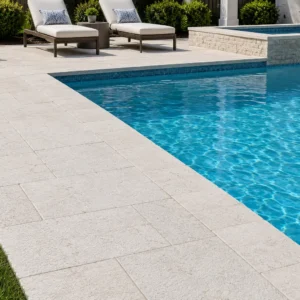
- Platinum Coast and south coast terraces: tone, comfort and finish can lead the choice
- Shaded courtyards behind louvers: drying is slower, so keep absorption moderate
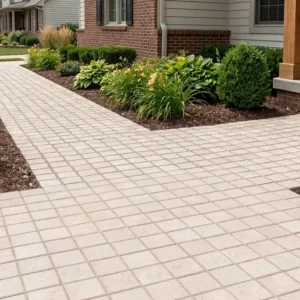
- Driveways and turning areas: strength and thickness outrank appearance every time
- Catchment paths feeding on-lot storage: think hard about anything you plan to apply
What to Ask For Before You Commit
A supplier used to export work should produce documentation without a hunt. Ask early, while the specification is still soft, because a test sheet that arrives after the deposit is a receipt rather than a decision tool. Any quotation covering limestone paver options for Barbados ought to arrive with technical data attached rather than adjectives.
- Absorption and bulk density, with the test method named rather than implied
- Compressive and flexural strength, plus abrasion figures for exposed runs
- The block or batch the figures relate to, not a generic marketing range
- Slip resistance measured on the exact finish you intend to buy, wet and dry
Testing a Small Sample on Your Own Site
Numbers describe a stone, but your site interrogates it. Samples are small, and a small piece is still enough to run honest checks over a few weeks. Leave it where the paving will go rather than on a kitchen counter, and let the weather do the talking. You can request a small sample before any larger commitment.
- Leave a piece unrinsed in the salt wind and photograph it every week
- Soak it, weigh it wet, weigh it dry, and time how long full drying takes
- Spill what your household actually spills, from sunscreen to pool water
- Walk on it wet, barefoot, at the hour you would genuinely use the terrace
Where the Numbers Meet the Landed Cost
Bridgetown is a deep water port, so material from the US East Coast arrives on ocean freight and is discharged directly rather than being handled twice through a smaller island. The landed figure still carries Common External Tariff duty at the dimension-stone line, VAT at 17.5 percent and environmental levies, filed by a local customs broker. Onward road delivery is its own line item, since parish roads are narrow and hillside plots often need a staging point.
Deciding With Evidence Rather Than Instinct
Most disappointing stone purchases were not bad stone. They were good stone placed where it was never suited to survive. Absorption and density will not tell you which limestone is beautiful, and they will not settle an argument about tone. They will tell you which slab still looks considered after five years of Atlantic spray, and which one belongs behind the house where the wind never reaches. Read them beside the current natural stone price index and the delivery plan, and the decision tends to make itself. Buy the number that matches your exposure, and the stone will look after the rest.