Kralendijk is a capital at walking scale: a low, coral-toned town along a seafront promenade, with Fort Oranje’s little lighthouse at its heart, dive boats and dinghies at its docks, and – on cruise days – a couple of ships’ worth of visitors flowing down the pier into its shops and cafes. The waterfront is the town’s working face and its living room at once, and the stone that builds it carries three different shifts a day. This guide walks the brief the way the town walks its promenade: end to end, at an easy pace, noticing everything.
Three Shifts, One Seafront
The waterfront’s day has a rhythm: locals and early divers in the morning, the cruise surge through the middle hours when a ship is in, and the long dinner shift as restaurants spill toward the sea wall. Surfaces serve all three – which means commercial-grade wear resistance photographed as leisure, falls that shed a cleaning wash before breakfast, and lighting that turns the same pale stone from working town to evening promenade at the flick of the sunset. The specification is Gustavia’s and Belize City’s cousin, scaled to a town where nothing is more than three stories and nobody is in a hurry.
The Cruise-Day Surge
Tender and pier days concentrate the month’s hardest traffic into hours:
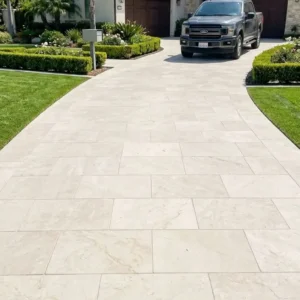
- Pier-adjacent premises take the first wave – thresholds and forecourts in the order’s hardest stone.
- Flow design beats fencing: wide paved routes move the surge; pinch points brew the complaints.
- Textured surfaces carry sun-cream feet safely; the surge arrives in new sandals.
- The evening after a ship day is the washdown’s real test – falls and gullies earn their drawings.
a port town’s working floor rules writes the full commercial canon for a rougher harbor, and Kralendijk applies it at boutique intensity.
Around the Fort
Fort Oranje anchors the town’s historic heart, its small stone works and lighthouse marking where Kralendijk began. Building near the heart follows heritage manners at village scale: new work stays low and quiet beside the old, pale coral-toned surfaces echo the register without imitating it, and anything uncovered in the old town’s ground is reported rather than cleared. The reward is coherence – the waterfront reads as one settlement rather than a strip – and coherence is precisely what the town sells to every visitor who strolls it.
Dinner at the Sea Wall
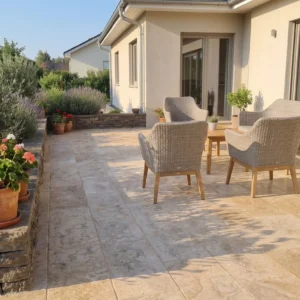
The waterfront’s restaurants own the island’s best hour – sunset over the sea with Klein Bonaire on the horizon – and their terraces run the hospitality canon in the salt’s front row: dense stone against the promenade’s daily traffic, textures graded from walkway to dining floor, thresholds negotiated cleanly with the public walk, and the same-batch spares that keep a February repair invisible. The sea wall adds its own detail: spray reaches the first meters in a north swell, and the specification treats that strip as splash zone, not seating plan.
Docks, Dinghies and the Working Edge
Between the promenade and the water runs the working edge – dive-boat docks, dinghy landings, water-taxi steps to Klein Bonaire. Its stone is marine-duty by definition: textured treads that work wet, edges that forgive fenders and fuel cans, fixings specified for permanent salt, and falls that drain the working mess seaward of the strolling public. The town’s charm depends on the working edge staying genuinely working – polish it into a marina cliche and Kralendijk loses the honesty that brings the visitors in the first place.
The Townhouse Renovation Lane
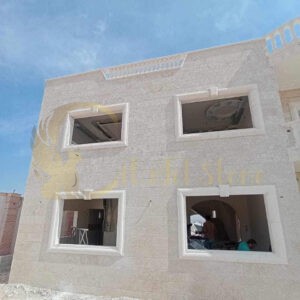
Behind the front row, old Kralendijk’s houses are renovating steadily – Dutch buyers, dive-business owners, families upgrading the family lot. The stone work is courtyard-scale: entrance paths, shaded courts, roof terraces within the town’s modest height manners, all supplied through the easiest logistics in the region and installed by crews who can see the port from the job. It is the quiet half of the waterfront economy, and its material discipline – one pale family, single batches, spares held – keeps the town’s fabric improving without changing its face.
Back Streets, Front Standards
A block inland from the promenade, Kralendijk’s working lanes carry the town’s daily life – school runs, bakery queues, the shortcut everyone takes between the port and the supermarket. The renovation wave is reaching them, and the specification wisdom is to build the back streets to front standards: the same pale stone families at courtyard scale, thresholds detailed as carefully as the seafront’s, shade trees kept and paved around rather than removed, and drainage that respects neighbors downhill of every new court. Towns this size have no minor streets – every lane is somebody’s daily route and some visitor’s wrong turn that becomes a discovery – and the capitals that age best are the ones whose quality does not stop one block behind the postcard.
The Promenade Test
Kralendijk’s waterfront succeeds by an easy test: can the same stone carry the morning’s dive crates, the midday surge and the sunset dinner without changing its expression? Specified densely, textured honestly and washed nightly, it can – the region’s harbor capitals prove it at every scale, and quayside craft in a yacht capital shows the boutique end of the same family. Build the promenade for all three shifts and the capital’s living room stays worth the stroll – which on this island is the whole economy walking past.
The Promenade Bench
Kralendijk’s seafront furniture is half-built into its architecture: the low walls, wide steps and terrace edges where the town actually sits – locals at sunset, cruise visitors resting their feet, kids watching the dive boats come in. Designing the sittable edge is promenade craft in miniature:
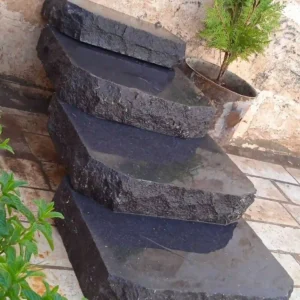
- Wall caps at sitting height run smooth-honed on top, textured on the face – comfort above, safety below.
- Depth matters: a cap two hands wide seats a person; narrower just collects feet.
- Corners round generously where the sitting concentrates – the promenade’s edges are child-height territory.
- Pale stone stays sittable in the sun; dark caps burn their welcome away by ten in the morning.
The sittable edge costs almost nothing at build time and repays the town daily – free seating for the sunset audience, resilient furniture no storm or budget cycle removes, and the kind of small civic generosity that makes a waterfront feel owned by everyone who uses it. The best promenades are the ones you can sit on anywhere; Kralendijk’s stone edges are quietly getting there.
A capital built on top of its own reef
Kralendijk is unusual among Caribbean capitals in how little separates the town from the protected water in front of it. The Bonaire National Marine Park management plan records a park established in 1979 and formally declared in 1999, running from the high water mark to the 60 meter contour around Bonaire and Klein Bonaire and covering roughly 2,700 hectares of fringing reef, seagrass and mangrove. The boulevard, the piers and the shopfronts sit directly above that. Every drainage decision on the waterfront is therefore a marine decision, whether or not it was designed as one.
- Surface water routed to interception rather than straight over the edge
- Wash-down and cleaning water captured before it reaches the sea
- Silt containment maintained through every phase of works
- Fuel, oil and chemical storage kept well back from the wall
- Cutting stations sited inland, never on the quay
Two crowds, one narrow strip
The waterfront handles cruise arrivals, dive operators, restaurants and residents on the same few meters of ground. Trolleys, tanks, service vehicles and evening strollers all cross it within a single day, and the surface has to read as a civic promenade while performing as a working quay.
- Bedding depth set by service vehicles, not by footfall
- Continuous edge restraint where wheeled loads turn
- Service covers set flush and rated for what crosses them
- Level changes marked so visitors read them without looking down
Choosing kralendijk waterfront stone for a town that is opened often
A capital waterfront is lifted repeatedly for services, moorings and repairs, so the build-up matters more than the pattern. Guidance on detailing natural stone paving for lasting durability is clear that installation method drives long-term performance, and on this frontage that means a system which can be reopened and closed without leaving a scar.
- A build-up that can be lifted without breaking units
- One documented reinstatement detail issued to every trade
- Municipal spare stock held for the whole waterfront
- Non-ferrous fixings throughout, since salt reaches everything here
Our Bonaire stone supply guide sets out the formats, finishes and lead times that suit this island. A promenade this close to a reef is a piece of marine infrastructure with shops behind it.