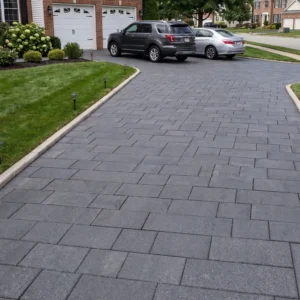
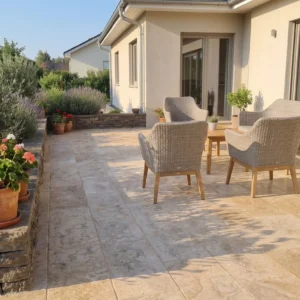
The single biggest predictor of a masonry stone project’s long-term success isn’t the stone itself — it’s the contractor who installs it. Knowing how to choose a masonry stone contractor separates projects that hold up beautifully for decades from ones that start showing cracks, efflorescence, and shifting joints within a few seasons. The questions you ask before signing anything will do more for your outcome than any material upgrade you can spec.
What Credentials Actually Tell You
Licensing and insurance are the floor, not the ceiling. Every masonry and stone contractor you evaluate should carry general liability insurance at a minimum of $1 million per occurrence and workers’ compensation coverage for every crew member on site. Confirm both with a certificate of insurance sent directly from the insurer — not a copy the contractor hands you. Certificates can be outdated or altered, and the liability exposure on a stone installation project is significant.
Beyond basic licensing, look for membership in trade organizations like The Masonry Society or the Mason Contractors Association of America. These memberships don’t guarantee quality, but they do indicate a contractor who stays connected to current standards and continuing education. According to The Masonry Society natural stone wall construction standards, proper detailing for stone masonry requires adherence to evolving load-bearing and veneer anchoring guidance that contractors who are isolated from the industry often miss.
Ask directly whether the masonry stone contractor holds any manufacturer certifications for the stone products they intend to install. Some natural stone producers offer installer training programs that validate a contractor’s understanding of specific material behavior — thermal movement rates, mortar compatibility, and joint depth requirements. A contractor who can name the certification and the issuing body is demonstrating real product knowledge, not just general experience.
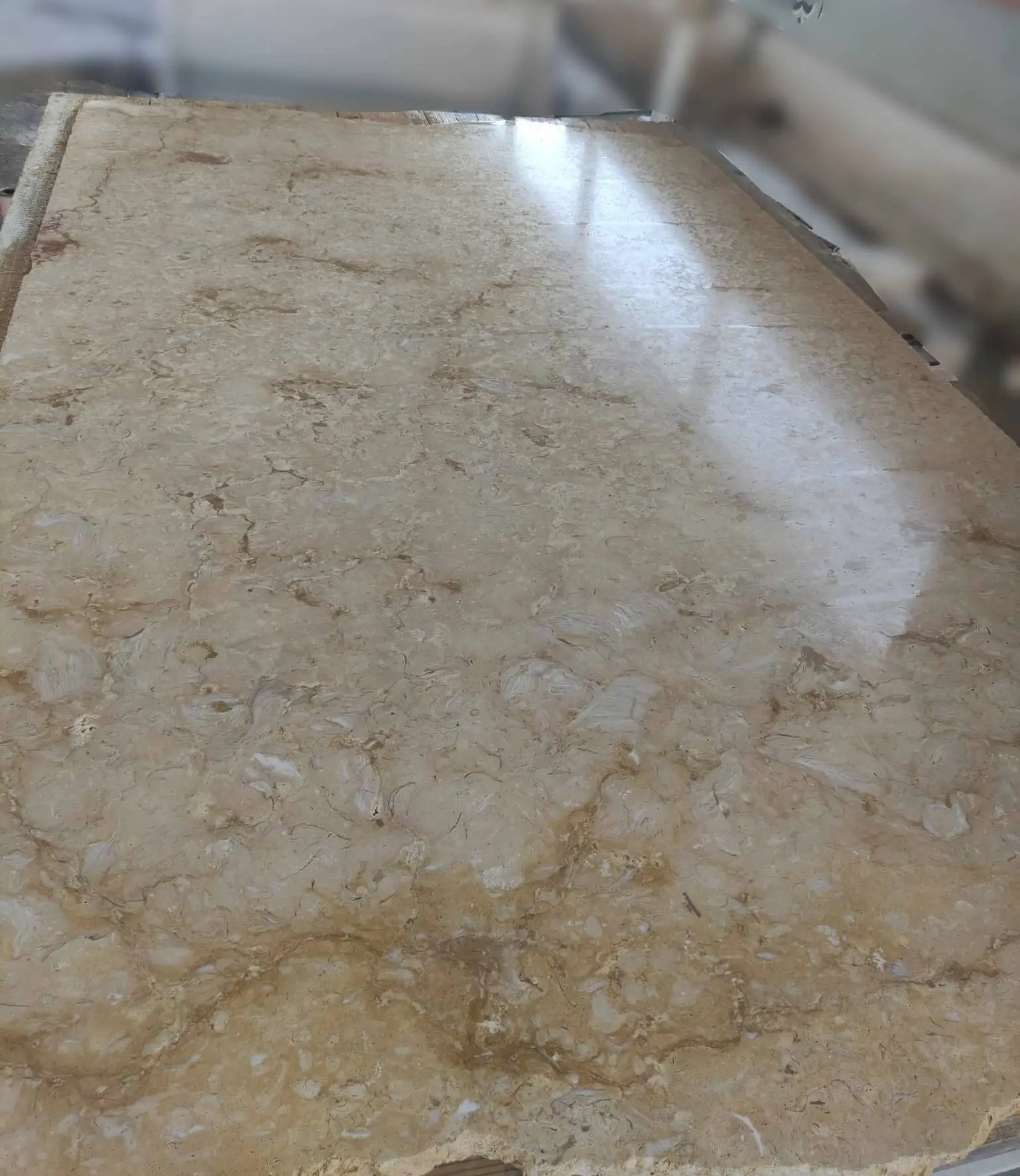
Portfolio Evaluation: Beyond the Photos
Photos of completed work tell you what a contractor wants you to see. What you need to see is how their projects hold up two or three years after installation — not on the day of the final walkthrough. Request a list of completed projects with contact information for those clients, and actually call them. Ask specifically about joint integrity, any settlement or shifting, efflorescence or staining issues, and how responsive the contractor was when problems emerged.
Your portfolio review should also focus on material match. A contractor who has executed flawless granite cobblestone driveways may not have the same depth of experience with dry-laid limestone flagstone or mortared ashlar veneer. Stone masonry services span a wide technical range, and the execution details differ meaningfully across material types, joint systems, and installation methods. Matching the contractor’s portfolio to your specific material category matters more than their total years in business.
- Look for projects using the same stone type you’re specifying — not just similar aesthetics
- Ask about the base preparation method used — compacted aggregate depth, drainage slope, and sub-base type
- Request information on the mortar or setting bed system applied, including brand and mix ratio where relevant
- Check whether the contractor can speak to the curing timeline they observed before allowing foot or vehicle traffic
- Ask how they handled thermal expansion joints on large field areas — this is where inexperienced contractors often cut corners
The Technical Questions That Separate Professionals
Here’s what most specifiers miss when evaluating masonry and stone contractors: the ability to answer material-specific technical questions on the spot reveals more than any portfolio. A contractor who can articulate why they’d use a Type S mortar over Type N for a below-grade retaining wall application — and explain the compressive strength differential — is demonstrating field knowledge that takes years to develop.
Ask about their approach to substrate evaluation. Competent stone masonry services providers will describe a specific process for assessing the existing base or structural substrate before they ever pick up a trowel. They’ll discuss moisture content, deflection thresholds for structural substrates, and the implications of frost depth on below-grade work. Vague answers like “we check the base and fix any soft spots” should put you on alert.
- What mortar mix do you use for this stone type, and why does that chemistry work with this material’s absorption rate?
- How do you calculate expansion joint spacing on large stone field installations?
- What’s your process when the delivered stone doesn’t match the approved sample in color range or surface variation?
- How do you handle drainage integration when slope constraints limit fall to less than 1% across the installation?
- What’s your minimum cure time before grouting, and how does ambient temperature affect that timeline?
The IBC Chapter 21 masonry provisions establish baseline technical requirements for structural stone work, and a professional contractor should be able to reference applicable code requirements without prompting. Compliance isn’t optional — it’s the starting point for any legitimate stone masonry scope.
Understanding the Bid and What It Must Include
A properly structured bid from a masonry stone contractor does more than list a total price. It should itemize the scope in enough detail that you can compare competing bids line by line. When bids come back with significant price variation, the answer is almost always found in what each contractor has — or hasn’t — included in their scope.
Your bid document should specify material quantities with a waste factor stated explicitly. A 10–12% waste allowance is standard for irregular cut stone; 5–7% is acceptable for machine-cut dimensional products. Contractors who don’t state a waste factor are either rolling the risk back to you or underestimating the material requirement. Both scenarios create problems at project midpoint when warehouse stock runs short and reorder lead times stall the job.
- Base preparation scope: depth of excavation, aggregate type and compaction spec, geotextile fabric inclusion
- Setting system: dry-laid sand bed, mortar bed, thin-set, or structural adhesive — with product specification
- Joint treatment: sand, mortar, polymeric, or epoxy grout — with stated joint width range
- Sealing: whether included, product specification, and number of coats
- Cleanup and waste disposal responsibilities
- Warranty terms — specifically what is covered and for how long
Sourcing your stone through a reputable national supplier before bid day gives contractors accurate pricing data. When you source masonry stone through Citadel Stone, you’re giving every bidding contractor the same material specifications and unit pricing, which makes your bid comparison genuinely apples-to-apples rather than a guessing game of who priced the stone cheapest.
Sun Exposure, UV Performance, and What Your Contractor Should Know
For any exterior stone installation, your masonry stone contractor’s understanding of UV exposure and material weathering is a legitimate vetting criterion. This isn’t just an aesthetic consideration — UV degradation affects sealing schedules, finish longevity, and the structural integrity of certain surface treatments over time.
Natural stone in sun-exposed installations — pool surrounds, south-facing terraces, open courtyard paving — experiences surface oxidation and color change that varies significantly by stone type and finish. Honed limestone and travertine tend to fade toward a warmer, chalky tone under sustained UV exposure, while polished granite maintains surface color longer due to its crystalline density. A contractor who can speak to finish selection relative to UV resistance is demonstrating the kind of material knowledge that translates directly into specification decisions that hold up over time.
- Matte and honed finishes on light-colored stone show UV bleaching more quickly than textured or thermal finishes
- UV-stable penetrating sealers outperform topical coatings in exterior applications — topical sealers peel and yellow under sustained sun exposure
- In high-UV installations, sealing intervals should move to 18–24 months rather than the standard 3-year schedule for sheltered applications
- Darker stone varieties — black basalt, charcoal limestone — absorb more solar radiation but also show surface oxidation as a whitish bloom that requires periodic acid washing
- Flamed or brushed surface textures on granite and basalt retain appearance better under UV exposure than polished equivalents in outdoor settings
Ask your shortlisted masonry and stone contractors how they approach sealing specification for sun-exposed work. A contractor who recommends the same sealer regardless of sun exposure level is applying a one-size-fits-all approach that typically results in early sealer failure and callbacks. According to Natural Stone Institute stone veneer installation and wall stone guidance, finish selection and protective treatment must account for installation orientation and exposure conditions — this is standard professional practice, not a premium add-on.
Red Flags in the Selection Process
The masonry stone contractor selection process surfaces certain warning patterns consistently. Contractors who pressure you for a decision before you’ve reviewed competing bids, who request more than 30–40% upfront before any material is delivered or work begins, or who can’t provide verifiable references for completed projects in your material category are all presenting elevated risk signals.
Watch for contractors who propose to substitute materials after the contract is signed. “We couldn’t source exactly what was specified, so we upgraded you” is a common framing for unauthorized substitutions that often reduce quality rather than improve it. Your contract should include a written material substitution clause that requires your written approval before any deviation from the specified stone product.
- Vague scope language like “install stone as directed” without base preparation detail
- No written warranty or warranty language limited to “workmanship only” without defining the standard
- Crew size that doesn’t match the project scale — a two-person crew on a 2,000 sq ft stone installation has timeline implications that affect material delivery sequencing
- Inability to name the specific stone product or supplier they intend to use before contract execution
- Cash-only payment requirements or resistance to standard payment-schedule structures
Evaluating Project Management and Logistics Capability
Stone installation projects fail as often from poor logistics as from poor craftsmanship. Your masonry stone contractor needs to demonstrate that they understand how material delivery, site conditions, and crew scheduling interact. A contractor who can’t describe their sequencing plan — when stone arrives relative to base completion, how many days between substrate cure and setting, how they handle truck access constraints on your site — is likely to create delays that compound into cost overruns.
Material delivery coordination deserves specific attention. Natural stone arrives on pallets by freight truck, and site access for a semi-truck is a real constraint that many homeowners don’t think through until it’s a problem. Confirm with your contractor whether a standard flatbed truck can reach the delivery point or whether materials will need to be off-loaded at the street and hand-carted — this affects both your project timeline and your material cost if additional handling charges apply.
Lead times vary depending on whether the stone is in warehouse stock or requires a special order. At Citadel Stone, we maintain national warehouse inventory across a broad range of natural stone products, which typically reduces lead times considerably compared to projects that require imported stone sourced to order. Your contractor should be confirming stock availability before finalizing the project schedule — not assuming material will appear on demand.
Contract Structure and Payment Terms
A well-structured contract protects both parties and defines the project clearly enough to prevent disputes. Your masonry stone contractor agreement should include the full scope of work in technical language, a payment schedule tied to measurable milestones, a material specification list with product names and supplier, a change order process requiring written approval, and a dispute resolution clause.
Payment schedules that align with project milestones reduce your financial exposure significantly. A standard structure might be: 25–30% at contract execution to cover material procurement, a second payment when base preparation is complete and inspected, and the balance on project completion and your written acceptance. Never release the final payment before you’ve had the opportunity to walk the installation carefully and document any punch-list items in writing.
The Natural Stone Institute’s guidance on professional stone installation standards provides a useful benchmark for what constitutes acceptable workmanship — knowing these standards gives you an objective reference point if you need to assess whether installed work meets professional expectations. According to NSI ASTM stone installation technical standards, dimensional tolerances, lippage limits, and joint width consistency are all measurable acceptance criteria that belong in your contract.
Final Considerations
Choosing the right masonry stone contractor comes down to a structured process: verifying credentials properly, evaluating portfolios for material-specific experience, asking technical questions that reveal genuine field knowledge, and reviewing bids that are detailed enough to compare honestly. The contractor who earns your project should be able to speak specifically about the stone you’re installing — its thermal movement characteristics, its appropriate mortar system, its sealing requirements, and how UV exposure will affect its appearance and maintenance schedule over time. Masonry and stone contractors who understand the material as deeply as they understand the installation process are the ones who deliver results that hold up across decades, not just across seasons. As your project moves toward execution, complementary stone construction methods can inform your broader understanding of how stone performs structurally — how slipform stone masonry works is worth reviewing for projects where structural stone walls are part of the scope. Reviewing a contractor’s previous stonework alongside the specific material they propose to use is a practice Citadel Stone encourages for every project brief.
Related reading: stone masonry pointing repair · types of masonry stone · rubble masonry explained.