The Island Is Already Built of Stone
It is worth stating plainly before anything else: Anguilla sits on limestone from shore to shore. The reef rock beneath the whole island is the same material that shaped the old masonry around The Valley and buildings such as Wallblake House. Any supplier arriving here to explain the merits of limestone has misread the room entirely. The honest conversation is not about the rock. It is about what a modern build needs that a thin reef cap and a hand-worked tradition were never asked to produce.
What Imported Setts Add in a Heritage Context
What does not exist locally is a calibrated, dimension-sawn, consistently graded paving product available in repeatable lots, season after season, with documented density and absorption figures behind it. That is a processing and supply argument, and it is the only one worth making on this island.
- Consistent depth across a lot, so a large court lays true without endless packing
- Graded sorting, so tone runs evenly instead of drifting across a courtyard
- Repeat availability, so phase two of a restoration matches phase one
- Documented performance figures that a specifier can actually put in a schedule
Matching Tone Without Imitating
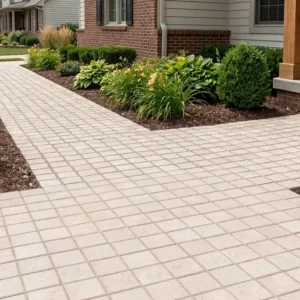
The trap in heritage work is the copy that falls just short. New paving cut and colored to mimic old local masonry tends to read as a costume, and it ages differently besides. A better approach is to choose a tone that sits within the same family without pretending to be the same stone, then let the difference be legible and calm. A pale, warm surface next to old rubble walling reads as a respectful addition. A near-match that misses reads as a mistake for the next thirty years. Light here is unusually strong and the dry season bleaches everything a shade, so judge tone outdoors in the afternoon rather than under a showroom lamp, and judge it against the wall the paving will actually touch.
Finish and Texture in Old Settings
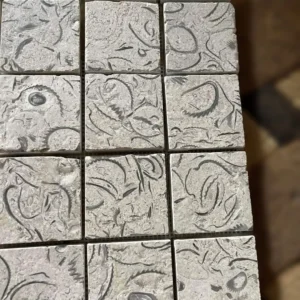
Texture does more heritage work than tone does. A sawn, flat face broadcasts its own newness across a courtyard, while a worked or riven face catches light the way hand-cut stone does and settles into an older context within a season or two. Comparing textures that read as aged side by side under real island sun is more useful than any photograph, because the difference is about how a surface handles glare at four in the afternoon.
- Look at samples outdoors, in the actual orientation the paving will take
- Wet a sample and look again, since rain changes the reading completely
- Check the texture against the adjacent wall, not against a catalog image
- Favor a face that will hold grip once salt dust and rain arrive together
Laying Conventions That Look Right
Historic paving was laid by eye, to the ground it found, by masons working with what came out of the ground nearby. That gives old surfaces slight irregularity in coursing, joints that vary, and lines that follow buildings rather than a survey grid. Modern setwork can borrow those habits without abandoning tolerance.
- Follow the building line rather than a theoretical rectangle on the drawing
- Let the coursing bend where the old wall bends instead of correcting it
- Keep joints in the middle of the acceptable range rather than machine-tight
- Break the field with a change of coursing where old thresholds and paths already exist
- Resist the temptation to introduce a modern grid across a courtyard that never had one
Thresholds, Restraint and Old Walls
Working next to old fabric brings its own rules, and most of them are about not loading something that was never designed for it.
- Keep new bedding and haunching clear of historic wall bases
- Route drainage away from old masonry rather than turning a wall into a sump
- Give thresholds a generous, clearly detailed transition instead of a tight butt joint
- Hand-dig the first course beside old fabric rather than bringing a machine to the wall
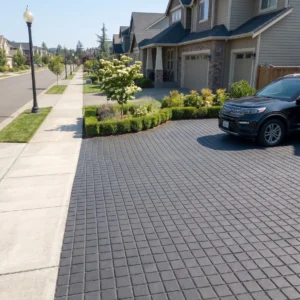
Because small stone units for courtyards can be laid to a curve and cut sparingly, they let a new surface meet an old wall without the row of thin, fragile slivers a large format forces on you.
Planning and Approvals
Development in Anguilla is governed by the Land Development (Control) Act, with applications reviewed by the Land Development Control Committee and the Department of Physical Planning working to the National Land Use Plan. Building work is carried out to the Anguilla Building Code, which draws on the Caribbean Uniform Building Code. Any sensitive site deserves an early conversation with the professionals handling the application, because a paving specification agreed before submission is far easier than a change requested afterward.
Lead Times on a Restoration Timetable
Restoration work runs to its own calendar, and stone should be ordered against that calendar rather than against a hopeful one. Cargo lands at Road Bay in Sandy Ground, commonly after a hub port call and a short feeder crossing, so the crates are handled twice and need to be built accordingly. Commercial consignments clear through Anguilla Customs on ASYCUDA World, normally through a registered broker, with duty assessed on CIF value alongside the nine percent Import Goods Tax that has applied at the port since the first of August 2025. Order the sample first, hold it against the old wall, and only then order the stone.