What the Ratio Actually Decides in Hardscape vs Softscape Landscaping
Hardscape vs softscape landscaping decisions made without a ratio framework almost always produce sites that underperform structurally — too much highly resistant coverage creates runoff problems, too little defined hardscape leads to erosion at transition edges and chronic maintenance overhead. The ratio between hard and planted surfaces isn’t an aesthetic preference; it’s a structural decision that determines drainage performance, maintenance load, and how the landscape holds up over decades. Get the proportion wrong and you’ll spend years compensating for it with irrigation, erosion patching, or premature stone replacement.
The general benchmark most landscape architects work from is a 60/40 split — roughly 60% softscape to 40% hardscape for residential properties that want lush greenery with defined structure. That number shifts considerably based on your property’s drainage coefficient, the intended function of each zone, and whether your region sits in a freeze-thaw cycle that stresses mortar joints and undermines compacted base layers. Understanding where to flex that ratio is where the real specification work begins.
Defining Hardscape Beyond the Obvious
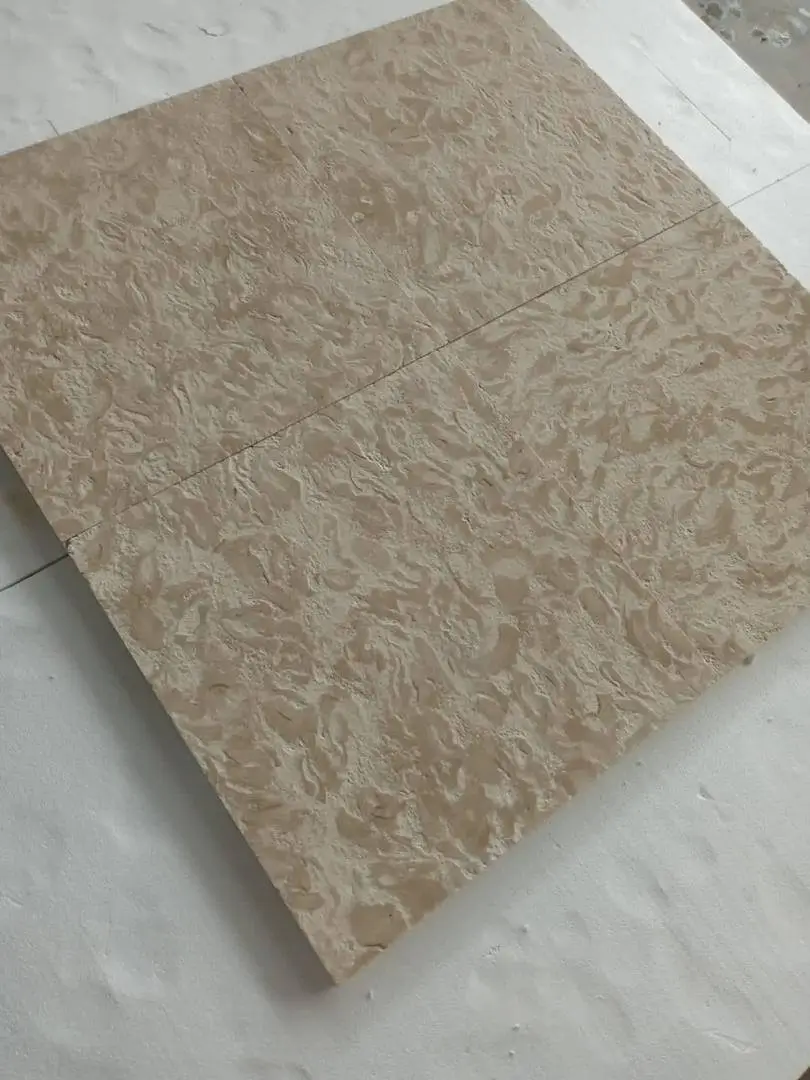
Hardscape landscaping covers far more than patio slabs and retaining walls. Every highly resistant or semi-permeable surface that holds a structural load — driveways, walkways, steps, edging borders, dry-stack walls, gravel paths with compacted base — falls into this category. The distinction matters because each of these elements has a different drainage and load profile, and treating them as a single undifferentiated mass leads to poor specification decisions.
Natural stone sits at the performance end of the hardscape spectrum. Compared to concrete pavers or poured slabs, natural stone brings compressive strength values typically ranging from 8,000 to 19,000 PSI depending on material type, combined with thermal mass characteristics that moderate surface temperature swings. That performance comes with a caveat: natural stone requires more precise installation detailing than manufactured alternatives. Joint width, base depth, and edge restraint systems all carry higher consequence when the material itself has less flexibility to compensate for substrate movement.
- Paved surfaces: patios, driveways, walkways, and pool decks — all need engineered base prep and proper slope-to-drain geometry
- Vertical hardscape: retaining walls, seat walls, and stone veneer — load-bearing calculations change specification requirements significantly
- Transitional elements: steps, edging borders, and kerb stones — these bridge hardscape and softscape zones and often take the most abuse from foot traffic and storm runoff
- Decorative stone features: dry-laid gravel beds, boulder placements, and rock garden formations — lower structural load but critical for drainage management
Understanding which sub-category each element belongs to keeps your specification language precise and ensures the right material gets specified for the right application. According to Natural Stone Institute stone variety specifications, material selection based on application type — rather than aesthetics alone — is the primary driver of long-term performance in landscape hardscape installations.
Softscape Functions That Hardscape Cannot Replace
Planted areas do structural work that stone and concrete physically cannot. Root systems stabilise soil and reduce erosion on slopes. Plant canopy intercepts rainfall, slowing the rate at which water reaches the ground and reducing peak runoff volumes. Turf and groundcovers act as biological filters, improving water quality before it reaches drainage infrastructure.
The practical implication for your project: softscape zones need to be positioned where their drainage and stabilisation functions are most needed, not just where they look attractive. On a sloped property, planted buffer strips below hardscape areas are often the difference between a stable installation and one that needs re-grading every five years. Ground-level softscape adjacent to stone paths absorbs the lateral splash from heavy rain events, which significantly reduces the sediment loading on joint sand in the adjacent pavers.
- Perennial borders alongside stone walkways reduce soil splash onto paved surfaces and protect joint integrity during storms
- Tree canopy positioned to shade hardscape slows thermal expansion cycling that stresses large-format stone slabs
- Groundcovers on slopes adjacent to retaining walls reduce hydrostatic pressure buildup behind the wall over time
- Lawn areas between paved zones act as informal infiltration strips, reducing concentrated runoff across stone surfaces
Natural Stone in Landscaping: Performance Factors Worth Knowing
Stone in landscaping performs differently from stone in architectural applications because the exposure conditions are more varied and less controlled. Outdoor stone faces freeze-thaw cycling, biological growth from soil contact, UV degradation of sealer systems, and mechanical stress from maintenance equipment. Each of these factors influences which stone type you should specify for each zone in a landscape.
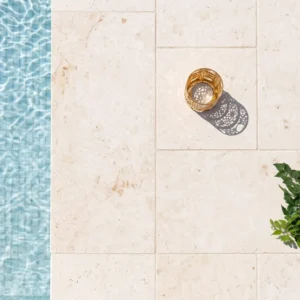
Limestone is a strong performer in decorative landscaping stone applications — pathways, garden borders, dry-stack features — because its relatively open crystalline structure allows moisture to pass through without the explosive freeze-thaw damage that traps water in denser stones. Granite, by contrast, suits high-traffic hardscape zones where compressive strength and abrasion resistance are the primary requirements. Basalt handles edge restraint and border stone applications well given its tight grain structure and resistance to surface chipping. The American Society of Landscape Architects guidance on hardscape materials consistently supports material selection based on zone-specific performance requirements rather than a single material across all applications.
For decorative stone beds and gravel garden features, particle size and angularity also require consideration. Angular crushed stone locks together and resists displacement from foot traffic and wind; rounded pea gravel looks attractive but migrates easily under rain impact and light foot traffic, which creates ongoing maintenance. Your choice of decorative landscaping stone for these zones has a real bearing on how much remediation work the installation requires over its first three to five years.
Wind, Storm, and Weather Impacts on Hardscape Design
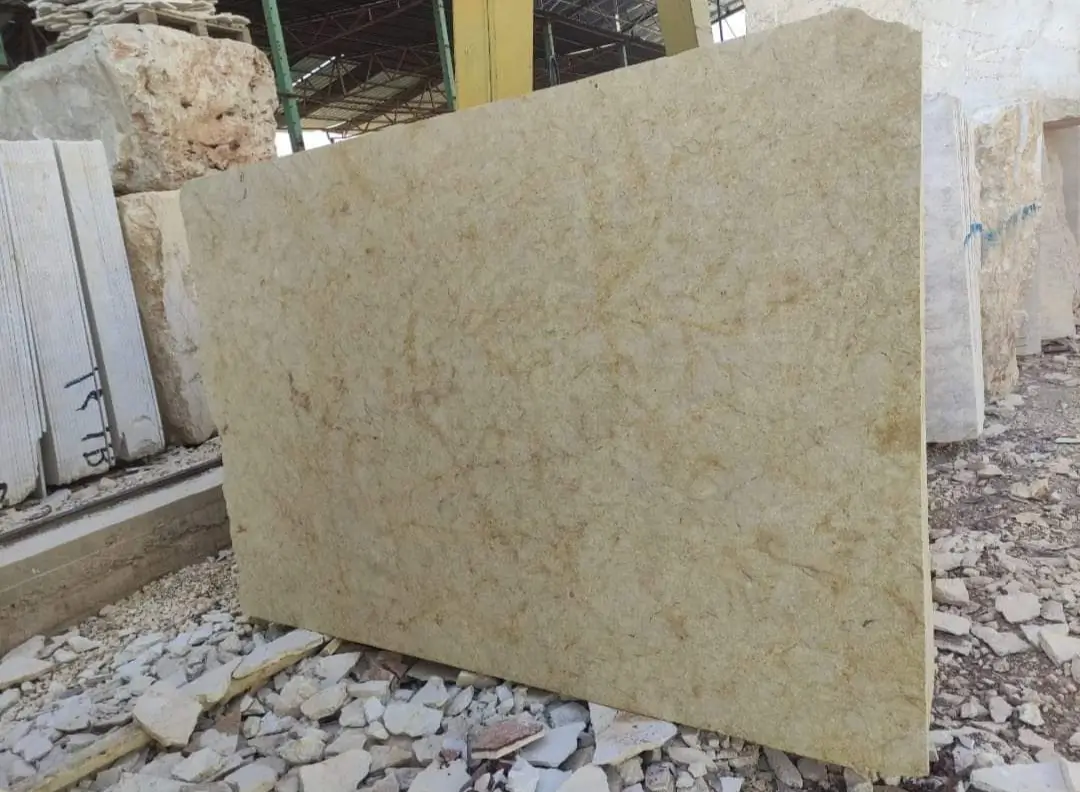
Storm performance rarely makes it into hardscape vs softscape landscaping conversations at the planning stage, but it should be one of your primary specification drivers — especially in exposed sites. Wind-driven rain is a different mechanical force from vertical rainfall. It enters joints at an angle, carries debris, and imposes lateral pressure on edge restraints that simple gravity loading doesn’t account for. Stone pathways and patio edges installed without adequate edge restraint depth can migrate 5–10mm per season in areas exposed to regular storm events, even with a properly compacted base.
Hail impact is another underappreciated factor for natural stone in landscaping. Softer stones like some limestone varieties and certain sandstone types can develop surface pitting from repeated hail strikes over multiple seasons. The damage is cosmetic initially but creates micro-surface irregularities that trap organic debris and accelerate biological staining. Harder stone choices — dense limestone, granite, basalt — handle impact stress without surface degradation. According to USGS dimension stone production and use data, granite and dense basalt consistently outperform softer dimension stones in mechanical impact resistance across documented construction applications.
- Edge restraint systems for exposed hardscape zones should be set a minimum of 100mm (4 inches) deep in compacted base to resist lateral wind and storm-water forces
- Joint sand in wind-exposed areas benefits from polymeric stabilisation — standard dry sand blows out during storm events and needs replacement within two seasons
- Large-format stone slabs on elevated terraces or exposed hillside sites should be mechanically pinned at corners where wind uplift can compromise mortar-bed adhesion
- Softscape buffer planting along stone path edges reduces wind velocity at ground level, which directly lowers the erosion rate on exposed joint sand
Your site’s wind exposure should also influence stone finish selection. Heavily textured or rough-split finishes create more surface turbulence and debris catch than honed or sawn finishes. In sites with regular leaf fall and storm debris, a sawn finish on primary walkways reduces maintenance cleaning time significantly over a standard split-face finish.
Balancing Stone and Plants: Practical Zone Planning
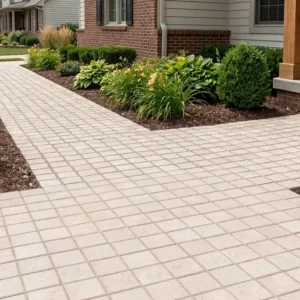
The most functional landscapes divide the site into distinct performance zones before any material or plant selection begins. Entry and high-traffic zones typically warrant a higher proportion of hardscape landscaping — durable, easy-to-clean stone surfaces handle concentrated use without damage. Transition and recreation zones can carry more softscape with defined stone edges. Peripheral and boundary zones benefit from predominantly planted coverage with gravel or stone accents for definition and drainage.
What gets missed in most residential planning is this: the edges between hardscape and softscape zones are the highest-maintenance locations in the entire landscape. Grass grows into gravel. Mulch migrates onto pavers. Soil heaves during freeze-thaw cycles and undermines stone edges. Specifying a definitive hard border — a limestone or granite edging course set 50–75mm proud of the surrounding grade — between stone and planted zones is one of the most cost-effective maintenance investments you can make. That single detail reduces annual edge-maintenance time by 30–40% over a planted-edge transition. For design ideas and options across the full range of Citadel Stone decorative hardscape stone, the stone yard covers material types suited for both structural and ornamental landscape applications.
- Entry zone (high traffic): 70–80% hardscape — dense stone paving, defined borders, minimal soil exposure
- Living zone (patio, seating): 50–60% hardscape — primary stone paving with planted perimeter beds and container softscape
- Transition zone (paths through garden): 30–40% hardscape — stepping stones or gravel path through planted areas
- Peripheral zone (boundaries, slopes): 10–20% hardscape — stone edging, boulder accents, planted groundcover dominant
Specifying Hardscape Stone by Application
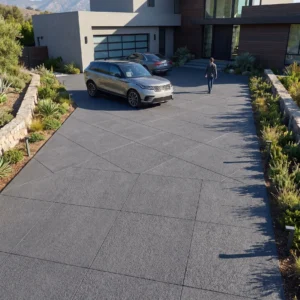
Material specification needs to match the mechanical demands of each application zone, not just the visual palette. Foot-traffic paths require a minimum 30mm thickness in a 2-inch nominal hardscape stone format to resist point-load cracking under concentrated weight. Driveway applications need 50mm minimum with a 150mm compacted aggregate base. Decorative landscaping stone used in non-trafficked beds — boulders, accent pebbles, dry-stack edging — carries far less structural requirement but still needs to account for freeze-thaw durability in regions with regular sub-zero temperatures.
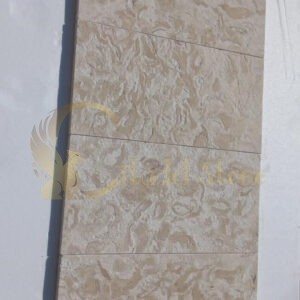
Surface finish selection matters significantly in transitional zones between hardscape and softscape. Wherever stone and soil meet at grade — path edges, step risers adjacent to planted beds, retaining wall caps — algae and lichen colonisation is faster than on elevated stone. A textured or slightly etched finish on these surfaces slows biological attachment compared to a polished face. That’s a field observation, not a theoretical one: honed limestone step treads adjacent to planted borders in shaded installations typically need their first biological treatment within 18–24 months, while split-face treads in the same conditions extend that to 36–48 months.
- Pathway stone: 30–40mm thickness, honed or sawn finish for low maintenance, set on 75–100mm compacted aggregate base
- Patio zones: 40–50mm for primary entertaining areas, with 10–15mm mortar bed on a concrete substrate where drainage geometry requires precise control
- Retaining wall capping: 50–75mm sawn-edge stone with 15mm overhang — overhang directs water away from the wall face and significantly reduces efflorescence development
- Decorative gravel beds: angular 20–40mm crushed stone resists wind displacement and foot traffic migration better than rounded equivalents
Ordering and Project Logistics
Getting material quantities right on a mixed hardscape-softscape project is more complex than a single paved area because you’re typically ordering multiple stone types across different application zones. A useful approach: complete your zone plan first, calculate square footage for each zone separately, and add 10–12% waste factor per zone rather than a blanket percentage across the full order. Cut waste rates vary significantly by stone type — irregular formats like flagstone run 15–18% waste while sawn-edge regular formats run 8–10%.
Verify warehouse stock levels for all specified materials before finalising your project timeline. Natural stone supply runs on quarry extraction cycles, and specific colours or finishes can have 6–8 week lead times from import if your distributor doesn’t hold inventory. Citadel Stone maintains national warehouse inventory across its stone range, which typically reduces lead times to 1–2 weeks for standard material types — a meaningful difference when your project has a planting season deadline. Coordinate your truck delivery scheduling with the installation sequence: stone for base courses and edging should arrive before surface-course material, not in a single mixed delivery that requires on-site sorting.
Expert Summary: Getting Hardscape vs Softscape Landscaping Right
Hardscape vs softscape landscaping comes down to one principle: every square foot on your site should earn its function. Stone earns its place through structural performance, drainage geometry, and durability under mechanical and weather stress. Planted areas earn their place through stabilisation, infiltration, and the kind of biological benefit no stone surface can replicate. The projects that age well — that still look intentional after 15 or 20 years — are the ones where that functional logic drove every zone decision, not just the aesthetic ones.
Natural stone sets the structural tone of any landscape. Specify it precisely, install it with correct base depth and edge restraint, and maintain joint integrity against wind-driven sand loss. For projects that incorporate stone in garden and boulder settings as well, rock garden design and build guidance covers how to use larger stone elements effectively within planted landscapes — a complementary discipline that extends the same hardscape-softscape balance principles into feature planting zones. The planted zones respond to the stone framework — get the stone right and the softscape composition becomes far easier to manage over time. Balancing gravel paths and stone borders from Citadel Stone with planted softscape areas generally produces landscapes that require less irrigation and seasonal upkeep.
Related reading: landscaping rocks and stones · river stone for landscaping · white vs black landscaping rock.