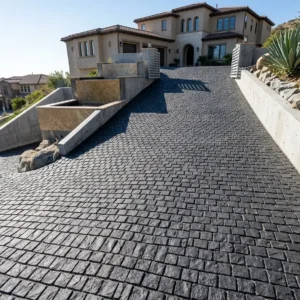
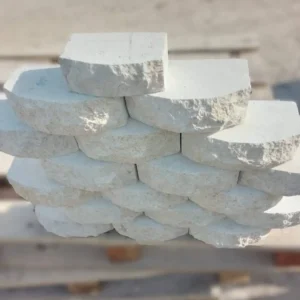
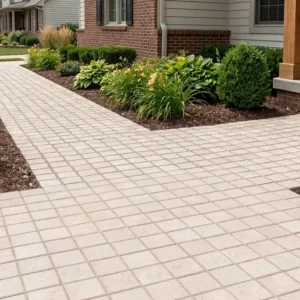
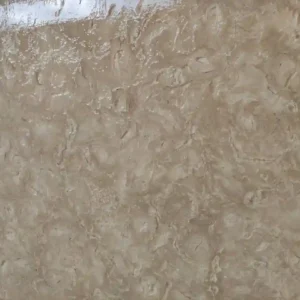
The choice between granite vs porcelain pavers comes down to a set of performance trade-offs that most buying guides treat too lightly. Both materials can produce a beautiful patio, but they behave differently under real project conditions — base movement, thermal cycling, joint maintenance, and long-term surface wear separate them far more decisively than color charts do. Understanding those differences before you specify is how you avoid a costly retrofit two or three seasons in.
What Each Material Actually Is
Granite is an intrusive igneous rock — formed when magma cools slowly deep in the crust. That slow cooling produces a coarse crystalline structure with interlocked feldspar, quartz, and mica grains, and it is one reason the material holds up under sustained load and surface abrasion the way it does. The Natural Stone Institute granite overview describes the mineralogical consistency that defines how fabricators grade and cut it. Because it is a natural material, you will see variation in veining, grain size, and tone from slab to slab — a feature that distinguishes it visually from manufactured products.
Porcelain is a manufactured ceramic product fired at very high kiln temperatures. The process densifies the body and drives absorption to near zero, producing a hard, dimensionally consistent tile. Porcelain can carry a printed surface — wood grain, stone look, geometric pattern — at whatever color value the manufacturer programs. What it cannot replicate is the depth and three-dimensional movement you see in genuine stone crystal structure. For a patio comparison, that distinction matters both aesthetically and structurally.
Surface and Finish Options for Each Material
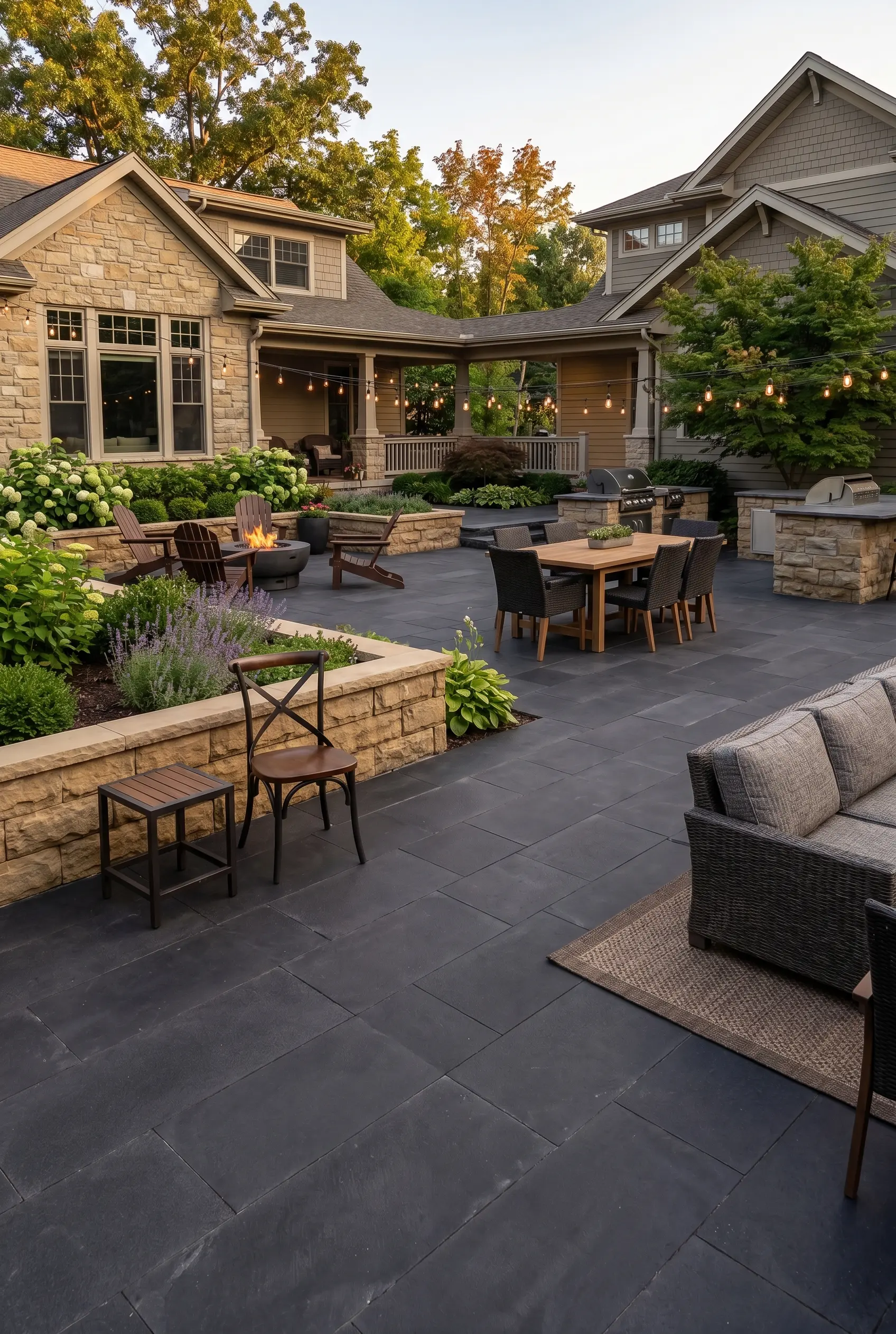
Granite gives you a wider palette of working finishes for outdoor use. A bush-hammered finish opens the surface texture and is well suited to pool decks, ramps, and wet areas where surface character matters. For patios and terraces, a brushed finish in a coarser grit works well outdoors; for covered terraces and indoor-outdoor transitions, a finer brushed grit or honed surface reads cleaner underfoot. Polished finishes on granite are reserved for dry indoor surfaces — countertops, vanity tops, interior floors — where the reflective surface stays pristine. For pool decks, wet steps and slopes, choose a bush-hammered finish. For other outdoor paths, bush-hammered or brushed in our coarsest grit both work; check a sample.
Porcelain patios typically arrive in one or two factory finishes — most commonly a matte or lightly textured face. The manufacturer controls that texture, so there is no field adjustment. If the factory finish does not suit your drainage conditions or surface context, your only option is a different product. With granite vs porcelain pavers as a specification choice, finish selection for granite is part of the conversation before the stone is cut, while porcelain locks you into whatever the factory produces.
How Freeze-Thaw and Thermal Cycling Affect Each Material
This is where the granite vs porcelain pavers comparison becomes most technically consequential for climates with real temperature swing — not just seasonal cold, but the daily cycling between afternoon heat and overnight low that puts repeated stress on both the field material and the setting bed. Natural stone and porcelain expand and contract at different rates, and those coefficients of thermal expansion drive joint-spacing calculations and setting mortar selection. Specifying expansion joints from your own movement calculation rather than a generic rule of thumb is how you keep a patio from cracking at the joints three winters in.
Porcelain’s near-zero absorption makes it less vulnerable to freeze-thaw spalling from water penetration into the body — water cannot saturate a body that does not absorb it. Granite’s absorption is low but measurable, and for freeze-thaw regions you should specify the ASTM C615 test method and request the test report from your supplier to confirm the absorption figure for the specific stone. The ASTM C615 granite dimension stone standard defines the testing protocol your supplier’s report should reference. Knowing the absorption figure lets you set a sealing interval that keeps water from cycling into open pores through freeze-thaw events.
Thermal cycling also affects grout and joint compound. Both materials require joints that accommodate movement — the question is how wide and how often. Here is what most specifiers overlook: a large-format porcelain tile with a near-zero thermal expansion coefficient still needs movement joints at intervals the setting material manufacturer specifies, because the setting bed itself moves. Thin, rigid porcelain on a substrate that moves seasonally is a common cause of early delamination. Granite, with its greater mass, moderates temperature at the setting face more slowly, which can reduce the rate of thermal shock at the adhesive layer — but it does not eliminate the need for correctly spaced joints.
Thickness, Base Preparation, and Structural Requirements
Granite vs porcelain pavers differ significantly in how thickness specifications interact with base requirements. For pedestrian patios and paths, granite pavers at 1¼ in (3 cm) on a compacted aggregate base with a mortar bed are a standard specification. The mass of the stone contributes to stability, and the material’s structural integrity means thin sections still carry the load without brittleness under point impact. Porcelain at the same nominal thickness performs differently — the material is harder in surface hardness terms but more brittle under point loads and edge impact, which makes base flatness and bedding consistency critical. A low spot in the mortar bed that would merely flex a granite paver can crack a porcelain tile at the unsupported area.
- Granite pavers at 1¼ in (3 cm) are appropriate for patios, paths, pool decks, and pedestrian plazas on a properly prepared compacted base
- Porcelain tiles for outdoor use require a full-coverage mortar bed with no voids — any unsupported area becomes a fracture point under impact or flexural load
- Both materials require expansion joints at intervals your setting material manufacturer specifies — do not default to a generic spacing number
- For any patio application adjacent to planted areas, drainage beneath the slab affects the long-term stability of both materials
When you are selecting granite pavers, explore our natural granite paving to review the formats, finishes, and cut sizes available for your project specification.
Water Resistance and Sealing Requirements
Porcelain’s near-zero absorption rate is genuinely useful in high-moisture environments. It does not require sealing and does not stain from surface liquids the way porous stone can. Those are real maintenance advantages for a pool surround or shaded patio where organic material settles on the surface. What porcelain does not tolerate well is grout joint failure — once grout cracks or erodes, water tracks under the tile, and the bond to the setting bed deteriorates. Grout and joint maintenance matter as much for porcelain as sealing does for natural stone.
Granite is highly resistant to staining and surface moisture when properly sealed, and it responds well to penetrating sealers that close the surface pore structure without forming a film that peels. Your sealing interval depends on the specific sealer manufacturer’s stated performance — some products call for annual resealing in high-traffic areas, others extend further. The key is sticking to the interval rather than waiting for visible staining to appear. A well-sealed granite patio stays clean with far less effort than an unsealed one, and the sealing process itself is straightforward with the right penetrating product.
Visual Performance and How Each Material Ages
The aging trajectory of granite vs porcelain pavers diverges noticeably after the first few years. Granite develops a patina — the surface traffic wears the micro-texture slightly, and the stone acquires the kind of depth that makes old stone floors in historic buildings look so compelling. That aging is additive; the material looks better with time when it is maintained properly. Porcelain does not patina in the same way. Its printed surface is fixed at manufacture, and while the material is highly resistant to surface abrasion, the aesthetic experience does not evolve. A ten-year-old porcelain patio looks like a ten-year-old factory product.
Color consistency is the reverse story. Porcelain tiles from a single production run match each other closely — the factory controls tone, pattern repeat, and surface texture within tight tolerances. Natural granite carries variation from slab to slab and within a single slab. That variation is part of what makes natural stone visually compelling, but it requires you to select and lay from multiple packs simultaneously, blending the material so variation distributes evenly across the field. Skipping that step is how you end up with a section of noticeably darker or lighter stone concentrated in one corner.
Cost Considerations and Long-Term Value
Material cost comparisons between granite and porcelain vary significantly by format, finish, and order volume. At equivalent thicknesses and slab sizes, granite sourced from selected quarries and cut to size is competitive with premium large-format porcelain, and in some specifications it comes in lower. What the cost comparison often omits is long-term maintenance cost. Porcelain requires no sealing but does require grout and joint maintenance, and replacing a cracked tile on an outdoor installation — matching color and texture against a product that may no longer be in production — is genuinely difficult. Granite’s service life, where the base is sound and drainage works, extends across many decades, and individual pavers that crack or chip can typically be replaced from the same quarry material.
- Porcelain eliminates sealing cost but introduces grout and joint maintenance cost
- Granite requires periodic resealing but tolerates repair and replacement more practically
- Both materials benefit from correct base preparation — skipping base depth or compaction creates maintenance costs regardless of material
- Porcelain color-matching for repairs depends on the product remaining in production; natural granite from the same quarry source can be re-ordered
The USGS dimension stone production data gives context for the scale and variety of the US granite supply, which informs why quarry-sourced stone is a dependable long-term specification material.
Installation Variables and Delivery Planning
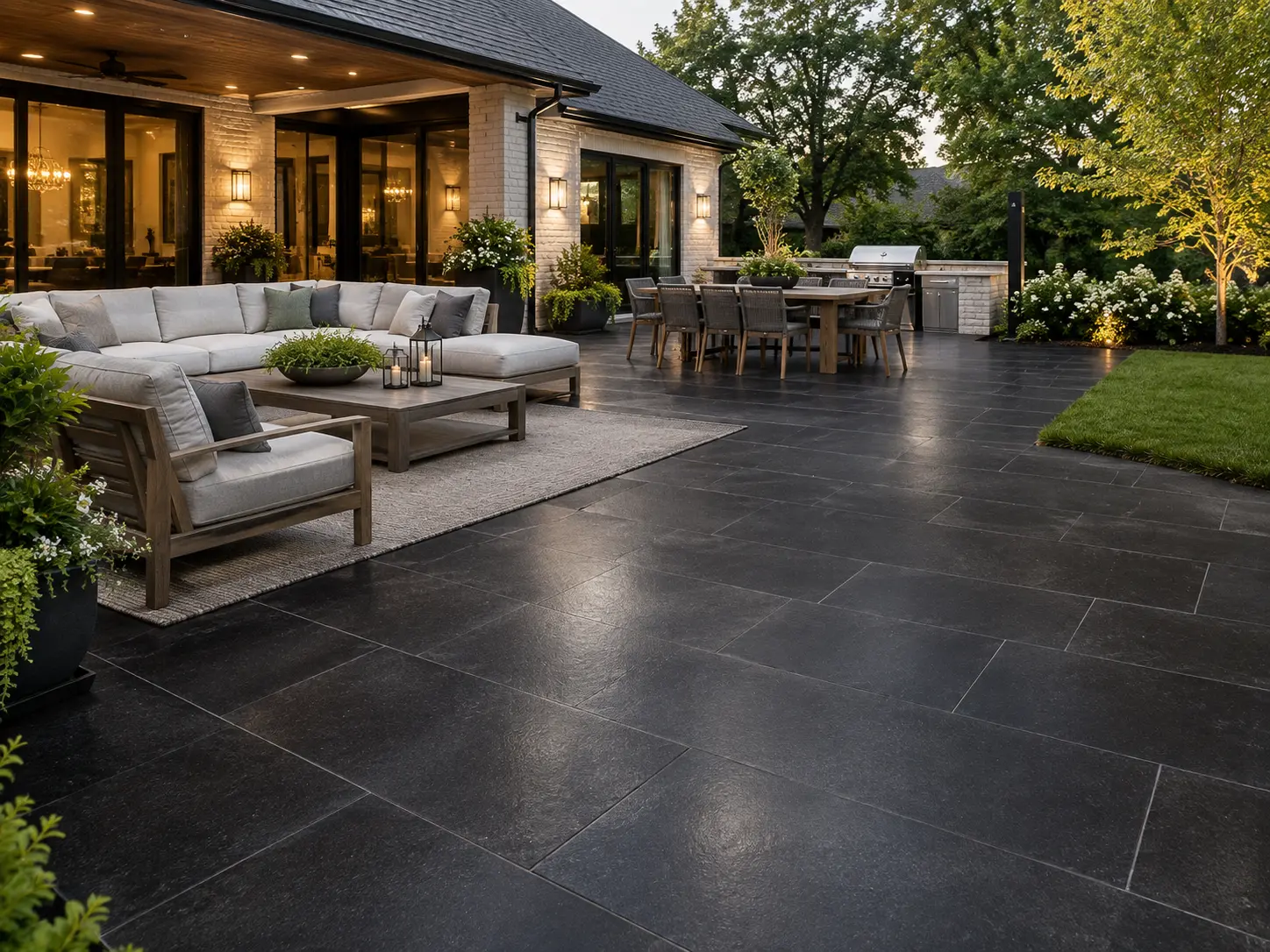
Granite pavers cut to size ship on pallets that require standard access to the delivery point. Your project’s site constraints — gate width, overhead clearance, surface conditions — affect offloading arrangements, and those arrangements are confirmed before the delivery date rather than assumed at order time. Lead times are quoted with the order and depend on the cut specification and current quarry production schedule. Citadel Stone cuts granite to order at our selected quarries, which means format, finish, and thickness are specified at the time of order rather than chosen from a fixed in-stock tile range.
Porcelain tiles are typically stocked by distributors in fixed formats and are available on shorter lead times from local distribution. That speed advantage is real for projects with tight schedules. The trade-off is that your format and finish options are limited to what the distributor carries, and special-order porcelain from overseas production carries its own lead time that can rival cut-to-order stone. For a project where the patio design drives the material specification rather than the reverse, cut-to-order granite gives you significantly more control over dimensions, finish, and thickness than a stocked porcelain range.
Installation labor cost tends to be comparable between the two materials for standard formats. Large-format porcelain requires additional care during handling — the combination of large face area and brittleness under flexural load makes panel cracking during installation a real risk if the setting bed is not prepared correctly. Granite pavers in standard sizes are more forgiving to handle and cut on site, though cutting granite does require diamond tooling and water cooling.
Professional Summary
The granite vs porcelain pavers decision for a patio ultimately resolves around three questions: how important is natural variation and long-term patina versus consistent factory uniformity; what is the site’s thermal cycling and freeze-thaw exposure and how does your joint design account for it; and what maintenance model suits the project over a ten-to-twenty-year horizon. Porcelain performs well where near-zero absorption and color consistency are the priority and where joint maintenance is actively managed. Granite rewards projects where material depth, finish flexibility, and decades of service life matter more than factory uniformity. For any outdoor patio in a climate with meaningful temperature swing between day and night or between seasons, thermal movement calculations belong in your specification from the start — not as an afterthought when joints start to open. As you build out the full stone plan for your project, granite stepping stone paths offer a complementary design element worth considering alongside your patio layout. Granite pavers from Citadel Stone carry natural grain and color variation, a key point to compare against porcelain before you choose.
Related reading: flamed granite paver finish · Granite Cobble Pavers vs Concrete Cobbles: Which Lasts? · granite paver thickness.