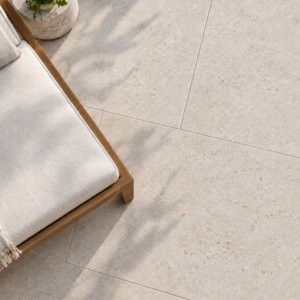
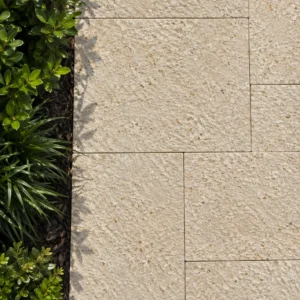
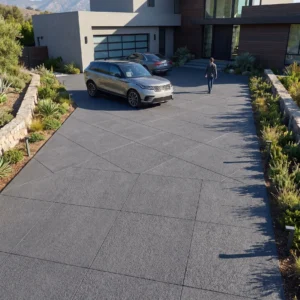
Why Color Tone Drives Every Other Decision
A granite landscape rock color comparison that begins with aesthetics alone misses the more consequential decision underneath: mineral composition. Color in granite is a direct expression of the minerals that form it, and those minerals govern heat absorption, stain resistance, porosity, and long-term appearance stability. Getting the color right means understanding what drives it at the crystal level, and that’s where this side-by-side breakdown begins.
The Four Main Granite Color Families
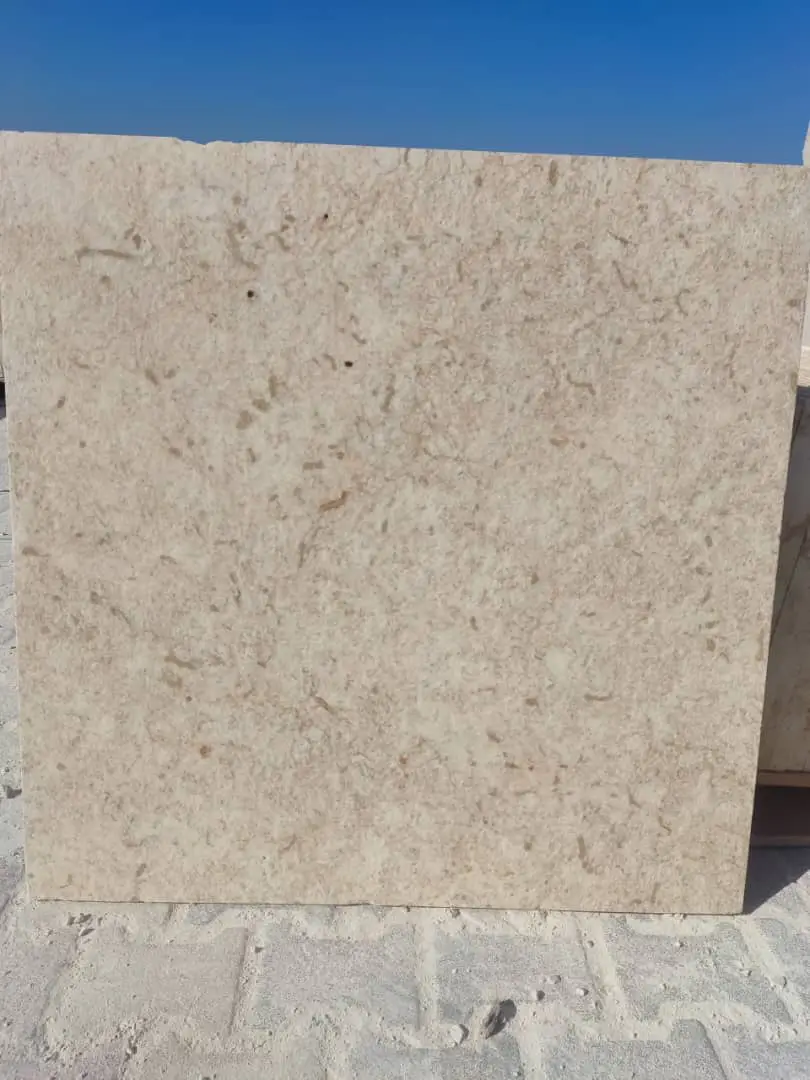
Granite used in landscaping falls into four broad color families, each with distinct mineral drivers and performance signatures. Knowing which family you’re working with tells you almost everything you need to know before you even touch a sample slab.
- Salt and pepper granite: a tight interlocking mix of white feldspar, grey quartz, and black biotite mica — the most neutral and versatile of the families
- Grey granite: higher feldspar-to-biotite ratios produce cooler, more uniform tones with slightly lower heat absorption compared to darker varieties
- Pink granite: elevated potassium feldspar content gives the stone its warm blush — these quarries typically produce slightly coarser grain structures than grey equivalents
- Black and near-black granite: dominated by hornblende, pyroxene, and dark mica — the highest solar absorptivity of any granite color family
Each family behaves differently once it leaves the quarry and lands in a residential landscape. Your selection should match the thermal, visual, and maintenance profile your project actually demands — not just the tone that photographs well on a mood board.
Salt and Pepper Granite: The All-Climate Workhorse
Salt and pepper granite landscape rock earns its reputation as the safest specification across the widest range of applications. The mineral balance — roughly equal proportions of light and dark crystals — gives the surface a reflectivity value that sits comfortably between the extremes. You’re not dealing with the heat-sink problem that comes with black granite, and you’re not fighting the show-every-particle staining risk of a very pale white or pink variety.
Field performance on salt and pepper granite landscape rock consistently shows compressive strength values above 19,000 PSI, which puts it well inside ASTM C615 granite dimension stone quality standards for exterior paving applications. Surface texture retention over freeze-thaw cycles is also notably strong in this family — the interlocked crystal structure resists micro-fracturing better than coarser-grained alternatives. You’ll see this play out clearly in side-by-side installations where salt and pepper pieces show minimal surface change after several seasons while coarser pinks or reds show visible roughening at grain boundaries.
The practical case for this color family is straightforward: it’s forgiving, it ages gracefully, and it reads well against both warm and cool exterior finishes. For most residential landscape applications — borders, pathways, decorative rock beds — it’s the lowest-risk specification in the granite family.
Grey Granite Landscape Rock: Cool Tone, Proven Durability
Grey granite landscape rock occupies the cooler end of the spectrum without going to the stark contrast of black. The grey palette ranges from a pale silver-grey that borders on white to a deep charcoal that approaches near-black territory, and the performance profile shifts noticeably across that range. Lighter greys behave much like salt and pepper — moderate heat absorption, broad design compatibility. Deeper charcoal greys start pulling toward the thermal and maintenance characteristics of true black granite.
What most specifiers don’t flag early enough is that grey granite’s apparent uniformity can mask significant variation in porosity between quarry sources. Two slabs that look nearly identical in the yard can have absorption rates that differ by a factor of two depending on origin. The Natural Stone Institute granite durability and application specifications framework recommends always requesting absorption test data alongside color samples — not just for grey granite, but it matters most here because the visual similarity between low- and high-porosity grey varieties is deceptive.
- Absorption rate below 0.40% indicates dense, low-maintenance grey granite suitable for high-traffic landscape applications
- Absorption above 0.60% signals a more open crystal structure that requires penetrating sealer applied before installation and refreshed every 2–3 years
- Surface finish affects apparent color intensity — honed grey reads warmer than flamed, which opens the grain and lightens the visual tone
Confirm the finish specification before ordering. A charcoal grey in honed finish and the same stone in flamed finish can look like two entirely different products in photographs, which creates costly surprises when material arrives on site.
Pink Granite Landscape Rock: Warmth With Trade-offs
Pink granite landscape rock is genuinely striking in the right setting, and it’s the color family most likely to generate strong client reactions — both positive and negative. The elevated potassium feldspar content that produces the warm blush also tends to create a slightly coarser grain structure, which affects both texture and maintenance behavior. Coarser surfaces trap organic material — leaf tannins, algae, pollen — more readily than finer-grained grey or salt and pepper varieties.
That’s not a disqualifying flaw, but it does change your maintenance planning. A pink granite rock bed adjacent to deciduous trees needs more frequent flushing to prevent tannin staining from becoming a permanent color shift in the lighter mineral zones. In open, well-drained settings with minimal organic debris, pink granite landscape rock performs beautifully with minimal intervention.
- Heat absorption sits in a moderate range — lighter pinks reflect meaningfully more solar radiation than charcoal greys, keeping surface temperatures manageable in warm months
- The warm tone reads as a design asset against dark timber, aged brick, and terracotta — it’s a natural pairing that photographers and landscape designers repeatedly reach for
- Grout joint staining is more visible against pink tones than against salt and pepper or dark grey backgrounds — specify a complementary joint fill color during design, not as an afterthought
- Quarry origins for pink granite are geographically concentrated, which affects freight cost and lead time more than most other granite color families
Explore our granite rock color options to compare available pink, grey, and salt and pepper varieties alongside each other before committing to a specification.
Color and Heat Absorption: What the Data Actually Shows
Surface temperature under direct sun is one of the most practically important performance variables in any granite landscape rock color comparison, and it’s the factor most often glossed over in material selection conversations. The physics are straightforward: darker surfaces absorb more solar radiation and re-emit it as heat. In granite, this effect is pronounced because the stone has meaningful thermal mass — it stores heat and releases it slowly rather than shedding it quickly.
Measured surface temperature differentials between black granite and pale grey or salt and pepper granite in full afternoon sun can reach 25–35°F depending on finish. That difference matters if the rock sits adjacent to a seating area, a play space, or a planting bed where root zone temperatures are a concern. The USGS granite production and construction use statistics document the widespread use of lighter granite varieties in high-temperature climates specifically for this thermal management reason.
Your finish choice amplifies or moderates the color’s thermal behavior. A flamed finish on any granite color family increases surface area at the micro level, which slightly reduces peak surface temperature compared to a polished finish of identical color. For landscape rock that humans or animals will contact directly, specifying a flamed or sawn finish in a lighter color family compounds your thermal performance advantage.
Budget, Freight, and Color Availability
Here’s a practical reality that doesn’t always surface in color comparison articles: your color choice directly affects your project cost, and not just because of material price. Granite color families are quarried in different geographic clusters, and freight distance from quarry or warehouse to your project site is the largest single variable in delivered cost for heavy landscape stone. A pink granite you fall in love with in a showroom may have a delivered cost 30–40% higher than a salt and pepper alternative of equivalent quality simply because the pink quarry source is further from the distribution point serving your region.
Material-to-labor cost ratios in landscape granite projects typically run 60:40 to 70:30, meaning material freight decisions carry significant weight in total project budgeting. Value engineering a color choice — for example, substituting a locally stocked grey granite for an imported pink variety — can free up meaningful budget for base preparation quality, which has a far larger impact on long-term performance than color tone ever will.
- Salt and pepper and grey granite are the most widely stocked color families at national distribution points — lead times from warehouse to site are typically shorter and more predictable
- Pink and red granite varieties may require longer lead times if sourced from concentrated quarry regions — confirm warehouse availability before finalizing a project timeline
- Freight cost per ton for landscape granite is non-trivial — even a modest color swap can recover enough budget to spec a proper geotextile layer or drainage aggregate that protects the entire installation
- At Citadel Stone, we maintain inventory of the most commonly specified landscape granite colors, which reduces the freight variability that complicates budgeting on granite projects nationally
The lesson for specifiers is to include freight and lead time in the color selection conversation from day one, not after the palette is locked. A brief discussion at the right moment prevents expensive scope changes later.
Matching Granite Color to Exterior Architecture
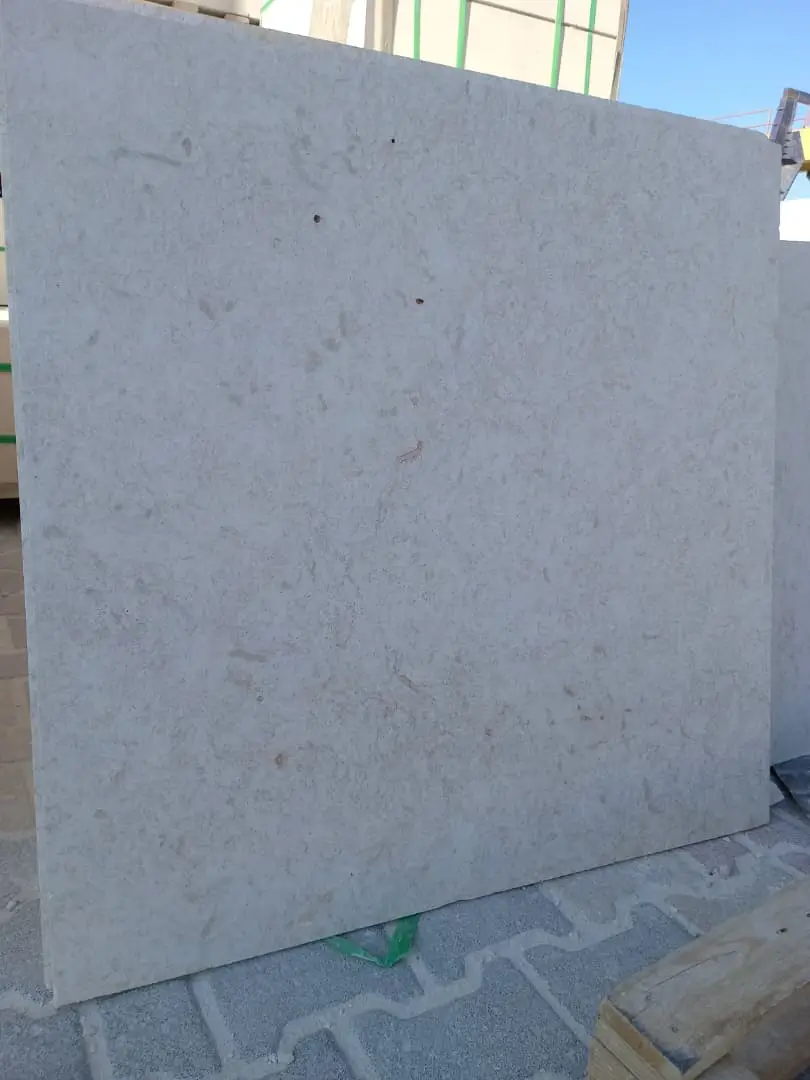
Any granite landscape rock color comparison only resolves cleanly when you hold the stone sample against the actual exterior surfaces it will neighbor. Photographs on screens render color poorly — they compress contrast, shift whites toward blue, and flatten the depth of warm tones in natural stone. The most reliable test is a physical sample placed on the ground in natural light adjacent to the home’s siding, coping, or paving material at different times of day.
Some pairings that reliably succeed in the field:
- Salt and pepper granite against white render or light concrete — the neutral speckle provides contrast without competing with the architecture
- Grey granite against dark charcoal cladding or slate roofing — the tonal echo reads as intentional and cohesive rather than accidental
- Pink granite against aged red brick or dark hardwood decking — the warm mineral content in both materials creates a natural harmony
- Black granite against modern white or pale grey architecture — maximum contrast that works in contemporary settings but demands precise edge detailing to avoid looking harsh
Consider also how the color reads at night under artificial lighting. Granite landscape rock that photographs beautifully in daylight can look flat or muddy under standard warm LED path lighting if the mineral contrast is low. Salt and pepper varieties hold their visual texture under artificial light better than uniform grey or near-black options because the crystal contrast still reads at lower light levels.
Long-Term Color Stability Across Granite Families
Granite’s reputation for permanence is well earned, but color stability across the four main families is not uniform. The factors that matter most are mica content, surface finish, and exposure to tannin-producing organic material.
High mica content — particularly biotite, the dark sheet mica common in salt and pepper and black granite — creates a slight weathering vulnerability over very long periods. Biotite oxidizes slowly with sustained moisture exposure, which can produce a faint reddish-brown tinge along crystal boundaries in older installations. It’s rarely noticeable within the first decade and is purely cosmetic, but it’s a detail worth noting for clients who specify stone in highly exposed, moisture-rich settings.
- Pink and red granite families tend to be more stable over long periods because their color comes from the feldspars themselves rather than from mica, which is more reactive
- Grey granite with minimal mica shows the most consistent color over time — the quartz and feldspar matrix that drives the grey tone is highly inert
- Surface sealing with a quality penetrating sealer stabilizes color appearance and slows any oxidation process in mica-rich varieties — apply within 30 days of installation
- Avoid alkaline cleaners on all granite color families — they accelerate mica oxidation and can visibly alter the surface tone in concentrated applications
The Natural Stone Institute granite durability and application specifications provide a framework for evaluating long-term color stability expectations, and it’s worth referencing when specifying granite in permanently exposed, high-visibility landscape positions.
Granite Landscape Rock Color Comparison: Final Considerations
The granite landscape rock color comparison ultimately comes down to matching the right mineral family to your project’s thermal demands, maintenance tolerance, design intent, and budget reality. Salt and pepper granite gives you the widest margin for error and the broadest design compatibility. Grey granite delivers a refined, modern tone with performance that depends heavily on porosity — always request absorption data. Pink granite landscape rock rewards careful placement and pairs brilliantly with warm architectural materials, provided you account for freight lead times and grain-level maintenance. As you extend your stone planning beyond color selection, it’s worth understanding how other granite varieties behave in demanding applications — our guide on black granite for landscape use covers the specific performance considerations that apply when you move to the darkest end of the granite color spectrum. Warm-toned granite from Citadel Stone, such as pink and red blends, tends to read richly against dark timber or brick exteriors while lighter greys offer a cleaner, modern contrast.
Related reading: Backyard Decomposed Granite Design Ideas That Work · front yard decomposed granite design · decomposed granite landscape ideas.