Acid damage is the mistake most people never see coming when they start cleaning marble pavers. The surface looks fine after a single pass with the wrong product, then six months later you notice a dull, slightly corroded patch where the stone has lost its polish and opened up to staining. Getting your cleaning approach right from the first maintenance cycle is what separates marble installations that stay beautiful for decades from ones that need costly restoration work.
Why Marble Responds Differently to Cleaning Products
Marble is a metamorphic stone composed predominantly of recrystallised calcium carbonate, and that chemistry is what makes it so reactive. Acids — even mild ones found in citrus cleaners, vinegar-based products, and some “natural” bathroom sprays — dissolve the calcite matrix at the surface. You lose the crystalline structure that gives polished marble its depth, and you expose a micro-rough surface that traps dirt faster than the original finish ever did. The Natural Stone Institute marble grades and specifications cover this reactivity in detail, and the guidance is consistent: pH-neutral cleaning chemistry is non-negotiable for any calcareous stone.
Your marble pavers maintenance routine should be built around three principles: compatible chemistry, controlled moisture, and scheduled sealing. Deviate from any one of them and the other two cannot compensate.

Choosing the Right Cleaner for Marble Pavers
The product selection step is where most maintenance programs go wrong. You need a pH-neutral stone cleaner — not a tile cleaner, not a grout cleaner, and definitely not a multi-surface spray. Dedicated stone cleaners are formulated to lift organic soils without attacking the calcium carbonate surface, and the label should explicitly state compatibility with marble or calcareous stone.
- Avoid anything with citric acid, acetic acid, or phosphoric acid — these are etching agents on marble regardless of dilution ratio
- Bleach-based cleaners will lighten surface staining temporarily but oxidise the sealer and degrade the stone surface chemistry over time
- Enzyme-based cleaners work well for organic staining (food, mould, algae) provided they carry a neutral pH rating from the manufacturer
- Soap-based cleaners leave a film that builds up in the stone’s surface texture and darkens the appearance — use only rinse-compatible formulations
- For routine cleaning marble pavers in outdoor settings, a purpose-made outdoor stone wash diluted to the manufacturer’s stated ratio is your safest baseline
Test any new product on an off-cut or inconspicuous area first. Etch damage appears quickly — within minutes on a polished surface — so a ten-minute field test tells you what you need to know before you apply anything to the full installation.
Sealing Marble Pavers Correctly
Sealing is not optional for outdoor marble pavers — it is the primary barrier between the stone’s pore structure and the staining agents your installation faces daily. Marble is significantly more absorbent than granite, and without a functioning sealer, cooking oil, tannins from leaves, and iron-rich water staining penetrate quickly. The question is not whether to seal but which sealer type to specify and how often to reapply.
Penetrating impregnator sealers — sometimes called below-surface sealers — are the correct choice for outdoor marble paving. They enter the pore structure and cure there, repelling water and oil without forming a film on the surface that can peel, trap moisture, or alter the stone’s natural appearance. Surface-film sealers and topical coatings are generally unsuitable for outdoor marble pavers because thermal cycling and freeze-thaw movement cause them to delaminate.
- Specify an impregnator rated for calcareous stone — many fluoropolymer impregnators are formulated for granite and may underperform on marble’s finer pore structure
- Apply sealer to a clean, dry surface — moisture in the pores prevents penetration and leaves a whitish haze
- Follow the sealer manufacturer’s stated reapplication interval, not a generic rule of thumb — intervals vary from one to five years depending on traffic, climate exposure, and stone density
- Perform a water-bead test annually: pour a small amount of water on the surface and observe absorption; if the stone darkens quickly, resealing is due regardless of calendar interval
- On sloped or hillside installations, work in sections from the low point upward so run-off from application doesn’t carry uncured sealer over areas you have already done
The ASTM C503 marble building stone specification establishes the absorption characteristics that underpin sealer selection decisions — your sealer supplier should be able to cross-reference your stone’s absorption test data against their product formulation.
Building a Reliable Marble Pavers Maintenance Schedule
Outdoor marble pavers accumulate different soiling profiles depending on where they sit in your site. A flat courtyard shaded by a pergola traps organic material differently from a south-facing terrace exposed to full UV. Elevation and drainage geometry play a real role here: pavers on a slope drain freely after rain and dry faster, which generally reduces biological growth (algae, moss) but accelerates surface dust and pollen accumulation. Low-lying or flat sites with slower drainage often develop persistent moisture at joints, which drives biological soiling deeper into the stone over time.
- Weekly: sweep or blow debris clear — organic material sitting on the surface breaks down into tannins and acids that etch and stain
- Monthly: damp-clean with a pH-neutral stone wash, working in manageable sections and rinsing thoroughly
- Quarterly: inspect joints for settlement or biological growth and treat with a diluted stone-safe biocide where moss or algae is present
- Annually: perform the water-bead sealer test, assess any etch marks or staining, and plan any restoration work before it compounds
- After any oil or food spill: blot immediately, do not wipe (wiping spreads the stain laterally), and apply a poultice draw if absorption has occurred
For sealing and general care decisions, the Citadel Stone care recommendations page covers the practical steps our technical team advises for calcareous stone in outdoor environments.
Stain Removal: Matching the Treatment to the Stain Type
Cleaning marble pavers after staining has set requires you to identify the stain chemistry before you reach for any product. Treating an oil stain with the same approach you use for rust will either fail or make the situation worse. Most stain types fall into four categories, each with a distinct treatment approach.
Organic stains — leaf tannins, mould, food, coffee — respond to hydrogen peroxide-based poultices in concentrations appropriate for marble. Mix with an absorbent powder (diatomaceous earth or kaolin), apply in a thick layer over the stain, cover with plastic sheeting, and allow the poultice to draw the staining agent out of the pore structure as it dries. Organic stains on sealed marble often lift within a single poultice application.
- Oil and grease stains require an alkaline-side poultice (pH 8–10) combined with an absorbent medium — the mild alkali saponifies the oil and allows extraction
- Rust staining from iron-bearing water or metal furniture legs is one of the hardest stain types on marble — commercial iron-specific poultice products exist, but deep rust staining may require professional restoration
- Etch marks from acid contact are not stains — they are surface damage. Light etching on a honed surface can sometimes be polished back by a stone restoration professional; etching on a heavily polished finish generally requires machine re-polishing
- Efflorescence (white crystalline deposits at joints or the surface) results from soluble salts migrating through the stone or substrate — it is removed dry first, then with a diluted non-acid efflorescence remover specifically formulated for calcareous stone
Pressure Washing Marble Pavers: What You Need to Know
Pressure washing is a common approach for outdoor paving maintenance, and the technique requires careful calibration on marble. High-pressure washing at close range can erode the joint material between pavers, drive moisture into the stone faster than the substrate can drain, and physically damage a polished or honed surface finish if the nozzle passes too close or lingers. That said, low-pressure rinsing with a wide fan nozzle is a legitimate part of the cleaning sequence — the issue is pressure and nozzle choice, not the method itself.
- Use a wide fan nozzle (40-degree or wider) and maintain a working distance that keeps pressure at the surface within a safe range — your equipment manual or a stone contractor can advise on appropriate settings
- Never use a zero-degree or narrow-stream nozzle on marble surface or joints
- On graded or sloped installations, direct rinse water downgrade so you are not driving dirty water back up into cleaned areas
- Allow the stone to dry fully before assessing stain removal results — wet marble always appears darker and may mask remaining staining
- After pressure rinsing, check joint integrity and refill any sand or grout that has been displaced
How Your Marble Finish Affects Cleaning Demands
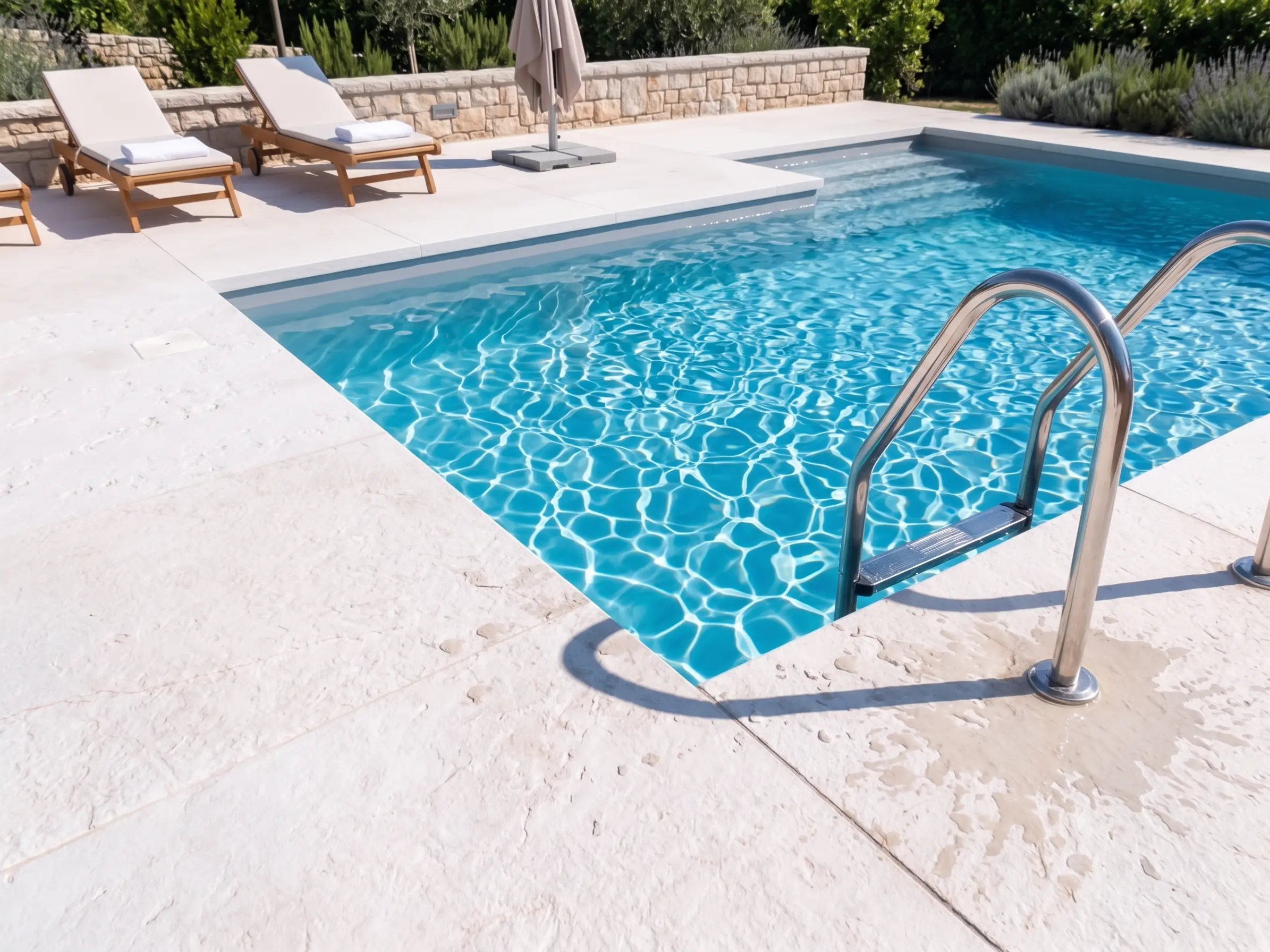
The finish on your marble pavers directly changes how you approach the cleaning marble pavers process. A polished finish presents a dense, smooth surface that resists initial penetration but shows etch marks and water spotting immediately. A honed finish is more forgiving of surface staining — soiling sits more visually level with the stone — but the open texture means faster absorption into the pore structure if the sealer fails. A tumbled or brushed finish leaves an open, matte texture with higher surface area and more joint-like recesses where organic material accumulates, requiring more frequent mechanical cleaning.
According to the Britannica geological profile of marble, the crystal structure and mineral composition of marble vary meaningfully by quarry source, which translates to real variation in surface hardness, porosity, and how a given finish holds up over time. Specifying marble for an outdoor project without reviewing the stone’s test data by finish type is a gap worth closing.
Citadel Stone cuts marble to order at our selected quarries, which means the finish you specify is applied to stock that has been inspected for consistency — not pulled from a batch where finish quality varies across a consignment.
Drainage, Grade, and Why They Change Your Maintenance Approach
Site terrain affects cleaning marble pavers more than most maintenance guides acknowledge. On hillside or sloped installations, drainage works in your favour — water moves off the surface quickly, reducing the dwell time that allows staining agents to penetrate. The practical consequence is that biological growth (moss, algae) is less of a recurring problem, but fine particulate — dust, pollen, construction debris — accumulates in low spots and against any raised edge details at the base of a slope.
Low-lying or flat sites present the inverse challenge. Drainage is slower, puddles remain after rain, and the extended contact time between water and the stone surface draws dissolved minerals and organic contaminants into the pore structure faster than the sealer can compensate. On these sites, increase sealing frequency and prioritise joint maintenance, since standing water at joints accelerates mortar or sand degradation and creates entry points for staining agents that bypass the sealed surface entirely.
- On graded sites, plan your cleaning passes to follow the natural drainage direction — working with the grade reduces recontamination from dirty rinse water
- On flat installations, ensure surface falls of at least 1.5% are maintained during base preparation so that ponding does not become a chronic condition
- Sloped installations may require a delivery plan that accounts for site access constraints at grade changes — offloading arrangements should be confirmed as part of pre-delivery scheduling
- After heavy rainfall on any sloped marble installation, inspect the low-side edges for sediment deposition and clear it before it dries and bonds to the surface
Long-Term Care for Marble Pavers: Getting the Foundations Right
The decisions that determine long-term maintenance success for cleaning marble pavers are largely made at specification and installation — chemistry compatibility, sealer selection, joint design, and drainage geometry. Once those foundations are right, the ongoing work is straightforward: a consistent schedule, the correct products, and prompt attention to spills and biological growth before they set. What often fails an installation is the gap between commissioning and first maintenance — the assumption that marble needs no attention until a problem appears. The stone’s pore structure is working from day one, and your sealer has a finite service life that begins at application, not at the first visible sign of wear.
As you plan the full scope of your marble paving project — from substrate preparation through long-term care — the installation foundation matters as much as the maintenance routine. For guidance on base preparation and setting methods, marble paver installation on a patio base covers the structural decisions that support everything above grade. Marble pavers from Citadel Stone come from our selected quarries in the Middle East, chosen for their fine, consistent grain and cleanable surface characteristics.
Related reading: marble pavers cost · choosing marble pavers · choosing white travertine pavers.