

Black basalt countertop specification comes down to understanding what you’re actually working with at a mineralogical level — and most buyers skip that step entirely. Basalt is an extrusive igneous rock, which means it cooled rapidly at or near the earth’s surface, producing an extremely fine-grained, dense matrix that behaves very differently from granite or quartzite under fabrication stress. That rapid cooling is exactly why honed black basalt countertop surfaces carry such a precise, velvety finish — the tight grain structure takes the machine honing evenly, whereas a coarser-grained stone would show inconsistent tool marks across the face.
Your decision to go with a black basalt countertop will intersect with questions about porosity behavior, thermal sensitivity, edge profiling, and structural support — each of which deserves a specific answer rather than a generic assurance. This guide works through each performance dimension so you can write a specification that holds up in practice, not just on a product sheet.
What Makes Basalt a Countertop Material Worth Specifying
The mineralogy of basalt sets it apart from most countertop stones in a practical way. Plagioclase feldspar, pyroxene, and olivine make up the primary mineral assemblage, and none of these minerals are the open-cleavage types that allow granite to spall along crystal boundaries under point load. According to USGS basalt volcanic rock properties and composition, basalt’s fine-grained texture results from its volcanic origin — a characteristic that directly influences how the material resists edge chipping and surface abrasion in kitchen environments.
The dark tonality you’re specifying is a function of iron and magnesium content, not a surface treatment or coating. That matters because the color is consistent through the full slab depth, which means scratches and edge wear don’t reveal a lighter substrate. For countertop applications where edge exposure is visible — waterfall edges, peninsula overhangs, and prep surfaces — this through-body color consistency is a genuine performance advantage, not a marketing point.
Basalt’s thermal mass behaves noticeably in kitchen use. The stone absorbs and holds heat, which means a hot pan placed directly on the surface will create a localized temperature differential across the slab. That’s not unique to basalt, but basalt’s relatively low thermal conductivity means heat dissipates more slowly than it would through granite. Most installers don’t flag this at specification time, and most clients notice it the first time they leave a cast-iron skillet on the surface.
Porosity, Sealing, and Maintenance Protocol
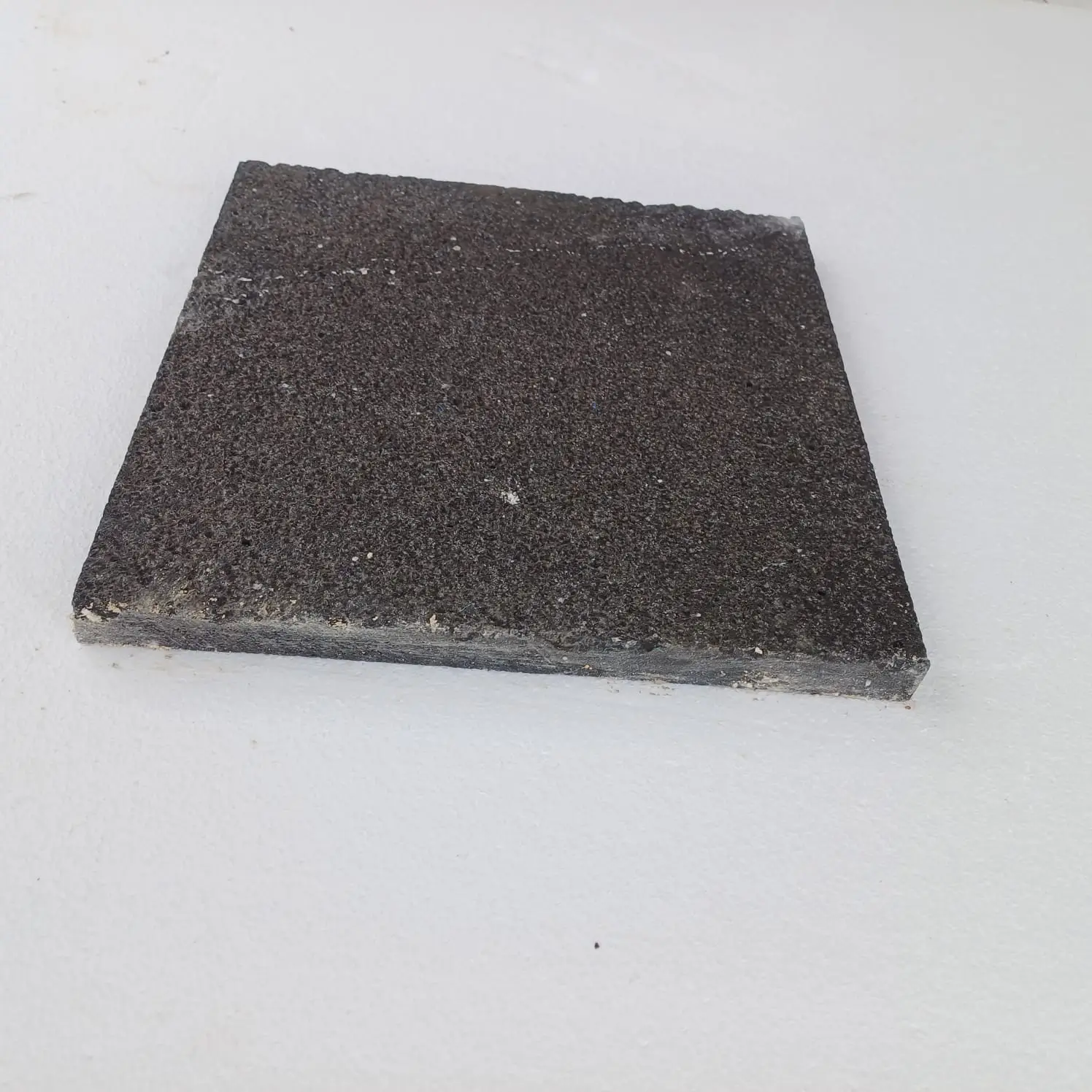
Basalt is denser than limestone or travertine, but it is not a zero-porosity material — and that distinction matters when you’re specifying it for kitchen countertops where cooking oils, wine, and acidic liquids are the daily hazard. The stone’s pore structure tends to be interconnected in a fine network, which means liquid penetration, when it occurs, moves through a wider internal area than a single large void would suggest. Request the water absorption test report from your supplier before specification — the result gives you the sealing interval your project needs, and it varies between quarry sources.
The sealing protocol for a black basalt countertop is more sensitive than for darker granites, and here’s why: over-sealing basalt — particularly with a high-solids impregnating sealer — can produce a faint haze or sheen that disrupts the characteristic matte finish of honed stone. The right approach is to use a penetrating, solvent-based impregnator applied in a single thin coat, allowed to fully absorb, with any surface excess wiped before it flashes. Your sealer manufacturer’s data sheet will state the reapplication interval — follow that interval rather than waiting for visible staining to appear.
For day-to-day cleaning, pH-neutral stone cleaners are the requirement. Avoid any product containing citric acid, bleach, or vinegar — these attack the iron-rich mineral matrix and, over repeated use, cause subtle surface dulling that you won’t notice until the countertop looks distinctly different from its original specification. This is the maintenance detail most end-users aren’t given at installation handover, and it’s the one that drives early refinishing calls.
Finish Options and Surface Texture
The finish you select for a black basalt countertop controls both the aesthetic outcome and the daily maintenance burden — and the two are often in tension. Honed basalt delivers the clean, matte surface that most specifiers and designers are after: it absorbs ambient light rather than reflecting it, which makes the deep black tone appear richer and more saturated in most lighting conditions. The trade-off is that honed surfaces show fingerprints and water marks more readily than brushed or leathered alternatives.
A brushed finish leaves an open, matte texture with gentle surface undulation produced by wire-brushing the face during production. That texture means daily fingerprinting is less visible, and the surface feels warmer underhand than a precision-honed face. For residential kitchen islands where hands are constantly moving across the surface, a brushed finish is often the more practical specification. A leathered finish takes the brushing process further, producing a more pronounced three-dimensional texture — it reads as very tactile and organic, and it largely self-conceals minor surface marking.
Polished basalt countertops exist but are a minority specification for good reason. The fine grain structure polishes to a high gloss, but micro-pitting from olivine crystal boundaries is often visible under raking light — something you don’t see with polished granite because granite’s coarser crystal structure fills those boundaries differently. Specify polished basalt only after viewing a full-size sample in the actual lighting conditions of the installation space.
Slip Resistance and Countertop Surface Safety
Slip resistance becomes a more relevant topic when your black basalt countertop specification extends to adjacent applications — window sills, bar tops with liquid exposure, or integrated draining boards adjacent to sinks. The standard that governs wet-surface testing for stone is ANSI A326.3, which measures performance wet; the finish is the primary variable affecting how a surface behaves under those conditions. According to Natural Stone Institute igneous stone paving technical standards, surface texture and finish are the key specification decisions affecting stone surface behavior in wet conditions.
For any project where a test report on surface behavior is required by a client or code reviewer, request it from your supplier — the result is document-specific to the finish and quarry batch, and a generic category claim tells you nothing useful about your actual material. What you can state with confidence in your specification is that a brushed or leathered finish leaves an open, matte texture that differs meaningfully from the smooth, close face of a polished surface, and that difference is what finish selection is actually managing.
Structural Support and Code Considerations
Your countertop’s substrate and structural support requirements aren’t governed by the stone’s inherent properties alone — they’re shaped by the span, the overhang, and, in some jurisdictions, by local building code provisions that address point-load transfer in kitchens with heavy stone surfaces. Basalt is a dense material; a full slab at standard countertop thickness carries significant self-weight, and that weight must transfer cleanly to the cabinet structure below without inducing flex in the substrate. Flex is the enemy of stone countertops regardless of material — it transmits to the surface and produces hairline cracks at the most mechanically stressed points, typically near sink cutouts and cooktop openings.
In seismic zones classified under IBC Chapter 16, heavy stone countertops may require supplementary anchoring or adhesive bonding details that differ from standard countertop practice. Your structural engineer or local building official is the authority on this — not the stone supplier. What the stone supplier can give you is the thickness and weight-per-square-foot figures from the fabrication drawings, which feed directly into the structural calculation. Always request those numbers before finalizing cabinetry specifications in jurisdictions with active seismic requirements.
- Confirm cabinet substrate type and span before finalizing slab thickness — plywood decking performs differently from particleboard under stone load
- Request fabricator drawings showing cutout locations before substrate installation, not after
- In seismic zones, consult IBC Chapter 16 requirements for heavy countertop material anchoring
- Overhang spans beyond standard dimensions require under-counter corbel or bracket support — check the fabricator’s maximum unsupported overhang recommendation for your thickness
- Local code authorities may require a structural review for countertop loads in high-seismic or high-load applications
The interaction between frost-line depth and floor structure doesn’t directly affect interior countertops, but it becomes relevant when you’re extending a black basalt countertop specification to an outdoor kitchen in a freeze-thaw region. Outdoor countertop bases must sit on footings below the frost line to prevent heave-induced cracking, and that’s a code requirement rather than a material recommendation. Check your jurisdiction’s frost-depth table before any exterior countertop specification is finalized.
Fabrication, Edge Profiles, and Tolerances
Basalt’s fine grain structure is an advantage in fabrication — the material machines predictably, holds tight radii on edge profiles, and doesn’t blow out at corners the way some coarser-grained stones do. That said, the same mineralogy that makes basalt dense also makes it relatively brittle under impact load, which means template accuracy and safe transport are critical. A slab that arrives at the site with a hairline crack from rough handling will propagate that crack under the thermal cycling of kitchen use, and the failure point is almost always at a cutout or notch in the fabricated piece.
For edge profiling, eased and beveled edges perform better over time than pencil edges on basalt — the fine bevel or ease removes the sharp arris that chips most readily under everyday contact. Full bullnose profiles are viable but add significant machine time because basalt requires wet cutting throughout; dry tooling generates thermal stress at the surface that produces micro-fractures invisible to the eye at installation but visible after the first year of use. Any fabricator specifying a black basalt countertop should confirm their tooling protocol with the supplier before cutting begins.
At Citadel Stone, we cut black basalt to order at our selected quarries, which means the slab dimensions, thickness tolerances, and finish specifications are confirmed against the project drawings before material is prepared. That coordination eliminates the tolerance stacking that occurs when a slab is cut speculatively and then re-cut in the field to fit — a practice that puts unnecessary stress on a finished edge.
Explore our black basalt surfaces to see the available finishes and dimensions that can be confirmed to your project specification.
Ordering, Lead Times, and Delivery Logistics
Planning your black basalt countertop procurement starts with accepting that this is not an off-the-shelf transaction. Material is cut to order against confirmed drawings, and lead times are quoted with the order rather than advertised as a fixed figure — the actual timeline reflects the current production schedule at our selected quarries and the logistics route to your project location. Factor that lead time into your project programme before cabinet installation begins, not after.
Delivery of fabricated stone countertops involves coordinating access to the site and confirming offloading arrangements before the delivery date. A fabricated basalt slab for a kitchen island is heavy and relatively fragile in transit — the transport packaging and offloading method matter as much as the driving route. Your project’s access constraints, particularly for high-rise residential or tight urban sites, may affect scheduling and should be communicated clearly at the time of order.
- Confirm final template dimensions before cutting — changes after production begins may not be accommodatable without restarting the cut
- Lead times are quoted with the order and depend on production schedule and logistics; build margin into your programme
- Communicate site access constraints — road widths, loading dock availability, and floor-level access — at time of order
- Arrange a delivery inspection protocol so the stone can be checked before the delivery crew departs
- Citadel Stone stocks basalt at its selected quarries and manages delivery logistics from the quarry forward — delivery specifics are confirmed when the order is placed
Comparing Basalt to Competing Countertop Materials
The honest comparison between a black basalt countertop and competing dark stone options starts with understanding what each material actually is. Black granite — often specified for the same visual effect — is a true igneous rock with a visible coarse crystalline structure, generally higher quartz content, and different porosity behavior. Granite’s coarser grain means it takes a high polish more reliably and shows fewer surface micro-pits under raking light, but it also means the visual character is fundamentally different: granite has sparkle and movement, basalt has depth and uniformity.
Black quartzite is a metamorphic material with extremely high silica content, making it highly resistant to surface etching from acids — a practical advantage in kitchen environments where granite and basalt require vigilant sealer maintenance to achieve the same result. The trade-off is that quartzite is harder to fabricate, more expensive per square foot in most markets, and doesn’t carry the same matte-finish versatility that honed basalt delivers. According to basalt volcanic rock formation and construction properties, basalt’s dense, fine-grained matrix distinguishes it from both granite and metamorphic alternatives in ways that directly affect fabrication behavior and surface finish characteristics.
Porcelain slabs in dark formats are a competing specification that deserves an honest assessment. Porcelain is highly resistant to acid etching, UV fading, and moisture penetration — and it’s consistent from batch to batch in a way that natural stone cannot be. The counter-argument is authenticity: porcelain is a manufactured product, and the printed pattern that simulates stone movement has a visual frequency that repeats across a large surface in ways that natural basalt, with its genuine through-body mineral variation, does not. For projects where material authenticity is a client priority, that distinction matters.
Installation Best Practices and Common Field Errors
The installation detail that determines long-term performance of a black basalt countertop more than any other is substrate preparation — specifically, confirming that the substrate is flat, level, and fully supported before the stone is set. Basalt slabs do not flex to accommodate substrate irregularities the way thinner tile formats do; any high point on the substrate becomes a fulcrum, and the slab rocks on it under load until the stress propagates a crack. A straight-edge tolerance check across the full cabinet run before stone placement is a non-negotiable field step.
Setting material selection matters more than most installers acknowledge. A rigid epoxy or polyester adhesive performs well under the compressive loads of a countertop but does not accommodate the thermal movement of a large, dark stone surface exposed to direct sunlight — particularly relevant for outdoor kitchens or island countertops adjacent to large south-facing glazing. In those scenarios, a flexible adhesive that meets the movement requirements of your slab geometry is the correct specification, and the adhesive manufacturer’s technical data sheet is where you confirm that suitability.
- Check substrate flatness with a straight-edge across the full cabinet run — address any high or low points before stone placement
- Confirm setting adhesive suitability for slab size, thermal exposure, and substrate type — never use a rigid adhesive on a large slab with significant solar exposure
- Protect the surface during adjacent trade work — basalt’s honed finish marks from abrasive dust settling and being wiped under pressure
- Seal the stone before grouting any joint or caulk application — this prevents grout haze from staining the porous surface
- Allow full adhesive cure before loading the countertop — placing heavy objects too early is a common cause of adhesive bond failure at cutout edges
- Apply caulk rather than grout at the joint between the countertop and a tile backsplash — the differential movement between the two planes requires a flexible connection
Basalt’s coloration range — from near-charcoal to warm dark grey — varies between quarry sources, and matching across multiple slabs in a large kitchen installation requires reviewing full slabs together before fabrication, not selecting from small samples. Color consistency is a quarry-source variable, not a fabrication variable, and it’s the one element of the specification that benefits most from seeing the actual material batch.
Expert Summary
Specifying a black basalt countertop correctly requires you to move through the material’s mineralogy, porosity behavior, finish mechanics, fabrication tolerances, and structural support requirements as connected decisions — not independent checkboxes. The most consistent failure mode in black basalt countertop installations isn’t material failure; it’s specification gaps that compound into field problems. Substrate flatness that wasn’t confirmed before setting, sealer application that left surface haze on a honed finish, edge profiles that chipped because the arris was left too sharp — these are installation outcomes, and they all trace back to decisions made before the stone arrived on site.
Your specification should address finish selection, sealing protocol and interval, substrate preparation tolerance, adhesive type relative to thermal exposure, and structural support details for the slab spans and overhangs your project involves. In seismic regions, that specification should also reference local code requirements and, where applicable, input from a structural engineer who has reviewed the actual slab weight and cabinet construction. No amount of material quality compensates for a structural or substrate deficiency — that principle applies to every countertop material, but it applies with particular weight to dense, relatively brittle stone like basalt.
Beyond countertop applications, if your project involves dark stone elements in adjacent hardscape — outdoor kitchens, bar surrounds, or feature walls — understanding how different dark stone types compare across applications helps you maintain material cohesion across the project. For a closer look at how basalt performs across slab formats, black basalt slab selection and comparison covers the specification decisions specific to full slab procurement. Basalt countertop stone from Citadel Stone is prepared from selected quarries in the Middle East for consistent dark tone.
Related reading: black basalt honed · black basalt driveway surface guide · black basalt cobblestone installation.