

Tumbled travertine pavers and small-format tiles start from the same quarried block, but the specification gap between them is wider than most project managers expect. The tumbling process doesn’t just soften edges — it meaningfully changes how the surface handles thermal cycling, joint behavior, and moisture movement across a slab assembly. Understanding that gap is what separates a side-by-side comparison that actually guides decision-making from one that merely lists surface attributes.
What the Tumbling Process Actually Changes
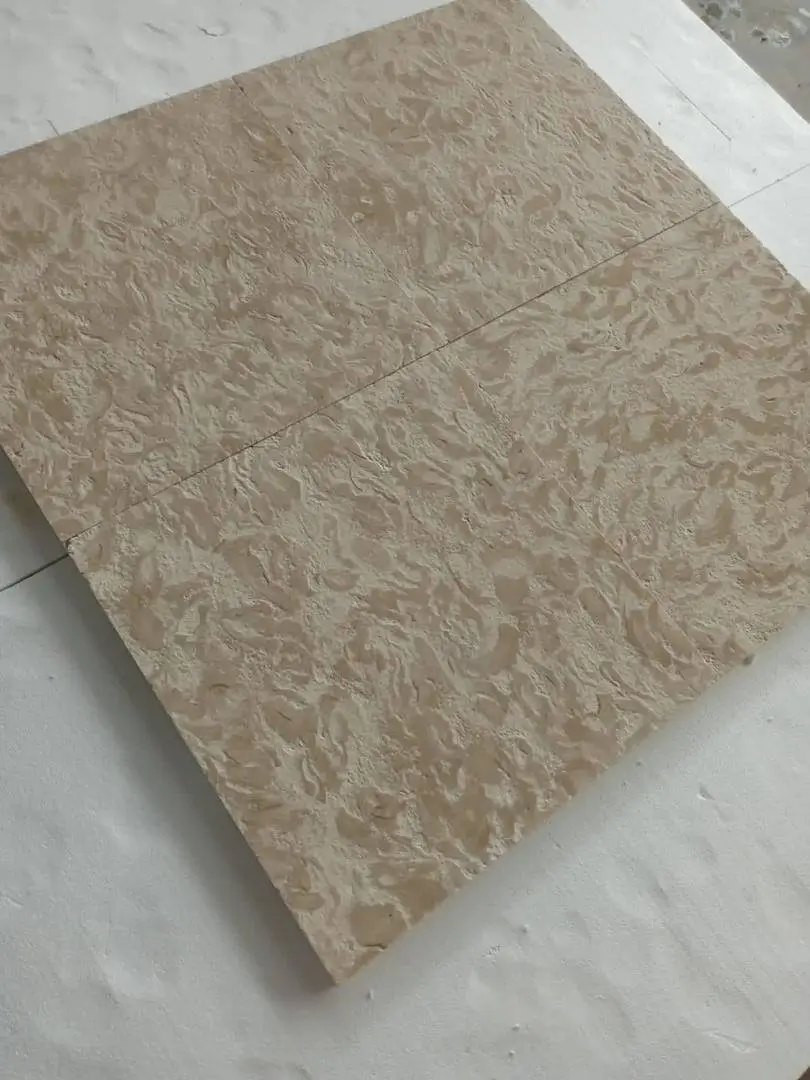
Tumbled travertine pavers go through mechanical abrasion that rounds every corner and edge, creating a surface texture that reads as aged and handcrafted. That’s the aesthetic story. The structural story is more interesting: the tumbling opens micro-voids at the surface level, which shifts how the paver manages water and heat compared to a cut-face tile finish. Small tiles — typically 12×12 or smaller — are usually honed or polished, leaving sharp arrises and a tighter surface plane. The difference in edge profile alone changes grout joint requirements, expansion zone behavior, and how the installation responds to ground movement over time.
Field experience shows that tumbled travertine pavers self-adjust slightly in bed during thermal expansion cycles. The rounded edges allow fractional movement without telegraphing stress to adjacent units the way sharp-edged tiles do. In a large outdoor setting, that tolerance adds up meaningfully across hundreds of square feet.
Size Format and Scale: Where the Decision Really Lives
Format size is rarely just an aesthetic call — it’s a structural and logistical decision that shapes your entire installation spec. Tumbled travertine pavers typically run in the 12×24, 16×16, or 18×18 nominal range, though 24×24 units are common in higher-budget pool deck and courtyard applications. Small tiles — 4×4 through 6×6 — serve a fundamentally different spatial role. Here’s where each format genuinely excels:
- Large-format tumbled pavers minimize grout joint frequency, reducing long-term joint maintenance across wide horizontal planes
- Small tiles accommodate curved layouts, mosaic fields, and confined vertical or accent applications where larger units become geometrically unwieldy
- Tumbled travertine pavers at 3/4-inch to 1-inch nominal thickness handle outdoor subgrade variability better than thinner small tiles
- Small-format tiles allow for pattern complexity — herringbone, basketweave, fan configurations — that pavers rarely achieve efficiently
- Paver formats are better suited to mortar bed or compacted aggregate installations outdoors; small tiles typically require a continuous, flat bonded substrate
The scale decision also connects directly to budget. Larger format pavers generally carry a higher per-unit cost but require fewer pieces, less adhesive, and proportionally less labor on straightforward rectangular layouts. Small tiles flip that ratio — lower material cost per square foot in many cases, but noticeably higher installation labor due to piece count, joint alignment precision, and back-buttering requirements.
Surface Finish Differences and Wet-Surface Behavior
The tumbled finish creates a naturally textured surface that most specifiers consider preferable for outdoor wet environments. Small tiles in a honed or polished finish present a measurably smoother surface under wet conditions. If you’re specifying either material for pool surrounds, shower floors, or any surface subject to standing water, the finish — not the material alone — is the variable that governs wet-surface behavior. Per ASTM C1527 travertine dimension stone standards, finish classification is a defined specification criterion that should appear in your project documentation. For any installation where wet-surface performance matters, reference ANSI A326.3 and specify finish type explicitly — tumbled, brushed, or honed — rather than relying on generic material descriptions.
One detail that gets overlooked: small tiles with polished finishes can actually perform acceptably in shower floors when paired with a high joint-frequency mosaic layout, because the grout network itself provides texture across the walking plane. In that specific application, joint density compensates for a smoother tile face. A tumbled paver achieves surface texture through the stone itself, which is a more reliable long-term approach outdoors where grout joints can erode or settle.
Thickness, Substrate Depth, and Base Requirements
This is where the comparison gets genuinely technical. Tumbled travertine pavers for outdoor use typically spec at 1.25 inches to 2 inches nominal, depending on the application load. Small travertine tiles usually run at 3/8 to 1/2 inch. That thickness differential has cascading effects on your base prep:
- Thicker pavers tolerate more subgrade irregularity — a 4-inch compacted gravel base with a 1-inch sand setting bed is standard for pedestrian paver applications
- Thin small tiles demand a flat, bonded, continuous substrate — typically a concrete slab or cement board — with zero tolerance for differential settlement
- Outdoor small tile installations on grade require substrate waterproofing membranes and crack-isolation layers that paver-on-aggregate systems largely avoid
- Paver installations in freeze-thaw regions benefit from free-draining aggregate bases that allow water to escape before expansion pressure builds
- Small tile systems bonded to concrete can telegraph slab cracks directly through the tile, requiring control joint planning before any stone is set
If your project is outdoors and involves any grade change or soil movement risk, the paver-on-aggregate approach carries significantly lower long-term risk than thin tile on a rigid bonded system. The National Stone Institute’s guidance on outdoor stone performance confirms that free-draining bases outperform rigid bonded systems in climates with significant temperature variation, per NSI travertine outdoor suitability data.
Cost Factors, Freight Logistics, and Budget Planning
The material-to-labor cost ratio differs substantially between these two formats, and that ratio shifts again depending on your project’s location relative to distribution points. Tumbled travertine pavers are heavier per square foot than thin small tiles — a pallet of 2-inch pavers can run 4,000–5,000 pounds, which affects both truck freight rates and job site handling requirements. Your total delivered cost needs to account for freight distance honestly, not just the material price per square foot shown in the catalogue.
In markets where skilled stone installation labor commands a premium, large-format tumbled pavers often prove more cost-effective over the full project cycle. Fewer pieces, simpler layout geometry, and less precision grout work compress the labor hours significantly. Small tiles in a complex pattern can double installation time relative to a straightforward paver grid — and in a tight labor market, that hour difference becomes a major budget line. For projects where you’re value-engineering against a fixed budget, switching from a mosaic small-tile design to a running-bond tumbled paver layout can free up 15–20% of the installation budget without a meaningful sacrifice in visual quality.
Warehousing also plays into project timeline. Citadel Stone maintains warehouse inventory of tumbled travertine pavers available for prompt dispatch, which can reduce lead times significantly compared to special-order small-format tile sets sourced through import cycles. If your project schedule is tight, warehouse availability is a practical budget variable — delayed materials mean extended labor mobilization costs that eat into your contingency fast. Confirm warehouse stock levels before your installation crew is scheduled, not after.
Grouting, Jointing, and Long-Term Maintenance
Joint strategy is one of the clearest points of divergence between these two formats. Tumbled travertine pavers in outdoor settings typically use wider joints — 3/8 to 1/2 inch is common — filled with either polymeric sand (in dry-set applications) or sanded cementitious grout (in mortar-bed applications). Small tiles usually run 1/16 to 3/16 inch joints, demanding non-sanded or fine-sanded grout that’s far more sensitive to differential movement.
- Wide paver joints with polymeric sand allow controlled movement without cracking — sand reconsolidates after minor settling
- Narrow tile grout joints are brittle under movement — hairline cracks appear first at joints and then propagate into tile faces if subgrade issues persist
- Tumbled paver surfaces are easier to spot-repair: individual pavers can be lifted and reset without disturbing adjacent units
- Small tile repairs require careful grout removal and often disturb neighboring tiles — a more disruptive and costly intervention
- Both formats benefit from penetrating sealer application, though small tiles with polished faces need sealer renewal on a tighter schedule than tumbled pavers with their open textured surface
Annual maintenance for tumbled travertine pavers outdoors typically involves joint sand top-up, sealer reapplication every 18–24 months, and periodic alkaline cleaning. Small tiles in indoor or semi-covered settings require similar sealer attention but are less susceptible to joint erosion. Factor maintenance access into your specification — a tumbled paver terrace with good drainage is genuinely low-maintenance for years between major interventions.
Where Each Format Performs Best: Practical Application Matching
The clearest guidance comes from matching format to application context rather than trying to force one material into every scenario. Tumbled travertine pavers consistently outperform small tiles in these settings:
- Outdoor terraces, pool surrounds, and courtyard floors where large-scale continuity matters
- Garden walkways and stepping paths where the tumbled profile reads naturally in landscape context
- Driveways and vehicle-accessible areas at appropriate thickness specs — pavers handle point loading that thin tiles cannot
- Projects in freeze-thaw climates where free-draining aggregate bases outperform bonded rigid systems
Small travertine tiles deliver clear advantages in these contexts:
- Interior wet rooms — shower floors and walls — where curved or intricate mosaic layouts are specified
- Vertical applications: feature walls, fireplace surrounds, bathroom niches where thin tile weight is an advantage
- Accent borders within a larger paver field — small tiles create visual contrast and detail at transition zones
- Tight-geometry spaces where large-format cutting waste would be prohibitive
Explore the full range of format options through the Citadel Stone paver selection to compare how specific dimensions and finishes map to your project requirements.
Combining Both Formats on a Single Project
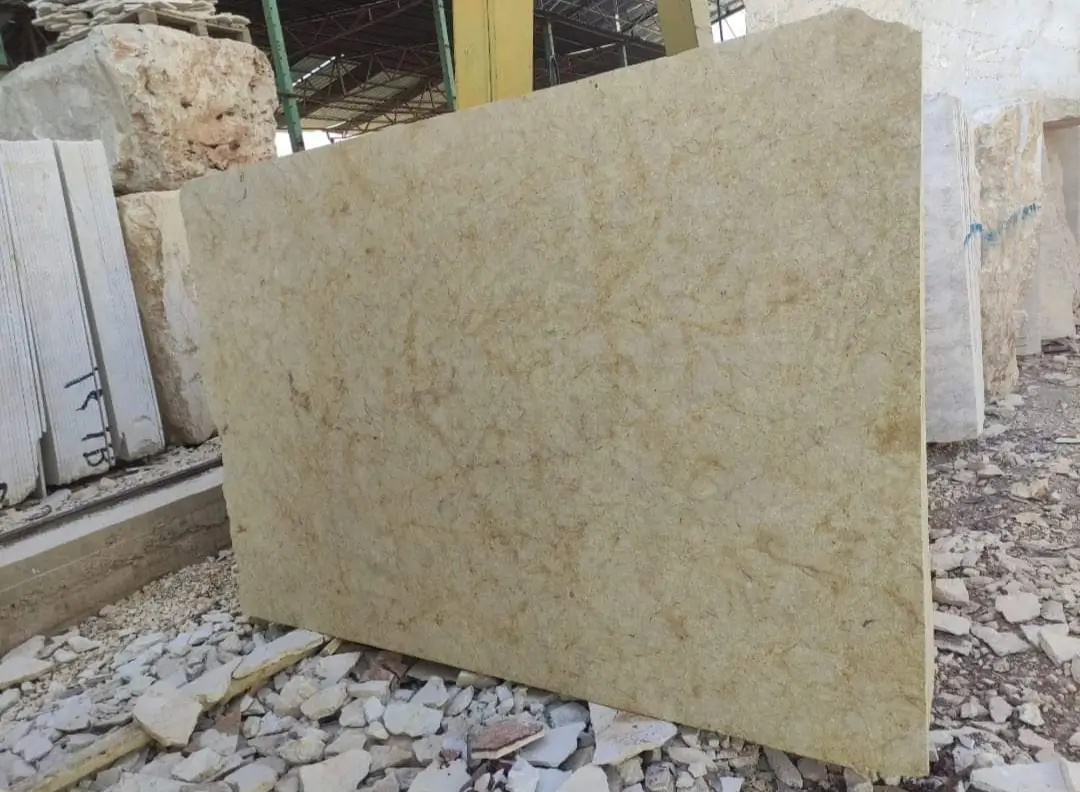
One approach that often gets overlooked: using tumbled travertine pavers as the primary field material while incorporating tumbled bluestone pavers as a contrasting border or transition element. Bluestone’s denser composition and cooler grey tones create a natural visual counterpoint to travertine’s warm cream palette, and both tumbled formats share compatible installation requirements — similar base depth, joint width, and sealer chemistry. This combination allows you to define zones or circulation paths without switching to an entirely different installation system, keeping your logistics and material ordering consolidated.
Tumbled bluestone pavers are particularly effective as perimeter banding around a travertine field — the tonal contrast reads clearly without requiring a change in substrate depth or mortar mix. Mixing tumbled travertine with small tiles in the same horizontal plane is achievable but requires careful thickness management. The substrate must accommodate both formats simultaneously — typically achieved by rebating the tile field into the setting bed or using a thicker mortar bed section beneath tile areas to bring both surfaces flush. It’s a detail that’s straightforward to spec on paper but demands close supervision during installation to avoid lippage at the format transition.
According to USGS dimension stone production data, travertine remains one of the most consistently specified natural stone materials across residential and commercial outdoor applications in the US — a reflection of its established performance record in diverse installation contexts. That production stability also means supply is reliable, which matters when you’re coordinating multi-phase deliveries across a construction schedule. Per USGS limestone and travertine natural formation data, travertine’s geological consistency across major quarrying regions supports the material quality predictability that long-run projects depend on.
Getting Tumbled Travertine Paver Specifications Right
Your format decision — tumbled travertine pavers versus small tiles — should be driven by substrate conditions, application load, installation context, and long-term maintenance budget, in roughly that order of priority. Aesthetic preference matters, but it should be the final filter, not the first. Specifiers who reverse that sequence end up retrofitting structural solutions around visual choices, which is where cost overruns and early failures originate.
At Citadel Stone, we quarry, template, manufacture, and handle our travertine stock through our selected quarries, which gives our technical team direct insight into how specific lots perform across different finish and format combinations. If you’re weighing specifications for a larger project, our team can advise on format-to-application matching based on the specific conditions of your site — not generic catalogue guidance. As you continue refining your natural stone specification, travertine care and finishing guidance covers how travertine performs in detail-sensitive applications and what maintenance protocols the material genuinely requires long term. Sourced from select natural stone quarries worldwide, Citadel Stone tumbled travertine pavers stay cooler underfoot in hot, dry climates.
Related reading: how to polish travertine tile · travertine border tile ideas · small travertine bathroom ideas.