What White Paver Design Ideas Actually Deliver
White paver design ideas succeed or fail on decisions about scale, joint width, and pattern direction — not on the stone’s color alone. White pavers in a running bond feel expansive; the same stone in a pinwheel pattern creates intimate zones. Getting that decision right before you order a single piece is what separates a backyard that photographs beautifully from one that genuinely lives well.
Layout Patterns That Define Outdoor Spaces
Your paver layout pattern is the first design lever you control, and it costs nothing extra to choose wisely. A straight grid aligns well with modern architecture but demands precise subgrade flatness — any settlement reads immediately because the joint lines are continuous and unforgiving. Diagonal layouts shift visual weight toward a corner focal point and disguise minor lippage between units, which matters on sites with variable soil compaction beneath.
Versailles patterns suit expansive pool surrounds or large courtyards where mixed-format stones create movement without introducing additional color. The trade-off is cutting complexity at borders — plan for 15–20% extra material when your perimeter isn’t a clean rectangle. For walkways and garden paths, a staggered offset with wider joints planted in creeping thyme or fine gravel softens white paver design ideas and grounds the installation in the landscape.
- Running bond (brick pattern) — elongates narrow spaces and suits contemporary exteriors
- Grid or stack bond — crisp and formal, best on flat, well-compacted subgrades
- Diagonal grid — visually expands square patios and deflects eye toward garden edges
- Versailles mixed format — high visual interest, ideal for wide-open pool decks or terraces
- Random irregular — organic feel, works with tumbled finishes and garden-style planting
Finish Selection: Honed, Tumbled, and Brushed
Your finish choice shapes both the aesthetic and the practical performance of white pavers in outdoor conditions. A honed surface reads crisp and architectural — it reflects diffused light evenly, which keeps the space feeling bright without the hard glare a polished finish would generate in direct sun. Tumbled finishes round the edges and break the face texture, producing a more weathered, aged character that blends seamlessly into cottage gardens or Mediterranean-style courtyards.
Brushed travertine sits between those two poles. The mechanical texturing opens micro-grooves in the surface, which does affect how the stone interacts with water — something to discuss with your installer when planning drainage gradients. According to Natural Stone Institute travertine properties and outdoor suitability, surface finish and open-pore structure are closely linked to how travertine manages moisture absorption in exterior applications. Finish affects slip resistance, so review ANSI A326.3 wet DCOF requirements with your specifier and let finish be the variable you adjust.
- Honed — smooth, consistent, modern aesthetic with low surface variation
- Tumbled — soft edges, aged character, forgiving in informal garden settings
- Brushed — tactile texture, good surface contrast, suits transitional and Mediterranean styles
- Sandblasted — matte, highly textured, used where strong surface profile is the priority
Color Contrast and Pairing Strategies
White pavers earn their impact through contrast, and the elements you pair them with define the overall tone. Dark grout joints sharpen the geometry of a white paver layout, making each unit read as an individual element in a composed pattern. Charcoal or graphite jointing against snow white tile is a combination that reads cleanly in both natural and artificial light — a useful consideration for entertaining spaces used after sundown.
Planting beds, pool water, and boundary walls all interact with white paver brightness. Tall grasses or dark-leafed shrubs at the perimeter absorb some of that reflected light and prevent the space from feeling bleached in midday conditions. For pool surrounds, the blue-white relationship between water and pale stone is well established, but you can dial it up or down by varying your grout tone from near-white to slate, controlling how much visual structure the joint pattern contributes to the overall composition.
Sizing and Format Decisions for Patio Scale
The format size you choose should be proportional to the space, but that relationship isn’t always intuitive. Large-format pavers — 24×24 inches or wider — create fewer joints, which reads as calm and uninterrupted in open areas. That same format in a compact courtyard can feel oversized and disconnected from the garden’s scale. A 16×24-inch format in a running bond tends to be the workhorse option: it suits mid-sized patios, reads as considered rather than generic, and handles the cutting demands of typical residential perimeters more efficiently than very large slabs.
White paver design ideas in mixed formats add visual layering without introducing color. Pairing a dominant 24×24 module with 12×24 and 12×12 infill units creates a Versailles composition that draws the eye across the full surface rather than resting on any single element. According to ASLA outdoor paving material guidance, format variety in natural stone installations can also contribute to permeability outcomes when joints are specified with open aggregate fill rather than solid mortar.
- 12×12 inches — best for small patios, stepping stone paths, and accent borders
- 16×16 or 18×18 — versatile mid-range, suits most residential terraces and garden settings
- 24×24 inches — clean and contemporary for open pool decks and wide outdoor dining areas
- Mixed Versailles format — high design value, requires more precise cutting and base work
Snow White Travertine as a Design Foundation
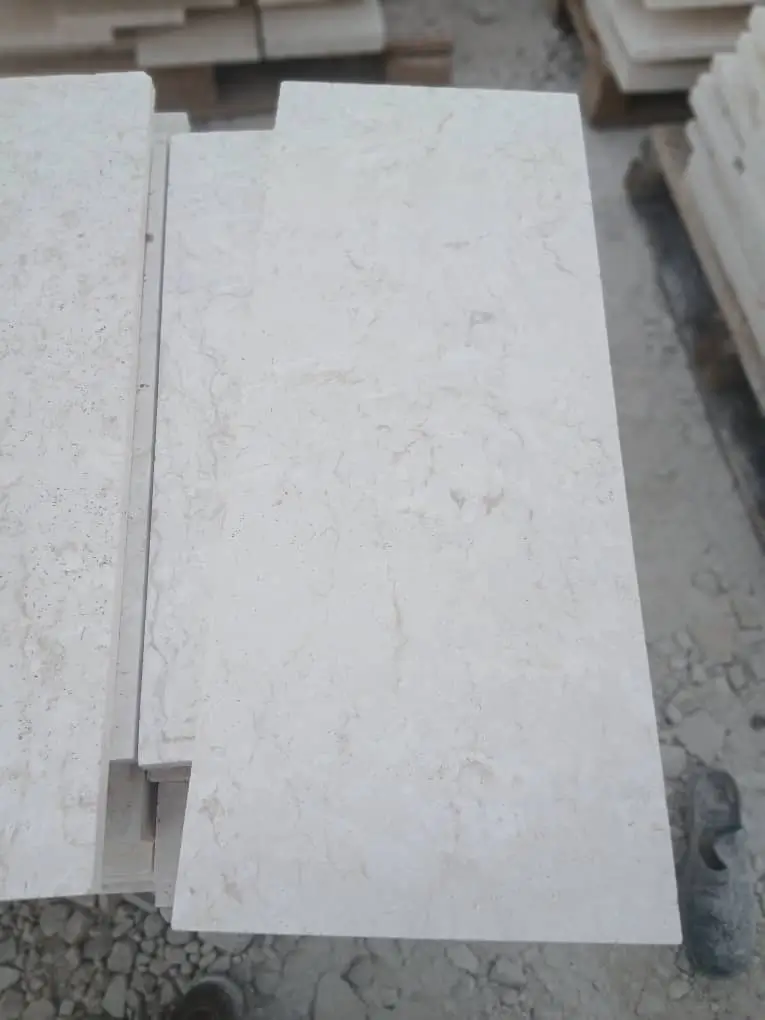
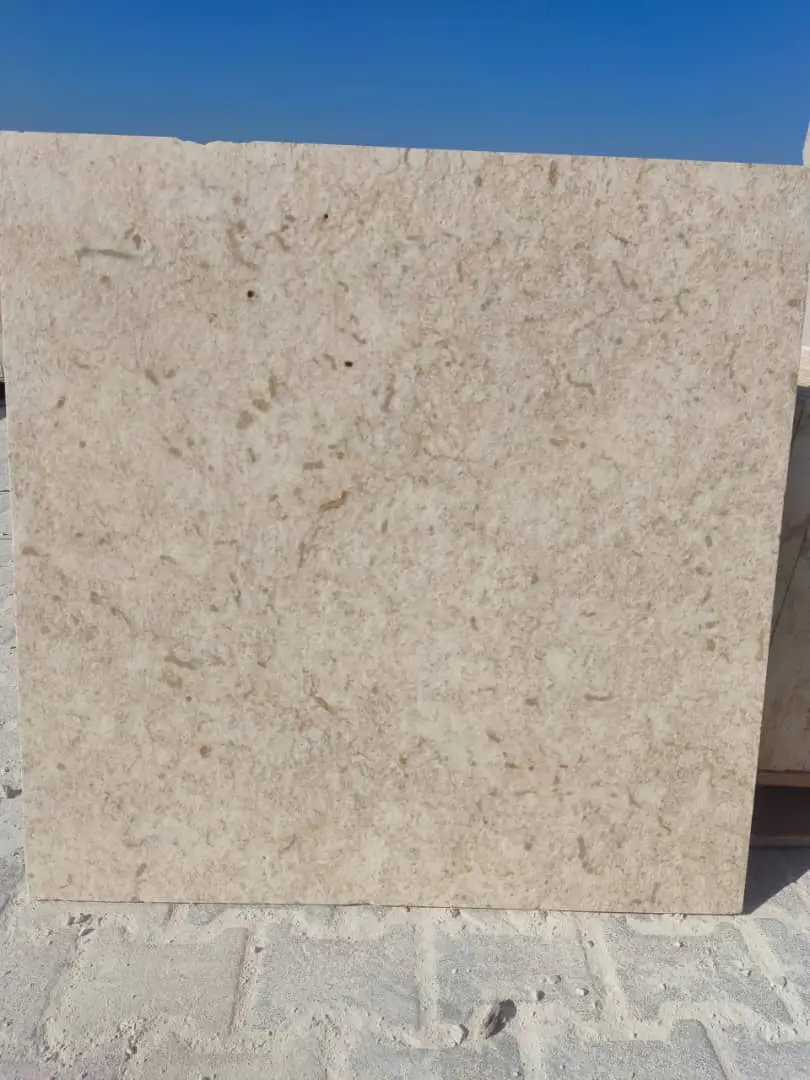
Among the available material options for white paver projects, travertine occupies a distinctive position. Its natural veining and tonal variation within the white-to-cream range give the surface depth that a uniform manufactured tile simply can’t replicate. The stone’s open-pore structure means surface temperatures moderate more readily than with denser materials — a meaningful comfort factor on barefoot pool decks in warm-climate regions.
For projects where tone consistency matters across a large surface, specifying from a single batch is worth confirming with your supplier before committing to an order. At Citadel Stone, our technical team reviews batch variation at the warehouse level so your project maintains visual cohesion from border to field. Snow white tile is sourced from selected quarries and reviewed for tonal consistency before it reaches our warehouse inventory. For a detailed look at material and finish options in this family, Snow White Travertine Pavers covers the specific selections available and their recommended applications.
Ground Preparation and Subgrade Considerations
Here’s what most design-focused buyers underestimate: the most thoughtful white paver design ideas fail at the subgrade, not at the surface. Expansive clay soils present the most common challenge in residential installations. Clay swells with moisture and contracts during dry periods, and that cyclic movement creates differential settlement that breaks joint lines and lifts individual units. The design you specified looks nothing like what you intended twelve months after installation if the base system doesn’t account for your actual soil type.
Sandy or loose soils need different treatment — they drain readily but provide inconsistent compaction support, particularly under large-format slabs. A well-graded compacted aggregate base, typically 4–6 inches for pedestrian applications and 8–10 inches under vehicular loads, bridges the difference in most soil conditions. Caliche layers in arid regions require mechanical breaking and removal before base installation — a step that adds cost but is non-negotiable for long-term joint stability. Rocky ground presents the opposite problem: high spots need grinding or shimming, and drainage paths require deliberate planning since water won’t penetrate naturally.
- Expansive clay — requires deep compacted base and perimeter drainage to control moisture movement
- Sandy soil — good drainage but needs careful compaction testing at each base lift
- Caliche hardpan — must be broken and removed; creates drainage barriers if left in place
- Rocky subgrade — requires leveling, drainage engineering, and shimming at high spots
Slope your paver field at a minimum 1–2% away from structures regardless of soil type. That gradient keeps surface water moving toward drain points and reduces the saturation cycle that accelerates heave in clay-dominant profiles. According to USGS dimension stone production and use data, natural stone paving remains one of the most widely specified exterior surface materials precisely because properly installed systems tolerate ground movement that would crack thinner manufactured alternatives.
Lighting and White Pavers: A Design Multiplier
Outdoor lighting transforms white paver design ideas after dark in a way that darker materials simply can’t match. The pale surface reflects low-voltage ground-level fixtures across the full paver field, which means you can achieve comfortable ambient illumination at lower wattage than you’d need with charcoal or dark stone. Path lights spaced every 6–8 feet along a white paver walkway produce a lantern-like effect that reads as intentional and architectural rather than purely functional.
Grazing light — fixtures positioned low and aimed along the surface rather than down onto it — highlights texture variation in tumbled and brushed finishes beautifully. The micro-relief that’s almost invisible in daylight becomes a design feature at night. This approach works particularly well with snow white tile formats in pool coping and surrounding deck areas, where the water’s reflective surface amplifies the effect further. Consider warm-toned LEDs (2700–3000K) rather than cool white for white stone; the cooler spectrum can push the paver tone toward clinical or flat in photographs and in person.
Sealing and Maintenance Planning
Approaching sealing as a scheduled maintenance item — not a one-time installation step — is what keeps white paver surfaces looking their best over time. An impregnating penetrating sealer applied after installation, and reapplied on a schedule appropriate to your climate and traffic, keeps the stone’s pore structure protected without altering its surface appearance. Glossy topical sealers change the finish character of natural stone and can create maintenance headaches when they begin to peel or yellow, which they invariably do in high-UV outdoor conditions.
Citadel Stone’s warehouse team can advise on sealer compatibility with specific stone types based on the porosity characteristics of each product in our inventory. For tumbled travertine specifically, fill the surface voids with a colour-matched grout or epoxy fill before sealing — unfilled holes accumulate organic debris that discolours white pavers faster than almost any other maintenance failure. Plan on inspecting joints annually and replacing any that have eroded or separated, since open joints are the primary entry point for moisture that contributes to freeze-thaw damage in colder regions.
- Use an impregnating penetrating sealer, not a topical film sealer
- Reapplication schedule depends on stone porosity, UV exposure, and foot traffic
- Fill travertine voids before first sealer application to prevent debris accumulation
- Inspect and repoint eroded joints annually to maintain moisture protection
Ordering and Logistics for White Paver Projects
Design planning should run parallel to material logistics planning, not after it. White pavers in popular formats move quickly from warehouse inventory, particularly in peak spring and summer ordering seasons. Confirming stock availability before finalizing your project timeline is a straightforward step that prevents the more frustrating scenario of a half-installed patio waiting three weeks for a truck delivery to complete the field.
Calculate your square footage requirement, add 10–15% for cuts and waste, and confirm that your driveway or site access can accommodate a standard truck delivery without special equipment. For larger orders with Versailles or mixed-format layouts, coordinate the delivery sequence so that the dominant field units arrive and are staged before the cut-fill and border pieces — it simplifies installation flow considerably. Lead times from warehouse to site typically run 1–2 weeks for stocked material, which compares favorably to the 6–8 week cycle for special-order or imported formats.
Planning Your White Paver Project Right
White paver design ideas succeed or fail on decisions that happen well before installation day — pattern choice, finish selection, subgrade preparation, and material sourcing all carry equal weight in the final result. The surface you see is only as good as the base system beneath it and the maintenance plan you commit to afterward. For projects where tone and finish selection require a closer look, white travertine finish and tone selection provides additional detail on matching those variables to your project conditions. Design teams sourcing through Citadel Stone often pair wide-format white pavers with dark grout joints to sharpen contrast and define the overall outdoor layout.