

What Gray Limestone Rock Actually Is — and Why the Distinction Matters
Gray limestone rock’s performance story begins at the mineralogical level, not at the surface finish. Dense, low-porosity limestone forms under sustained compressive burial — the calcium carbonate grains recrystallize under pressure into a tighter, more interlocking matrix than sedimentary limestone that formed quickly in shallow-water environments. That distinction shapes everything from how the stone responds to freeze-thaw cycling to how it behaves under foot traffic over decades. When you’re specifying gray limestone rock for a demanding application, understanding which formation type you’re working with is the starting point, not an afterthought.
The gray coloration in limestone typically derives from clay mineral inclusions, organic carbon residues, and fine-grained silica distributed through the carbonate matrix during diagenesis. Higher clay content tends to push the tone toward blue-gray; organic carbon yields warmer charcoal tones; silica-rich bands can produce subtle veining. According to limestone formation and characteristics, these compositional variations are a direct record of the depositional environment — and they predict, with reasonable reliability, how the stone will weather over time.
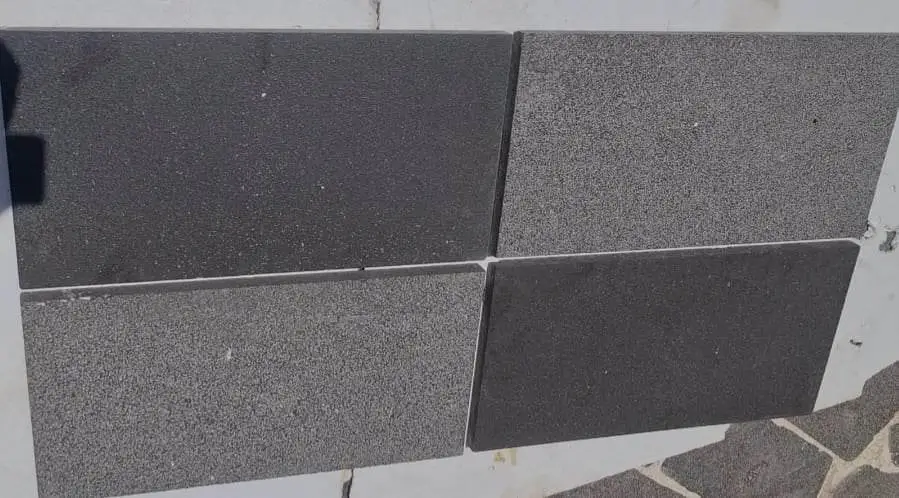
Formation Mechanics: Karst Limestone and the Diagenetic Process
Karst limestone represents one of the most architecturally interesting formation outcomes — and one of the more technically demanding material categories to specify correctly. Karst terrain develops when slightly acidic groundwater dissolves carbonate rock along fracture planes and bedding contacts over geological time, creating a network of voids, solution pipes, and irregular surfaces. The stone that comes out of karst quarries carries the signature of that dissolution history: variable void density, surface texture that ranges from razor-sharp to smoothly rounded, and density that can shift measurably between adjacent blocks from the same quarry face.
Karst limestone appears most often in Turkish and broader Middle East quarry output, where extensive carbonate sequences have been subject to prolonged weathering cycles. The practical implication for your project is that batch-level quality verification matters significantly more with karst-origin stone than with dense micritic limestone from stable sedimentary sequences. Requesting lot certificates and reviewing density data before committing warehouse stock to a large installation isn’t excessive caution — it’s standard practice for anyone who’s watched a mixed-density shipment create differential settling across a patio installation. According to USGS limestone composition and construction applications, limestone physical properties can vary substantially based on formation environment, reinforcing why specifying by formation type rather than by visual color alone produces more predictable results.
Weathering Behavior Across Surface Finishes
The weathering trajectory of gray limestone rock diverges sharply depending on surface finish — a detail that’s easy to underestimate when reviewing samples under showroom lighting. Polished limestone presents its lowest-porosity face to the environment, which initially seems advantageous. The challenge is that polishing removes the micro-roughness layer that provides traction and also exposes any sub-surface void networks to direct moisture ingress at joint edges. Over three to five years of outdoor exposure, polished finishes typically weather back to a matte patina that the stone naturally tends toward — which is fine aesthetically, but worth communicating to clients before installation.
Honed and brushed finishes start closer to the stone’s natural equilibrium state. They weather more gracefully, develop a consistent silver-gray patina, and maintain surface texture that resists moisture accumulation. Tumbled finishes introduce intentional micro-fracturing at edges and surfaces, which accelerates initial weathering but tends to stabilize faster — what you see after eighteen months is close to the stone’s long-term appearance. For gray limestone rock used in high-traffic paving applications, honed or brushed finishes are the specifications that hold up most reliably across varied climate conditions, particularly in regions that experience significant seasonal rainfall or freeze-thaw cycles.
- Polished finishes: lowest initial absorption, highest gloss, fastest aesthetic drift outdoors — best reserved for covered or interior applications
- Honed finishes: balance of low absorption and stable surface texture, appropriate for most exterior paving applications
- Brushed finishes: slightly higher micro-roughness, excellent traction, slower patina development — well-suited to pool surrounds and wet zones
- Tumbled finishes: intentional edge rounding and surface irregularity, rapid initial weathering followed by stable long-term appearance
- Flamed or thermal finishes: thermally fractured surface with high slip resistance, ideal for steep-grade applications and areas where barefoot safety is a priority
Performance Data and Specification Benchmarks
Dense gray limestone rock performs well across the standard structural and durability metrics that matter in paving specification — but the numbers need to come from actual lot-level testing rather than generic material-category claims. The Natural Stone Institute limestone technical specifications provide a useful framework for understanding the performance range typical of quality limestone, though individual quarry output varies enough that project-specific certification is worth requesting for high-value work.
From a specification standpoint, what you’re looking for in gray paving stones intended for exterior use includes compressive strength sufficient to resist point loading from furniture legs and vehicle occasional overhang, water absorption low enough to limit freeze-thaw damage in cold-climate applications, and surface hardness adequate to resist abrasion under pedestrian traffic. The Böhme abrasion test is the most relevant abrasion metric for paving stone — lower values indicate harder, more abrasion-resistant surfaces. For gray limestone rock specified in public or commercial settings, requesting independently certified physical property data protects the project from performance shortfalls that become apparent only after installation.
- Request compressive strength data for the specific batch, not just material category averages
- Confirm water absorption figures under the standard applicable to your project’s climate zone — ASTM C97 is the relevant test for dimensional stone
- Verify that the surface finish tested matches the finish you’re specifying — honed and polished surfaces behave differently in absorption testing
- For freeze-thaw regions, ask specifically for freeze-thaw cycling test results, not just general absorption data
- Thickness uniformity across a batch matters as much as average thickness — excessive variation creates installation problems that show up as lippage after setting
Seasonal Installation Timing and Scheduling for Limestone Projects
The installation window for gray limestone rock projects is narrower than most scheduling documents acknowledge. Setting mortars and adhesives for natural stone have temperature and humidity thresholds that directly affect bond strength — and those thresholds can be breached in ways that aren’t visible until the stone starts lifting six months later. For mortar-set applications, the practical working range is substrate and ambient temperatures between approximately 50°F and 90°F, with humidity low enough that the mortar surface doesn’t skin over before the stone makes full contact.
Morning installation sessions consistently outperform afternoon work in warmer months. Substrate temperatures peak in mid-to-late afternoon, and setting mortar applied to an overheated substrate loses moisture too rapidly to develop full bond strength. Scheduling your installation crew to work from dawn through early afternoon and then pulling back as surface temperatures climb gives you meaningful quality gains without additional material cost. In cooler months, the inverse applies — wait until surfaces have warmed above the minimum working temperature before laying stone, even if that means starting two hours later than you’d prefer.
Seasonal adhesive behavior is a related concern that’s often underweighted. Polymer-modified mortars designed for natural stone paving have extended open times in cooler conditions but can skin rapidly in warm, low-humidity weather. Consult the adhesive manufacturer’s technical data sheet for the specific product you’re using — not the generic guidelines, but the temperature-adjusted working time charts that quality manufacturers include in their product documentation. Adjusting your batch size to match actual working conditions rather than maximum theoretical batch size is one of those field habits that separates clean, well-bonded installations from callbacks.
Base Preparation and Drainage Fundamentals
Gray limestone rock’s long-term performance is more directly controlled by what’s under the stone than by the stone itself. This is the specification decision that experienced installers debate seriously and that product descriptions almost never cover adequately. A well-prepared compacted aggregate base at appropriate depth, correctly graded for drainage, will support natural stone for decades. The same gray paving stones on an inadequately compacted or poorly drained base start showing problems — differential settlement, joint opening, surface rocking — within two to five years.
For residential paving applications under moderate pedestrian traffic, a 4-inch compacted aggregate base over native soil with adequate drainage slope is a reasonable starting point. For applications that include occasional vehicle access, dumpster placement, or heavy furniture, increase the base depth to 6 inches and consider a concrete intermediate layer for point-load applications. The critical detail that often gets shortchanged in residential projects is the distinction between compacted base depth and nominal layer thickness before compaction — compacted aggregate typically reduces 20 to 25 percent from its loose-laid depth, so your material orders and layer measurements need to account for that reduction.
- Slope the finished surface a minimum of 1/8 inch per foot away from structures — most drainage guidelines require at least this, and gray limestone rock performs better when water evacuates quickly
- Install geotextile fabric between native soil and aggregate base in clay-heavy soils to prevent fines migration into the drainage layer over time
- Use clean, angular crushed aggregate for base layers — rounded gravel doesn’t interlock and resists compaction less effectively
- Compact in maximum 4-inch lifts; attempting to compact thicker layers at once produces inconsistent density through the profile
- Allow base compaction to stabilize before setting stone — newly compacted aggregate continues to settle for 24 to 48 hours after compaction under normal conditions
our natural limestone selections
Gray Limestone Rock in Exterior Applications: Where It Performs Best
Gray limestone rock earns its specification in exterior applications through a combination of thermal stability, aesthetic coherence, and workability that dense igneous alternatives don’t fully replicate. The material’s thermal mass characteristics mean it absorbs heat gradually during the day and releases it through the evening — a behavior that moderates surface temperature extremes in open, sun-exposed applications. This is particularly noticeable in pool surrounds and open terrace installations where limestone remains significantly more comfortable underfoot during peak afternoon hours than comparable granite or dark basalt paving.
The material’s workability also provides a practical advantage in complex layouts. Gray paving stones cut cleanly with diamond-blade wet saws, hold tight tolerances for custom radius work and pattern cuts, and can be trimmed in the field without the chipping risk that affects harder, more brittle stone types. For installations that include curved pool edges, angled step nosings, or custom-width border courses, this workability translates directly to reduced material waste and faster installation times.
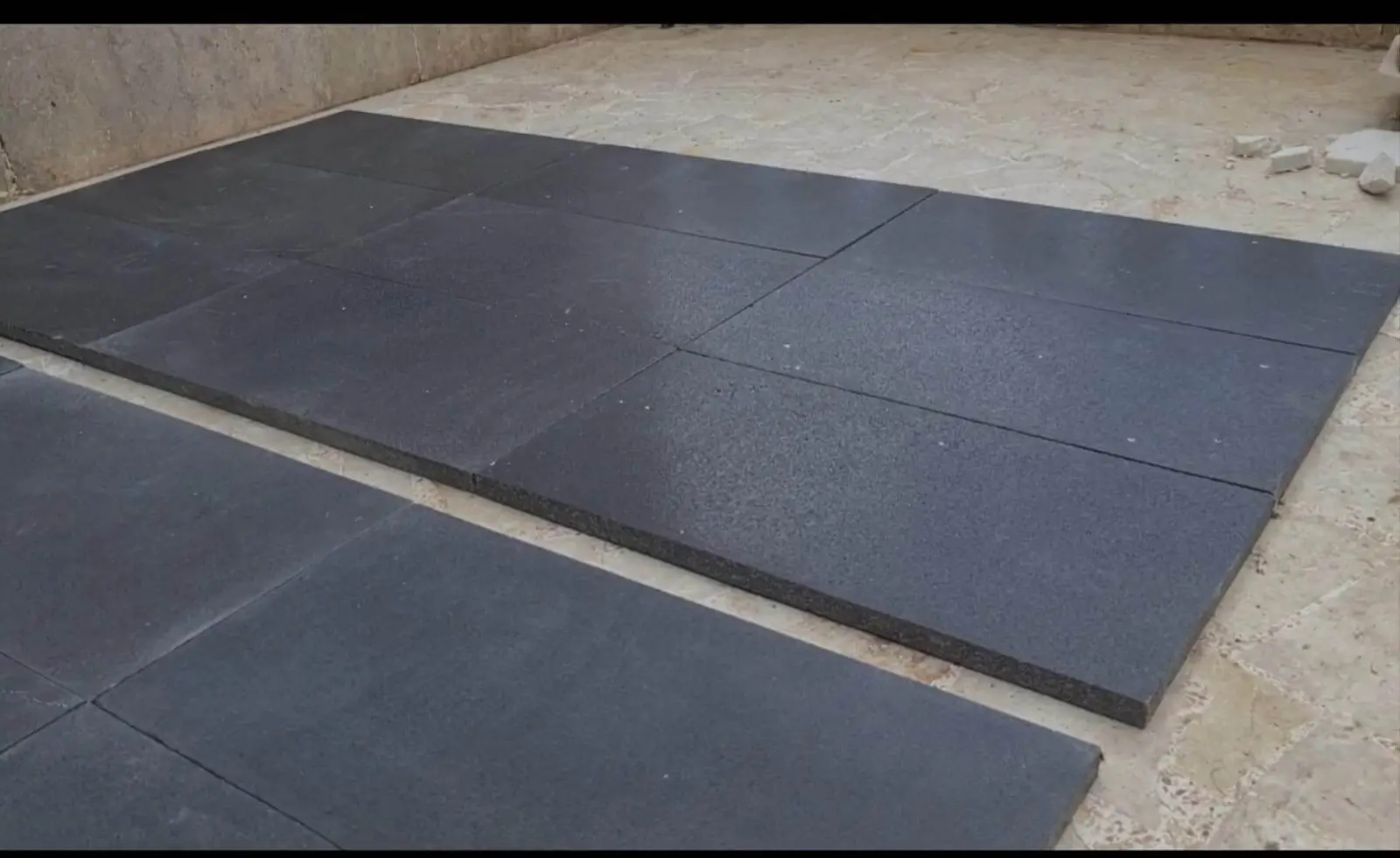
Honest limitations are worth stating clearly. Gray limestone rock is susceptible to acid etching from cleaners, organic stains from leaves and standing water in shaded areas, and surface marking from iron-containing water sources. These issues are manageable with appropriate sealing protocols and routine maintenance — but specifying this material for an application where maintenance won’t happen reliably creates problems that are difficult to reverse without resurfacing.
Sealing and Long-Term Maintenance Protocol
Penetrating sealers are the right choice for gray limestone rock used in exterior paving — not topical or film-forming coatings that sit on the surface and eventually delaminate. Penetrating silane/siloxane-based sealers enter the stone’s pore structure and bond to the carbonate matrix, reducing effective water absorption without fundamentally altering surface texture or appearance. The result is water beading, reduced stain penetration, and maintained natural appearance — the outcomes clients actually want.
Application timing matters significantly. Newly installed limestone should be allowed to cure fully and reach equilibrium moisture content before sealing — typically a minimum of 28 days for mortar-set installations, longer in cool or humid conditions. Sealing over residual moisture traps it under the sealer, which can cause clouding or patchy appearance that’s difficult to correct without stripping and resealing. Test a small area first if you have any doubt about moisture content — a clear sealer applied over damp stone will typically show immediate cloudiness that indicates the problem before you’ve committed the full surface.
Maintenance resealing frequency depends on traffic level and exposure. For most exterior residential applications, a two-to-three year resealing schedule is practical. High-traffic commercial applications may need annual resealing of the most-trafficked zones while perimeter and low-traffic areas hold the original sealer longer. Citadel Stone’s technical team can provide specific sealing guidance for the limestone variant you’re working with — the right product choice varies with surface finish and the specific stone’s absorption characteristics.
Ordering, Logistics, and Project Planning
Accurate quantity calculation for gray limestone rock projects requires accounting for more than the bare square footage of your installation area. Waste factor for standard rectangular paving in a running bond pattern typically runs 5 to 8 percent. Complex patterns — basketweave, herringbone, custom radius curves — can push waste to 15 percent or higher depending on the specific geometry. Pattern cuts generate offcuts that are often too small to be useful elsewhere in the layout, so your material order needs to reflect actual consumption rather than net coverage.
Truck delivery logistics for large-format limestone orders require advance planning, particularly for sites with restricted access. Heavy natural stone ships on palletized loads that need adequate truck clearance and a hard surface capable of supporting a loaded truck without rutting. Before your delivery is scheduled, verify your site access dimensions — overhead clearance, driveway load rating, and distance from the public road to the installation area all affect whether a standard flatbed delivery works or whether you need a smaller vehicle and additional material handling. Coordinating these logistics before the stone leaves the warehouse avoids the job-site scramble of redirecting a delivery that can’t reach its destination.
- Order a minimum of 10 percent over your net calculated quantity — returns of unopened material are typically straightforward, but sourcing additional material from the same production batch after the fact is rarely possible
- Verify batch/lot consistency for the full order quantity before delivery — visual variation between batches in the same material category can be significant enough to affect appearance across a large installation
- Confirm warehouse stock availability before finalizing your project schedule — lead times vary between stocked and special-order materials, and a 6-to-8-week import cycle affects scheduling differently than a 1-to-2-week warehouse fulfillment
- Inspect material on delivery before signing acceptance — surface damage, thickness variation, and color inconsistency that exceed acceptable tolerances are easiest to address before the stone is moved to the installation site
Getting Gray Limestone Rock Specifications Right
The projects that hold up best over time — the ones you walk by ten years later and they still look right — share one characteristic: the specification decisions were made before installation, not during it. Gray limestone rock rewards thorough upfront work. Understanding the formation origin, verifying the physical property data, preparing the base to the correct depth and drainage geometry, and timing the installation to suit the season and the adhesive system’s working parameters — these aren’t steps that add cost. They’re the steps that prevent callbacks and premature replacement that cost far more. As you refine your project specification, grey limestone design inspiration offers additional perspective on how specific limestone variants perform across different aesthetic and functional applications. Sourced from premium quarries in Turkey and the broader Middle East region, gray limestone rock at Citadel Stone shows naturally varied surface character.
Related reading: jerusalem grey gold limestone · salem grey limestone · arctic grey limestone.